Business
How poor communication from travel agents leaves air passengers stranded
Published
1 hour agoon
By
Preport
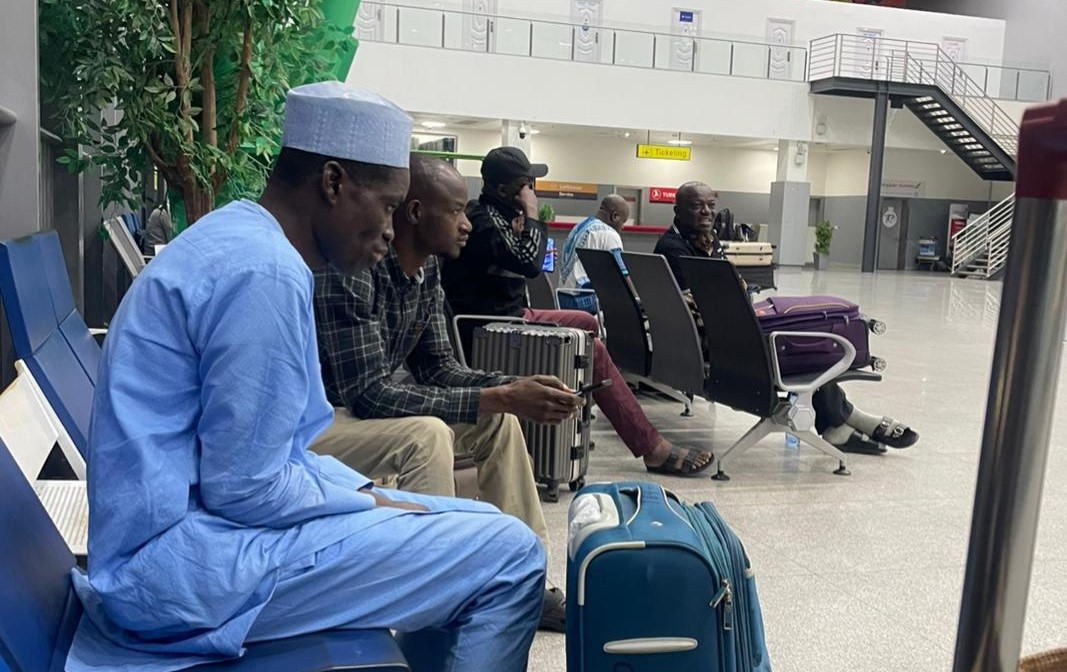
Air passengers are increasingly arriving at airports unaware that their flights have been delayed, rescheduled or cancelled, a situation the Nigerian Civil Aviation Authority (NCAA) says is being worsened by poor communication between travel agents and travellers.
The Director of Public Affairs and Consumer Protection at the NCAA, Michael Achimugu, raised the concern in a video posted on his official X page on Tuesday.
According to him, many complaints received by the regulator involve passengers who booked tickets through third-party agents but failed to receive important updates directly from airlines.
Mr Achimugu said many travel agents use their own phone numbers and email addresses during bookings, leaving passengers dependent on them for information on delays, cancellations, and schedule changes.
In recent months, both domestic and international passengers have repeatedly complained about arriving at airports only to discover that their flights had either been cancelled or rescheduled without their knowledge, leaving many stranded for hours.
One such incident occurred on 27 April, involving passengers travelling aboard Ethiopian Airlines through Abuja to destinations including India.
Some of the affected passengers told PREMIUM TIMES that they travelled long distances for their international departures only to discover at the airport that the flights had been disrupted.
Several passengers said they never received any prior notification because their tickets were booked through travel agents.
One of the passengers, who identified himself as Yusuf Muhammad, said they depended entirely on their agents for updates from the airline.
According to him, the agents later claimed they had not received any information about the disruption.
The incident reportedly left several passengers stranded at the Nnamdi Azikiwe International Airport, Abuja, with some forced to spend the night at the terminal before arranging alternative travel plans the next day.
Reacting to the growing complaints, Mr Achimugu urged passengers to insist that their personal phone numbers and email addresses are used whenever tickets are booked through third parties.
“For the umpteenth time, I feel the need to say this. If you are booking your flight tickets through a third party, like a travel agent, please insist that they fill in your own phone number, or at least your email, when booking your ticket,” he said.
He added that, “The reason is because in our experience at the NCAA Consumer Protection Department, most of the cases of missed flights that have been recorded are because third-party passengers were not informed by their agents when they received notifications for delays, schedule changes and cancellations.”
READ ALSO: Airline operators reject NCAA debt claims, seek review of ticket charges
He also advised passengers to check their emails and text messages regularly before travelling.
“A lot of passengers have received emails and still went ahead to the airport for disruptions which they received notification for, only to discover later that they had received such notifications earlier,” he added.
The NCAA spokesperson further encouraged passengers to patronise registered travel agencies affiliated with the National Association of Nigerian Travel Agencies (NANTA), noting that such agencies can be held accountable for negligence.
“I would encourage you, from the NCAA perspective, to do business with travel agencies who are members of the National Association of Nigerian Travel Agencies ( NANTA),” he said.
Mr Achimugu said the increasing number of complaints linked to poor communication between airlines, agents and passengers highlights the need for travellers to take greater responsibility for monitoring travel information directly from airlines.
You may like
Business
SPECIAL REPORT: Day Akwa Ibom market burned because a fire truck had no fuel
Published
12 hours agoon
May 27, 2026By
Preport
Blackened palm oil flowed across the wet market walkway. Burnt roofing sheets hung loosely over collapsed wooden stalls. Damaged freezers, melted buckets of rice, scorched cartons of tomatoes, and warped metal doors lay in heaps. Traders wandered through the debris in stunned silence, some clutching keys to shops that no longer existed.
Around 1 a.m. on 19 May, a fire broke out near the market fence at one of the container shops used as a cold room, according to witnesses. Within minutes, the flames spread through makeshift structures crowded against the perimeter of one of Akwa Ibom’s busiest daily markets – the Akpan Andem Market in Uyo, the state capital.
But while the fire advanced, residents and traders said the closest emergency response unit, a fire station inside the market, could not respond.
The reason, according to multiple witnesses and fire service officials interviewed by PREMIUM TIMES, is that there was no diesel to power the firefighting truck.
By the time federal firefighters eventually arrived hours later, traders, desperately fighting to put out the raging inferno, had formed human chains with buckets and basins. Residents fetched water from nearby homes. A hotel in the area supplied additional water. By then, millions of naira in goods had already been reduced to ashes.
“If not for the people in this street, this fire would have consumed far more shops in the market than this,” said Godwin Emmanuel, a phone and laptop repair technician, whose shop, luckily, was not destroyed by the fire.
Mr Emmanuel said he received a distress call shortly after 1 a.m. and raced about four kilometres from his house to the market, as public transportation was unavailable at night.
“When we called the fire service station inside the market, they told us the truck was working, but there was no diesel,” he said. “We called other places too, and heard the same thing. Help finally came after the chairman of Uyo Local Government contacted the federal fire service.”
PREMIUM TIMES visited the market around 11 a.m. on the day of the fire and observed smoke still emitting from several shops hours after the blaze was extinguished.

This newspaper counted at least eight container shops built along the market fence, which were completely razed. Another eight lock-up stores inside the market were severely damaged.
“Everything I had is gone”
Inside one of the burnt stores, palm oil still coated the floor in thick layers.
Utibe Udeme, who stored drums of palm oil in the shop, stood motionless beside the wreckage.
“I have lost over N12 million,” he said quietly. “I invested everything I had and even collected loans because of the expected returns later in the year. Now I am back to square one.”
Witnesses said the stored palm oil intensified the fire.
Nearby, Irene Edet sifted through charred bags of rice, burnt beans and blackened cartons of tomatoes.

“I recently got over N6 million to equip this shop,” she said. “There is nothing left to recover.”
She said she was informed about the fire during the night, but by the time she reached the market in the morning, her shop had already been destroyed.
“I asked how this could happen when there is no electricity in the market. They told me it was an electrical fault from another shop,” she said. “I am begging the government and the market leadership to help us.”

For Emah James, a food vendor, the losses went beyond merchandise.
“I lost the N50,000 I collected from my thrift contribution,” she said. “I buy rice and garri in bags for my business. Everything is gone.”

But beyond grief, many traders expressed anger.
Umoh Jeremiah, another victim, said no senior government official had visited them as of Tuesday afternoon, on the day of the fire incident.
“They are busy with elections, while people are suffering here,” he said. “We pay taxes every day in this market. Yet when an emergency happened, there was no emergency response.”
N40,000 shortage, millions in losses
When PREMIUM TIMES visited the fire station inside the market, officials confirmed they had received distress calls but could not deploy immediately due to fuel shortages.

“For over two months now, this station has not received even a drop of diesel,” an official said on condition of anonymity because he was not authorised to speak publicly on the incident.
The official, however, said the firefighting truck was functional.
“If we had diesel, not up to two shops would have been affected,” he said. “The incident happened within reach. We would have responded almost immediately.”
Using Google Earth, an open-source tool that allows distance measurement, measured the distance between the fire station and the fire outbreak site. It was 105.98 metres, about the distance of 10 buses parked end to end.
Measurement of the distance between the fire service station at Akpan Andem Market and the location of the fire outbreak
According to the official, less than 20 litres of diesel would have been sufficient for the emergency response because of the short distance between the station and the fire scene.
A survey of filling stations in Uyo found that diesel sold between N1,950 and N2,000 per litre. Twenty litres would, therefore, not be more than N40,000.
That amount, traders noted bitterly, might have prevented losses running into tens of millions of naira.
The incident has raised fresh concerns about emergency preparedness in Akwa Ibom State despite the state’s strong revenue profile and previous calls for improved emergency response.
In April last year, Akwa Ibom youths asked Governor Umo Eno’s administration to develop and implement a comprehensive state emergency response strategy after noting that the state lacked one.
Data obtained by PREMIUM TIMES from the spokesperson of the Akwa Ibom State Fire Service, Emmanuel Michael, indicates these concerns are becoming more urgent.
According to Mr Michael, the state has had 30 documented fire incidents between January and 20 May 2026.
The figure translates to an average of at least six documented fire outbreaks per month, highlighting mounting pressure on the state’s emergency response system and the need for sustained investment in fire prevention and rapid-response infrastructure.
Akwa Ibom is not a state gasping for resources that can deter its emergency response.
PREMIUM TIMES previously reported that Akwa Ibom received N397.51 billion into its coffers between January and March 2026. Within the same period, the state said it spent N201.73 billion.
A budget performance document reviewed by PREMIUM TIMES showed that N29.78 billion was spent on “other recurrent costs” during the quarter, a category that includes operational expenses such as fuel for government agencies.
However, Mr Eno’s administration has, for five consecutive quarters, failed to publish detailed expenditure breakdowns required under the state’s fiscal responsibility law, making it difficult to determine how much was allocated specifically to fire service operations.
“Only three functional trucks in the entire state”
At the headquarters of the Akwa Ibom State Fire Service in Uyo, a senior official painted an even grimmer picture.
The official, who requested anonymity for fear of government sanctions, told PREMIUM TIMES that only three firefighting trucks were functional across the entire state, all stationed within Uyo. Two were located at the headquarters, while one was at Akpan Andem market. He added that diesel shortages had become routine.

“Our diesel finished on Sunday after another firefighting operation,” the official said. “Most times, we rely on Hensek Group to assist us with diesel during emergencies.”
Hensek Group, a Uyo-based construction company, handles the majority of the Akwa Ibom State Government’s road contracts. Its owner, Uwem Okoko, is a close political ally of Mr Eno and heads the Umo Eno Campaign Organisation for the 2027 elections.
The fire service official said poor logistics have severely weakened emergency response capacity across the state.
When contacted, the spokesperson for the Akwa Ibom State Fire Service, Mr Michael, confirmed that the service experienced a diesel shortage during the incident.
He said officials attempted unsuccessfully to source fuel during the night.
“Our people were looking for where to buy diesel but could not find enough because it was late,” he said. “I contacted the federal fire service. Even they initially said they did not have diesel until they later managed to get less than half of a 25-litre container.”
Mr Michael said additional diesel was later sourced through Hensek.
Asked whether the dependence on emergency fuel sourcing affected operational efficiency, he responded: “Such things happen.”
When PREMIUM TIMES insisted that it was aware of the agency’s underfunding and asked what his prayers to the government were, Mr Emmanuel acknowledged the concern.
“Since you have already made your findings and discovered that the agency has not been funded so well, the call is that we pray the government will be proactive to know that fire service is meant to save lives and property, and that emergency can occur at any time to anyone thus we should not run short of any amenities that can help us do our job,” he said.
Budget priorities and missing details
An examination of Akwa Ibom’s 2026 approved budget showed that the Ministry of Works and Fire Service received the state’s largest capital allocation — N416.2 billion.
Yet only three line items in the ministry’s capital projects directly relate to firefighting infrastructure: the procurement of two firefighting trucks for Uyo, the purchase of laboratory and safety equipment, and the installation of a fume cupboard expeller.
Together, the projects amount to N302.7 million.
However, a review of last year’s budget performance gives reason for cautious optimism. In 2025, the state budgeted N210 million for the same items. Senior officials at the fire service headquarters said such equipment had not been provided.
When our reporter contacted him, the Akwa Ibom State Commissioner for Works and Fire Service, Eno Ibanga, denied responsibility for current fire service operations, despite state law, specifically Volume III, Cap 55 of the Laws of Akwa Ibom State 2022, placing that duty on his office.
While the law mandates the commissioner to ensure efficient fire service response, Mr Ibanga claimed the agency is now overseen by the Office of the Head of the Civil Service.
PREMIUM TIMES found that the Commissioner for Works and Fire Service retains legal responsibility for these operations, and efforts to reach the Head of the Civil Service, Elsie Peters, for comment were unsuccessful, as she did not respond to calls, SMS, or WhatsApp messages from our reporter.
The newspaper, in its enquiry to the Head of Akwa Ibom Civil Service, asked about measures the state government has put in place to ensure emergency response readiness at major public facilities and markets, and if the government is considering an investigation into the circumstances surrounding the fire incident and the response delay.
Interestingly, an existing policy framework already contains proposals that address many of the gaps exposed by the Akpan Andem Market fire.
PREMIUM TIMES reviewed the proposed Akwa Ibom Disaster Risk Management and Emergency Response Policy Framework, a document designed to establish legislative and institutional structures for disaster preparedness and emergency response across the state.
The framework provides recommendations on fire prevention, emergency preparedness and response systems, public awareness campaigns, training, inspection and enforcement.
It also proposes regular inspections of public and private buildings to ensure compliance with fire codes and safety standards, while outlining coordination procedures among agencies such as the State Emergency Management Agency, the National Emergency Management Agency (NEMA), the Nigeria Police Force, and the Nigerian Red Cross during emergencies and multi-hazard disasters.
Government agencies and institutions that contributed recommendations to the framework include NEMA, the Nigeria Security and Civil Defence Corps, the Ministry of Environment, the Fire Service Commission, the University of Uyo, the Ministry of Women Affairs, and the Ministry of Humanitarian Affairs.
Despite extensive consultations, the framework has yet to translate into visible institutional reforms.
‘No strong will to take action’
Elkanah Oluyori, executive director of the Clement Isong Foundation, said the organisation, with support from ActionAid Nigeria, consulted, drafted and submitted the draft framework to the Akwa Ibom State deputy governor, followed by sustained engagement with the government, but little progress has followed.
“The idea was to establish different response units with clearly defined responsibilities during emergencies,” Mr Oluyori said. “This is something that could have addressed the recent fire outbreaks we have had in different parts of the state.”
He said implementation efforts had remained slow.
“So far, the actions have been slow, and the commitment to change has not been strong enough,” he said. “Government needs to embrace the ideas shared because disasters happen suddenly. There should be a response structure and units that can immediately take the right decisions to avert loss of lives and property.”
Mr Oluyori identified weak political will as a major obstacle.
“I believe the will to take action is not very strong,” he added. “But with the increasing emergency situations, maybe the government will begin to look into it.”
PREMIUM TIMES contacted the office of the Deputy Governor of Akwa Ibom State, Akon Eyakenyi, for clarification on the status of the framework and measures being taken to strengthen disaster preparedness and emergency response systems in the state.
Omen Bassey, the press secretary to Mrs Eyakenyi, said the proposal from the Clement Isong Foundation was being reviewed against existing legislation at both the state and federal levels to avoid conflicts.
“I think the deputy governor is enthusiastic about it,” he said.
“Since it’s a legal framework, the advice of the Attorney General has to be sought and obtained.
“I know the state government is working towards further strengthening disaster preparedness and emergency response in the state. I don’t have the details, and I am not competent to speak on it.”
Illegal structures, shared blame
The Chairman of Uyo Local Government Council, Uwemedimo Udo, said preliminary findings suggested the fire started from makeshift structures erected near the market fence.

He said he contacted the federal fire service and police authorities during the incident and confirmed that Hensek Group also supported with some diesel.
The council chairman said the local council would work with the Uyo Capital City Development Authority to assess and, if necessary, demolish illegal structures around the market.
But when asked why the council had not supported the fire station with diesel despite generating daily revenue from traders through market tickets and rents, he said the fire station belonged to the state government.
“If you want their attention, call the people in charge, and they will respond,” he said.
Meanwhile, at Akpan Andem Market, traders who lost millions watched firefighters frantically search for diesel in the middle of the night in one of Nigeria’s highest-earning oil-producing states, a state that generated nearly N400 billion in three months, yet could not guarantee enough fuel for a truck stationed inside its busiest market.
And by Tuesday afternoon on the day of the fire, traders were still standing inside the ruins of their businesses, asking the same question: How many livelihoods could have been saved if the truck had moved when the first call came?
Business
Malabu faction sues FG over OPL 245 split, demands N1 trillion in damages
Published
1 day agoon
May 26, 2026By
Preport
A faction of Malabu Oil & Gas Ltd has filed a N1 trillion suit against the federal government over the splitting of the Oil Prospecting Licence (OPL) 245.
In the suit filed in the firm’s name through its lawyer, Reuben Atabo, a Senior Advocate of Nigeria (SAN), the plaintiff sought an order from Judge Mohammed Umar of the Federal High Court in Abuja to quash the government’s conversion of OPL 245 to OML 245.
Malabu sued the President, the Attorney-General of the Federation (AGF) and the Minister of Petroleum Resources in the suit marked FHC/ABJ/CS/871/2026.
In a motion on notice filed on 25 May by Mr Atabo, the company argued that the conversion of OPL 245 to OML 245 was done while several cases were pending at the Federal High Court up to the Supreme Court.
It therefore sought a declaration that splitting OPL 245 into four assets—to be managed by Shell Nigeria Ultra-Deep Limited, Shell Nigeria Exploration Production Company Ltd, Nigerian Agip Exploration Company Ltd, and NNPC Limited through the OPL 245 Resolution Agreement signed around 5 March—was unlawful.
Malabu also seeks an order awarding N1 trillion in damages against the respondents jointly and severally.
The company said the fine was for unlawful interference with its interests in OPL 245 and for actions that exceed the limits of the Petroleum Industry Act 2021.
In an affidavit in support of the motion, a shareholder and director, Alhaji Mohammed Sani Abacha, detailed the company’s history and its prolonged legal battle over OPL 245.
The judge set 11 June for the hearing.
Last Thursday (22 May), Mr Umar granted leave to Malabu Oil & Gas Ltd to apply for a judicial review, to seek declarations and injunctions against the executive action of the federal government to split OPL 245.
The judge, in a ruling, held that the motion ex-parte, moved by Atabo, in respect of the relief sought, was meritorious.
The suit came less than two months after President Bola Tinubu on 5 March announced the government had resolved a decades-long dispute over Oil Prospecting Licence (OPL) 245, one of Nigeria’s most commercially significant deepwater oil blocks.
At the time, the presidency said the agreement paves the way for development that could add approximately 150,000 barrels per day to Nigeria’s production capacity.
Although details of the agreement are still sketchy and were not made public, the president’s office described it as a “historic settlement” that would unlock the development of one of Nigeria’s most strategically important deepwater resources.
On Thursday, Malabu in its suit alleged that the Federal Government split OPL 245 into four separate assets and reassigned them to Shell Nigeria Ultra-Deep Limited, Shell Nigeria Exploration Production Company Limited, Nigerian Agip Exploration Company Limited, and Nigerian National Petroleum Company (NNPC) Limited.
According to Malabu, the reallocation was carried out through the OPL 245 Resolution Agreement executed on or about 5 March.
The firm further alleged that the action was taken without the consent or approval of its directors.
The matter is expected to return to court on 11 June for further proceedings.
Background
OPL 245 was originally awarded to Malabu Oil and Gas by the regime of General Sani Abacha in 1998.
Under the terms of the award, Malabu — a briefcase company set up by Mr Abacha’s son and the then petroleum minister, Dan Etete, in controversial circumstances — was required to develop the block in partnership with an international technical partner and pay a signature bonus of $20 million.
The company paid only $2 million before entering into a joint operation agreement with Shell Nigeria Ultra Deep Limited (SNUD). Malabu received its operating licence in April 2001, but it was revoked three months later, in July 2001.
The administration of former President Olusegun Obasanjo subsequently invited ExxonMobil and Shell — Malabu’s technical partner — to bid for OPL 245 in partnership with the Nigerian National Petroleum Corporation (NNPC). Shell won the bid and began work on the block.
Malabu accused Shell of conniving with the government to seize the block and petitioned the House of Representatives, which directed the federal government to re-award Block 245 to the company.
Malabu also approached the Federal High Court in Abuja, but the suit was struck out. While an appeal was pending, the then Minister of State for Petroleum, Edmund Daukoru, sought an out-of-court settlement on behalf of the federal government.
The block’s association with Mr Etete — whom the federal government alleged had awarded the block to himself while in office — inflamed opinion in the Niger Delta, where communities demanded a full audit of oil block allocations and disclosure of the ethnic identities of their owners.
The Obasanjo government eventually reversed course, reclaimed OPL 245 from Shell, and re-awarded it to Malabu on the condition that the company pay a new signature bonus of $210 million, in addition to the $2 million earlier paid in 1998.
Malabu paid the sum and withdrew its court cases, but the settlement created another dispute.
Shell filed for arbitration at the International Centre for Settlement of Investment Disputes (ICSID) in Washington, D.C., and also instituted proceedings at the Federal High Court in Abuja. SNUD, which had entered into a Production Sharing Contract with the NNPC in 2002, had paid $1 million of the $210 million signature bonus and held the remaining $209 million in an escrow account with JP Morgan pending resolution of the dispute.
Shell sought compensation and damages exceeding $2 billion, citing costs incurred in de-risking the block.
Several settlement efforts followed, though none produced a definitive outcome. However, a Terms of Settlement Framework was adopted in 2006.
In April 2011, under the Goodluck Jonathan administration, then Attorney-General Mohammed Adoke brokered a Resolution Agreement.
Under the agreement signed on 29 April 2011, Malabu agreed to waive all claims to OPL 245 in exchange for compensation from the federal government. Shell, in turn, agreed to withdraw all suits against the government and to pay, through the federal government, the sum of $1.092 billion as full and final settlement of Malabu’s claims. The block would then revert to Shell and its new partner, Italian oil company Eni.
In June 2013, the matter was formally concluded on those terms, and presidential approval was granted for the payment of $1.092 billion to Malabu — now controlled by Mr Etete after scheming out the Abachas — from the federal government’s escrow account at JP Morgan in London.
Italian trial and acquittals
The deal later attracted international scrutiny. Italian prosecutors alleged that most of the $1.3 billion purchase price for OPL 245 had been siphoned off to politicians and intermediaries.
PREMIUM TIMES reported that about half of the funds were transferred to the accounts of controversial businessman Abubakar Aliyu, believed to be a front for senior government officials.
Shell and Eni, along with several of their former and current executives — including Eni CEO Claudio Descalzi — were tried in Italy. All were acquitted in 2021 after denying any wrongdoing.
In Nigeria, Mr Adoke was later named in the $1.1 billion scandal. The Economic and Financial Crimes Commission (EFCC) accused him of benefitting fraudulently from the deal he had helped broker as Attorney-General.
He was arraigned before the FCT High Court in Abuja in February 2020 on a 40-count amended charge of bribery and related offences alongside Mr Aliyu, Rasky Gbinigie, Malabu Oil and Gas Limited, Nigeria Agip Exploration Limited, Shell Nigeria Extra Deep Limited, and Shell Nigeria Exploration Production Company Limited.
The EFCC later admitted it lacked sufficient evidence against Mr Adoke, and the court dismissed the charges. In a separate case at the Federal High Court, the EFCC accused him of laundering N300 million allegedly derived from bribery. He was also discharged and acquitted in that case.
In his book (The Burden of Service) published last year, Mr Adoke described the OPL 245 litigation as “as lucrative as OPL 245 itself for lawyers and their allies” during the Buhari administration. He characterised it as “a monumental waste of resources.”
Mr Adoke has continued to deny any wrongdoing, maintaining that no federal government money went missing and that those who brokered the 2011 settlement should be credited for civic patriotism, having saved the government from financial embarrassment arising from mismanagement of the original award process.
Following the announcement of a resolution by Mr Tinubu, Mr Adoke called on the Nigerian government to offer him an “unreserved apology” over what he described as years of persecution and humiliation linked to the controversial OPL 245 oil block deal.
(NAN)
Trending
-
News3 days ago
Xreal, Google’s smartglasses partner, thinks it has finally mastered this notoriously tricky industry
-
Health3 days ago
Anambra govt launches long-acting injectable drug to prevent HIV
-
News4 days ago
2027 Is a Walkover, APC Will Record Landslide Victory Across Nigeria — Yilwatda Declares
-
Events1 day ago
Intellectual Muslims Forum Distributes Rice to Communities Across Plateau Ahead of Eid-el-Kabir