Connect with us

News

TETFund Awards N7.5bn Research Grants To 174 Researchers

info

Published

on

IMG 20260611 WA0052.jpg


Warning: Undefined array key “sfsi_plus_threads_display” in /home/u310331633/domains/nannews.ng/public_html/wp-content/plugins/ultimate-social-media-plus/libs/sfsi_widget.php on line 2021

Warning: Undefined array key “sfsi_plus_threads_display” in /home/u310331633/domains/nannews.ng/public_html/wp-content/plugins/ultimate-social-media-plus/libs/sfsi_widget.php on line 2021

By Funmilayo Adeyemi

The Tertiary Education Trust Fund (TETFund) has awarded N7.5 billion research grants to 174 research teams across Nigerian tertiary institutions under the 2025 National Research Fund (NRF) Grant Cycle.

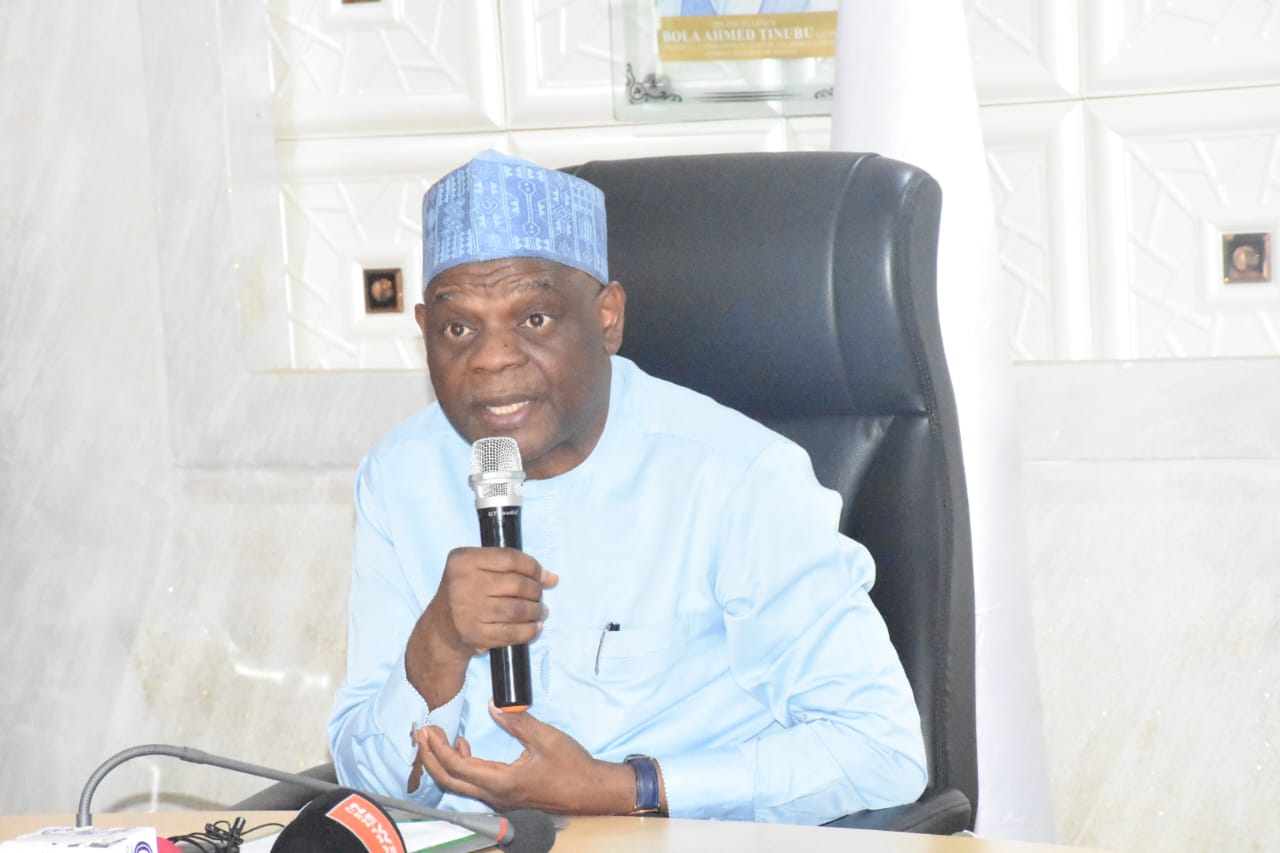
The Executive Secretary, Mr Sonny Echono, announced this at a news conference on Thursday in Abuja, while releasing the outcome of the 2025 NRF grant selection process.

Echono said the grants were awarded following a rigorous and competitive process.

He explained that the process involved the submission and evaluation of concept notes, full proposals, oral defence and final selection by the TETFund NRF Screening and Monitoring Committee.

According to him, the value of individual grants ranges from N13.7 million to N49.98 million.

He said the funded projects covered key national priority areas, including health and social welfare, agriculture and food security, sustainable use of natural resources, science and engineering, power and energy and blue economy.

Other areas, he said, were innovation and technology in national defence, clean and affordable energy, education and human capital, gender equity and social inclusion, as well as conflict, defence and security.

The executive secretary said the Federal University of Technology, Minna, emerged as the highest-performing institution with 18 successful grants.

He added that the Federal University of Technology, Owerri, secured 11 grants, while Ahmadu Bello University, Zaria, won 10.

Other institutions included the University of Ilorin with eight grants; Bayero University, Kano and Nnamdi Azikiwe University, Awka, with seven grants each; while University of Jos got six.

The University of Ibadan, University of Lagos and Usman Danfodiyo University, Sokoto, secured five grants each.

Echono said some newly established federal universities also recorded successes in the grant cycle.

He identified the institutions as the Federal University of Applied Sciences, Kachia; Federal University of Environment and Technology, Koroma/Saakpenwa, Ogoni; and the Federal University of Technology and Environmental Sciences, Iyin-Ekiti.

He also listed state-owned institutions that won grants as Enugu State University of Science and Technology, Ekiti State University, Kwara State University, Adamawa State University, Rivers State University and Sokoto State University, among others.

According to him, several polytechnics also secured grants, including the Federal Polytechnic, Ilaro; Federal Polytechnic, Bida; and Federal Polytechnic, Nekede.

“Others are Federal Polytechnic, Moguno; Federal Polytechnic, Ile-Oluji; Federal Polytechnic, Bauchi; Ramat Polytechnic, Maiduguri; Yaba College of Technology; Kaduna Polytechnic; and Umaru Ali Shinkafi Polytechnic, Sokoto,” he said.

He added that beneficiary colleges of education included the College of Education, Katsina; Osun State College of Education, Ilesa; and Isa Kaita College of Education, Dutsin-Ma.

Echono congratulated the successful institutions and research teams, describing the awards as the “culmination of a transparent and highly competitive selection process”.

He said preparations would soon begin for the 2026 NRF Grant Cycle and encouraged researchers and scholars in tertiary institutions to take advantage of the opportunity by submitting concept notes for consideration.

Echono said the Federal Government had intensified support for research and development over the past four years as part of efforts to drive economic transformation and national development.

He said the government was leveraging the intellectual capacity of tertiary institutions to develop solutions that would improve resource utilisation, boost innovation, create jobs and address national challenges.

According to him, countries such as Singapore, South Korea, Brazil, India and China achieved rapid development by investing heavily in research and innovation.

“We believe that if we harness the intellectual talents in our tertiary institutions and deploy them efficiently, we will create new products and services, grow the economy and improve the living standards of our people.”

The executive secretary said the grant programme was also designed to prepare Nigerian researchers to compete successfully for international research grants.

According to him, Nigeria has moved from eighth to fourth position in Africa, in terms of research grant competitiveness over the past two years.

He said Nigerian scholars in the diaspora remained the highest-performing African researchers globally, expressing confidence that researchers within the country could attain similar levels of excellence with adequate support.

To accelerate commercialisation, Echono said the fund would host another NRF in November, where researchers would showcase innovations to investors, financial institutions, industries and start-up organisations.

He added that TETFund had created a national database of researchers and research outputs to facilitate access by potential investors and industry partners.

On accountability, Echono said the fund had not recorded significant cases of misuse of research grants due to its stringent monitoring mechanisms.

He explained that grants were disbursed in phases based on approved work plans and verified milestones, while project supervisors and monitors tracked implementation.

“Researchers do not receive the entire grant at once. Funds are released in tranches based on performance and progress reports,” he said.

The executive secretary, however, acknowledged that some projects experienced delays due to security challenges, personnel changes and other operational constraints.

He also highlighted several innovations already emerging from TETFund-supported research, including improved food preservation technologies, cleaner and more efficient gari processing systems and high-yield crop varieties.

“Other innovations are water purification technologies, renewable energy solutions, electric vehicles and locally designed automotive components,” he said.

Echono further disclosed that Nigerian researchers have developed prototypes for hearing aids, wind-powered cooling systems, compressed natural gas conversion technologies and fully indigenous vehicle designs.

He said some of the innovations were already in the market, while others were undergoing certification and scaling for commercial production.

He expressed optimism that stronger collaboration between academia and industry would accelerate the adoption of research outputs and contribute to Nigeria’s industrialisation drive. (NAN)(www.nannews.ng)


Edited by Philip Yatai

 

Continue Reading
Click to comment

Leave a Reply

Your email address will not be published. Required fields are marked *

News

ADC aspirant drags party to court over alleged exclusion from primary election

info

Published

on

By

Legborsi Nwiabu .jpg

An aspirant of the African Democratic Congress, ADC, for the Rivers State House of Assembly, Khana Constituency I seat, Legborsi Nwiabu, has taken his party before a Federal High Court sitting in Port Harcourt, alleging that he was excluded from the party’s last primary election.

Also named as respondents in the suit are the ADC’s declared candidate for the Khana Constituency I seat in the 2027 general election, Bright Nulee, and the Independent National Electoral Commission (INEC).

When the matter came up for hearing on Friday, counsel to the ADC, Emenike Ebete, informed the court that a committee had been set up to resolve issues arising from the disputed primary and orally sought the court’s leave to allow the parties to settle the matter out of court.

The application was not opposed by counsel to the second and third respondents.

However, counsel to the plaintiff, Felix Beragbara, opposed the request, telling the court that his client had not been informed of any such committee.

The presiding judge, Justice Muhammed Turaki, after hearing submissions from both sides, granted leave for the parties to pursue an out-of-court settlement and adjourned the matter until August 12, 2026, for a report on the settlement or, alternatively, for hearing of the suit.

Addressing journalists outside the courtroom, Beragbara explained the circumstances that prompted his client to seek redress in court, adding that his client remained prepared to return to court should the committee fail to deliver justice in the matter.

“My client was cheated out of the primaries of his party, which were scheduled to be conducted on the 21st day of May 2026.

“You must be aware that almost all the political parties conducted their primaries in May 2026. My client’s political party, the African Democratic Congress (ADC), also conducted its primaries, and my client was an aspirant seeking the party’s nomination for the House of Assembly seat for Khana Constituency I in Khana Local Government Area of Rivers State.

“That election was scheduled to be held nationwide on the 21st of May 2026.

“Unfortunately, the election could not be held on that date. It was rescheduled—or purportedly rescheduled—to the next day, May 22, 2026. My client mobilised his supporters, sent his field agents, and deployed them to all the voting centres across the 11 wards that make up Khana Constituency I.

“My client and his supporters, who are members of the ADC, waited from the morning, when accreditation was scheduled to commence, until nightfall.

“They did not see a single ADC official who came to conduct the election. They also did not see any monitoring officer from the third defendant in this suit.

“So the first defendant, my client’s political party, failed to conduct the primaries. My client then petitioned the appeals committee, stating that the election did not hold and asking them to conduct another election so that the party could have a legitimate candidate.

“They ignored my client’s complaint. What my client later heard was that they had declared the second defendant, Mr Bright Nulee, as the party’s candidate and forwarded his name to the third defendant, INEC, without conducting the election.

“That is why my client is in court to challenge the purported primary that produced the purported candidate. That is why we are here today.”

Meanwhile, counsel to the ADC, Emenike Ebete; counsel to the second respondent, B. F. Opara; and counsel representing INEC all declined to comment on the court proceedings.

Continue Reading

Health

Niger investigates suspected infectious disease after child’s death

info

Published

on

By

Niger.png

MTN ADVERT

The Niger State government has launched an investigation into a suspected infectious disease following the death of a child and reports that other members of the same family have fallen ill.

The state Director of Public Health, Ibrahim Idris, disclosed this in a statement issued in Minna on Thursday by the Ministry of Information and Orientation.

Mr Idris said the Ministry of Health responded after a father shared videos on social media alleging that a strange illness had affected members of his household.

He said the swift response demonstrated the state’s commitment to protecting residents through prompt public health action.

He said the prompt intervention reflected the commitment of the Governor Umaru Bago-led administration to safeguarding the health and well-being of residents across the state through timely public health responses.

PT WHATSAPP CHANNEL

According to him, every unexplained death deserves a thorough investigation, while every suspected outbreak must be treated with urgency to prevent possible transmission and protect public health.

The director said the affected children had been evacuated to a health facility for comprehensive medical evaluation and treatment as health authorities intensified efforts to determine the cause.

He said preliminary clinical findings suggested that the illness might not be a strange disease but one familiar to medical experts, with diphtheria among the conditions being considered.

“At this stage, no definitive conclusion can be made until laboratory investigations are completed,” he said.

“The samples collected will help determine the exact cause of the illness and guide the response.”

Mr Idris said public health officials had commenced contact tracing in the affected community and in the schools attended by the children to identify similar cases and contain any possible transmission.

He advised parents and caregivers to ensure their children completed all recommended routine immunisation schedules, noting that many life-threatening illnesses could be prevented through vaccination.

The director urged residents to seek prompt medical attention whenever unusual symptoms were observed, stressing that early detection and treatment remained critical to disease control efforts.

Also, Junaidu Inuwa, executive director of the Niger State Primary Health Care Development Agency (NSPHCDA), said preliminary findings showed the deceased child had received only partial immunisation.

He said some of the surviving children were either partially immunised or had not completed their vaccination schedules, exposing them to vaccine-preventable diseases and associated health complications.

ALSO READ: Niger Assembly has no website, limiting residents’ access to information

According to him, the development underscores the critical importance of routine immunisation in protecting children against vaccine-preventable diseases and reducing childhood mortality across communities.

Mr Inuwa said health officials also visited the isolation centre at the General Hospital, where affected family members had been placed on appropriate antibiotic treatment and were receiving care.

He said health authorities would continue to provide timely updates as investigations progressed and would intensify surveillance, contact tracing, and other interventions if the illness was confirmed to be infectious.

He reiterated that complete immunisation remained the safest and most effective protection against vaccine-preventable diseases and urged parents to utilise vaccination services available across the state. (NAN)


Continue Reading

Trending