Health
FG deploys task force to respond to diphtheria outbreaks in Kano, Katsina


The federal government has deployed an emergency multi-agency task force to strengthen surveillance, close immunisation gaps and expand access to treatment following diphtheria outbreaks in Kano and Katsina states.
Ado Bako, an Assistant Director in the Information and Public Relations Department of the Federal Ministry of Health and Social Welfare, disclosed this in a statement on Friday.
According to the statement, the Minister of Health and Social Welfare, Muhammad Pate, directed the establishment of the task force as part of efforts to protect children and strengthen Nigeria’s capacity to prevent and respond to disease outbreaks.
“The federal government reaffirms its resolve to protect Nigerian children from vaccine preventable diseases and remains committed to a swift, coordinated and evidence based response to bring the outbreak under control,” the statement said.
The development follows reports of deaths among children in Rano Local Government Area of Kano State.

On Wednesday, a lawmaker in the Kano State House of Assembly raised the alarm over a severe diphtheria outbreak in the area and called for urgent intervention.
Diphtheria
Diphtheria is a serious and highly contagious bacterial infection caused by Corynebacterium diphtheriae.
The infection spreads mainly through respiratory droplets when an infected person coughs or sneezes, as well as through close contact with an infected person.
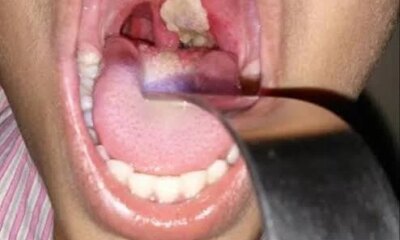
Common symptoms include fever, sore throat and the development of a thick grey or white membrane in the throat, which can obstruct breathing. Severe cases can cause complications such as heart and nerve damage.
Vaccination with diphtheria toxoid containing vaccines, including the pentavalent vaccine routinely administered to infants, remains the most effective protection against the disease.
Nigeria has recorded more than 40,000 suspected diphtheria cases and over 1,000 deaths since the outbreak began in 2022.
Multi agency response
The newly established task force will coordinate the federal and state response and comprises the Federal Ministry of Health and Social Welfare, the Nigeria Centre for Disease Control and Prevention (NCDC), the National Primary Health Care Development Agency (NPHCDA), affected state governments and international health partners.
The committee will be jointly led by the Director General of the NCDC and the Director of Public Health, who will serve as co chairs.
Its members include representatives of the NPHCDA; health commissioners from Katsina, Kano, Zamfara and Sokoto states; the World Health Organisation (WHO); the United Nations Children’s Fund (UNICEF); and the National Tuberculosis and Leprosy Control Programme in Katsina.
The ministry’s chief epidemiologist will serve as secretary of the committee.
Vaccination and treatment
The task force will focus on containing the outbreak by investigating cases, strengthening disease surveillance and intensifying community sensitisation.
It will also work to identify and immunise children who have not received the required vaccines, particularly in communities where immunity gaps may be contributing to the spread of the disease.
As part of the immediate response, the NPHCDA has deployed 500,000 doses of vaccines to Kano and Katsina states.
READ ALSO: Kano community rejects bribe, reports drug trafficking network – Agency
Beyond vaccination, the task force is working with the Katsina State government to establish hospital treatment annexes across the Katsina, Daura and Funtua senatorial districts.
The annexes are expected to facilitate early treatment and bring care closer to affected communities.
Emergency support is also being mobilised for referral services at the Federal Teaching Hospital in Katsina, which serves as the primary treatment centre for the state and neighbouring areas.
The support includes supplies of diphtheria antitoxin (DAT), intravenous antibiotics, additional clinical personnel and personal protective equipment (PPE).
The task force will provide the minister with weekly updates on the response, including emerging challenges and additional requirements, to ensure that identified bottlenecks are promptly addressed.
Discover more from Premium Times Nigeria
Subscribe to get the latest posts sent to your email.





The Lagos State government has disputed claims that only one dialysis machine is functional at the Alimosho General Hospital, Igando.
Lagos State Commissioner for Health, Akin Abayomi, made the clarification in a post on X on Sunday, saying all eight dialysis machines at the hospital’s dialysis centre are functional.
PREMIUM TIMES traced the claim to a video posted by Nigerian skit maker and social media influencer Akewusola Oladipupo, popularly known as MC Always, on 17 September.
In the video posted on his Facebook and Instagram accounts, Mr Oladipupo raised concerns about the condition of the dialysis centre, describing it as “in shambles” and “in a state of comatose”.
He said only one dialysis machine was working at the facility and questioned how patients could be adequately attended to with the limited equipment.
Mr Oladipupo also said the hospital’s generator operates from 9 a.m. to 4 p.m., while a dialysis session takes at least four hours. He questioned how the centre could serve patients if only one machine was functioning out of what he estimated to be 10 to 15 machines.

“So all the people that have kidney problems in Lagos are in serious problem,” he said. What does it take to fix these machines?” Mr Oladipupo asked, adding that the centre was not accepting new patients and was only attending to existing ones.
Government responds
In his post, Mr Abayomi said the claim that the hospital had only one functional dialysis machine was false.
The post was accompanied by a video showing different sections of the dialysis centre and its machines. Mr Abayomi said the centre has eight dialysis machines and that all eight are working.
According to him, six of the machines serve general dialysis patients, while two are dedicated to patients living with HIV or hepatitis, in line with infection prevention and control measures.
He said dialysis sessions begin as early as 6 a.m. and continue until the last patient is attended to, sometimes until midnight.
READ ALSO: Lagos APC orders candidates to stay in Nigeria until 2027 polls
“We run up to 200 dialysis sessions every month,” Mr Abayomi said, adding that the centre has a dedicated standby generator.
The commissioner also listed other public hospitals offering dialysis services in Lagos, including Lagos State University Teaching Hospital (LASUTH), General Hospital Lagos, General Hospital Gbagada, Infectious Diseases Hospital (IDH), Yaba, and Federal Medical Centre (FMC), Ebute Metta.
Healthcare advocacy
Mr Oladipupo has continued to use his social media platforms to speak about challenges in Nigeria’s healthcare system following the death of his wife from Stage 4 cancer.
During an appearance on TVC in August, he spoke about his wife’s illness and the difficulties his family encountered while seeking care for her.
Since her death, he has used his platform to raise concerns about access to healthcare, the availability of functional medical equipment and the financial burden on patients and their families.
He urged patients and caregivers to speak about their experiences and called for improvements in the country’s healthcare system.
Discover more from Premium Times Nigeria
Subscribe to get the latest posts sent to your email.
-

 Business2 days ago
Lingzhi Global, NACOFTAN Announce 2026 Coffee Festival in Cross River
-
Events2 days ago
Peace Walk: WOPPI Urges Plateau Citizens to Invest in Peace Every Day
-
Business4 days ago
Tinubu reacts as Nigeria wins arbitration against Sunrise Power
-
News4 days ago
Why I refused to join APC – Seriake Dickson