Business
Zenith Bank, MTN Nigeria, AXA Mansard top stock pick this week

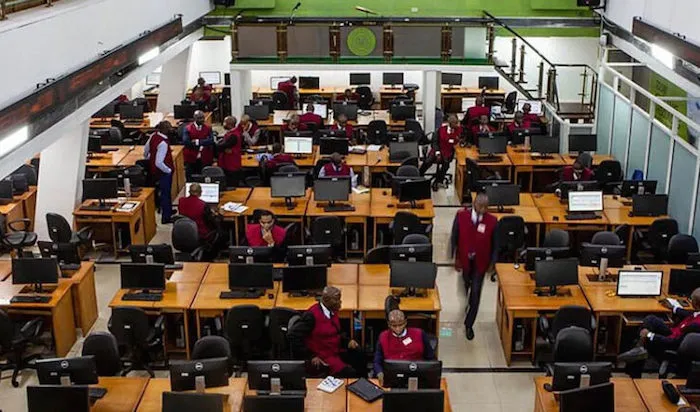

After two successive weeks of loss, Nigerian stocks found resilience last week amid stronger buy pressure, helping market capitalisation appreciate by 0.8 per cent.
The oil & gas index propelled the fairly good performance, thanks to substantial gains by Seplat Energy, contrary to the penultimate week when it fared worst among the five sector indices.
In a way, it is a reassurance that investors’ interest in energy stocks is building up in view of the vibrant outlook on the sector that spikes in the price of crude holds for producers as the US-Israel war against Iran continues.
The upbeat market mood owes its debt to the profound revenue growth and, in some cases, a surge in profit that oil companies recorded at half-year locally and globally.
Looking forward, hopes are high this week that two key positives – Nigeria’s reclassification as a frontier market by FTSE Russell and its upgrade from stable to positive by Moody’s last week – could drive stocks further upwards.

PREMIUM TIMES has assembled some stocks with sound fundamentals, adopting rigorous approaches to save you the risk of picking equities at random for investment.
The pick, a product of an analytical market watch, offers a guide to entering the market and taking strategic positions, with the expectation that selected stocks will record reasonable price appreciation with the passage of time.
This is not a buy, sell or hold recommendation but a stock investment guide. You may need to involve your financial advisor before taking investment decisions.
Zenith Bank
Zenith Bank tops this week’s pick on the basis of its sound fundamentals and for trading below its intrinsic value. The lender’s net profit ratio (NPR) is 21.8 per cent, while the price-to-earnings (PE) ratio is 4.8x. Its 14-day relative strength index (RSI) is 55.2.
MTN Nigeria
MTN Nigeria makes the selection due to its robust fundamentals. The telecom operator’s NPR is 21.9 per cent, while the PE ratio is 11.6x. Its 14-day RSI is 28.8.
AXA Mansard Insurance
AXA Mansard Insurance makes the cut by virtue of its strong fundamentals and for trading below its intrinsic value. The NPR of the insurer is 3.4 per cent, while the PE ratio is 29.8x. Its 14-day RSI is 49.6.
Unilever Nigeria
Unilever makes the list on account of its sound fundamentals. The company’s NPR is 14.1 per cent, while the PE ratio is 19.6x. Its 14-day RSI is 30.5.
Jaiz Bank
Jaiz Bank appears on the pick based on its attractive fundamentals. The NPR of the bank is 28.5, while the PE Ratio is 11.6. The 14-day RSI is 39.2.
Discover more from Premium Times Nigeria
Subscribe to get the latest posts sent to your email.





Tony Elumelu played a supreme role in getting investment bank Afrinvest back on track in 2011 after the global financial meltdown pushed the investment bank to the brink, its chief executive recalled in a letter to the tycoon seen by PREMIUM TIMES.
The multisectoral magnate, who is the top shareholder of United Bank for Africa, the Transcorp Group, and Seplat Energy, granted a soft loan of $1 million to Ike Chioke, the CEO of the financial institution, as a mark of urgent support when the firm direly needed the cash to recapitalise, the latter said.
“Fifteen years ago, Afrinvest was navigating one of the most challenging periods in its history, as we struggled to rebuild and recapitalise the business in the aftermath of the global financial crisis,” Mr Chioke said.
“At that critical juncture, when the future was far from certain, you made the remarkable decision to lend me US$1 million of your personal funds. You placed your confidence not simply in the prospects of a business but in me as an individual, my integrity, my determination and my conviction that Afrinvest could emerge stronger from adversity.”
This June, Mr Chioke eventually completed the repayment of the credit, according to the letter, describing the gesture as an extraordinary act of friendship, generosity and trust.
READ ALSO: Afrinvest repays undocumented $1 million from Elumelu with interest
Mr Elumelu, whose economic vision is anchored on what he calls “Africapitalism” – an investment philosophy that prioritises the private sector’s role in democratising the wealth Africa needs to power large-scale growth, has been involved in active philanthropic initiatives on the continent.

In March, his foremost charity project, the Tony Elumelu Foundation, turned sixteen, and he said the initiative had disbursed over $100 million in seed capital to 24,000 entrepreneurs in Africa and created more than 1.5 million jobs over the period.
The foundation expects to fund an additional 3,200 entrepreneurs this year, it said in September.
Mr Chioke applauded the profound impact Mr Elumelu’s financial assistance has had on Afrinvest, notably transforming it into a diversified regional financial services group with an expanding universe of clients and operations in asset management, investment banking, research & consulting, and securities trading.
Discover more from Premium Times Nigeria
Subscribe to get the latest posts sent to your email.
-

 News4 days ago
Plateau APC 2027 Campaign Council inaugurated today in Jos
-
News4 days ago
Nigerians’ data appetite drives MTN Nigeria revenue to ₦2.68tn – Technology Times
-
News2 days ago
Plateau Ndigbo Crown Chief Johnson Nwosu as New Igwe
-
News2 days ago
CrowdStrike to shell out nearly $500M for 2 AI security startups as the market for securing agents takes off