Health
FG urges early cancer detection, says delayed diagnosis complicates treatment


The federal government has underscored the importance of early cancer detection, saying the stage at which the disease is diagnosed determines the treatment approach and chances of cure.
Uchechukwu Nwokwu, National Coordinator, National Cancer Control Plan (NCCP), Federal Ministry of Health and Social Welfare, said this in an interview with the News Agency of Nigeria (NAN) on Sunday in Abuja.
Mr Nwokwu also explained how cancer progresses through four stages, adding that it is not a single disease but a group of diseases that could affect different organs and behave differently depending on the type of cancer and the cells from which it originated.
According to him, cancer begins when abnormal cells develop within a particular organ or body system, with the extent of spread determining its stage.
He said Stage One cancer referred to a disease that remained within the area where it originated and had not spread beyond that location.

“When the cancer may arise from a small cell inside the organ of a particular system of the body, and as long as it is within the area it originated, it is an early stage, stage one,” he said.
Mr Nwokwu said Stage Two occurs when the cancer has moved beyond its original area but remains confined within the affected organ.
He explained that Stage Three is when the disease has grown beyond the affected organ but remains within the same body system or surrounding region.
“For example, if a breast cancer is growing beyond the breast and affects the chest wall, which is hosting the breast, that’s Stage Three,” he said.
The coordinator said Stage Four is the most advanced stage, occurring when the cancer has spread from the original organ to other systems or distant parts of the body.
He said such a spread is known as metastasis.
“So when it leaves the whole of where it’s growing, it’s a different system, we call it metastasis. That’s stage four,” he said.
Mr Nwokwu explained that breast cancer, for instance, could spread to the brain, bones, liver or lungs, with tests showing that a tumour in those locations originated from the breast.
He said Stage Four cancer is particularly difficult to manage because treatment is no longer focused solely on the original organ.
“So that means you can see breast cancer affecting some in the brain. You can see a tumour in the brain that’s actually from the breast,” he said.
Mr Nwokwu said the stage at which cancer is detected has significant implications for treatment and the possibility of achieving a cure.
He explained that some stage one cancers could potentially be cured through surgery alone because the disease remained confined to its site of origin.
“If you have somebody who has a breast cancer in stage one, like I said, it’s still within where it started from,” he said.
“You might just cut off that place and do a surgery that can just take a small part of the normal tissue where it has not affected, and with that surgery alone, the person is completely cured of that cancer.”
According to him, surgery can also be effective for some stage two cancers because the disease remains confined to the organ.
He said stage two and stage three cancers could, however, require combinations of treatment, including surgery, chemotherapy and radiotherapy.
Mr Nwokwu explained that doctors could also use what is known as neoadjuvant or adjuvant therapy alongside surgery, depending on the patient’s condition.
He said targeted therapy is another treatment option for cancers driven by particular hormones or biological mechanisms.
The coordinator cited prostate cancer as an example, explaining that some patients could undergo removal of the testes to reduce testosterone, a hormone that could stimulate the growth of prostate cancer.
He, however, noted that some advanced prostate cancers could become resistant to this approach, a condition known as castration-resistant prostate cancer, requiring other medicines to control disease progression.
Mr Nwokwu said treatment of stage four cancer is more complex because the disease could involve several parts of the body.
He explained that chemotherapy could be useful in some circumstances because it is a systemic treatment that can reach cancer cells throughout the body.
He, however, said that radiotherapy had to be applied more selectively depending on where the cancer had spread and the patient’s overall condition.
READ ALSO: Health minister seeks increased investment in radiopharmaceutical cancer therapy
Mr Nwokwu emphasised that the differences in treatment across the stages reinforced the importance of detecting cancer early, before it spreads beyond the organ where it originated.
He said early diagnosis allowed doctors to determine the stage of the disease and select the most appropriate combination of treatment modalities.
The coordinator also emphasised that cancer treatment should be individualised because cancers affecting the same organ could behave differently depending on their biological characteristics.
He urged Nigerians to seek medical attention promptly when they notice unusual symptoms and to follow appropriate screening and diagnostic recommendations to improve the chances of detecting cancer at an early stage.
(NAN)
Discover more from Premium Times Nigeria
Subscribe to get the latest posts sent to your email.




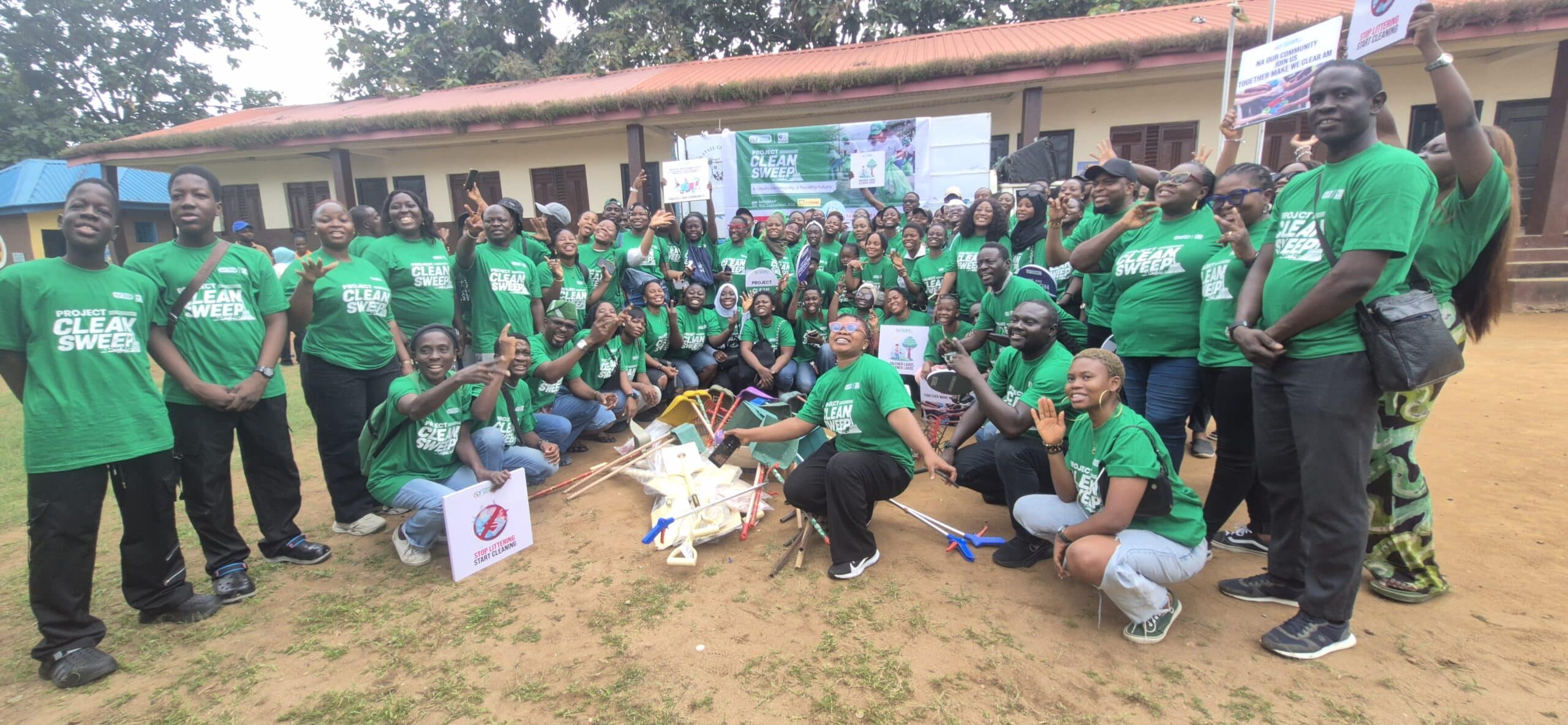
Fidson Healthcare Plc has mobilised its staff and volunteers to clean communities in Lagos as part of activities to mark World Cleanup Day 2026.
The exercise, held on Saturday morning, took place around Obanikoro, Fadeyi, Palmgrove and Shomolu axis of Lagos state, with employees of the company and volunteers participating in the cleanup and environmental hygiene advocacy.
The initiative, tagged Project Clean Sweep 2026, was organised by Fidson in partnership with the African Cleanup Initiative (ACI) as part of its corporate social responsibility (CSR) and sustainability initiative.
The Lagos Waste Management Authority (LAWMA) also participated in the exercise, with its advocacy team supporting the organisers.
World Cleanup Day is an annual global movement held on 20 September to tackle waste pollution and promote sustainable resource management.
Fidson links clean environment to health
In her remarks, Adejoke Alli, the Associate Director of Business Operations at Fidson Healthcare, said the company organised the exercise to contribute to a cleaner and healthier environment in its host community.


“The whole idea is to do our part to ensure that we have a greener Lagos and a greener environment, particularly in our host community around Obanikoro, Fadeyi, Shipeolu and Shomolu, where our head office is located,” Ms Alli said.
“We are very passionate about environmental sustainability. Environmental, Social and Governance (ESG) is also part of our governance framework, so we are particularly interested in ensuring that we maintain an environment with a less carbon footprint, an environment that is clean and habitable, and one that can promote good health.”
She noted beyond just talking or complaining, the organisation decided to take action so that people can see that “we can all make a difference.”
“This is something that we are very proud of, and we hope we’ll continue to do this for the future,” she added.
Tosin Shoboyede, Human Resources Business Partner at Fidson Healthcare, said environmental cleanliness is part of the company’s commitment to its motto, “We value life.”
Mr Shoboyede said maintaining a clean environment was one way of promoting healthy living.
He described the exercise as part of Fidson’s effort to give back to society and contribute to a cleaner environment.
Organisers call for community action
Alexander Kibe, Founder and President of the ACI, said the organisation had been involved in environmental cleanup activities for 16 years, working across Nigeria’s six geopolitical zones.
Mr Kibe said the group was combining the cleanup with advocacy because cleaning the environment without changing people’s behaviour would not provide a lasting solution.

As part of the exercise, the volunteers also went into the market around the area to clean and engage traders on the need to keep their surroundings clean.
“We cannot leave everything to the government,” Mr Kibe said. “As the African Cleanup Initiative, we are playing our part, and Fidson Healthcare is also playing its part.”
He said residents, traders and passers-by also have a responsibility to keep their surroundings clean.
Mr Kibe said the organisers were engaging members of the communities to encourage them to maintain the environment after the cleanup exercise.
Volunteers urge residents to take responsibility
Munnir Adams, Founder of Climb with Me and a volunteer with the ACI, said improving waste management systems would not be enough without citizens taking responsibility for their surroundings.
 Mr Adams said residents should contribute actively to keeping their streets, gutters and areas around their homes clean instead of only complaining about poor waste management.
Rachel Coker, another volunteer with the ACI, said she had participated in the organisation’s activities for more than a year.
Ms Coker said regular environmental sanitation could help reduce exposure to germs and diseases and also contribute to people’s psychological wellbeing.
She said the volunteers were also seeking to set an example for residents and encourage them to make environmental cleanliness a regular habit.
Discover more from Premium Times Nigeria
Subscribe to get the latest posts sent to your email.

The National Agency for Food and Drug Administration and Control (NAFDAC) has confirmed 48 deaths and 182 cases of severe illness following the reported consumption of locally prepared alcoholic and herbal concoctions in parts of Ondo State.
The agency, in a statement dated on Friday and signed by its Director-General and Chief Executive Officer, Mojisola Adeyeye, a professor, said the affected communities are mainly in Odigbo Local Government Area, including New Town, Odole, Okele, Orita Odigbo, Araromi-Obu and Oniparaga.
According to the agency, Odigbo town and Araromi-Obu recorded the highest impact, while cases have also been reported in Irele Local Government Area.
It stated that the figures, recorded as of 17 September, remain subject to verification as surveillance and investigations continue.
Given further breakdown, the agency noted that among 182 recorded cases confirmed, 90 people were admitted to hospitals and subsequently discharged while 31 were treated as outpatients and six remained hospitalised.
“As of 17th September 2026, a total of 182 cases have been recorded, with 48 deaths confirmed,” the agency stated.
Also, five affected persons had been rendered totally blind, while two others suffered partial blindness.
The agency’s preliminary findings found that those affected reportedly developed symptoms including headaches, generalised weakness and body pain, visual disturbances, difficulty breathing and altered consciousness, with some cases deteriorating rapidly.
NAFDAC’s examination on the substance
NAFDAC’s preliminary laboratory findings have raised fresh concerns over what was contained in the drinks consumed by the victims.
The agency said it subjected 15 unlabelled samples of the herbal concoction to laboratory examination which includes toxicity testing, and chemical analysis.
However, its preliminary laboratory investigation revealed that more than 73 per cent of the collected samples tested positive for cannabis indica, and gas chromatography on the samples confirmed the presence of high concentrations of methanol, a highly toxic substance capable of causing blindness, organ failure and death.
“Preliminary findings are gravely concerning: 11 of the 15 samples tested positive for cannabis indica, and gas chromatography confirmed the presence of high concentrations of methanol,” NAFDAC said.
The agency added that the result of acute oral toxicity tests conducted on the samples recorded approximately 50 per cent mortality among laboratory mice in six of the 15 samples analysed. It stated that the finding indicated “significant toxic potential” in the samples.
NAFDAC, however, cautioned that its laboratory findings remain preliminary, saying further confirmatory analyses are being conducted to establish the precise concentration of methanol and identify other potentially toxic substances in the concoctions.
The agency said the combination of the laboratory findings and the deaths and severe illnesses recorded among consumers warranted urgent regulatory and public health action.
As part of its response to the issue, the agency said 15 suspects had been arrested in connection with the suspected production, sale and distribution of the implicated alcoholic and herbal beverages.
“Surveillance, case management, and risk-control measures are actively ongoing across the affected communities, in coordination with relevant public health authorities,” the statement said.
The agency warned members of the public against consuming unlicensed, unregistered and locally prepared alcoholic or herbal concoctions whose contents are unknown.
“NAFDAC strongly warns the public against the purchase or consumption of unlicensed, unregistered, and locally prepared alcoholic or herbal concoctions of unknown composition,” the agency said.
Nigeria faces serious menace from unregulated herbal concoctions, often hawked on the streets and market places and promoted on social media. Many of these conctions have been linked to serious health risks including breathing problems, kidney and liver stress, and heavy metal poisoning.
Weak regulation, aggressive marketing, and widespread self-medication are fueling their proliferation.
In June 2023, an investigative report jointly published by PREMIUM TIMES and Dubawa, revealed through an extensive independent laboratory analysis that continuous consumption of a concoction known as “Sacra Herbs” or “Baba Aisha Herbal Medicine” posed a massive safety risk.
READ ALSO: NAFDAC orders recall, destruction of alcohol in sachets, PET bottles
It established that the concoction, popular in Abuja and some northern states, contained ttoxic components that could cause acute kidney, liver, and lung injuries, as well as cancer.
The investigation revealed that the herbal medicine was being manufactured inside a residential facility under highly unhygienic conditions, completely violating Good Manufacturing Practices (GMP).
The authorities initially clamped down on the producer, Salisu Sani, who called himself “Dr. Baba Aisha”, but no decisive enforcement action that could serve as deterence is known to have been carried out.
While the product carried NAFDAC registration numbers, the investigation proved that the numbers were either invalid or long-expired (having expired over three years prior).
The report also revealed failure of NAFDAC and health regulatory bodies to conduct proper due diligence and for allowing a toxic, unregistered product to be heavily marketed and sold to millions of citizens.
Discover more from Premium Times Nigeria
Subscribe to get the latest posts sent to your email.
-

 News3 days ago
Nigeria Takes on the World! Chess Stars Begin 2026 Olympiad Battle in Samarkand
-
News3 days ago
Al Gore has a surprisingly calm take on the AI data center backlash
-
News3 days ago
Anambra govt releases records of alleged unpaid debts by Peter Obi during tenure as governor
-
News3 days ago
Mafab seeks investors for nationwide 5G expansion, holds talks with Reliance Jio, Airtel – Technology Times