News
The U.S. is building barriers around drones and robots, but China has scale to get around them


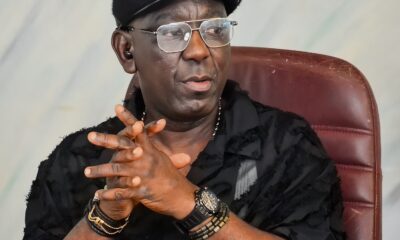


The federal government has announced plans to invest an additional $3 billion in Nigeria’s health sector by 2030 as part of efforts to reduce dependence on foreign assistance and strengthen domestic health financing.
The Coordinating Minister of Health and Social Welfare, Muhammad Pate, said this on Monday in Abuja at a media conference announcing the fifth Global High-Level Ministerial Conference on AMR, scheduled for 6 -8 December, 2026.
Mr Pate said the conference, the first to be hosted on African soil, would focus on translating global commitments into practical actions with the theme, “One Health: Advancing Global AMR Commitment through Local Action”.
He was responding to questions on the health Memorandum of Understanding (MoU) between Nigeria and the United States.
The News Agency of Nigeria (NAN) reports that Nigeria and the United States signed a five-year bilateral health MoU on 19 December 2025, under the US America First Global Health Strategy.
Mr Pate said the planned investment was part of a transition arrangement under which both countries would work towards Nigeria fully financing its health sector by 2030.


“From now until 2030, the expectation is that the federal government will put in $3 billion into health, which is more than what the US government will contribute as it ramps down its contribution,” he said.
He said the arrangement reflected Nigeria’s position that long-term dependence on external assistance was not in the country’s national interest.
“Our position is that dependency in the long run is not in our national interest on external support,” he said.
“We articulated that we want Nigeria to exit from dependency from other entities over time.”
Health financing
Mr Pate acknowledged that achieving self-sustaining health financing would require increased domestic investment, noting that Nigeria was not yet in a position to fully fund its health sector.
He said 15 Nigerian government institutions, including the ministries of Foreign Affairs, Finance, and Health and Social Welfare, participated in articulating Nigeria’s position during negotiations with the United States.
According to him, the US had supported health programmes in Nigeria for about 25 years, including interventions for HIV, tuberculosis and malaria, benefiting millions of Nigerians.
However, following a shift in US government policy in 2025, Nigeria decided to assume greater responsibility for financing its health programmes.
“How do we own it responsibly? So, with the US government, we agreed that we will have a transition. By 2030, they exit and we exit. That means we fully fund our health sector,” he said.
Mr Pate said President Bola Tinubu had increased domestic health allocations, including providing six per cent of the government budget for health, as part of efforts to strengthen Nigeria’s contribution.
He emphasised that sustainable financing would require all three tiers of government to increase spending on citizens’ health.
Mr Pate said the transition was intended to strengthen Nigeria’s ownership of health programmes and reduce reliance on funding decisions made by other countries.
“We cannot rely on somebody else’s taxpayers funding for the health of Nigerians,” he said.
On concerns surrounding the MoU, Mr Pate described it as a non-binding framework for cooperation, anchored on Nigeria’s national policies and laws.
“The MoU that was signed with the US government is a non-binding MoU. It is anchored on Nigerian policy, national policies and laws, does not subvert our sovereignty or subvert US government sovereignty over their resources.
“It’s also one that either party can walk away at any time,” he said.
Mr Pate said the Attorney-General of the Federation had also confirmed that the agreement contained nothing that subverted Nigeria’s national interest.
He added that the MoU was publicly available and interested parties could request a copy from the ministry through the Freedom of Information process.
READ ALSO: Nigeria is building a sustainable health financing future, By Muhammad Ali Pate
The minister said the agreement aligned with the government’s Health Sector Renewal Investment Initiative, which prioritises improved governance, stronger primary healthcare, expanded health insurance coverage, domestic production and increased health security.
He said the cooperation would support public health and laboratory capacity, including the detection of antimicrobial resistance, while promoting local capacity to produce essential health commodities.
Mr Pate said strengthening domestic production and ensuring local markets could supply essential medicines, including antimicrobials, were important steps towards reducing external dependence.
He said the transition would require sustained efforts and domestic investment to ensure Nigeria could finance its health priorities as external contributions declined.
Mr Pate urged Nigerians to examine the agreement and its provisions, saying the government’s objective was to strengthen national ownership of health financing and service delivery.
(NAN)
Discover more from Premium Times Nigeria
Subscribe to get the latest posts sent to your email.

The Oyo State chapter of the All Progressives Congress, APC, has expressed displeasure over a fresh kidnapping incident in the state.
The party questioned Governor Seyi Makinde over the recent abduction of three staff members of the Cocoa Research Institute of Nigeria (CRIN).
DAILY POST gathered that the three staff members were kidnapped last Friday within the premises of the institute.
In a statement signed by its Publicity Secretary, Wasiu Sadare, the APC questioned the governor over the abduction.
Sadare said the governor should tell the people of the state what his administration was doing to rescue the victims.
He also urged Makinde to explain the measures being taken to prevent a recurrence.
Sadare said, “Also, the public wanted to know the circumstances surrounding the fresh abduction of the three staff of the Cocoa Research Institute of Nigeria (CRIN) and efforts being put in place to rescue them, as well as ensuring that surging insecurity is permanently addressed in the state.”
-

 Business3 days ago
Communications Ministry made ₦345.5 million duplicate payment for Abuja ICT Park project
-
News3 days ago
LumenUs helps automate tedious paperwork in times of grief
-
Business4 days ago
Fuel subsidy would cost Nigeria over N20trn yearly — Minister
-
News3 days ago
Inside INEC’s AI and cybersecurity plans to secure Nigeria’s 2027 Elections – Technology Times