Business
OpenAI to end Cursor deal with SpaceX over contract, safety concerns

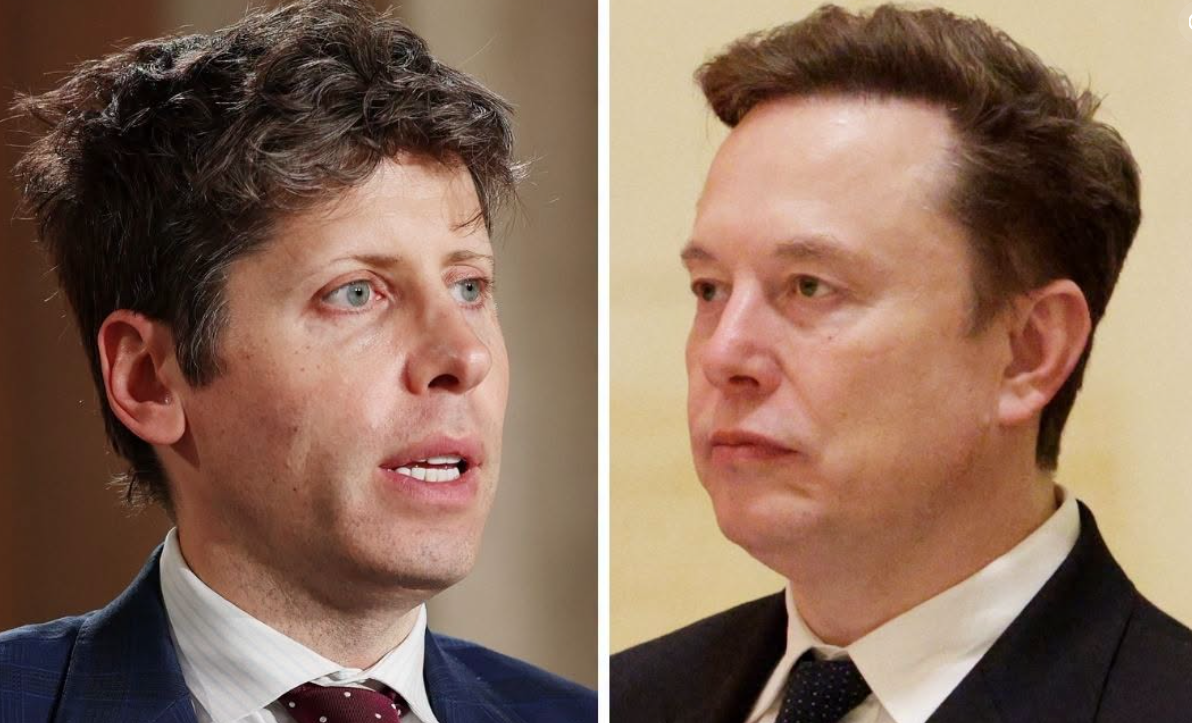

OpenAI has notified SpaceX of its intention to terminate its contract to provide OpenAI models to Cursor, citing concerns over compliance with its terms of service.
The AI company said in a statement on Friday that it intends to wind down the contract by 12 November, giving SpaceX the maximum notice period permitted under the agreement.
The notice to end the contract followed Elon Musk-owned SpaceX’s acquisition of Anysphere, the developer of AI coding platform Cursor, for about $60 billion, despite OpenAI having worked with Cursor for nearly four years.
OpenAI said the decision followed concerns that SpaceX may not use its technology in accordance with its terms of service, citing what it described as previous contract violations involving companies owned by Mr Musk.
“This decision was incredibly tough, as we care deeply about our models being broadly available for developers.

“We are making this choice because we cannot be confident that SpaceX will use our technology within our terms of service, based on our experience with Elon Musk’s companies violating contracts,” OpenAI said.
Agreements
The company said its agreements with large partners typically include customised provisions designed to ensure compliance with its terms of service and safety requirements.
According to OpenAI, after Mr Musk acquired Twitter, now known as X, the social media company breached the terms of its contract with OpenAI, alongside contracts with other companies.
OpenAI also cited an admission by Mr Musk under oath earlier this year that xAI, which OpenAI said is now part of SpaceX, had violated its terms of service.
The company said its custom agreement with Cursor contains a limited period within which it can terminate the contract following a change of control.
OpenAI said the advancement of AI capabilities had also increased its responsibility to ensure that its forthcoming model, Astra, is deployed in accordance with its terms.
“As AI capabilities advance, we also have a new level of accountability to ensure our upcoming model, Astra, is being used in accordance with our terms,” the company said.
OpenAI said it had decided to allow the contract to remain in place until the latest possible termination date while withholding future models from Cursor.
It acknowledged that developers who rely on OpenAI models through Cursor would be most affected by the decision and said it was prepared to provide additional support during the transition.
The termination will affect Cursor’s access to OpenAI models, although the coding platform also offers models from other AI companies.
Rivalry
Meanwhile, responding to the proposed contract termination, Mr Musk said he was indifferent to the decision and described OpenAI’s leadership as “untrustworthy.”
The rivalry between Mr Musk and OpenAI’s leadership dates back to 2018, when Mr Musk left the company’s board following disagreements over its direction.
ALSO READ: OpenAI admits its system autonomously hacked another company
Mr Musk was a co-founder and early backer of OpenAI, which was established in 2015 as a nonprofit focused on developing artificial intelligence for the benefit of humanity.
After ChatGPT launched in November 2022, Mr Musk warned that “we are not far from dangerously strong AI.”
OpenAI launched its paid ChatGPT Plus subscription in February 2023, while the company had already established a for-profit entity in March 2019 as part of its efforts to raise capital for AI development.
In 2024, Mr Musk sued OpenAI, CEO Sam Altman, and President Greg Brockman, alleging that they had abandoned the company’s nonprofit mission by pursuing a for-profit structure.
However, a federal jury in May 2026 rejected his claims after finding that he had waited too long to bring the lawsuit; the judge subsequently accepted the jury’s decision and dismissed the claims.
Discover more from Premium Times Nigeria
Subscribe to get the latest posts sent to your email.







Tony Elumelu played a supreme role in getting investment bank Afrinvest back on track in 2011 after the global financial meltdown pushed the investment bank to the brink, its chief executive recalled in a letter to the tycoon seen by PREMIUM TIMES.
The multisectoral magnate, who is the top shareholder of United Bank for Africa, the Transcorp Group, and Seplat Energy, granted a soft loan of $1 million to Ike Chioke, the CEO of the financial institution, as a mark of urgent support when the firm direly needed the cash to recapitalise, the latter said.
“Fifteen years ago, Afrinvest was navigating one of the most challenging periods in its history, as we struggled to rebuild and recapitalise the business in the aftermath of the global financial crisis,” Mr Chioke said.
“At that critical juncture, when the future was far from certain, you made the remarkable decision to lend me US$1 million of your personal funds. You placed your confidence not simply in the prospects of a business but in me as an individual, my integrity, my determination and my conviction that Afrinvest could emerge stronger from adversity.”
This June, Mr Chioke eventually completed the repayment of the credit, according to the letter, describing the gesture as an extraordinary act of friendship, generosity and trust.
READ ALSO: Afrinvest repays undocumented $1 million from Elumelu with interest
Mr Elumelu, whose economic vision is anchored on what he calls “Africapitalism” – an investment philosophy that prioritises the private sector’s role in democratising the wealth Africa needs to power large-scale growth, has been involved in active philanthropic initiatives on the continent.

In March, his foremost charity project, the Tony Elumelu Foundation, turned sixteen, and he said the initiative had disbursed over $100 million in seed capital to 24,000 entrepreneurs in Africa and created more than 1.5 million jobs over the period.
The foundation expects to fund an additional 3,200 entrepreneurs this year, it said in September.
Mr Chioke applauded the profound impact Mr Elumelu’s financial assistance has had on Afrinvest, notably transforming it into a diversified regional financial services group with an expanding universe of clients and operations in asset management, investment banking, research & consulting, and securities trading.
Discover more from Premium Times Nigeria
Subscribe to get the latest posts sent to your email.
-

 News4 days ago
Plateau APC 2027 Campaign Council inaugurated today in Jos
-
News4 days ago
Nigerians’ data appetite drives MTN Nigeria revenue to ₦2.68tn – Technology Times
-
News2 days ago
Plateau Ndigbo Crown Chief Johnson Nwosu as New Igwe
-
News2 days ago
CrowdStrike to shell out nearly $500M for 2 AI security startups as the market for securing agents takes off