Business
US, Nigeria to deepen trade, investment ties as America marks 250 years of independence

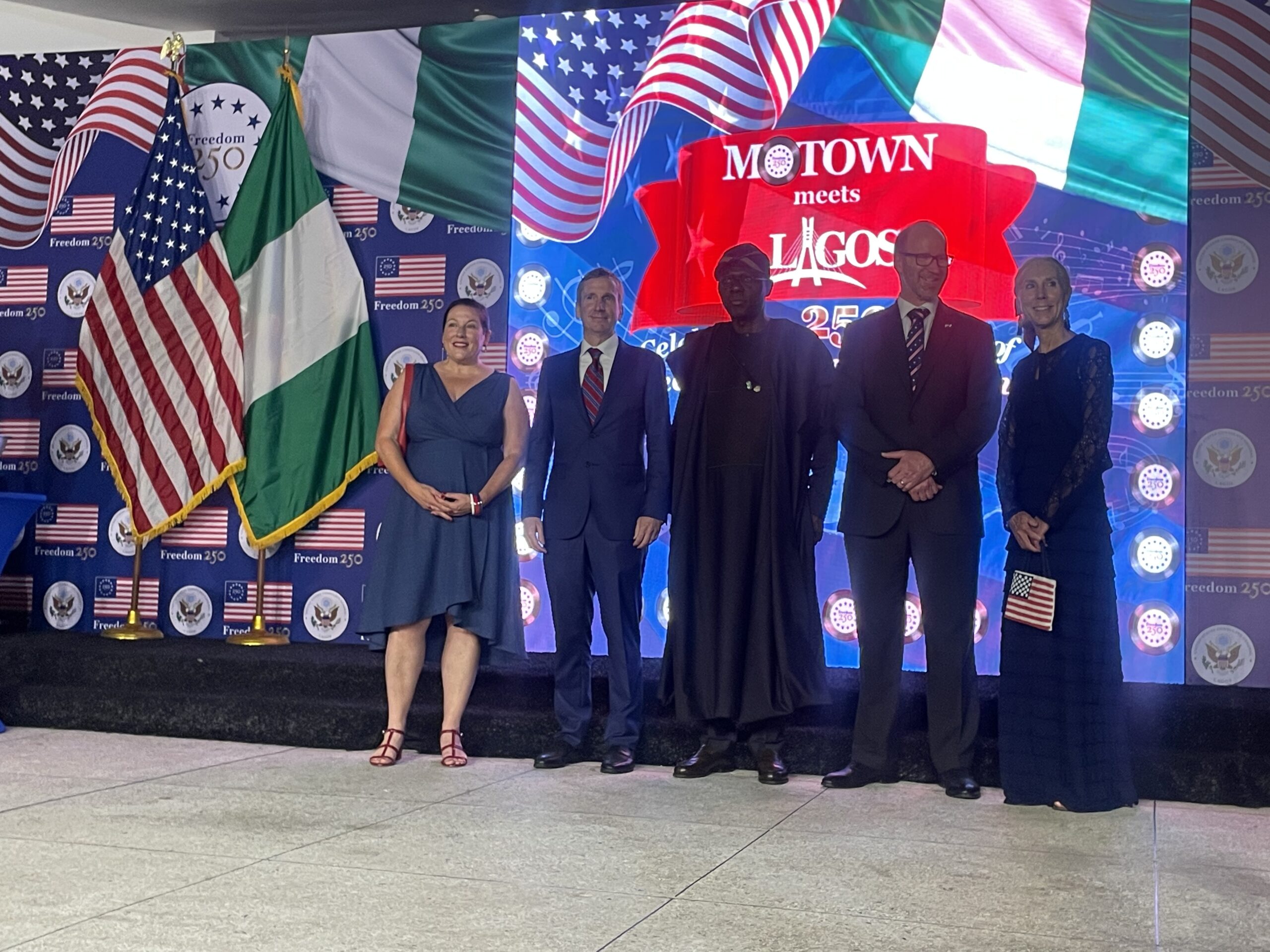

The United States Mission in Nigeria has reaffirmed its commitment to deepening trade, investment, security, and cultural relations with Nigeria as it marked the 250th anniversary of American Independence and Freedom in Lagos.
Speaking at the celebration, the Chargé d’Affaires at the U.S. Mission to Nigeria, Keith Heffern, said the anniversary celebrates 250 years of American history while looking ahead to the country’s future leadership in innovation and global engagement.
Mr Heffern described Nigeria as one of the United States’ most important partners in Africa, noting that economic relations between both countries have continued to expand.

“Nigeria is now the United States’ second-largest trading partner in Sub-Saharan Africa. In 2025, two-way trade between our countries reached nearly $15 billion, representing a 14 per cent increase over 2024,” he said.
He added that more than 100 US companies currently operate in Nigeria, saying the investments support jobs, economic opportunities, and growth in both countries.

According to him, one of the mission’s priorities is helping American companies succeed in Nigeria through the US-Nigeria Commercial and Investment Partnership, a five-year Memorandum of Understanding signed with Nigeria’s Ministry of Industry, Trade and Investment.
Now in its second year, Mr Heffern said the initiative has brought together nearly 50 American and Nigerian companies to remove barriers to trade and investment.
He noted that Lagos hosted the first ministerial-level meeting under the partnership in January and said cooperation is focused on the digital economy, agriculture, and infrastructure to promote long-term economic growth.
Security, Cultural Collaboration
Beyond commerce, Mr Heffern highlighted the growing security collaboration between the two countries. He noted that the National Drug Law Enforcement Agency (NDLEA), working with the US Drug Enforcement Administration (DEA), recently dismantled a major transnational criminal organisation involved in drug trafficking and money laundering.
“Efforts like this disrupt the illicit networks that undermine security, finance criminal activity, and threaten the safety and prosperity of our two nations,” the diplomat said.
Mr Heffern said cultural exchanges remain a strong pillar of the bilateral relationship, with this year’s event themed ‘Motown’ to celebrate the global influence of American music and its connection to Nigeria’s creative industry.
He said Nigerian Afrobeats stars continue to enjoy global recognition, citing Rema and Burna Boy as examples of artists who have achieved international success.
Looking ahead, he said the United States hopes to strengthen cultural and commercial cooperation through sports as it prepares to host the 2026 FIFA World Cup and the 2028 Summer Olympics.
Mr Heffern also highlighted the impact of US exchange programmes, stating that more than 14,000 Nigerians have participated in U.S. government-sponsored exchanges and now form a network of leaders contributing to stronger bilateral relations.
He further announced that construction is underway on the new US Consulate General complex in Eko Atlantic, describing it as one of America’s most significant investments worldwide and “a lasting symbol” of the U.S. commitment to Nigeria.
Earlier at the event, the US Consul General in Lagos, Rick Swart, reflected on his diplomatic career as he prepares to retire from the US Department of State at the end of July.

Mr Swart said the celebration was particularly meaningful given his experience in Lagos after serving in Mali and several other West African countries over the previous 35 years.
He acknowledged Lagos’ diversity, noting its creativity, resilience, innovation, and hospitality towards all its inhabitants.
“Of all the places Bonnie and I could have concluded our diplomatic journey, I cannot imagine a better place than Lagos, Nigeria.
“It has been the honour of my career to serve here in Lagos. The memories and friendships we have made here will stay with us long after we depart,” he said.
Partnership expansion
Also speaking, Lagos State Governor Babajide Sanwo-Olu hailed the American government, describing the United States as a country whose history has shaped global conversations for 250 years.

He said Lagos and the United States have maintained a productive relationship spanning more than six decades through partnerships in finance, technology, healthcare, education, and skills development.
He also said thousands of Nigerians have benefited from exchange programmes and innovations from the United States, expressing confidence that the partnership would create new opportunities for both countries in the years ahead.
READ ALSO: Oyedele proposes special commercial tribunal to boost investor confidence, attract investment
“That singular occasion, idea, and symbol was an act of modern history. There is no part of the world that has not heard of the United States of America. And it continues to shape the global conversation.
“And we’re indeed happy that, for us in Lagos, we have created that relationship for over six decades. We see the United States and Lagos as friends, not new friends, because Nigeria takes a bigger part in that friendship.
“And so one can’t help but feel lucky among the various recipients or beneficiaries of the exchange programmes that we’ve had over this long relationship. We’ve seen relationships in finance, technology, and health. We’ve seen skills being transferred,” Mr Sanwo-Olu said.
The governor noted that Nigeria remains one of America’s largest trading partners in Sub-Saharan Africa and expressed optimism that bilateral businesses and investment would continue to expand.





The Aliko Dangote Foundation (ADF) has said 777,907 vulnerable women across 15 Nigerian states are on track to benefit from 15.56 million shares in Dangote Petroleum Refinery and Petrochemicals under its Women Share Subscription Grant Initiative.
In a statement issued on Sunday by Zouera Youssofou, its managing director/CEO, the foundation said the programme aims to promote financial inclusion and empower women through equity ownership in one of Africa’s largest industrial investments.
“A total of 777,907 underprivileged Nigerian women across 15 states are set to benefit from 15.56 million shares in Dangote Petroleum Refinery and Petrochemicals IPO under the Aliko Dangote Foundation’s (ADF) Women Share Subscription Grant Initiative,” the statement said.
The initiative forms part of the foundation’s broader target of empowering two million vulnerable women across Nigeria’s 36 states and the Federal Capital Territory (FCT), it stated further.
The foundation said 15 state governments have committed to participating in the programme, under which each state’s financial contribution will be matched by the foundation to provide beneficiaries with shares at no cost to the beneficiaries.
The participating states include Abia, Anambra, Borno, Ebonyi, Enugu, Gombe, Imo, Kebbi, Kwara, Lagos, Nasarawa, Niger, Plateau, Yobe and Zamfara.

Last week, PREMIUM TIMES reported that the Dangote Petroleum Refinery and Petrochemicals extended its ongoing $1.6 billion IPO, originally scheduled to end on 13 October, by two weeks to enable broader participation across Africa, following robust, continent-wide interest.
Since its launch, the IPO has been heralded as the biggest-ever on the continent. It is offering 4.1 billion shares at N525 per unit, with a minimum subscription of 10 shares. Its green shoe option allows an additional 30 per cent of the shares on offer to be sold if it is oversubscribed.
In July, a private placement ahead of the IPO was 270 per cent oversubscribed, even though the original plan was to raise $2.5 billion.
The IPO attracted billions of naira within minutes of opening, with a couple of trading platforms, including Bamboo and Cowrywise, experiencing downtime on the first day on account of unprecedented subscription traffic.
Shares allocation
The foundation noted that Gombe State has emerged as the first participating state to make full payment towards the initiative, marking a milestone in its implementation.
Under the arrangement, each beneficiary is eligible to receive 20 shares at an indicative allocation price of N525 per share, giving each recipient an allocation valued at N10,500.
The state government will finance 10 shares per beneficiary, while the foundation will provide a matching contribution for the remaining 10 shares.
The initiative, according to the statement, seeks to extend the benefits of the IPO beyond institutional and high net-worth individuals to vulnerable women, many of whom may be participating in the capital market for the first time.
Rather than relying solely on conventional financial assistance, the programme intends to give beneficiaries ownership of productive assets and an opportunity to participate in long-term wealth creation.
The foundation’s target of reaching two million women across all 774 local government areas underscores its ambition to expand financial inclusion and broaden individual participation in Nigeria’s capital market.
ADF acknowledged the support of the Nigerian Exchange and the Securities and Exchange Commission in advancing the initiative’s financial inclusion objectives.
The programme runs simultaneously with the foundation’s Tertiary Students Share Subscription Grant Initiative, which is designed to support eligible students looking to participate in the IPO.
Under the students’ initiative, the foundation supports applications for 10 shares on behalf of each participating eligible student at no cost.
Discover more from Premium Times Nigeria
Subscribe to get the latest posts sent to your email.
-
News2 days ago
NUCAP: Nigeria targets 20 million people with 3,700 telecom towers – Technology Times
-

 News2 days ago
Gunmen storm Plateau mining site, kill two persons
-
News2 days ago
Nigeria needs stronger collaboration ‘to shape internet governance’ – Technology Times
-
Business2 days ago
NCC Launches Internet Governance Working Group to Sustain Stakeholder Dialogue