Health
Stakeholders Renew Calls for Government Support to Scientific Research as Prof. Aguiyi Launches Book on Natural Products Development


Jos, October 11, 2025 — Stakeholders in Nigeria’s health and education sectors have renewed calls for stronger government support for scientific research following the public presentation of Prof. John C. Aguiyi’s latest book, “Natural Products Development – In the Age of Innovation: Phytomedicine, Phytogenomics, and the Challenges of Climate Change.”
The event, held in Jos, Plateau State, drew scholars, medical practitioners, students, and faith leaders who described the book as a timely contribution to Nigeria’s growing body of scientific literature on herbal medicine, biotechnology, and climate resilience.
A Testament to Decades of Research
Author of the book, Prof. John C. Aguiyi, a renowned researcher and Professor of Pharmacology and Toxicology at the University of Jos, said the publication represents the outcome of over three decades of research into the healing potential of natural plants and their pharmacological applications.
“As a teacher, I don’t like to theorize what I haven’t proven,” he explained. “This book is a product of years of laboratory work and field experience — showing that many of the herbs our forefathers used have scientific validation when studied under modern standards.”


He appealed for more investment in local research and product development, noting that Nigerian scientists have the capacity to produce effective and affordable medicines from indigenous plants if given adequate institutional and financial support.
“Our dependency on imported drugs can reduce drastically if government and the private sector strengthen support for researchers,” Prof. Aguiyi added.
Science, Innovation, and Environmental Responsibility
Chairman of the occasion, Dr. Pastor Shae Bebeyi, commended Prof. Aguiyi for merging scientific innovation with a concern for environmental sustainability.
He noted that the book aligns with global discussions on how climate change affects plant life and, consequently, human health.
“When I read through the book, I saw a reflection of the connection between man and nature,” he said. “The health of our environment determines the health of our people. Climate change is not just an environmental issue; it is a public health issue.”


Dr. Bebeyi also presented a poem titled “Climate Change: The Earth Cries”, urging scientists, policymakers, and communities to take urgent steps to protect the ecosystem.
Scholarly Endorsements and Reviews
In his review of the 16-chapter book, Prof. Kakjing Falang of Plateau State University described the work as “an academic masterpiece that blends traditional medicinal knowledge with modern biotechnology.”


He said the book provides insight into how phytomedicine and phytogenomics can shape the future of healthcare and natural product development in Africa, especially amid the growing interest in sustainable and affordable medical solutions.
“It is not just a scientific text; it is a roadmap for the integration of indigenous knowledge into mainstream medicine,” Prof. Falang noted.
Unveiling and Messages of Support
The unveiling of the book was performed by Evangelist Adaobi Ozo, who expressed delight at being part of what she called “a divine and intellectual milestone.”
“This work reminds us that God has placed healing in creation and has given man the wisdom to uncover it,” she said.


Also speaking, Dr. Pokop Wushipba Bupwatda, Chief Medical Director of Jos University Teaching Hospital (JUTH), praised Prof. Aguiyi’s consistency in research, particularly his development of an anti-snake venom vaccine and other phytomedicine-based discoveries.
He urged the government to create structures that make it easier for Nigerian researchers to move their innovations from laboratory to market.


Faith, Family, and Legacy
The Mother of the Day, Pastor Mrs. Choice Isa El-Buba Sadiq, applauded the author for combining his Christian faith with scientific pursuit, describing the book as “both practical and prophetic.”
She said it would serve as a reference for students, researchers, and policymakers committed to national development.


Family members and associates also shared goodwill messages, including Dr. George Chukwudi Onuorah, the author’s brother-in-law who travelled from New York for the occasion. He hailed Prof. Aguiyi as “a scientist whose discoveries have stood the test of time.”
A Call to Inspire the Next Generation
The event featured goodwill messages from academics, foundations, and agro-based organizations, including Amb. (Mrs.) Charity Alozie Njoku, Chairperson of the Planning Committee and founder of the Miracle Charity Foundation.


Students from various schools in Jos also made climate and health-themed presentations, reflecting Prof. Aguiyi’s vision to inspire a new generation of researchers.
The book, now available in print and digital formats, offers a comprehensive look into the intersection of phytomedicine, genomics, and environmental change, and serves as both a research guide and advocacy piece for sustainable innovation in Africa. 


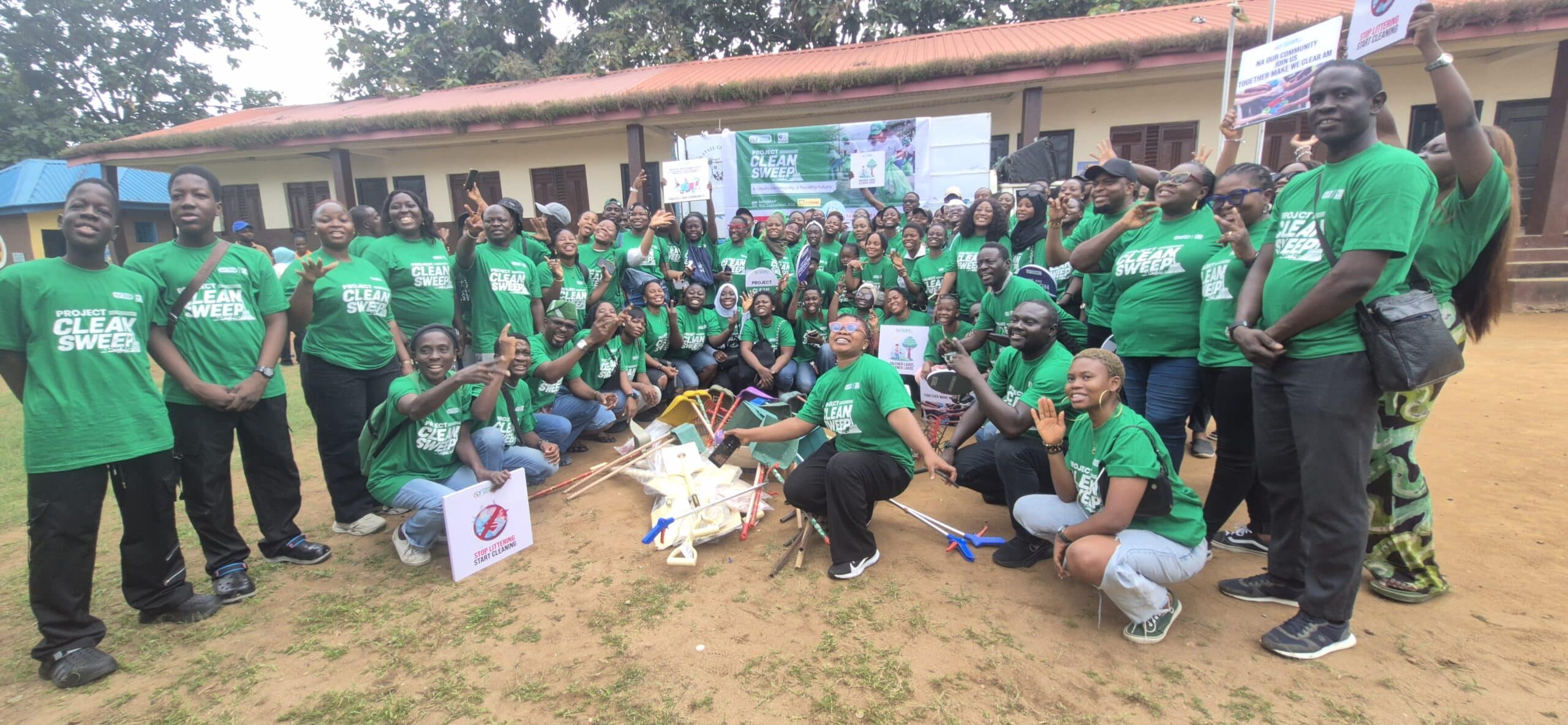
Fidson Healthcare Plc has mobilised its staff and volunteers to clean communities in Lagos as part of activities to mark World Cleanup Day 2026.
The exercise, held on Saturday morning, took place around Obanikoro, Fadeyi, Palmgrove and Shomolu axis of Lagos state, with employees of the company and volunteers participating in the cleanup and environmental hygiene advocacy.
The initiative, tagged Project Clean Sweep 2026, was organised by Fidson in partnership with the African Cleanup Initiative (ACI) as part of its corporate social responsibility (CSR) and sustainability initiative.
The Lagos Waste Management Authority (LAWMA) also participated in the exercise, with its advocacy team supporting the organisers.
World Cleanup Day is an annual global movement held on 20 September to tackle waste pollution and promote sustainable resource management.
Fidson links clean environment to health
In her remarks, Adejoke Alli, the Associate Director of Business Operations at Fidson Healthcare, said the company organised the exercise to contribute to a cleaner and healthier environment in its host community.



“The whole idea is to do our part to ensure that we have a greener Lagos and a greener environment, particularly in our host community around Obanikoro, Fadeyi, Shipeolu and Shomolu, where our head office is located,” Ms Alli said.
“We are very passionate about environmental sustainability. Environmental, Social and Governance (ESG) is also part of our governance framework, so we are particularly interested in ensuring that we maintain an environment with a less carbon footprint, an environment that is clean and habitable, and one that can promote good health.”
She noted beyond just talking or complaining, the organisation decided to take action so that people can see that “we can all make a difference.”
“This is something that we are very proud of, and we hope we’ll continue to do this for the future,” she added.
Tosin Shoboyede, Human Resources Business Partner at Fidson Healthcare, said environmental cleanliness is part of the company’s commitment to its motto, “We value life.”
Mr Shoboyede said maintaining a clean environment was one way of promoting healthy living.
He described the exercise as part of Fidson’s effort to give back to society and contribute to a cleaner environment.
Organisers call for community action
Alexander Kibe, Founder and President of the ACI, said the organisation had been involved in environmental cleanup activities for 16 years, working across Nigeria’s six geopolitical zones.
Mr Kibe said the group was combining the cleanup with advocacy because cleaning the environment without changing people’s behaviour would not provide a lasting solution.

As part of the exercise, the volunteers also went into the market around the area to clean and engage traders on the need to keep their surroundings clean.
“We cannot leave everything to the government,” Mr Kibe said. “As the African Cleanup Initiative, we are playing our part, and Fidson Healthcare is also playing its part.”
He said residents, traders and passers-by also have a responsibility to keep their surroundings clean.
Mr Kibe said the organisers were engaging members of the communities to encourage them to maintain the environment after the cleanup exercise.
Volunteers urge residents to take responsibility
Munnir Adams, Founder of Climb with Me and a volunteer with the ACI, said improving waste management systems would not be enough without citizens taking responsibility for their surroundings.
 Mr Adams said residents should contribute actively to keeping their streets, gutters and areas around their homes clean instead of only complaining about poor waste management.
Rachel Coker, another volunteer with the ACI, said she had participated in the organisation’s activities for more than a year.
Ms Coker said regular environmental sanitation could help reduce exposure to germs and diseases and also contribute to people’s psychological wellbeing.
She said the volunteers were also seeking to set an example for residents and encourage them to make environmental cleanliness a regular habit.
Discover more from Premium Times Nigeria
Subscribe to get the latest posts sent to your email.
-

 News4 days ago
Al Gore has a surprisingly calm take on the AI data center backlash
-
News4 days ago
Mafab seeks investors for nationwide 5G expansion, holds talks with Reliance Jio, Airtel – Technology Times
-
News3 days ago
Tinubu’ll win presidency with 65 percent votes – Jibrin
-
News3 days ago
Crusoe raises $3.9B to build massive data centers and small modular “AI factories”