News
Samsung Galaxy A27 5G brings AI features to Nigeria’s mid-range smartphone market – Technology Times

Stay connected via Google News

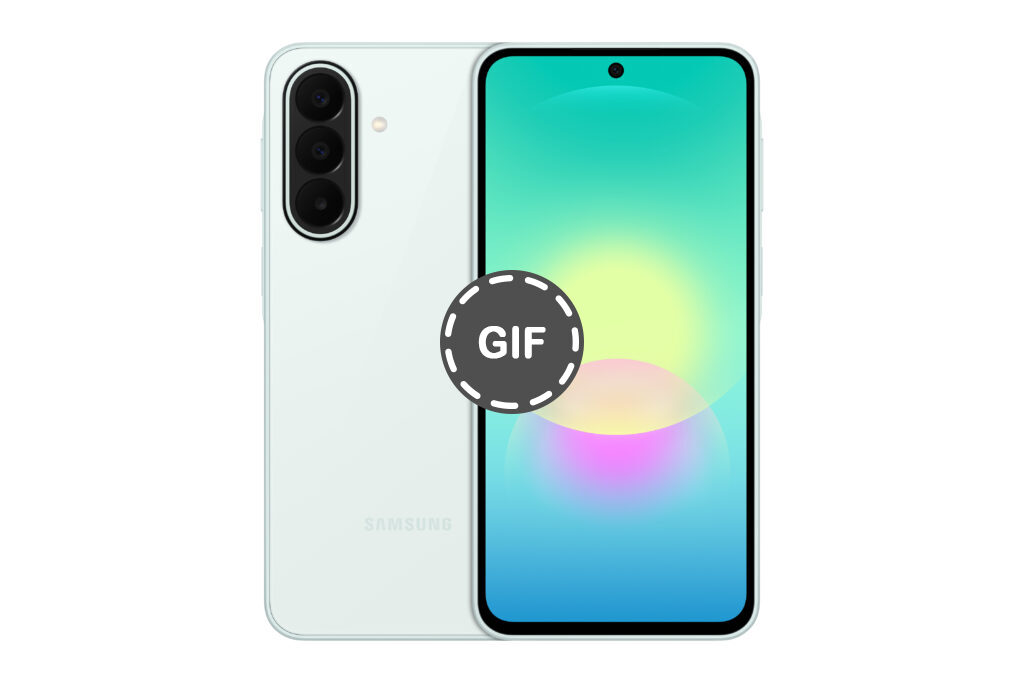
For years, artificial intelligence (AI) has been the headline feature reserved for flagship smartphones costing well above ₦1 million, but Samsung’s latest Galaxy A27 5G suggests that era may be coming to an end.
With the launch of the Galaxy A27 5G, Samsung is bringing many of its AI-powered experiences to the mid-range market, signalling that the next phase of smartphone competition may no longer revolve around faster processors or bigger cameras alone. Instead, the battle is shifting towards making AI useful for everyday consumers.
For Nigerian buyers, where value for money often outweighs cutting-edge specifications, the Galaxy A27 5G raises an important question: Can affordable smartphones now deliver meaningful AI experiences without premium pricing?


For Nigerian buyers, where value for money often outweighs cutting-edge specifications, the Galaxy A27 5G raises an important question: Can affordable smartphones now deliver meaningful AI experiences without premium pricing?
Samsung Galaxy A27 5G: AI becomes the main attraction
Unlike many mid-range smartphones where AI remains a marketing buzzword, Samsung has integrated artificial intelligence into several tasks users perform daily.
Perhaps the most practical addition is the upgraded Circle to Search with Google.
Instead of typing product descriptions into a browser, users simply circle objects appearing on the screen. The new version recognises multiple objects simultaneously, whether shoes, clothing, bags or accessories, and presents shopping results almost instantly.
For Nigerian consumers who increasingly discover fashion items through Instagram, TikTok and WhatsApp Status updates, this could become one of the phone’s most frequently used features.
Samsung has also introduced virtual try-on capabilities through Google Search, bringing AI-assisted online shopping closer to mainstream users.


Instead of typing product descriptions into a browser, users simply circle objects appearing on the screen. The new version recognises multiple objects simultaneously, whether shoes, clothing, bags or accessories, and presents shopping results almost instantly.
Photo editing gets smarter
Photo editing has traditionally required separate applications and some technical knowledge.
Samsung’s improved Object Eraser changes that.
Removing unwanted people, distracting objects or background clutter now requires only a few taps, with AI automatically rebuilding the missing parts of the image.
For social media creators, small businesses and everyday users who rely heavily on smartphone photography, this could eliminate the need for third-party editing apps.
The improvements appear incremental rather than revolutionary, but they make smartphone photography considerably more accessible.
A productivity boost for students and professionals
One of the most underrated additions may be the new Voice Transcription feature.
The phone can transcribe voice recordings while simultaneously translating them into 22 supported languages.
Although support for major Nigerian languages has not yet been announced, the feature still offers value for journalists, students, lecturers, researchers and professionals who regularly record meetings or interviews.
Instead of replaying lengthy recordings repeatedly, users receive searchable transcripts almost immediately.
In an increasingly hybrid workplace, this is arguably one of the Galaxy A27’s strongest AI capabilities.


The phone can transcribe voice recordings while simultaneously translating them into 22 supported languages. Although support for major Nigerian languages has not yet been announced, the feature still offers value for journalists, students, lecturers, researchers and professionals who regularly record meetings or interviews.
Choice replaces ecosystem lock-in on Samsung Galaxy A27 5G
Another notable departure from previous Samsung devices is flexibility.
Rather than limiting users to a single assistant, Samsung allows access to multiple AI services, including Google Gemini, Perplexity and Bixby.
That means users can choose whichever assistant best suits their needs.
Samsung has also redesigned Bixby into a conversational assistant capable of controlling device settings using natural language.
Although Google’s Gemini remains the strongest option for general AI queries, giving consumers multiple choices represents a welcome shift away from closed ecosystems.
AI may dominate Samsung’s marketing, but the underlying hardware also deserves attention.
The new 6.7-inch Super AMOLED display now supports a 120Hz refresh rate, making scrolling noticeably smoother than many competing devices in this price category.
Samsung has also replaced the older waterdrop notch with a punch-hole camera, creating a cleaner, more modern appearance.
Under the hood sits Qualcomm’s Snapdragon 6 Gen 3, a processor designed for improved graphics performance, better multitasking and enhanced power efficiency.
While it is unlikely to compete with flagship processors, it should comfortably handle gaming, streaming and AI-assisted applications without noticeable lag.
Selfies receive overdue attention
Samsung has upgraded the front-facing camera to 12 megapixels, focusing less on increasing resolution and more on improving image quality.
The company says brightness, skin tones and colour reproduction have all been refined across different lighting conditions.
If real-world performance matches Samsung’s claims, content creators and video callers could notice clearer, more natural-looking images.
Six years of software support changes value equation
Perhaps the Galaxy A27’s biggest long-term advantage is one that buyers rarely notice on launch day.
Samsung promises six generations of Android upgrades alongside six years of security updates.
That commitment significantly exceeds what many Android manufacturers offer in the mid-range segment.
For Nigerian consumers who typically keep smartphones for four to six years before upgrading, this promise could translate into better security, longer device life and greater overall value.
It also reduces one of Android’s longstanding weaknesses, short software support cycles.
Samsung continues to differentiate itself through security.
The inclusion of Samsung Knox and Knox Vault provides hardware-backed protection for sensitive information such as passwords, biometric data and financial credentials.
As more Nigerians embrace mobile banking, digital wallets and online payments, stronger device security is becoming less of a premium feature and more of a necessity.


Samsung promises six generations of Android upgrades alongside six years of security updates. That commitment significantly exceeds what many Android manufacturers offer in the mid-range segment.
Samsung Galaxy A27 5G: What is the smartphone for Nigerian consumers?
The Galaxy A27 5G arrives at a time when AI is becoming the defining feature of modern smartphones.
Rather than restricting intelligent tools to expensive flagship devices, Samsung is betting that mainstream buyers also want AI-powered search, smarter photo editing, productivity tools and conversational assistants.
That strategy is likely to resonate in Nigeria, where consumers increasingly seek smartphones that remain useful for years rather than simply offering impressive specifications at launch.
Pricing will ultimately determine how competitive the Galaxy A27 becomes against rivals from Xiaomi, Redmi, TECNO, Infinix and OPPO. However, Samsung appears to be competing on something more sustainable than hardware specifications alone.
Our verdict
The Galaxy A27 5G does not attempt to reinvent the mid-range smartphone. Instead, it redefines what buyers should expect from one.
Its biggest innovation is not a faster processor or a larger camera sensor: it is the democratisation of artificial intelligence.
By combining practical AI features with a modern display, capable hardware, strong security and an industry-leading software support commitment, Samsung has produced a device that appears well positioned for consumers seeking long-term value.


By combining practical AI features with a modern display, capable hardware, strong security and an industry-leading software support commitment, Samsung has produced a device that appears well positioned for consumers seeking long-term value.
If Samsung prices the Galaxy A27 competitively in Nigeria, it could become one of the most compelling AI-enabled smartphones in the mid-range market and further accelerate the shift towards AI becoming a standard smartphone feature rather than a premium luxury.
Rating (pre-market assessment): 4.5/5
Pros of Samsung Galaxy A27 5G
-
Practical AI features for everyday use
-
Excellent six-year software and security support
-
Smooth 120Hz AMOLED display
-
Strong security with Samsung Knox and Knox Vault
-
Multiple AI assistants instead of a single ecosystem
Cons of Samsung Galaxy A27 5G
-
Nigerian pricing yet to be announced
-
Local language support for AI transcription remains unclear
-
Real-world battery performance and camera quality will require independent testing after launch
Stay ahead with real-time reports, breaking news, and exclusive insights delivered directly to your phone. Don’t settle for outdated information. Join TECHNOLOGYTIMES NEWS on WhatsApp for 24/7 updates.
Join Our Whatsapp Channel









Gunmen on Saturday reportedly attacked a mining site in Marit village, Barkin Ladi Local Government Area of Plateau State, killing five miners and injuring two others.
The attack reportedly occurred during the miners’ activities at the site, according to a statement on Saturday by Rwang Tengwong, the spokesman for Berom Youth Moulders-Association.
The group condemned the deadly attack on a mining site, stating that the attack left the community grieving and living in fear.
Mr Tengwong said the group is deeply concerned that law-abiding citizens in vulnerable communities and rural areas continue to face deadly attacks, despite repeated calls for stronger security.
He urged security agencies to go beyond expressing concern by identifying, arresting and prosecuting anyone responsible for these attacks.
“Such measures are necessary to prevent further loss of life and restore residents’ confidence in their safety.
“This must not be reduced to another statistic as authorities must act decisively to protect communities and ensure that those responsible are brought to justice,” he said.
Alabo Alfred, the state police spokesman, was not available for comment. Text messages sent to him remained unanswered as of press time.
Peoples Gazette had reported on June 16 that five miners were killed at a mining site in Gero village, Gyel district of Jos South area of the state.

-

 Featured4 days ago
PLATEAU STATE: IS THERE PEACE, OR ONLY THE ABSENCE OF VIOLENCE?
-
Business4 days ago
Shettima Urges African Leaders to Process Minerals Locally
-
News4 days ago
Commercial drivers demand complete ban of VIO in Plateau
-
News4 days ago
Akpabio Says Tinubu Remains in Charge Despite Extended Stay Abroad