Connect with us

Business

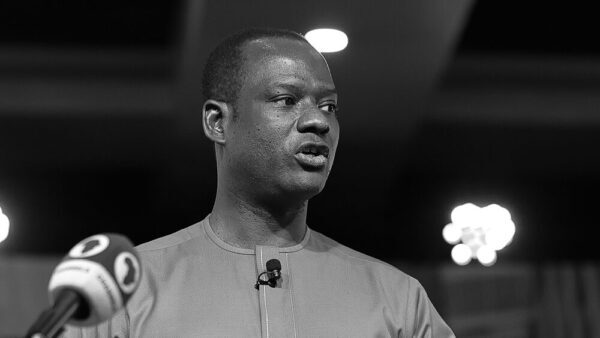
NSPPD Convener Pastor Jerry Eze Joins Heirs Life Assurance Board

info

Published

on

BY NKECHI NAECHE-ESEZOBOR—Heirs Life Assurance on Monday announced the appointment of Pastor Jerry Eze as an Independent Non-Executive Director on its Board, effective August 10, 2026.

The life company in a statement released today said the appointment reinforces its commitment to expanding financial inclusion and accelerating insurance adoption by strengthening public trust, consumer education, and long-term financial resilience across Nigeria.

The statement added that his appointment brings a unique perspective on community engagement, value-based leadership, and broad societal impact.

Eze is the Founder and Lead Pastor of Streams of Joy International Ministry, a growing multinational ministry with 34 branches across West Africa, Southern Africa, Europe and North America.

He is also the convener of the New Season Prophetic Prayers and Declaration (NSPPD), one of the world’s largest digital prayer platforms, reaching millions of people daily.

Through his ministry and humanitarian initiatives, he has become one of Africa’s most influential voices, championing hope, compassion, and community transformation.

He also the Founder of the Jerry Eze Foundation, a faith- led philanthropy where he provides housing support and grants to vulnerable and underserved communities. In 2026, he announced N1billion in grants to support young entrepreneurs across agriculture, technology, and manufacturing, further advancing enterprise development and economic opportunity.

Before entering full-time ministry, he built a career in development communications, serving as a Communications Specialist on a World Bank HIV/AIDS programme and with the United Nations Population Fund (UNFPA). He holds a Bachelor’s degree in History and International Relations from Abia State University and a postgraduate degree in Business Administration from Enugu State University of Science and Technology.

Speaking about the appointment, Tony O. Elumelu, Chairman, Heirs Life Assurance, said: “Pastor Jerry brings an exceptional combination of integrity, influence, and a deep understanding of people and communities. As we continue our mission to democratise access to insurance, his insight will help strengthen consumer trust, deepen financial inclusion, and reinforce our commitment to protecting the financial future of millions of Nigerians. We are delighted to welcome him to the Board of Heirs Life Assurance and the broader family of Heirs Insurance Group.”

Commenting on his appointment, Pastor Jerry Eze said: “I am honoured to join the Board of Heirs Life Assurance at a defining moment for the insurance industry. Financial security empowers individuals, families, and businesses to pursue their aspirations with greater confidence and resilience. I look forward to working with the Board and Management to advance the company’s mission of making insurance more accessible, relevant, and impactful for every Nigerian.”

Heirs Life Assurance has become one of Nigeria’s leading specialist life insurance companies, ranking 7th on the Financial Times list of Africa’s fastest-growing companies. It is one of the three insurance businesses of Heirs Holdings, the leading pan-African investment company, with investments across 24 countries and four continents.

Combining an omni-channel digital presence with physical branches spread across the country, Heirs Life continues to redefine life insurance through innovation, customer-centric solutions, and a commitment to making financial protection accessible to every Nigerian.

Heirs Insurance Group, comprising Heirs Life Assurance, Heirs General Insurance, and Heirs Insurance Brokers, collectively serves over 3 million people directly and indirectly. The Group is championing financial inclusion and leading the digital insurance play in Nigeria, demonstrating its mission to democratise access to insurance. 

The post NSPPD Convener Pastor Jerry Eze Joins Heirs Life Assurance Board appeared first on Business Today NG.

Continue Reading
Click to comment

Leave a Reply

Your email address will not be published. Required fields are marked *

Business

Tinubu’s subsidy removal, FX reforms, stabilising Nigeria’s economy

info

Published

on

By

530914551 18416828860102990 8036796329283742494 n.jpg

MTN ADVERT

The Executive Chairman of the Nigeria Revenue Service (NRS), Zacch Adedeji, has defended President Bola Tinubu’s economic reforms, arguing that the administration deserves commendation rather than criticism for removing fuel subsidy and unifying the foreign exchange market.

Mr Adedeji spoke in an interview on Channels Television’s Sunday Politics.

He said the reforms were necessary because the Tinubu administration inherited an economy burdened by an unsustainable fuel subsidy regime, an opaque foreign exchange market, an underperforming oil sector and a narrow tax base.

According to him, the government’s decision to remove the subsidy was implemented alongside the unification of the foreign exchange market as part of broader efforts to stabilise the economy.

He pointed to several indicators which, he said, showed that the reforms had begun to change the structure of the Nigerian economy.

PT WHATSAPP CHANNEL

Mr Adedeji cited the growth in domestic refining capacity, saying it had increased from about 30,000 barrels per day before the reforms to about 700,000 barrels per day.

He also said government revenue had risen significantly, from about N12 trillion to N40 trillion, attributing the increase to improved revenue collection and broader economic reforms.

The NRS chairman said the administration’s objective was not to increase the burden on Nigerians but to create an environment in which businesses could grow and generate greater prosperity.

“We are taxing prosperity, not poverty,” he said, stressing that the government would ultimately collect more revenue when businesses become more profitable.

Mr Adedeji also defended the government’s tax reforms, saying they were designed to broaden the tax base and improve the business environment rather than extract more money from poor Nigerians.

He said about 90 per cent of Value Added Tax (VAT) revenue goes to the states, arguing that the reforms had therefore strengthened the finances of sub-national governments.

The NRS chairman said the government had also taken steps to address structural constraints to economic growth, including electricity supply, education, infrastructure and access to credit.

He cited the Electricity Act as one of the reforms intended to change the structure of the power sector by allowing greater state participation and creating room for investment.

According to him, reliable electricity is essential to industrialisation and reducing the cost of doing business.

Mr Adedeji also defended the administration’s infrastructure spending amid concerns over the pace of budget implementation.

He said there was a difference between budgeting and funding, arguing that the government could not simply release money without considering the strategic allocation of resources to projects with long-term economic benefits.

He cited the Lagos-Calabar Coastal Highway and the Sokoto-Badagry Expressway among major infrastructure projects requiring substantial funding.

He also linked infrastructure spending to employment, saying projects such as the coastal road and airport reconstruction would create jobs and stimulate economic activity.

The NRS chairman said the “government was also supporting agriculture through institutions such as the Bank of Agriculture and the Bank of Industry, to expand mechanised farming and improve production.”

Mr Adedeji acknowledged concerns about the hardship Nigerians had experienced since the reforms began, but argued that the government was focused on consolidating the gains already recorded.

He said the administration’s priority was to maintain economic stability while ensuring that the benefits of the reforms gradually translated into improved household prosperity.

He also rejected the perception that increased government revenue meant the administration was taking more money from poor Nigerians.

Rather, he said, the government’s approach was to expand economic activity and collect more revenue from increased prosperity.

Mr Adedeji defended government expenditure against criticism of public officials’ lifestyles, explaining that government spending also circulates through the private sector.

He used spending on facilities such as conference centres as an example, arguing that government expenditure could generate revenue for private businesses and create employment.

READ ALSO: Why subsidy removal, FX reforms caused unavoidable economic shocks — Oyedele

On youth unemployment, he said the administration was supporting technical and vocational education while encouraging corporate organisations to play a greater role in creating employment opportunities.

He said education remained critical to reducing poverty and improving the economic prospects of young Nigerians.

Mr Adedeji also highlighted the government’s credit programmes as part of efforts to promote economic inclusion, particularly by providing financing for small businesses and individuals.

He said continued support for such programmes would help more Nigerians participate in economic activity.

The NRS chairman said the government’s recent reforms, including the new tax laws, would require time to produce their full impact.

He urged Nigerians to support the consolidation phase of the reforms, saying the government was focused on improving energy security, education, infrastructure and the broader economic environment.

He maintained that the ultimate objective of the reforms was to build an economy capable of generating prosperity without relying on unsustainable government interventions.


Discover more from Premium Times Nigeria

Subscribe to get the latest posts sent to your email.

Continue Reading

Business

Leadway Assurance Sets Bold Post-Recapitalisation Agenda Beyond Compliance

info

Published

on

By

BY NAECHE-NAECHE-ESEZOBOR—Leadway Assurance Limited said its recapitalised era will be defined not only by regulatory compliance, but by audacious strategic ambition.

The insurer in a statement released recently disclosed this known following the successful completion of its recapitalisation exercise under the Nigerian Insurance Industry Reform Act (NIIRA)

According to statement released by the insurer, that is accelerating a transformation built for the next decade, one that places digital-first service delivery, expanded capacity, and long-term policyholder commitment at the centre of its next growth trajectory.

For Leadway, meeting the National Insurance Commission’s (NAICOM) revised minimum capital requirements affirms that its business is structurally strong, its strategy is resilient, and its obligation to customers extends well beyond any regulatory cycle.

The strengthened capital base now positions Leadway to underwrite larger and more complex risks, champion financial inclusion at scale, and play an active role in Nigeria’s ambition to build a US$1 trillion economy.

According to the insurer its post-recapitalisation roadmap is anchored on three distinct but interconnected growth opportunities.

The first is the high net worth individual and premium segment, where growing personal wealth, asset complexity, and lifestyle sophistication are driving demand for tailored, relationship led insurance solutions. Leadway’s deepened capital position enables it to underwrite larger individual exposures and deliver the bespoke service this segment demands.

The second is critical sector and infrastructure coverage, encompassing major public and private sector projects, energy, manufacturing, and large-scale enterprise risk. With greater underwriting capacity, Leadway is now equipped to anchor complex risk programmes across Nigeria’s most strategically significant industries, serving as the risk backbone for the country’s most consequential investments.

The third is Nigeria’s next generation and a growing population of digitally native, entrepreneurially minded young Nigerians and small business owners who are redefining what they expect from financial services. Leadway is meeting that expectation head on.

For Nigeria’s next generation, it means accessible, mobile-led entry points into insurance for a demographic that expects digital as a baseline.

For HNIs and corporate clients, it means seamless, data-driven service with the depth and sophistication their portfolios require. For SMEs and agricultural businesses, it opens a path to affordable, appropriately structured coverage. Leadway’s digital focus is also directly aligned with the NAICOM Implementation Working Group’s vision of accelerating digitalisation and deepening financial inclusion across the Nigerian insurance sector, a vision Leadway is not merely endorsing but actively building.

Speaking on the above its managing Director/ CEO of Leadway Assurance, Gboyega Lesi, said, “We have spent the last several years building a business that is technically stronger, digitally tuned, and strategically positioned to serve Nigeria at a level this industry has not seen before. What recapitalisation gives us is the impetus to pursue that ambition at full scale, underwriting the risks that matter to Nigeria’s biggest enterprises, to design products that speak to a generation that will drive this economy for the next generation, and to honour every commitment we have made to our policyholders with the full weight of a well-capitalised institution behind us. Leadway is not entering a new chapter because a regulator asked us to; we are entering it because we are ready.”

“We commend NAICOM for providing a clear, forward-looking regulatory framework, welcome the discipline it demands and the confidence it instils across the market.”

Leadway’s expanded capacity also positions it as a natural partner for national development. With the ability to anchor major risk programmes, support infrastructure projects, and deepen enterprise coverage across finance, energy, agriculture, and technology, Leadway is building the institutional strength required to serve as Nigeria’s insurance backbone as the economy grows. Across every segment it serves, individual, commercial, and institutional, the message is consistent: the company is here for the long term, and the long term starts now.

About Leadway Assurance

Leadway Assurance is one of Nigeria’s leading insurance companies, with over 55 years of experience delivering a comprehensive range of financial protection services, including life insurance, general insurance, and diversified financial solutions.

A member of the Leadway Group, the company is committed to innovation, superior service, and long-term value creation for customers, partners, and stakeholders across Nigeria and beyond.

The post Leadway Assurance Sets Bold Post-Recapitalisation Agenda Beyond Compliance appeared first on Business Today NG.

Continue Reading

Trending