Health
FCMB, stakeholders set out roadmap to move Nigeria’s health sector from survival to scale


Nigeria’s healthcare sector needs more than additional funding to expand. It needs businesses capable of attracting capital, deploying it effectively and building institutions that can grow sustainably, healthcare stakeholders have said.
That challenge was at the centre of the inaugural First City Monument Bank (FCMB) Healthcare Summit in Lagos, where the bank unveiled a N20 billion Healthcare Fund to support private healthcare businesses.
The fund will provide financing to hospitals, clinics, diagnostic centres, pharmaceutical companies, pharmacies, maternity homes and other businesses across the healthcare value chain.
The summit, themed “Financing Growth: Unlocking Opportunity, Building the Future of Healthcare,” brought together policymakers, healthcare providers, investors, financial institutions and development partners to examine how more private capital can be channelled into Nigeria’s health sector.
At the heart of the discussions was a persistent financing problem: healthcare providers struggle to access affordable, long-term capital, while lenders and investors often require stronger governance, financial reporting and business structures before committing funds.

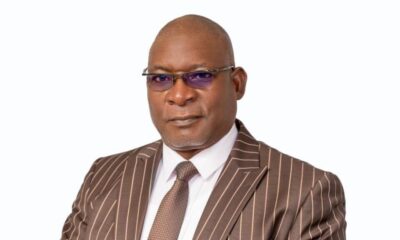
“Healthcare is a social imperative and an economic priority,” FCMB Managing Director and Chief Executive Officer Yemisi Edun said in remarks delivered by Executive Director, Corporate Services and Service Management Felicia Obozuwa. “Building a strong healthcare system requires patient, affordable and long-term capital.”
Mrs Edun said financing alone would not be sufficient. Healthcare businesses also need sound governance, capable leadership and strategic partnerships to build resilient institutions.
Through the new fund, FCMB plans to finance infrastructure expansion, medical equipment, working capital, technology adoption and other investments aimed at improving efficiency and service delivery.
The push for more private capital comes as the government increases public investment in healthcare and seeks to expand capacity across the sector.
Government investment
The Minister of State for Health and Social Welfare, Iziaq Salako, said more than N339 billion has been disbursed through the Basic Healthcare Provision Fund over the past 12 years.
Of that amount, N235 billion was disbursed in the last three years under the Nigeria Health Sector Renewal Investment Initiative, he said.
Mr Salako added that another N32.9 billion was recently disbursed to support more than 8,300 primary healthcare centres, while the government is targeting about 13,000 facilities nationwide.
Beyond healthcare facilities, the government is seeking to increase domestic production of medicines and medical equipment.
Under the Presidential Initiative for Unlocking the Healthcare Value Chain, Nigeria is targeting local production of 70 per cent of medicines and medical devices by 2030.
Mr Salako also highlighted initiatives aimed at addressing electricity constraints in healthcare facilities and creating long-term procurement opportunities for local manufacturers.
Making healthcare businesses bankable
For private healthcare operators, however, access to affordable capital remains a major obstacle to expansion.
The President of the Healthcare Federation of Nigeria (HFN), Njide Ndili, said affordable, long-term financing is one of the biggest barriers facing private healthcare businesses.
She said experience from HFN’s partnership with the PharmAccess Medical Credit Fund demonstrated that healthcare small and medium-sized enterprises could become bankable when financing is combined with technical support, capacity building and quality standards.
The challenge, therefore, is not simply increasing the amount of money available to healthcare providers but ensuring that businesses are prepared to attract and manage investment.
HFN will work with FCMB to develop a framework for pre-qualifying eligible healthcare facilities and helping businesses become investment-ready.
The federation, which has more than 400 member organisations and 4,000 professionals, will support businesses in strengthening governance, financial reporting, management capacity and growth plans before accessing financing.
From survival to scale
Discussions at the summit examined how healthcare operators can move beyond managing day-to-day pressures and build institutions capable of attracting long-term investment.
Participants explored blended finance, alternative lending structures and public-private partnerships as possible mechanisms for attracting more domestic and international capital.
An executive discussion on building healthcare businesses that attract investment also highlighted the importance of sound business management, governance, risk management and clear growth strategies alongside clinical performance.
READ ALSO: FCMB Group sustains performance, reports 99% growth in profit before tax to N157.3bn
Four broad priorities emerged from the discussions: expanding access to fit-for-purpose capital, improving the bankability of healthcare businesses, strengthening public-private partnerships and increasing domestic capacity in pharmaceuticals, diagnostics and medical equipment.
FCMB’s N20 billion fund is positioned within that broader agenda, complementing government investment with private financing for businesses seeking to expand facilities, purchase equipment, adopt technology and improve service delivery.
The summit was organised in partnership with the Health Business Academy for Africa.
For stakeholders, the next challenge is translating the financing commitments and partnerships announced at the summit into stronger healthcare businesses and increased capacity across the sector.
The broader goal is to create a healthcare ecosystem in which stronger institutions, sustainable financing and strategic partnerships translate into greater access to quality healthcare for Nigerians.
Discover more from Premium Times Nigeria
Subscribe to get the latest posts sent to your email.




The federal government has announced plans to invest an additional $3 billion in Nigeria’s health sector by 2030 as part of efforts to reduce dependence on foreign assistance and strengthen domestic health financing.
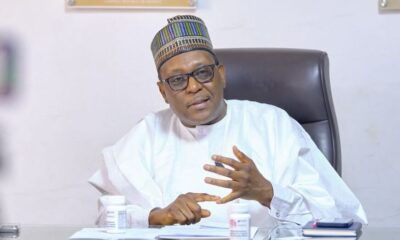
The Coordinating Minister of Health and Social Welfare, Muhammad Pate, said this on Monday in Abuja at a media conference announcing the fifth Global High-Level Ministerial Conference on AMR, scheduled for 6 -8 December, 2026.
Mr Pate said the conference, the first to be hosted on African soil, would focus on translating global commitments into practical actions with the theme, “One Health: Advancing Global AMR Commitment through Local Action”.
He was responding to questions on the health Memorandum of Understanding (MoU) between Nigeria and the United States.
The News Agency of Nigeria (NAN) reports that Nigeria and the United States signed a five-year bilateral health MoU on 19 December 2025, under the US America First Global Health Strategy.
Mr Pate said the planned investment was part of a transition arrangement under which both countries would work towards Nigeria fully financing its health sector by 2030.

“From now until 2030, the expectation is that the federal government will put in $3 billion into health, which is more than what the US government will contribute as it ramps down its contribution,” he said.
He said the arrangement reflected Nigeria’s position that long-term dependence on external assistance was not in the country’s national interest.
“Our position is that dependency in the long run is not in our national interest on external support,” he said.
“We articulated that we want Nigeria to exit from dependency from other entities over time.”
Health financing
Mr Pate acknowledged that achieving self-sustaining health financing would require increased domestic investment, noting that Nigeria was not yet in a position to fully fund its health sector.
He said 15 Nigerian government institutions, including the ministries of Foreign Affairs, Finance, and Health and Social Welfare, participated in articulating Nigeria’s position during negotiations with the United States.
According to him, the US had supported health programmes in Nigeria for about 25 years, including interventions for HIV, tuberculosis and malaria, benefiting millions of Nigerians.
However, following a shift in US government policy in 2025, Nigeria decided to assume greater responsibility for financing its health programmes.
“How do we own it responsibly? So, with the US government, we agreed that we will have a transition. By 2030, they exit and we exit. That means we fully fund our health sector,” he said.
Mr Pate said President Bola Tinubu had increased domestic health allocations, including providing six per cent of the government budget for health, as part of efforts to strengthen Nigeria’s contribution.
He emphasised that sustainable financing would require all three tiers of government to increase spending on citizens’ health.
Mr Pate said the transition was intended to strengthen Nigeria’s ownership of health programmes and reduce reliance on funding decisions made by other countries.
“We cannot rely on somebody else’s taxpayers funding for the health of Nigerians,” he said.
On concerns surrounding the MoU, Mr Pate described it as a non-binding framework for cooperation, anchored on Nigeria’s national policies and laws.
“The MoU that was signed with the US government is a non-binding MoU. It is anchored on Nigerian policy, national policies and laws, does not subvert our sovereignty or subvert US government sovereignty over their resources.
“It’s also one that either party can walk away at any time,” he said.
Mr Pate said the Attorney-General of the Federation had also confirmed that the agreement contained nothing that subverted Nigeria’s national interest.
He added that the MoU was publicly available and interested parties could request a copy from the ministry through the Freedom of Information process.
READ ALSO: Nigeria is building a sustainable health financing future, By Muhammad Ali Pate
The minister said the agreement aligned with the government’s Health Sector Renewal Investment Initiative, which prioritises improved governance, stronger primary healthcare, expanded health insurance coverage, domestic production and increased health security.
He said the cooperation would support public health and laboratory capacity, including the detection of antimicrobial resistance, while promoting local capacity to produce essential health commodities.
Mr Pate said strengthening domestic production and ensuring local markets could supply essential medicines, including antimicrobials, were important steps towards reducing external dependence.
He said the transition would require sustained efforts and domestic investment to ensure Nigeria could finance its health priorities as external contributions declined.
Mr Pate urged Nigerians to examine the agreement and its provisions, saying the government’s objective was to strengthen national ownership of health financing and service delivery.
(NAN)
Discover more from Premium Times Nigeria
Subscribe to get the latest posts sent to your email.

State government-owned hospitals in Kwara State are introducing electronic medical records (EMR) to strengthen health information management and modernise public healthcare delivery in the state.
The Executive Secretary of the KW-HMB, Abdulraheem Malik, disclosed this to PREMIUM TIMES in Ilorin, the state capital.
He said the initiative, being implemented through KW-HMB under the HOPE-PHC Project, will see healthcare workers begin training on the system in November.
The digital healthcare programme is expected to reduce reliance on paper-based medical records, improve access to patients’ medical histories and promote continuity of care across public hospitals in the state.
The system is also designed to strengthen administrative efficiency and support evidence-based decision-making in hospital management.
The rollout builds on an earlier hospital digitalisation pilot involving six hospitals and the state government’s ongoing efforts to integrate digital solutions into healthcare service delivery.
The initiative also complements the board’s efforts to strengthen health information management, including the inauguration of its Data Management Committee in August 2026.
The KW-HMB boss, Mr Malik, commended Governor AbdulRahman AbdulRazaq for approving the initiative, describing it as an important milestone in the state’s drive towards a more efficient, accountable and technology-driven public healthcare system.
READ ALSO: 30 children rescued from illegal orphanage in Kwara
Mr Malik said the adoption of electronic medical records would strengthen hospital operations, improve patient information management and support more efficient clinical encounters across the state.
He reaffirmed the board’s commitment to working with relevant stakeholders to ensure the successful implementation of the programme and deliver more responsive, efficient and patient-centred healthcare services to residents.
The staff training scheduled for November is expected to equip healthcare personnel with the skills required to operate the system effectively.
When fully implemented, the initiative is expected to improve the management of patients’ health information and support better coordination of care across Kwara State’s public hospitals.
Discover more from Premium Times Nigeria
Subscribe to get the latest posts sent to your email.
-

 Business3 days ago
Communications Ministry made ₦345.5 million duplicate payment for Abuja ICT Park project
-
News3 days ago
LumenUs helps automate tedious paperwork in times of grief
-
Business4 days ago
Fuel subsidy would cost Nigeria over N20trn yearly — Minister
-
News3 days ago
Inside INEC’s AI and cybersecurity plans to secure Nigeria’s 2027 Elections – Technology Times