Business
Unitrust Insurance Celebrates 40 Years Of Trust, Reaffirms Commitment to Stakeholders




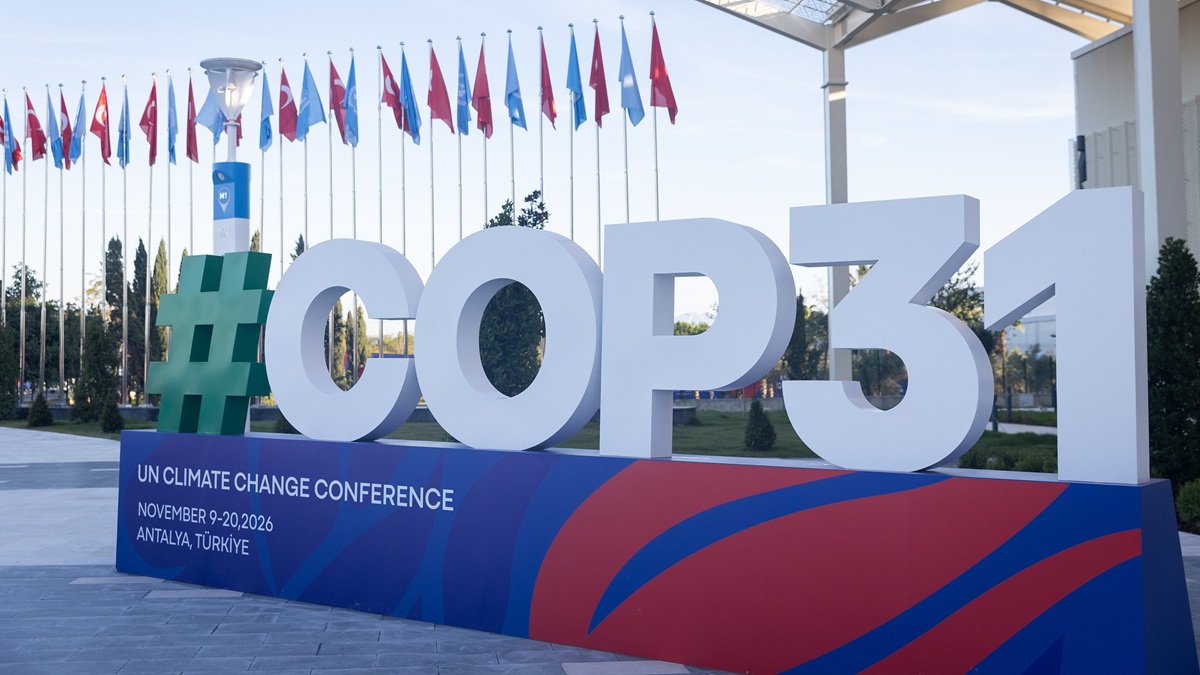
As world leaders prepare to convene in Antalya, Türkiye, for the 31st session of the Conference of the Parties (COP31) to the United Nations Framework Convention on Climate Change (UNFCCC), the African Group of Negotiators (AGN) says it will push for increased climate finance, including an ambitious replenishment of the Green Climate Fund (GCF), among other priorities.
The group said securing adequate and predictable climate finance, particularly grant-based and concessional funding, would be central to Africa’s negotiating priorities at the conference.
This was disclosed by the AGN Chair, Nana Antwi-Boasiako, on the sidelines of the pre-COP31 meetings on Friday.
The AGN is a coalition of climate change negotiators representing all 54 African countries at the UNFCCC and other international environmental negotiations. Nigeria is a member of the group and will negotiate under its umbrella at COP31.
Nigeria’s delegation and technical support is expected to be led by the Nigeria Council on Climate Change Director General, Omotenioye Majekodunmi.
In a speech recorded and published on the AGN’s social media platforms ahead of the formal commencement of COP31, scheduled to hold from 9 to 20 November, Mr Antwi-Boasiako said African countries would seek stronger financial commitments to support the implementation of their climate targets and adaptation plans.


According to him, the continent has made considerable progress in establishing the structures needed to implement the Paris Agreement, but inadequate financing remains a major obstacle.
He cited progress in developing Nationally Determined Contributions (NDCs), carbon market mechanisms under Article 6 of the Paris Agreement, National Adaptation Plans and the Enhanced Transparency Framework.
However, he said many developing countries were struggling to implement their climate commitments because of financial constraints.
“All these issues are structures that are going to support implementation. The key question now is: Where is the money? Where is the financial ambition to help us implement those commitments that we are making as developing countries?” the AGN chair said.
He noted that the group had submitted proposals for agenda items on tripling adaptation finance and replenishing the Green Climate Fund, describing both as critical to advancing climate action across African countries.
He explained that the proposed agenda item on adaptation finance was intended to provide an opportunity to clarify and establish operational arrangements for implementing the decision reached at COP30 in Belém, Brazil, to triple adaptation finance.
The group also wants COP31 to support an ambitious replenishment of the Green Climate Fund next year, describing the facility as particularly important for financing climate action in African countries.
COP31: From consensus to action
COP31 is expected to focus on translating climate commitments into concrete action, with an emphasis on implementation.
The summit will operate under an unusual shared leadership arrangement, with Türkiye hosting the conference while Australia leads the negotiations. Its overarching slogan, “Where Dialogue Becomes Global Action”, reflects the ambition to move beyond climate pledges towards practical implementation.
Beyond the proposed agenda items, the African negotiating bloc is seeking to defend the existing financial obligations of developed countries under the Paris Agreement.
Mr Antwi-Boasiako said Africa was not opposed to expanding the contributor base for climate finance but insisted that such an arrangement must not be used to weaken the obligations of developed countries.
Citing Article 9 of the Paris Agreement, he explained that Article 9.1 establishes the obligation of developed-country parties to provide financial resources to support developing countries, while Article 9.2 provides for contributions from other countries that are in a position to do so.
He argued that developed countries must demonstrate leadership by fulfilling their existing commitments before seeking additional contributions from other countries.
“You cannot abandon your obligations and use something that is not an obligation to replace your obligation,” he said.
The AGN chair disclosed that two policies had recently been adopted at a Green Climate Fund Board meeting ahead of the fund’s next replenishment. One concerns grant-based contributions, while the other addresses the expansion of the contributor base.
The group hopes the replenishment process will demonstrate leadership from developed countries before other countries are encouraged to contribute.
He also identified disagreements between developed and developing countries over climate finance as a major political divide in the negotiations.
While developing countries are demanding credible, predictable and scaled-up grant-based financing, developed countries have cited geopolitical tensions and domestic economic difficulties as constraints on their ability to increase financial contributions.
Mr Antwi-Boasiako, however, questioned the justification for these funding constraints, arguing that developed countries had demonstrated their ability to mobilise substantial resources when other priorities, including energy security, were at stake.
Africa seeks equitable energy transition
The African Group is also seeking progress on the Just Transition Mechanism, insisting that its implementation must reflect the continent’s development realities.
Mr Antwi-Boasiako said the mechanism should go beyond an energy-focused approach to address workers’ welfare, natural resource management, energy poverty and the broader economic implications of the transition.
He warned against an approach that could leave African economies worse off by forcing them to abandon resources they still need for development.
“For the African continent, we think that the transition away from fossil fuels must happen in a more equitable manner. We have a continent that has other challenges. And so we cannot allow our natural resources to be stranded when we need those resources to develop,” he said.
He acknowledged that discussions on the transition away from fossil fuels were continuing but noted that there was no formal negotiated agenda item specifically addressing the issue.
Rather, the discussions were being pursued through a roadmap developed by the COP Presidency outside the formal negotiation process.
The AGN’s position, however, is that countries with higher emissions and greater levels of pollution should lead the transition before other countries follow.
Mr Antwi-Boasiako stressed that the process must be designed to prevent economic hardship in developing countries.
“It is not just energy transition, but transitioning where we are able to make sure that our economies don’t suffer within the transition,” he said.
Climate and trade, other priorities
The African negotiating bloc is also seeking discussions on climate and trade, particularly the implications of unilateral trade measures that could undermine the progress of developing countries.
Mr Antwi-Boasiako said the group was working to secure the adoption of its proposed agenda item to create room for negotiations on the relationship between climate policies and international trade.
He also expressed concern about initiatives introduced under the COP Presidency’s action agenda without adequate consultation with parties.
While the AGN does not oppose initiatives led by the presidency, he said such programmes should not be introduced into formal negotiation texts without proper consultation and party-driven processes.
The group also wants to strengthen the participation of young Africans in climate negotiations through capacity-building programmes that would prepare a new generation of negotiators.
READ ALSO: CBD COP17: Why African countries struggle to mobilise biodiversity funding – AfDB official
COP31 as foundation for COP32
The AGN described COP31 as an important opportunity to strengthen Africa’s negotiating position ahead of COP32, which will be hosted by Ethiopia next year.
Mr Antwi-Boasiako said the group had commenced pre-sessional coordination meetings in Antalya on 1 November, followed by engagements with national focal points and other African delegates.
The group is also engaging other negotiating blocs within the Group of 77 and China to secure broader support for its proposed agenda items ahead of the formal adoption of the COP31 agenda, scheduled for 9 November.
He said Africa’s negotiating strength depended not only on internal coordination but also on building consensus with other developing countries.
The AGN chair cited the continent’s contributions to the establishment of the Green Climate Fund, the Loss and Damage Fund, and the inclusion of adaptation provisions in the Paris Agreement as examples of the group’s influence in international climate negotiations.
The group also called on civil society organisations and the media to help amplify Africa’s priorities throughout the conference.
Mr Antwi-Boasiako said the outcome of COP31 should provide a strong foundation for the continent as it prepares to host the next climate conference.
Discover more from Premium Times Nigeria
Subscribe to get the latest posts sent to your email.
-
News4 days ago
Zenith Tech Fair 2026 puts agentic AI, digital payments and Nigeria’s tech future in spotlight – Technology Times
-

 News4 days ago
Bandits kill 18-year-old vigilante in Plateau
-
News2 days ago
Plateau Govt Hails Council Chairmen as Inspection Tour Reveals Projects Across 17 LGAs
-
Business3 days ago
FG welcomes GIGM’s expansion into digital mobility, urges reliable services