Business
Tinubu’s subsidy removal, FX reforms, stabilising Nigeria’s economy

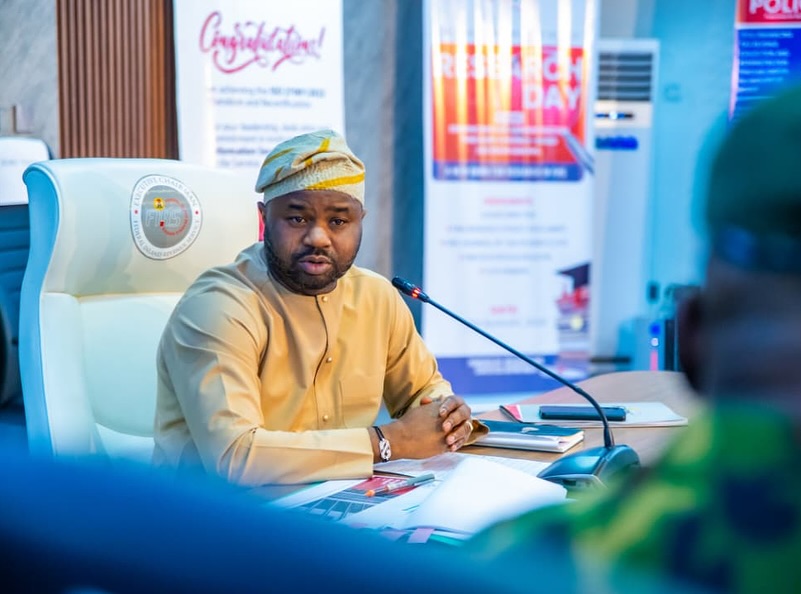

The Executive Chairman of the Nigeria Revenue Service (NRS), Zacch Adedeji, has defended President Bola Tinubu’s economic reforms, arguing that the administration deserves commendation rather than criticism for removing fuel subsidy and unifying the foreign exchange market.
Mr Adedeji spoke in an interview on Channels Television’s Sunday Politics.
He said the reforms were necessary because the Tinubu administration inherited an economy burdened by an unsustainable fuel subsidy regime, an opaque foreign exchange market, an underperforming oil sector and a narrow tax base.
According to him, the government’s decision to remove the subsidy was implemented alongside the unification of the foreign exchange market as part of broader efforts to stabilise the economy.
He pointed to several indicators which, he said, showed that the reforms had begun to change the structure of the Nigerian economy.

Mr Adedeji cited the growth in domestic refining capacity, saying it had increased from about 30,000 barrels per day before the reforms to about 700,000 barrels per day.
He also said government revenue had risen significantly, from about N12 trillion to N40 trillion, attributing the increase to improved revenue collection and broader economic reforms.
The NRS chairman said the administration’s objective was not to increase the burden on Nigerians but to create an environment in which businesses could grow and generate greater prosperity.
“We are taxing prosperity, not poverty,” he said, stressing that the government would ultimately collect more revenue when businesses become more profitable.
Mr Adedeji also defended the government’s tax reforms, saying they were designed to broaden the tax base and improve the business environment rather than extract more money from poor Nigerians.
He said about 90 per cent of Value Added Tax (VAT) revenue goes to the states, arguing that the reforms had therefore strengthened the finances of sub-national governments.
The NRS chairman said the government had also taken steps to address structural constraints to economic growth, including electricity supply, education, infrastructure and access to credit.
He cited the Electricity Act as one of the reforms intended to change the structure of the power sector by allowing greater state participation and creating room for investment.
According to him, reliable electricity is essential to industrialisation and reducing the cost of doing business.
Mr Adedeji also defended the administration’s infrastructure spending amid concerns over the pace of budget implementation.
He said there was a difference between budgeting and funding, arguing that the government could not simply release money without considering the strategic allocation of resources to projects with long-term economic benefits.
He cited the Lagos-Calabar Coastal Highway and the Sokoto-Badagry Expressway among major infrastructure projects requiring substantial funding.
He also linked infrastructure spending to employment, saying projects such as the coastal road and airport reconstruction would create jobs and stimulate economic activity.
The NRS chairman said the “government was also supporting agriculture through institutions such as the Bank of Agriculture and the Bank of Industry, to expand mechanised farming and improve production.”
Mr Adedeji acknowledged concerns about the hardship Nigerians had experienced since the reforms began, but argued that the government was focused on consolidating the gains already recorded.
He said the administration’s priority was to maintain economic stability while ensuring that the benefits of the reforms gradually translated into improved household prosperity.
He also rejected the perception that increased government revenue meant the administration was taking more money from poor Nigerians.
Rather, he said, the government’s approach was to expand economic activity and collect more revenue from increased prosperity.
Mr Adedeji defended government expenditure against criticism of public officials’ lifestyles, explaining that government spending also circulates through the private sector.
He used spending on facilities such as conference centres as an example, arguing that government expenditure could generate revenue for private businesses and create employment.
READ ALSO: Why subsidy removal, FX reforms caused unavoidable economic shocks — Oyedele
On youth unemployment, he said the administration was supporting technical and vocational education while encouraging corporate organisations to play a greater role in creating employment opportunities.
He said education remained critical to reducing poverty and improving the economic prospects of young Nigerians.
Mr Adedeji also highlighted the government’s credit programmes as part of efforts to promote economic inclusion, particularly by providing financing for small businesses and individuals.
He said continued support for such programmes would help more Nigerians participate in economic activity.
The NRS chairman said the government’s recent reforms, including the new tax laws, would require time to produce their full impact.
He urged Nigerians to support the consolidation phase of the reforms, saying the government was focused on improving energy security, education, infrastructure and the broader economic environment.
He maintained that the ultimate objective of the reforms was to build an economy capable of generating prosperity without relying on unsustainable government interventions.
Discover more from Premium Times Nigeria
Subscribe to get the latest posts sent to your email.


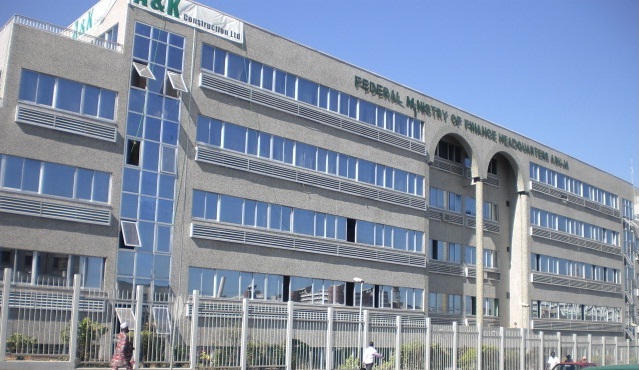
The Federal Ministry of Finance has disputed a claim that the Federal Government’s interest payments reached 124 per cent of its revenue in the first half of 2026, describing the figure as misleading.
The ministry said recent analysis and public commentary, which cited the World Bank’s October 2026 Nigeria Development Update, compared mismatched interest figures against an incomplete revenue base.
In a statement released on Sunday, the ministry said the 124 per cent interest calculation includes the debt serviced by the federal government on behalf of other tiers of government, including external loans to states.
“Measuring this against federal revenue alone overstates the ratio, which is only meaningful when debt and revenue cover the same level of government,” the statement said.
The ministry also asserted that the reported revenue is incomplete as it excludes the independent revenue earned by government agencies and enterprises but not yet remitted to the treasury.
“In addition, more revenue is typically earned in the second half of the year than in the first due to the statutory timing of certain payments. This is why the ratio stood at 156% in H1 2025, while the full-year 2025 debt service-to-revenue ratio was below 60%, down from 97% before the reforms,” it stated.

The ministry explained that federal revenue rose by 72 per cent from ₦3.6 trillion in the first half of 2025 to ₦6.2 trillion in the corresponding period of 2026.
Interest payments, however, rose by 38 per cent, from ₦5.6 trillion to ₦7.7 trillion over the same period, according to the ministry.
“The interest-to-revenue ratio fell by 32 percentage points in a single year, from 156% to 124%, and the gap between interest and revenue narrowed from ₦2.0 trillion to ₦1.5 trillion,” the ministry said.
The ministry attributed the changes to the current administration’s economic reforms, arguing that revenue is growing faster than interest costs.
It argued that a six-month figure alone should not be used to evaluate the sustainability of government debt.
“Debt sustainability is assessed on a full-year basis, not over six months,” the statement said.
READ ALSO: Federal government approves upgrade of four South-South ports
Citing the World Bank report, the ministry said Nigeria’s full-year 2026 debt service, covering both interest and principal, is projected at 46 per cent of revenue, and that this forecast is the appropriate benchmark for assessing the country’s debt-service burden.
The ministry noted that all borrowing falls within the limits approved by the National Assembly under the 2026 Appropriation Act and the approved borrowing plan, in compliance with the Fiscal Responsibility Act 2007 and the Debt Management Office (Establishment) Act 2003.
“We encourage analysts and commentators to apply the same rigour they seek to hold the government to: compare like with like, read figures in context, and seek clarification where the data is unclear,” the ministry said.
Discover more from Premium Times Nigeria
Subscribe to get the latest posts sent to your email.
-
News4 days ago
Miners Association Seeks Support To Unlock $3bn Gemstone Export Potential
-

 Health4 days ago
Katsina health professionals declare 7-day warning strike
-
News1 day ago
NUCAP: Nigeria targets 20 million people with 3,700 telecom towers – Technology Times
-
News2 days ago
Gunmen storm Plateau mining site, kill two persons