
News
Safe House Raises Alarm Over Worsening Humanitarian Crisis in Plateau State

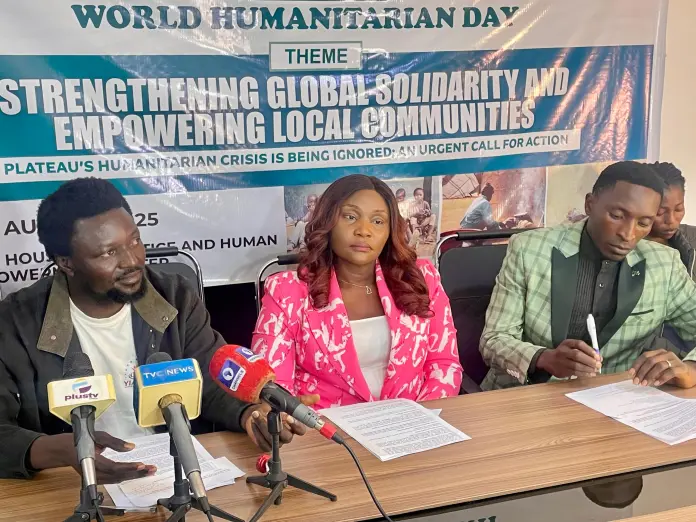
The Safe House for Justice and Human Empowerment Centre has warned of a rapidly escalating humanitarian emergency in Plateau State, saying the crisis has been dangerously neglected despite mass killings, large-scale displacement, and rising exploitation of vulnerable groups.
At a press briefing to mark World Humanitarian Day 2025 in Jos, the Centre’s Executive and Campaign Director, Barr. Edith Mankiling Gumut, described Plateau as the epicenter of “a protracted humanitarian catastrophe.”
“We are not here to commemorate, but to cry out,” Gumut declared. “Plateau’s suffering must not remain hidden. The world must act before this crisis swallows what is left of our humanity.”
Alarming Statistics and Testimonies
According to the Centre, at least 64 communities across Plateau have been completely displaced, turning once-thriving settlements into ghost towns. Families now crowd into churches, schools, and makeshift camps with little access to food, clean water, or healthcare.
Women and children—who form the bulk of the displaced—face the gravest risks. Reports point to sexual exploitation, gender-based violence, and child trafficking, with some children trafficked to other states and forced into domestic labor. The Ministry of Women Affairs recently rescued over 300 trafficked children from Bassa Local Government.
In many camps, some women and girls are resorting to “sex for survival.”
One grieving mother shared:
“I lost my husband to an attack. Now I must choose between feeding my children once a day or sending them to beg. No mother should face such a choice.”
Recent Violence and Displacement
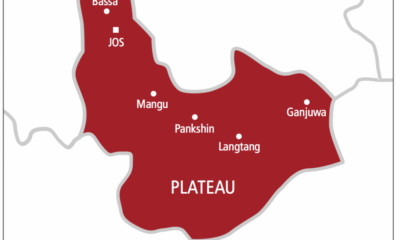
The Centre highlighted recent attacks in Bindi, Bassa, Riyom, Barkin Ladi, and Mangu, where villages were razed and dozens killed. In July alone, 27 people were buried in mass graves in Bindi, while over 24,600 people were displaced in a single wave of attacks.
Humanitarian monitors estimate that Plateau now hosts more than 1.3 million internally displaced persons (IDPs)—a 19% increase since late 2023.
Efforts and Gaps
While acknowledging interventions such as the ₦1 billion donation by First Lady Senator Oluremi Tinubu, and assistance from UNICEF, WHO, GIZ, NRC, and Search for Common Ground, the Centre stressed that these are “drops in an ocean of need.”
It warned that funding cuts and climate-related disasters are further deepening the crisis.

Calls to Action
The Safe House issued a threefold appeal:
- To donor agencies and philanthropists: Extend support beyond emergency relief to include peacebuilding, trauma healing, and livelihood restoration.
- To government authorities: Strengthen security through intelligence gathering, proactive deployment, and community policing, rather than reactive interventions.
- To citizens: Do not look away. “Your donations, no matter how small, can be a lifeline,” Gumut urged.
Final Warning
Concluding, the Centre cautioned that Plateau risks becoming a “forgotten crisis” if urgent and sustained action is not taken.
“The humanitarian crisis in Plateau is not just a statistic. It gnaws at the very soul of our people,” Gumut said. “We call on Nigerians, policymakers, and the global community—stand with Plateau, and let humanity prevail.”
📌 Media Contact:
Nennyinka Biska, Communications and Media Manager
Safe House for Justice and Human Empowerment Centre
Tel: 08066647731




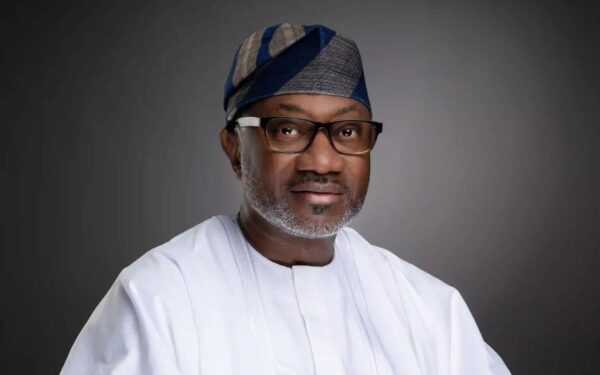
Femi Otedola, the chairman of First HoldCo Plc, has revealed that he shared a bunk bed with Lagos State Deputy Governor Obafemi Hamzat during their boarding school days 49 years ago.
Mr Otedola disclosed this in a post on X after hosting a dinner in honour of his longtime schoolmate, Mr Hamzat, attended by Aliko Dangote, the president of Dangote Group, and Abdulsamad Rabiu, the chairman of BUA Group.
The business tycoon said Mr Hamzat’s character has been defined over the years by honesty, sincerity, fairness, and strong moral principles.
“Yesterday, I hosted dinner in honour of @DrObafemiHamzat, the incoming Governor of Lagos State,” Mr Otedola said.
“A man of the highest integrity, with whom I shared a bunk bed at boarding school 49 years ago,” he added.
Mr Otedola stated that his longstanding relationship with Mr Hamzat has given him insight into the deputy governor’s character and values.


“My experience of his character over the years has been defined by his honesty, sincerity, fairness and strong moral principles,” Mr Otedola said.
READ ALSO: Tinubu’s reforms have put Nigerian economy on path of sustainable growth – Otedola
He, however, did not disclose the name of the boarding school he attended with the Lagos State deputy governor.
The billionaire investor has interests in financial services and oil & gas. He holds about 27.7 per cent of First HoldCo’s shares, following months of steadily increasing his stake in the banking group.
Mr Hamzat is seeking to contest the 2027 governorship election in Lagos State on the platform of the All Progressives Congress (APC), and has served as deputy governor under incumbent Governor Babajide Sanwo-Olu since 2019.
He emerged as the APC governorship candidate in May 2026.
Mr Hamzat served as Lagos State Commissioner for Science and Technology and later as Commissioner for Works and Infrastructure from 2005 to 2015.
Discover more from Premium Times Nigeria
Subscribe to get the latest posts sent to your email.

-
News2 days ago
NUCAP: Nigeria targets 20 million people with 3,700 telecom towers – Technology Times
-

 News3 days ago
Gunmen storm Plateau mining site, kill two persons
-
News3 days ago
Nigeria needs stronger collaboration ‘to shape internet governance’ – Technology Times
-
News1 day ago
Euromatch NPFL: Matchday 9 results

