Connect with us

News

Plateau slams schools over bandits’ attacks, parents lament

editor

Published

on

Plateau

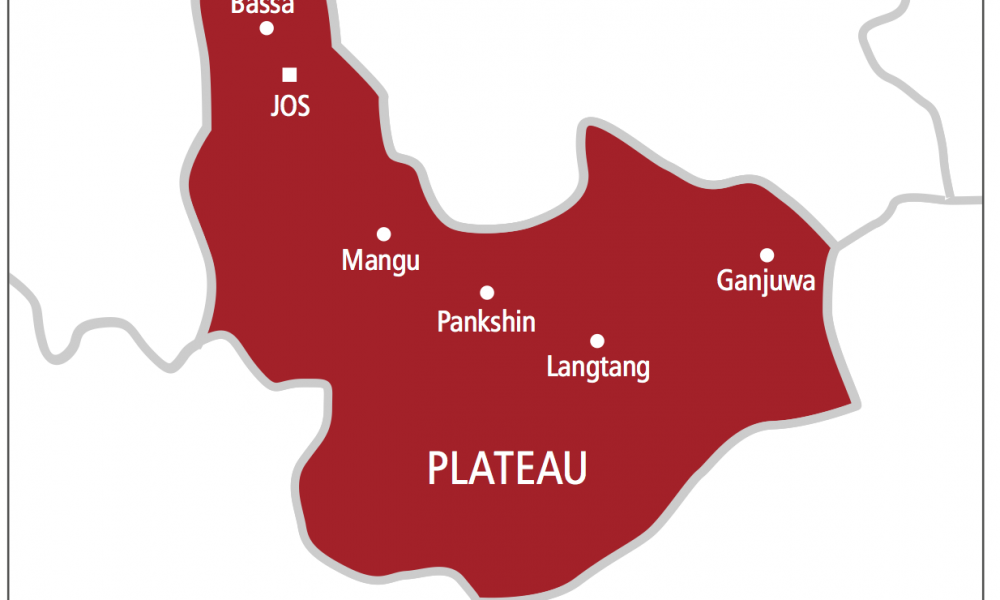
Following repeated attacks and killings by bandits in Plateau State, about eight schools have been shut down.

An investigation by news correspondents revealed that the schools shut down include the LEA Primary School in Pinau, Gumbi, Bangalala, and New Zak community, all in the Wase Local Government Area of the state.

Other schools shut down, according to findings, including those in Sanfio and Dogo Ruwa communities, as well as the primary school located in the Yaje Lawal community in the same Wase LGA, among others.

It is reported that bandits had been terrorizing residents of Wase LGA in the past months with the latest being an attack by gunmen on the Nyalun community which led to the killing of the village head, Salisu Idris, and two other residents last week.

Some parents in the affected communities, who spoke with newsmen in Jos on Sunday 23rd October 2022, lamented the situation, describing the closure of the schools as unfortunate.

A parent, Baba Yusuf, who had his two children in the LEA Primary School, Pinau community, before the school was shut down following the activities of bandits, said since the schools were closed, their children had been stranded without knowing where to go to continue their education.

“I have two children in LEA Primary School in Pinau, but they have stopped going to school because the school was closed as a result of insecurity. I think the primary school was closed to save the children from harm because some bandits have been terrorists us here. Yusuf said.

“It is not only in Pinau community, the same thing is happening in other communities in Wase which made them to close down the schools as well. Since last term when the schools were closed, they have not been reopened even when other schools resumed for a fresh term in September this year . So, right now that is the situation as we find it and our children are stranded without knowing where to go.”

The Executive Chairman of the Plateau State Universal Basic Education Board, Prof. Mathew Sule, in an interview also confirmed the shutting down of the schools due to insecurity.

“Yes, it is true. Learning isn’t taking place in about five schools in Wase communities right now because of the security challenge we are having in those communities.

“The children did not sit for exams the last term on account of what was happening because we had to close down the schools before we ended the third term and the affected schools are yet to be reopened. So, we are waiting for the situation to improve before the children can be brought back to the affected schools. But we have asked that the children be moved to safer areas where there are schools to enable them to continue with their education.”

When contacted, the spokesman for the Military Task Force, Operation Safe Haven, in charge of maintaining peace in the state, Capt. Oya James said everything was being done to address the security problem in Wase and other parts of the state.

“As I’m talking with you now, troops of Operation Safe Haven are still there in Wase for clearance operation. Even last week, we had an airstrike in that same Wase. So, we are doing our best to address this problem of banditry in Wase LGA.”

The Military spokesman appealed to the people to assist the task force and other security agents with timely information about the activities of the terrorists in enabling them to perform their duties.

Continue Reading
Click to comment

Leave a Reply

Your email address will not be published. Required fields are marked *

Business

Seven things to know about the Dangote refinery IPO

info

Published

on

By

Dangote Refinery 2 1024x831 1 e1778177983979.jpg

MTN ADVERT

Dangote Petroleum Refinery has opened its initial public offer to investors. Here are the key details.

1. The company is seeking about ₦2.15 trillion

The offer comprises 4.1 billion ordinary shares priced at ₦525 each. If fully subscribed, it will raise approximately ₦2.15 trillion.

2. The offer runs for one month

The IPO opened on September 14, 2026, and is scheduled to close on October 13, 2026.

PT WHATSAPP CHANNEL

3. Investors can start with ₦5,250

The minimum subscription is 10 shares. At ₦525 per share, eligible investors can participate with ₦5,250.

4. The IPO will broaden ownership of the refinery

Aliko Dangote described the transaction as an “IPO for the people.” Its low entry point is intended to give Nigerians across different income and professional groups an opportunity to own shares in the business.

5. The transaction could reshape Nigeria’s capital market

FCMB Group Chief Executive Ladi Balogun said the offer could strengthen the Nigerian Exchange and support its ambition to become Africa’s largest and most relevant capital market.

The transaction may also encourage other large African companies to raise capital and list their shares in Nigeria.

6. FCMB Group is participating in the transaction through three operating companies:

FCMB Capital Markets is a joint issuing house. CSL Stockbrokers is the stockbroker to the issue. First City Monument Bank is a receiving bank and distribution agent.

7. Qualified Investors and High Net Worth Individuals purchasing 50,000 shares and more, with a working stockbroking account should fill out the investor subscription form and credit their account of choice, sending both to FCMB Capital Markets at the following email address: [email protected]

8. Interested Retail investors with an FCMB bank account can subscribe to the DPRP IPO by following these steps: Log in to the FCMB Mobile App or visit website

Follow the prompts to the Dangote IPO subscription portal.

READ ALSO: Bamboo, Cowrywise down due to Dangote Refinery IPO subscription traffic

Select if you have a CSCS/CHN number.

If yes, fill in the number and follow the instructions.

If not, follow the prompts to open a trading account with CSL Stockbrokers, after which a code will be generated for you.

Ensure your FCMB bank account is sufficiently funded to cover your subscription and authorize the direct debit.

Investors without an FCMB bank account who want to participate in the DPRP IPO can visit the CSL portal to open a stockbroking account. Instructions for opening a bank account are available online.


Discover more from Premium Times Nigeria

Subscribe to get the latest posts sent to your email.

Continue Reading

News

We don’t need AI regulation — leave safety to us, Nvidia’s Jensen Huang says

info

Published

on

By

GettyImages 2219673294.jpg

Nvidia founder and CEO Jensen Huang made his position on the dangers AI poses very clear while speaking at Salesforce’s Dreamforce conference on Tuesday. To him, AI isn’t some new form of “alien mind,” as at least one OpenAI safety researcher has described it. It’s just hardware and software, he says, built by humans. That means, in his view, it can be controlled by humans and existing laws.

“Safety is an engineering problem, not a legal one,” he said. “We’re developing software after all. We’re developing computing systems after all. It’s a complicated computing system, but it’s ultimately a computing system.”

Therefore, there’s no need for new laws or regulations to govern it, he argues. In fact, Huang sees little need for new laws at all. The free market, he argues, will be enough to pressure companies not to release unsafe products.

“If we’re not confident about the safety of the products, like all companies, like you and I, all the companies here, if you build a product or a service, and you’re not confident in its functionality, capability, or safety, then don’t release it. And so that’s a very obvious thing to do,” he said.

He continued: “You pace yourself until you are confident you’re releasing something that the market would appreciate. The market forces are already there. We don’t need any new laws. We don’t need new regulations. We just need companies to decide that when [to] run as fast as they can. I think innovation, speed, and safe products … it’s a false choice. You could definitely have both at the same time. So run as fast as you can. But if you feel at any given point in time the company’s out of control, or the product’s not going to be safe, you know, take a pause and make sure you get it right.”

In some ways, this is a comforting thought. If anyone in the world knows AI, it is Nvidia’s founder, who’s been building the hardware brains of AI since well before ChatGPT existed and now runs a company that also makes open source models, agents, harnesses, and sandboxes.

Then again, if we’re being cynical, his point of view is also unsurprising for someone who’s had his bread so well buttered by the AI boom. Why would he want regulation to come along and add in a layer of hinderance that could slow down Nvidia’s quest to sell ever more AI systems and software? As he also said in the interview: “I’m more ambitious than ever. As a result of our ambition, and with the product productivity boost that we get from AI, the sky’s the limit for us. The sky’s the limit for our company. The sky’s the limit for every industry, for every single country.”

Unfortunately, even companies with the best intentions ship faulty products with unintended consequences, even software. Remember the 2024 CrowdStrike bluescreen-of-death fiasco that grounded thousands of flights and caused other havoc for businesses? Then there are companies accused of deliberately acting with less-than-good intentions. Meta just paid $18 billion to settle a lawsuit over social media harms to children.

And AI has already caused harm, too, whatever the intentions or safety testing involved, from an OpenAI model hacking into Hugging Face to lawsuits against the AI lab over the suicides of young people who engaged in long conversations with its chatbot.

The “leave them alone” strategy, which would let these companies release products as they see fit, could be an unwise approach to AI safety as far as society is concerned. Though Huang is right that it’s possible existing product liability laws could cover AI — if AI doesn’t somehow kill us all before enough cases get through the courts to test that theory.

He didn’t discuss the other route, which seems close to taking shape: industry self-regulation. Huang’s approach has been more to champion open-weight models and companies’ use of them as a competitive counterweight to proprietary AI labs.

But right now, the industry has a short window to institute self-regulation and to encourage AI labs worldwide, even those in China, to see the wisdom in participating. As Microsoft CEO Satya Nadella said at the All-In Summit on Monday, “China should also deeply care about the same safety concerns if the United States cares about them, right? Why should it be different for them? It’s not like they won’t have the same hacking problem. It’s not as if they don’t want to make sure that their citizens are benefiting from AI, just like we would want our citizens to benefit from AI.”

For now, though, if Huang is a no on any new AI regulation, he may be influential enough to get his way. He also demonstrated this week that he, quite literally, has the ear of President Trump.

When you purchase through links in our articles, we may earn a small commission. This doesn’t affect our editorial independence.

Continue Reading

Trending