Connect with us

News

Plateau Governor-Elect Visits Victims of Attacks/Scene of Jos Tanker Explosion, Commiserates with Bereaved Families, Survivors 

editor

Published

on

Governor Elect victims

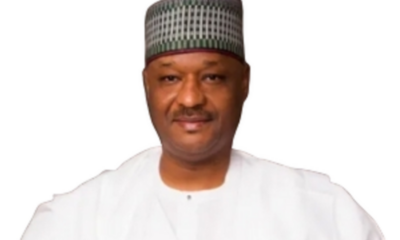
The Plateau State Governor-elect, Barr. Caleb Mutfwang has decried the renewed attacks in rural communities of Barkin-Ladi, Jos South, Mangu, and Bokkos Local Government Areas of the state recently where several lives have been lost and properties destroyed.

Barr. Mutfwang, who is heartbroken over the loss of innocent lives as a result of bandits activities called on security agencies to fish out the perpetrators of such dastardly acts and bring them to justice.

The incoming Governor, made his feelings known through the Deputy Governor-elect, Hon. Josephine Piyo when she led a delegation on a sympathy visit to Turu, Jos South Local Government, Heipang, Barkin Ladi Local Government area.

Accompanied by the Member representing Barkin-Ladi/Riyom Federal Constituency and Senator-elect for Plateau North, Dr. Simon Mwadkwon, the Speaker of Plateau State House of Assembly, Rt. Hon. Abok Nuhu Ayuba, Member representing Jos South Constituency, Hon. Gwattson Fom Dalyop and Senior Special Assistant on Special Duties, Mr. Moses Nwan, mni among other party stalwarts, the Deputy Governor-elect, conveyed the condolences of the Barr. Mutfwang to Farin-Lamba community in Turu District of Jos South Local Government Area over the bloody attack that led to the loss of artisan miners.

Hon. Piyo, who was at the Palace of Gwom Turu, Da Ezekiel James Dalyop said the Governor-elect of Plateau State is deeply pained by the news of the attack on the community.

“We are here on behalf of His Excellency, Barr. Caleb Mutfwang commiserated with the good people of Turu over the ugly incident that led to the loss of lives at a mining site. The death is not only a loss to the people of Turu but the entire Jos South Local Government Area and Nigeria at large. Our hearts are with you and may God Almighty comfort you all.”

Hon. Piyo was also at the residence of Mrs. Laitu David to commiserate with her over the demise of her husband, late Engr. Dalyop David Sabo in Turu and prayed for God’s comfort over the entire family.

The Gwom Turu, Da Ezekiel James Dalyop who received the Deputy Governor-elect and her team said the people of Turu are comforted by the visit, which he said will go along away in healing the wounds created by the unfortunate incident.

He expressed delight that the administration of Barr. Caleb Mutfwang will take proactive steps when sworn-in into office to address the resurgence of bloody attacks and provide a peaceful atmosphere for farmers as well as other law abiding citizens in the state to carry out their business activities without hindrance.

In the same vein, the Deputy Governor-elect, was at Tatu and Chil villages of Haipang District of Barkin-Ladi, where bandits laid ambush on the communities leading to the loss of lives.

She sympathised with the people, particularly the surviving widows, orphans and relatives and asked God to comfort them and avert a repeat of such sad and ugly occurrence.

The Acting Gwom of Tatu Da. Danjuma Chollom and Gwom Chil, Da. Gyang Dalyop in their separate remarks, expressed gratitude for the visit and said the entire communities are encouraged and comforted by the kind gesture.

At the Palace of Gwom Rwei of Haipang, the Deputy Governor-elect commiserated with the traditional ruler and the entire people of Barkin-Ladi over the unfortunate loss of lives and prayed for God’s intervention to end the attacks.

Receiving the delegation, the Gwom Rwei of Haipang, Da. Paul Tadi Tok assured the incoming administration of the support of his people in addressing issues of insecurity in order to pave the way for progress and development.

He encouraged communities in the state to take early warning signs very serious and report to security agencies, any strange movements around their localities for swift intervention.

The Deputy Governor-elect was similarly at the scene of tanker explosion at Bauchi Road in Jos North Local Government Area where innocent persons perished in the tragic inferno.

She commiserated with residents of the area and assured them of the support of the incoming administration in reorganising the city centre to curb such incidents and ensure free flow of traffic for healthy business transactions.

On his part, member representing Barkin-Ladi/ Riyom Federal Constituency and Senator-elect for Plateau North, Hon. Simon Mwadkwon assured the residents of “people oriented” legislations that will impact positively on citizens.

Hon. Mwadkwon noted that he would lobby to get legislative backing for the dualization of the Bauchi road to improve the living condition of the people.

Residents of the area including PDP Chairman, Jos North Local Government Area and a community leader, Alh. Sadis Mohammad among several stakeholders who were on ground to receive the delegation expressed gratitude for the visit and described it as timely in healing the broken-hearted as a result of the incident.

Continue Reading
Click to comment

Leave a Reply

Your email address will not be published. Required fields are marked *

News

Basketball Federation President Musa Kida Reiterates Importance Of NBBF’s U18 Programme Schedule

info

Published

on

By

Basketball Federation president Musa Kida.jpeg

The president of Nigeria Basketball Federation (NBBF), Engineer Ahmadu Musa Kida has reiterated that the body’s under-18 programme scheduled that was released during the week is aimed at ensuring the country gets proper representation internationally.

Sports247 reports that Kida went on to reveal that the NBBF is committed towards enhancing the development of Nigerian basketball with adequate opportunities for both male and female players to further develop at home and abroad.

Read Also: Badminton Ex-internationals, Former State Players Get Opportunities To Coach Nigeria’s National Teams

He went on to explain that the internal and external targets informed the release of an elaborate programme schedule for the country’s boys’ and girls’ national teams into the 2026 FIBA Africa U18 Championship and other competitions.

The NBBF boss further pointed out that, in line with the federation’s commitment to creating opportunities for Nigerian athletes globally, a training and evaluation camp will hold for Nigerian players in Chicago, USA from July 24th to 26th.

Kida affirmed that the camp will provide an opportunity for eligible Nigerian players based abroad to compete for places on the final rosters, while strengthening the connection between the NBBF and its growing diaspora talent pool.

The final phase of preparation will see all selected players from Nigeria and the diaspora gather in Côte d’Ivoire from July 27th to August 2nd for a joint-camp that will focus on team chemistry, tactical preparation and final roster integration.

Both the boys’ and girls’ national teams will then compete at the 2026 FIBA U18 Afrobasket Finals in Côte d’Ivoire from August 3rd-16th, thereby highlighting the NBBF’s commitment to youth development and sourcing for future national team players.

Kida added, “This programme is designed to identify talent across Nigeria, provide opportunities for our diaspora players, and ensure our teams receive the appropriate preparation necessary to compete successfully on the continental stage.

“The future of Nigerian basketball lies in the development of young athletes. The addition of Benin City to our tryout locations demonstrates our commitment to expanding access and discovering talent from every part of the country.”

Continue Reading

News

The token bill comes due: Inside the industry scramble to manage AI’s runaway costs

info

Published

on

By

GettyImages 1316461644.jpg

Across the industry, companies are starting to balk at the price of AI. Uber blew through its entire 2026 AI coding budget by April. Microsoft revoked its developers’ Claude Code licenses months after enabling them. A Priceline employee told TechCrunch that a routine Cursor contract renewal came back 4-5x more expensive.

Even though per-token prices have fallen, the push for more AI adoption and increasingly autonomous agents have driven token consumption higher and higher. Companies that gorged themselves in early 2025 on all-you-can-eat subscriptions are now scrambling to understand where their money is going, pull back spending, and figure out whether they can salvage some ROI from the wreckage of their budgets.

Meanwhile, a market is forming to meet them there. Startups, established vendors, and a new standards body are all racing to give companies the tools and language to track what they spend.

“Six months ago, I would have a conversation with a customer and it would be all about ‘What can it do? Is it good enough?’” Alexander Embiricos, OpenAI’s head of enterprise, told TechCrunch at an event in New York City this week. “Our conversations are never about that now. Now the conversations are about, ‘hey, we’re spending so much. What visibility do you have? What auditability do you have? What token controls do you have? What is the efficiency of your models?’”

It’s against this backdrop that the Linux Foundation this week unveiled plans for the Tokenomics Foundation, a new standards body that aims to instill the same cost discipline around AI tokens that FinOps did for cloud spend.

“In April and May, I started hearing from companies: ‘Oh my god, we are 3x over our entire 2026 token budget and it’s only April,’” J.R. Storment, executive director of the FinOps Foundation, a project under the Linux Foundation, told TechCrunch. “We started hearing existential crises, and the whole conversation shifted from tokenmaxxing and ‘go fast’ to ‘we need guardrails, how do we control this?’”

The cries heard round the tech world followed fervent demands from CEOs pushing their teams to use the best models and move fast, costs be damned. New models released in November like Anthropic’s Claude Opus 4.5, OpenAI’s GPT-5.1, and Google’s Gemini 3 Pro brought significant improvements to agentic tools, which have multiplied consumption. It’s how one company reportedly found itself with a $500 million Claude bill after forgetting to set usage limits for employees. 

“It’s like the crack-cocaine epidemic,” said Chris Reed, senior director of IT finance at Priceline, noting the company had begun placing token limits on certain groups. “They let you try it to get you hooked on it, and now you’re kind of beholden to it.”

Vitaly Gordon, CEO of engineering operations platform Faros AI, said he recently spoke to a CTO who told him: “One of my engineers spent $40,000 on tokens last month, and I genuinely don’t know whether I should stop him or should I go and tell everyone else to be like him.“

A March survey by Faros found that among 20,000 developers, output was rising, but so were bugs and rewrites. Jellyfish, an engineering management platform, similarly found engineers who used the most tokens were about twice as productive as those who used AI less, but they spent 10x the number of tokens to get there.

Nicholas Arcolano, head of research at Jellyfish, told TechCrunch via email that expenditure on AI is exploding in large part due to agentic features, with per-developer consumption rising about 18.6x in nine months. All in all, these stats make the productivity case murkier than the spending suggests.

“Whether extreme spend pays off comes down to the ultimate business value of shipped code (e.g. revenue), which most companies still can’t measure,” Arcolano said.

At least some of that measurement issue is the sheer scale at which AI is being used today.

“Tracking cloud costs is a hundreds-of-millions-of-rows-a-month data problem,” Storment said. “Tracking token costs is a trillions-of-rows-a-month data problem. You can’t just stick that into whatever spreadsheet or even basic tool. You’ve got to fundamentally rethink your tooling, your specs and your accounting systems to do that.”

At Priceline, Reed is already seeing discrepancies. He noted issues between a vendor’s reported usage and Priceline’s internal data.

“I started my career in telecom expense management, and I’m seeing all the same parallels, from telecom to cloud to AI,” he said. “Anytime you introduce something new, it’s ripe for billing errors and audit and optimization opportunities.”

A market is beginning to form around this problem. There are the pure-play companies, like Pay-i, which tracks, measures, and optimizes the costs and performance of GenAI investments. Paid, meanwhile, lets developers track costs, measure usage, and bill users based on actual value rather than subscription fees.

Then there are companies like Jellyfish, Waydev, and Faros AI, which all provide AI agent monitoring to prove the ROI of developer tools. Storment says most of the 180 vendors within the FinOps Foundation are leaning toward this space. 

Companies with existing distribution are also adding new features to capitalize on this new market. Ramp has recently moved into AI spend management; Datadog and New Relic have tacked on services like cloud cost management, token-level observability, and GPU monitoring. At the FinOps X conference next week, AWS is expected to introduce new financial management features geared toward enterprise AI spending.

Tiffany Luck, a partner at NEA, thinks token efficiency and observability will likely be added in at the “harness or app layer.” She pointed to Factory, a startup that makes AI agents for enterprises, which this week launched a model router that automatically picks the right model for every task. 

Gordon expects frontier labs and other model providers to adopt OpenRouter-style optimization to drive queries to the cheapest models — a trend already showing up on enterprise Claude bills. 

“The financial report for how much you spend on Anthropic, even if you call the Opus model, some of the spend will be on Sonnet or Haiku, because they are smart enough to do it,” Gordon said. “I think this will become more and more of a thing.”

But all these tools are being built without a common language or shared definitions for how much a token costs, what it produces, and how to compare spend across vendors. That’s where the Tokenomics Foundation hopes to prove useful.

The Foundation is building a canonical definition and framework for “tokenomics;” open standards, specifications and metrics for AI token usage and billing; as well as new metrics for AI economics, like cost-per-intelligence or tokens-per-watt. It also plans to define metrics across token factory effectiveness and consumption efficiency. The group is planning a formal launch in July, and is about to announce more members at the FinOps X conference next week. 

“Token economics is fundamentally more abstract and opaque than anything we’ve managed at this scale before,” Nishant Gupta, chief availability officer at Salesforce, said in a statement. “It requires a different operational muscle than the one the industry built for cloud.”

That said, Goldman Sachs projects global token usage to multiply by 24 times by 2030. The companies already over budget need solutions now, and the foundation’s first deliverable is still months away.

“Maybe we created a steam engine, but we still haven’t figured out the assembly line,” said Gordon.

According to Arcolano, the smart move is broad, moderate adoption. 

“The best ROI comes from moving the broad middle from low to moderate usage, not pushing heavy users higher,” he said.

Russell Brandom and Tim Fernholz contributed to this reporting.

When you purchase through links in our articles, we may earn a small commission. This doesn’t affect our editorial independence.

Continue Reading

Trending