Connect with us

News

Gov. Mutfwang Signs Harmonized Tax, 2025 Appropriation Bills Into Law

info

Published

on

Muf

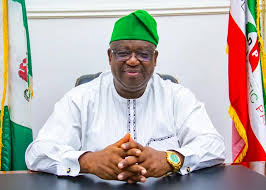
Plateau State Governor, Caleb Mutfwang, has signed into law two major bills passed by the State House of Assembly, marking a significant step in the state’s fiscal and administrative reforms.

The first legislation, the Harmonized Taxes and Levies (Approved for Collection and Coordinated Matters) Law, 2025, forms part of a new tax regime expected to take effect on January 1, 2026.

The law seeks to streamline tax administration, curb multiple taxation, and strengthen internally generated revenue mechanisms across the state.

The second legislation is the 2025 Appropriation Law, which authorizes the withdrawal and use of funds from the Consolidated Revenue Fund of Plateau State.

The law provides the statutory backing for government spending in the 2025 fiscal year following the passage of the budget by the state legislature.

Governor Mutfwang assented to both bills during a brief ceremony at Government House, Jos, on December 31, 2025.

The event was attended by the Speaker of the Plateau State House of Assembly, Naanlong Daniel, principal officers of the Assembly, the Secretary to the Government of the State, the Chief of Staff, the Attorney General, and members of the State Executive Council.

The governor commended the legislature for what he described as a collaborative and reform driven approach to law-making, noting that the new laws would enhance transparency, accountability, and sustainable development in Plateau State.

With the governor’s assent, both laws have now come into full effect, laying the foundation for improved fiscal management and governance in the state.

Continue Reading
Click to comment

Leave a Reply

Your email address will not be published. Required fields are marked *

News

Police, INEC report voting proceeding smoothly in Kano bye-election

info

Published

on

By

INEC 1.jpg

The Kano State Police Command and the Independent National Electoral Commission (INEC) have said voting is proceeding smoothly in the ongoing Dawakin Kudu State Constituency by-election in Kano State.

The Commissioner of Police, Ibrahim Adamu Bakori, alongside the Resident Electoral Commissioner (REC), Abdu Zango, and members of the Inter-Agency Consultative Committee on Election Security (ICCES), monitored the election across several polling units in Dawakin Kudu Local Government Area on Saturday.

During the monitoring exercise, the delegation assessed the deployment of security personnel, the conduct of INEC officials and voters’ compliance with electoral guidelines.

The Police Command said the election was progressing peacefully, with voters conducting themselves in an orderly manner while security operatives maintained professionalism and neutrality at polling units.

Recommended

“As at the time of this report, the electoral process is proceeding smoothly, with voters turning out in an orderly manner and security operatives maintaining neutrality and professionalism across all polling locations,” the command said.

The REC commended the police and other ICCES member agencies for working together to ensure a peaceful atmosphere for the election.

According to the Police Command, Zango praised the security agencies for their “synergy, professionalism and proactive measures” throughout the exercise.

Bakori also assured residents that security personnel would remain on duty until the collation of results and the official announcement of the election outcome were completed.

Continue Reading

News

Tinubu directs states to reduce transportation costs with CNG 

info

Published

on

By

1001768263 e1783452902133.jpg

President Bola Tinubu has restated his government’s resolve to focus on efforts to implement the newly established National Affordable CNG Transit Programme, rather than return to fuel subsidy, which caused a strain on the economy.

Mr Tinubu, in a statement on Saturday, stated that the resolve was made after he met with the 36 state governors on August 27, when they agreed that from October 1, measurable reductions in transportation costs must be experienced across the country.

Mr Tinubu said, “On August 27, I met with the governors of our 36 states, and we agreed on a clear objective. From October 1, more Nigerians should begin to see measurable reductions in transportation costs.

“We subsequently established an implementation committee for the National Affordable CNG Transit Programme under the auspices of the Nigeria Governors’ Forum, chaired by Governor AbdulRahman AbdulRazaq.

“Over the last three years, my administration has deliberately invested in building a CNG transportation ecosystem across Nigeria. Today, more than 120,000 vehicles have been converted; we have over 400 certified conversion centres and more than 90 CNG refuelling stations across the country, and these figures are increasing daily.

“At a time like this, our answer cannot be to return to the ruinous petrol subsidy regime that consumed trillions of naira and left our economy exposed to every movement in international oil prices, as some have suggested. We must accelerate the cheaper alternatives we have been building at home.”

Mr Tinubu acknowledged the ongoing efforts by the committee, PI-CNG & EV, the states and other critical stakeholders to identify priority transport corridors, determine appropriate interventions and put the necessary arrangements in place, especially amid the current global energy crisis.

The president stated that Nigerians in Borno, Kaduna, Oyo, Adamawa, Enugu, Plateau, Niger, Delta, Kwara and Lagos states, as well as Abuja, were already experiencing evidence of possible cheaper transportation from cheaper energy sources.

He stated that as disruptions to global energy supplies were again putting pressure on petrol and diesel prices, as well as increasing transportation costs worldwide, Nigeria, although unable to control events in global energy markets, must, as a gas-rich nation, reduce its exposure to global energy challenges.

Mr Tinubu encouraged each state to maintain the momentum towards October 1 by working with transport unions and commercial operators, supporting conversion and fleet deployment, facilitating the infrastructure required, and ensuring that savings from cheaper energy reach Nigerians through lower fares.

He vowed that his government would keep supporting “the scaling of CNG infrastructure and access, expand conversion capacity, and create the enabling environment for states, transport operators, manufacturers and private investors to participate.”

He stated that Nigeria, with its gas, current building of infrastructure and financial savings, must move faster and scale it so that more Nigerians would also feel the savings in the daily fares they pay.

Continue Reading

Trending