Connect with us

News

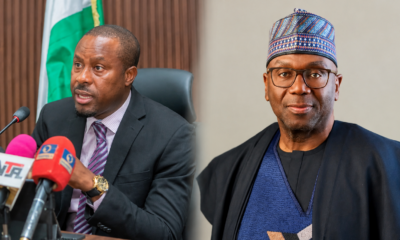
Peter Obi’s acceptance in North still in doubt despite Kwankwaso’s support base – Muhammad, Ibrahim 

info

Published

on

Peter Obi 5.jpg

A political alliance between former Labour Party presidential candidate, Peter Obi, and the leader of the Kwankwasiyya movement, Rabiu Musa Kwankwaso, is already generating fresh conversations ahead of the 2027 presidential election.

Although neither politician has officially emerged as the presidential candidate of the Nigeria Democratic Congress (NDC) yet, both men are seen as preferred candidates to contest against the ruling party and other strong opposition parties in the next election cycle.

Political observers believe the talks are largely driven by the electoral realities of the 2023 presidential election, where both candidates recorded impressive but regionally limited performances.

Obi secured more than six million votes nationwide under the Labour Party and won 11 states alongside the Federal Capital Territory (FCT). However, in the northern region, his victories were limited to Plateau and Nasarawa states, as well as the FCT, where he enjoyed considerable support.

Kwankwaso, who contested on the platform of the New Nigeria Peoples Party (NNPP), won Kano State and secured nearly one million votes, reinforcing his influence in the North-West.

The proposed alliance is now raising questions about whether Kwankwaso’s northern political structure could help Obi improve his acceptance across the region in 2027.

Speaking with DAILY POST in an exclusive interview, political analyst and lecturer at the Aliko Dangote University of Science and Technology, Professor Murtala Muhammad, said Obi’s appeal in the North during the 2023 election was mostly concentrated among urban youths and citizens seeking alternatives to mainstream political parties.

“Peter Obi demonstrated some electoral strength in parts of Northern Nigeria during the 2023 presidential election, particularly in Abuja and among urban youths, middle-class voters, and citizens dissatisfied with the traditional political establishment,” he said.

According to him, electoral trends showed that Obi’s strongest support base remained outside the North.

“Electoral analyses estimated his northern vote share at roughly 14 per cent, compared to over 40 per cent in Southern Nigeria,” Muhammad stated.

He explained that while an alliance with Kwankwaso could strengthen Obi’s chances in Kano and parts of the North-West, it may not significantly alter the broader regional voting pattern.

“Although a potential alliance with Rabiu Musa Kwankwaso could improve Obi’s competitiveness, particularly in Kano through the Kwankwasiyya movement, it does not automatically guarantee widespread northern support,” he added.

Muhammad argued that voting behaviour across most parts of the North-West is still heavily influenced by religion, regional identity, longstanding party loyalty, and local political interests.

“Consequently, many northern voters may still be reluctant to support Obi despite Kwankwaso’s endorsement, making it analytically inaccurate to assume that Kwankwaso’s northern identity alone can deliver the wider North-West voting bloc to Obi,” he said.

Also speaking on the development, Kano-based politician and State House of Assembly aspirant, Aminu Abdullahi Ibrahim, acknowledged that Obi has gained more visibility among northern youths since the last election.

“I believe Peter Obi has gained a level of popularity in parts of northern Nigeria, especially among young people, urban voters, Christians in the North-Central region, and Nigerians who are frustrated,” Ibrahim said.

He maintained, however, that Obi still faces stiff political limitations in the core North-West states, where established political structures remain dominant.

“His popularity in the core North-West, particularly in states like Kano, Katsina, Jigawa, Kebbi, Sokoto, and Zamfara, still remains limited when compared to established northern political figures such as Atiku Abubakar,” he added.

Despite those limitations, Ibrahim said a merger between both politicians could still create a stronger opposition platform than what existed during the 2023 election.

“That said, if Peter Obi and Kwankwaso eventually form a political alliance ahead of future elections, it could make a significant difference compared to 2023,” he stated.

According to him, any serious challenge in 2027 would depend on more than just popularity or online support.

“They require strong grassroots mobilization, party unity, trusted local structures, religious and ethnic balancing, and the ability to protect votes across polling units. Even if Obi and Kwankwaso work together, translating public excitement into nationwide electoral victory will still be a major challenge,” Ibrahim said.

As coalition discussions continue, analysts say the success of any Obi-Kwankwaso partnership may ultimately depend on whether both politicians can transform their individual regional strengths into a truly national political movement capable of competing across Nigeria’s diverse electoral landscape.

Continue Reading
Click to comment

Leave a Reply

Your email address will not be published. Required fields are marked *

News

Party Deregistration: ADC youth wing petitions NJC, demands Lifu’s removal

info

Published

on

By

1002424168.jpg

The National Youth Wing of the opposition African Democratic Congress, ADC) has written a formal petition against Justice Peter Odo Lifu, demanding his removal “from any and all adjudicatory matters, reviews, or decision-making roles concerning the ADC.”

The petition, dated June 18, 2026, was addressed to the Executive Secretary, National Judicial Council (NJC), and signed by the ADC’s national youth leader, Comrade Balarabe Rufai. 

While reading the content of the petition to media in front of the ADC National Secretariat, Comrade Rufai, who was represented by Comrade Ibrahim Garba Wala, alleged that there were attempts to prevent them from submitting the petition at the NJC. 

According to him, all roads leading to the NJC, on Thursday were barricaded by heavily armed security agents; hence, the need to present the petition to the public. 

The petition reads, “We demand the immediate, total removal of Hon. Justice Peter Odo Lifu from any and all adjudicatory matters, reviews, or decision-making roles concerning the ADC. Furthermore, given his pattern of flagrant judicial rascality, we explicitly demand that the National Judicial Council recommend his absolute dismissal from the Nigerian judiciary to preserve the fading credibility of the bench.

“Our democratic architecture is under a coordinated assault by compromised custodians of the law. Under suit number FHC/ABJ/CS/2637/2026, Hon. Justice Peter Odo Lifu delivered a highly controversial ruling ordering the Independent National Electoral Commission (INEC) to deregister the ADC and four other political parties. This judgment is not an honest legal error; it is a calculated, politically motivated act designed to shrink the democratic space in Nigeria and artificially consolidate a two-party monopoly.”

While lamenting what he described as “legal distortions and judicial rascality tying Justice Lifu to this systemic compromise,” the ADC Youth leader said, “Justice Lifu brazenly proceeded with this judgment despite a binding Court of Appeal order that explicitly stayed proceedings on this matter, a move that subverts the sacred doctrine of stare decisis and constitutes gross misconduct.”

“The bench looked away as the plaintiffs, the Incorporated Trustees of the National Forum of Former Legislators, clandestinely altered their legal personality midway through the process without a valid court order.

“While the NJC has previously dismissed certain claims due to standard procedural hurdles, the persistence of these identical accusations across multiple petitions—including those by the Chairman of the Boot Party—proves a systemic erosion of public trust.

“We cannot watch the political rights of millions of young Nigerians be auctioned off by compromised benches. The continuous involvement of Justice Lifu in ADC affairs completely destroys public trust and makes a mockery of fair hearings. As the protectors of our nation’s future, we declare that when the bench compromises its integrity, the youth will become the courtroom of public conscience. The ballot box belongs to us, and we will not allow any court to rob us of our political expression.”

“Until the Council acts to protect institutional integrity, enforces discipline, completely recuses this individual from our affairs, and begins the process for his immediate sack from the bench. Respectfully submitted on behalf of the Nigerian youth during a live protest.”

This comes as Lifu, in a judgment, ordered the Independent National Electoral Commission to deregister five opposition parties, including ADC. 

However, following widespread condemnation, the appeal court ordered a stay of execution of the judgment. 

Continue Reading

News

IPCR, SFCG urge action to save democracy from conflict drivers

info

Published

on

By

IMG 6006.jpeg

The Institute for Peace and Conflict Resolution (IPCR) and Search for Common Ground (SFCG) have called for efforts to address conflict drivers threatening democracy.

The organisations made the call on Thursday in Abuja at a joint news conference to commemorate the 2026 Democracy Day.

The Director-General of IPCR, Dr Joseph Ochogwu, said democracy remained the best form of government and depended on active citizen participation.

According to him, weak civic engagement, voter apathy and poor democratic culture continue to challenge democratic consolidation in Nigeria.

Mr Ochogwu said IPCR’s conflict assessments showed that many pressures on democracy stemmed from citizen disengagement rather than democracy itself.

He urged Nigerians, especially youths, to participate actively in elections and governance processes to strengthen democratic institutions.

The IPCR boss described electoral violence, intimidation and coercive political practices as serious threats to democratic development.

He called on political actors, electoral institutions, security agencies, media organisations and civil society groups to promote peaceful political engagement.

Mr Ochogwu also expressed concern over the increasing monetisation of politics, saying it excluded ordinary citizens from meaningful participation.

He identified terrorism, banditry, organised crime and violent extremism as major threats undermining governance and public confidence in institutions.

Responding to questions, Mr Ochogwu said insecurity would not prevent the conduct of elections in 2027.

He urged Nigerians not to lose hope in the country and to continue supporting democratic processes.

The Director of Programmes, Search for Common Ground,  Gift Omoniwa, said protecting democracy required addressing insecurity and conflict drivers.

Mrs Omoniwa said banditry, kidnapping and violent extremism continued to threaten peace, stability and democratic governance across Nigeria.

She stressed the need for inclusive approaches that address root causes of conflict and promote peaceful coexistence.

According to her, vulnerable youths remain targets for recruitment by violent groups, posing risks to national security and democracy.

She advocated greater youth empowerment, economic opportunities and meaningful participation in governance processes.

Mrs Omoniwa disclosed that SFCG and IPCR recently conducted conflict assessments in Benue, Nasarawa, Plateau and Taraba states.

She said the findings were being shared with stakeholders to support evidence-based interventions and conflict prevention efforts.

The interventions include strengthening early warning systems, peace committees and livelihood programmes in affected communities.

Mrs Omoniwa expressed confidence that the measures would support peaceful and credible elections in 2027.

She reaffirmed SFCG’s commitment to working with government institutions, civil society groups and communities to promote peace and democratic governance. 

(NAN)

Continue Reading

Trending