Connect with us

News

NIHSA issues flood alert for 1,841 Bauchi communities, 16 other states

info

Published

on

600DB7A0 0FA9 4687 8520 2B857C9B401B scaled.jpeg

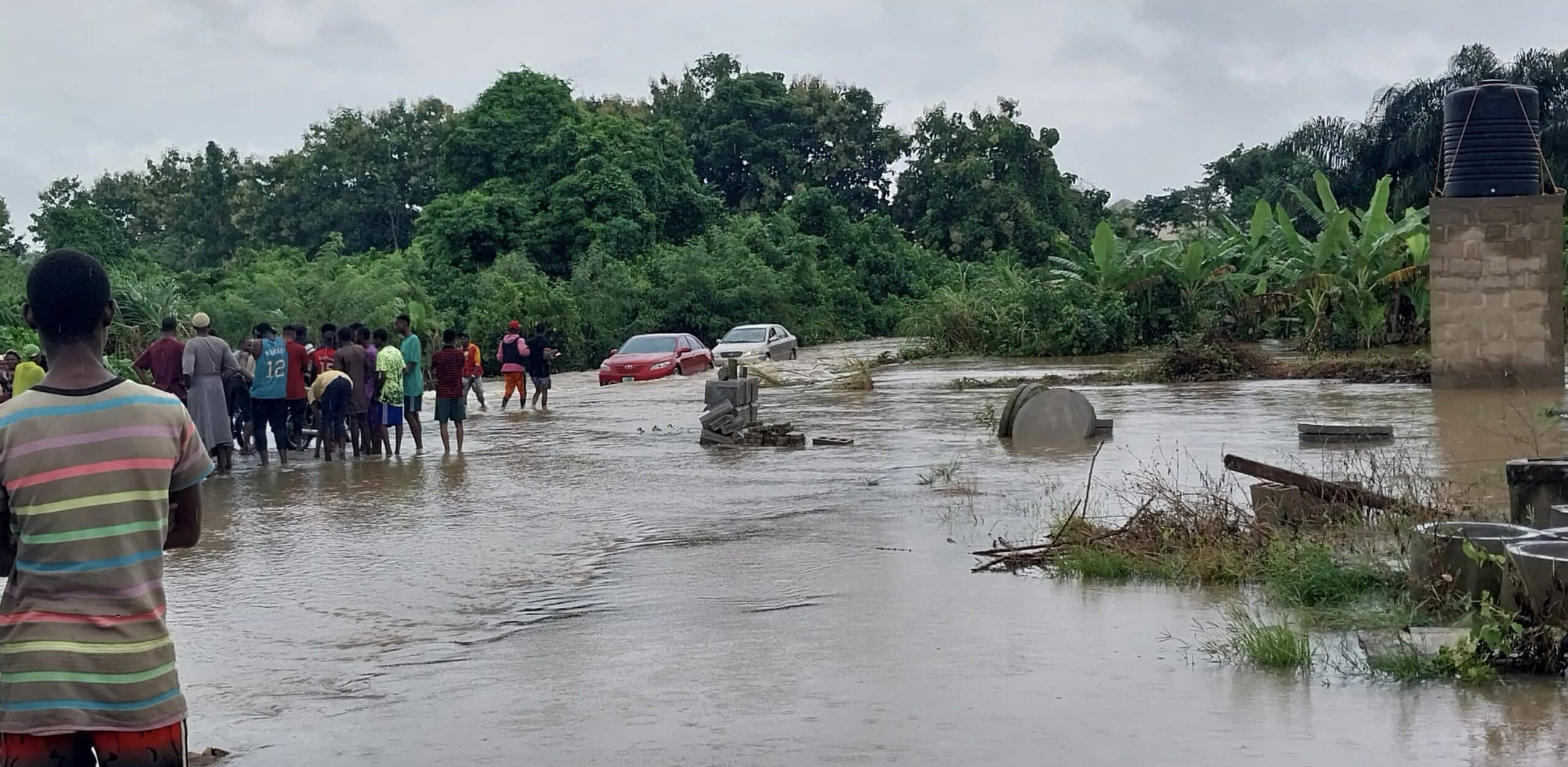
The Nigeria Hydrological Services Agency (NIHSA) has issued a seven-day flood advisory, warning of a medium flood risk in 17 states between July 21 and July 27.

The agency said the alert followed rising water levels at key river monitoring stations, increasing the likelihood of localised flooding along river channels and floodplains.

NIHSA Director-General, Umar Mohammed, disclosed this in the National Flood Advisory (Alert No. NFA-2026-200) issued on Tuesday.

He said the affected states are Adamawa, Bauchi, Benue, Borno, Edo, Gombe, Imo, Jigawa, Kaduna, Kano, Kebbi, Nasarawa, Niger, Plateau, Taraba, Yobe and Zamfara.

According to Mr Mohammed, river levels at Saminara on the Karam River, Waya Dam Site on the Waya River and Amber on the Amber River had exceeded watch and warning thresholds.

He said 16 gauging stations nationwide were recording elevated river stages, placing nearby communities at risk of localised flooding.

Mr Mohammed urged state governments, local authorities and residents of flood-prone communities to take precautionary measures immediately.

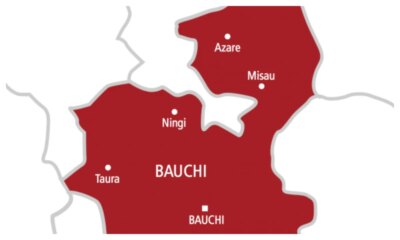
NIHSA said Bauchi had the highest exposure, with 1,841 communities, 145 schools, 101 health facilities and eight markets identified as vulnerable.

The agency also identified vulnerable communities and public facilities in Edo, Imo, Kaduna, Plateau and Benue states.

Mr Mohammed urged the National Emergency Management Agency (NEMA), State Emergency Management Agencies (SEMAs), local governments and community leaders to activate emergency response plans.

He recommended relocating residents, livestock and valuables from floodplains to safer locations.

He also advised emergency agencies to pre-position food, medical supplies and water treatment materials in areas likely to be affected.

The NIHSA boss called for community mobilisation through early warning volunteers and local communication channels to ensure timely dissemination of flood alerts.

He cautioned residents against walking, driving or riding through flooded roads, bridges and fast-flowing waterways.

Mr Mohammed further urged authorities to clear blocked drains, culverts and waterways to improve water flow and reduce flooding.

He advised the public and relevant agencies to monitor daily flood updates and advisories issued by NIHSA.

(NAN)

Continue Reading
Click to comment

Leave a Reply

Your email address will not be published. Required fields are marked *

News

Smartphone data boom raises cybersecurity risks across Africa – Technology Times

info

Published

on

By

Internet boom.jpg

Cybersecurity experts have warned smartphone users across Africa to strengthen their digital security practices as mobile devices increasingly become the primary gateway to the internet and repositories for sensitive personal and professional information.

The warning follows a survey by cybersecurity firm Kaspersky, which found that almost 60% of respondents across the Middle East, Türkiye and Africa (META) now regard smartphones as their main devices for accessing the internet, with computers increasingly becoming secondary tools.

The survey, conducted by Kaspersky’s Market Research Centre in March 2026, covered 7,200 respondents across 18 countries. Younger users are driving the shift, with 67% of respondents aged 18 to 28 identifying smartphones as their primary internet-connected device, according to the survey.

For Nigeria, where smartphones are increasingly central to banking, social media, work and access to government services, the trend creates a larger security surface for users and organisations. Nigeria had 157 million internet users as of July 2026, with mobile devices serving as a major channel for accessing online services.

Cybersecurity experts have warned smartphone users across Africa to strengthen their digital security practices as mobile devices increasingly become the primary gateway to the internet and repositories for sensitive personal and professional information. Image credit: AI.

Kaspersky said the amount and variety of sensitive information stored on smartphones has expanded significantly as users increasingly rely on the devices for both personal and professional activities.
Personal photographs and videos remain the most common categories of data stored on smartphones, with nearly two-thirds of users keeping visual memories on their devices.
Other commonly stored information includes contact details, reported by 51% of respondents; text messages and chat histories, 45%; and personal documents such as identity cards and passports, 43%.

Smartphones hold growing volumes of sensitive data

Kaspersky said the amount and variety of sensitive information stored on smartphones has expanded significantly as users increasingly rely on the devices for both personal and professional activities.

Personal photographs and videos remain the most common categories of data stored on smartphones, with nearly two-thirds of users keeping visual memories on their devices.

Other commonly stored information includes contact details, reported by 51% of respondents; text messages and chat histories, 45%; and personal documents such as identity cards and passports, 43%.

The survey also highlighted the growing overlap between users’ personal and professional digital lives.

According to Kaspersky, 37% of respondents store work emails on their smartphones, while 22% keep calendars and 17% store credentials for corporate systems on their devices.

Financial information and login details were found on 40% of smartphones, while newer categories of digital information are also becoming part of users’ mobile data footprints.

The survey found that 30% of respondents store AI chat histories on their devices, while 26% keep gaming account information.

The findings suggest that a compromised smartphone could provide access to multiple categories of personal, financial and professional information rather than a single type of data.

“Now our smartphones serve as full-featured assistants that touch every aspect of our lives. The data we entrust to them goes far beyond photos, phone numbers or text messages,” said Anton Kivva, cybersecurity expert at Kaspersky.

“Consequently, the main question is no longer what we store, but how we protect it, requiring security to become as integral to the device as the data it carries,” he said.

Nigeria faces growing mobile security threats

The increasing dependence on smartphones comes as Nigerian cybersecurity authorities continue to warn about threats targeting mobile devices and online users.

Nigeria’s Computer Emergency Readiness and Response Team, ngCERT, and the National Information Technology Development Agency (NITDA) have issued warnings about malware threats affecting Android devices, including malicious software capable of causing data loss, financial fraud and device compromise.

ngCERT has also warned of cyber incidents affecting organisations in Nigeria, including phishing, ransomware, business email compromise and data breaches.

The risks are particularly significant as smartphones become gateways to financial services, education, employment and government platforms.

A compromised device could expose users to identity theft, financial losses, account takeover and privacy breaches, depending on the information and applications accessible from the device.

Kaspersky blocks millions of mobile attacks

Kaspersky said its security systems prevented more than 2.67 million attacks involving malware, adware and unwanted mobile software globally during the first quarter of 2026.

The company also reported discovering more than 306,000 malicious mobile application installation packages during the period.

The figures underline the scale of threats targeting mobile users as smartphones become more deeply integrated into everyday activities.

Kaspersky said many users nevertheless continue to overlook basic security measures, including regular backups, device protection and safe browsing practices.

It advised users not to keep important information in only one location and recommended maintaining backups of sensitive files, including identity documents and financial information.

The cybersecurity company also recommended using security tools capable of detecting malicious applications and phishing attempts.

Other measures include enabling automatic software updates, using screen locks and activating device-tracking features to help locate or secure lost smartphones.

Kivva urged users to regularly assess how they would respond if their devices were lost, stolen or compromised.

“When was the last time I backed up my photos or notes? What’s my plan if my phone goes missing? Do I verify links before I click them?” he said.

Mobile security becomes a digital hygiene priority

For many Nigerians, smartphones now provide a single access point to financial services, communication platforms, education, employment opportunities and government services.

That concentration of personal and professional activity makes mobile security an increasingly important part of digital hygiene.

Kaspersky’s findings point to a shift in the role of smartphones from communication and entertainment devices to repositories for identity, financial, professional and increasingly AI-generated information.

As smartphone adoption and mobile internet use continue to expand, users are being urged to strengthen basic protections, including unique passwords, multi-factor authentication, timely software updates, secure screen locks, regular backups and greater caution when opening links or installing applications.

The broader message from cybersecurity experts is that smartphones now require the same level of security attention traditionally given to computers because a single compromised device can provide access to multiple aspects of a user’s digital life.

Continue Reading

News

2027: We don’t trust INEC to protect our votes – ADC

info

Published

on

By

Adc.jpg

The African Democratic Congress, ADC, says it does not trust the Independent National Electoral Commission, INEC, to protect its votes in the forthcoming 2027 general elections.

The National Publicity Secretary of the party, Bolaji Abdullahi, made this statement on Monday during an interview on Channels Television’s Politics Today.

According to him, the party is making arrangements to collate its votes, warning that INEC’s technical failures undermine trust.

“Don’t forget that I ran for Senate in the 2023 election. What many of us did, and not only myself, was that we trusted INEC when they told us there would be automatic transmission of results to the IReV.

Recommended

“Then what happened afterwards? They said that, due to some technical glitch, the results could not be transmitted automatically to the IReV. So we have been beaten by that, and we are now twice shy. We say we will not allow it to happen again. We are no longer naive.

“We can no longer trust INEC to protect our votes for us. We are saying that we will vigilantly guard our own votes. We will protect our own votes.

“If the results at the end of the day reflect the true votes that came from the polling units, we will accept them. But if they do not, we are not going to accept them. We are making provisions to collate our own votes,” he said.

Continue Reading

Trending