Business
Naira depreciation, not fresh borrowing, drove debt surge — Oyedele

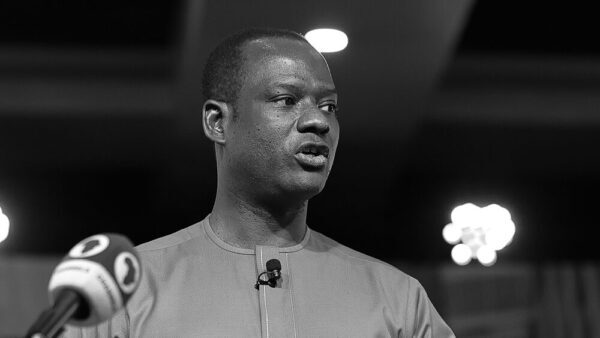

The Minister of Finance and Coordinating Minister of the Economy, Taiwo Oyedele, has said much of the increase in Nigeria’s public debt since the current administration assumed office resulted from exchange-rate depreciation and accounting adjustments rather than extensive new borrowing.
Mr Oyedele spoke on Monday while briefing the Senate Committee on Finance on the state of the economy, in response to concerns by lawmakers over the country’s rising debt profile.
His remarks followed questions from Senator Adamu Aliero (Kebbi Central), who referred to claims that the President Bola Tinubu administration had borrowed about ₦80 trillion in addition to the approximately ₦75 trillion public debt it inherited.
Responding, the minister cautioned against comparing the country’s debt stock at the beginning of the administration to the current figure without accounting for the impact of naira depreciation.
“When this administration came into office, public debt was around ₦75 trillion. Many people simply compare that figure with today’s debt stock and conclude that this government has borrowed massively,” Mr Oyedele said.

He explained that because Nigeria reports its public debt in naira, the depreciation of the local currency significantly increased the naira value of the country’s external debt.
According to him, the exchange-rate revaluation alone added more than ₦40 trillion to the public debt stock.
Mr Oyedele also said another major factor was the securitisation of the Ways and Means advances inherited from the previous administration, which the National Assembly approved.
He noted that the exercise brought about ₦33 trillion in previously existing obligations onto the government’s official debt records.
“It was not new borrowing; it was simply bringing previously existing obligations onto the official debt books. These factors have not always been properly explained, which is why the reported public debt appears much larger,” he said.
The minister added that a significant portion of the government’s domestic borrowing has been used to refinance maturing debt rather than to accumulate new obligations.
According to him, refinancing involves replacing existing debt with new debt to meet repayment obligations and should not be interpreted as additional borrowing.
He maintained that the Tinubu administration has adopted a cautious borrowing strategy focused on financing infrastructure and supporting long-term economic growth while keeping debt levels sustainable.
“We see debt as leverage. Every naira and every dollar borrowed should generate more value than the amount borrowed,” Mr Oyedele noted.
Budget Implementation
Beyond the debt discussion, senators expressed concern over the slow implementation of the capital component of the 2026 Appropriation Act.
Senate Chief Whip Tahir Monguno (Borno North) and Mr Aliero criticised the pace of capital project execution, stressing the need to accelerate implementation.
Responding after a closed-door meeting with the minister and members of the economic management team, Chairman of the Senate Committee on Finance, Sani Musa, assured lawmakers that implementation would improve.
Mr Musa said both the executive and the National Assembly were working to strengthen budget performance, including reviewing the current envelope budgeting approach.
According to him, the government is considering a transition to a performance- and priority-based budgeting system, alongside reforms to the contractor payment process to improve project delivery.
Nigeria’s public debt has risen sharply in recent years, reflecting a combination of fiscal deficits, exchange-rate movements and the formal recognition of previously outstanding government liabilities.
READ ALSO: Senate confirms Taiwo Oyedele as minister
Following the liberalisation of the foreign exchange market in 2023, the naira depreciated significantly against major international currencies, increasing the naira value of Nigeria’s external debt even without equivalent new foreign borrowing.
The Federal Government has consistently maintained that its borrowing strategy is aimed at financing critical infrastructure, supporting economic reforms, improving revenue generation, and maintaining debt sustainability. The issue has remained a subject of scrutiny as lawmakers and economic analysts continue to monitor the country’s fiscal position, debt-servicing costs, and budget implementation.




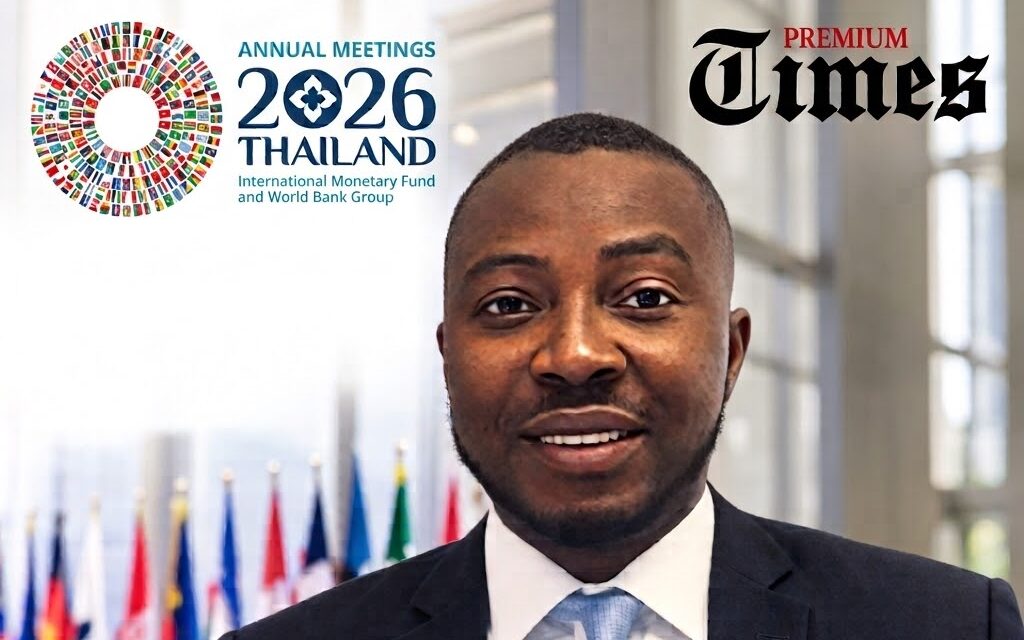
Financial experts, government officials, central bank chiefs, heads of multilateral organisations and other participants are gathered this week in Bangkok, Thailand, for the annual meetings of the International Monetary Fund (IMF) and World Bank scheduled to be held between October 12 and 18.
Participants are expected to deliberate on the disruptive potential of Artificial Intelligence (AI) in the global economy, the widening war in the Middle East and its impact on the global economy, the global energy supply shock, mounting debts, and rising interest rates that pose daunting risks to global economic growth.
IMF Managing Director Kristalina Georgieva says the Queen Sirikit National Convention Centre will host 18,000 people who were registered to attend the meetings, 4,000 more than the last off-site meetings held in Morocco in October 2023.
The IMF has made no significant change to its forecast of 3% global growth in 2026, and the body says some countries are expected to be downgraded because of war and reduced energy exports.
The meetings are also expected to address the growing public debt burden that has slowed growth and worsened inflation, as public debt remains at its highest level since World War Two and will exceed 100% of GDP before 2030, according to the IMF.
Emerging markets and low-income countries are particularly vulnerable, given high public debt levels that will have to be renegotiated at higher interest rates.

Equally important on the agenda is the precarity of platform-driven labour, amid AI-enabled automation and the changing future of work.
On Monday, Ms Georgieva said Artificial Intelligence (AI) could affect about 40 per cent of jobs globally, urging governments to prepare workers for the changing labour market. She described AI as a “slow-moving tsunami” for the labour market, saying it could augment, downgrade or eliminate jobs.
IMF estimates show that AI could affect about 60 per cent of jobs in advanced economies and 23 per cent in low-income countries, reflecting the slower spread of AI rather than greater protection from its effects.
Bangkok
The Bangkok meetings are taking place amid disruptions and a war that has negatively affected energy supplies, especially via the Middle East.
Flights to Bangkok, the host city of this year’s off-site meetings, often route through the Middle East, creating immediate challenges for global travellers heading to Thailand’s capital.
On Sunday, there were attacks on Saudi airports, prompting disruptions to international travel.
The IMF and World Bank’s last off-site annual meetings took place in Morocco in 2023.
Nigeria’s participation
Already, Nigeria’s Minister of Finance and Coordinating Minister of the Economy, Taiwo Oyedele, has arrived in Bangkok, Thailand, to lead the nation’s delegation to the meetings
A statement from the Federal Ministry of Finance said the annual gathering provides Nigeria with an opportunity to engage with international financial institutions and development partners on economic issues affecting the country and its development priorities.
Mr Oyedele’s presence at the meetings is equally expected to allow the Federal Government to present its economic priorities to development organisations and international partners. He is also expected to discuss how external cooperation can support domestic reform efforts.
The finance ministry website also says that, on the sidelines of the meetings, Nigeria will convene investors, project sponsors and public institutions around a curated pipeline of bankable opportunities across strategic sectors. The programme is focused on private-capital mobilisation, food security and infrastructure development. Another event focuses on investor and project-owner conversations at Fairmont Bangkok Sukhumvit.
PREMIUM TIMES newspaper is in Bangkok, Thailand’s capital, to report on the meetings and other policy decisions as they affect the global economy and Nigeria’s domestic affairs.
Discover more from Premium Times Nigeria
Subscribe to get the latest posts sent to your email.
-

 Business4 days ago
Communications Ministry made ₦345.5 million duplicate payment for Abuja ICT Park project
-
News4 days ago
LumenUs helps automate tedious paperwork in times of grief
-
News3 days ago
Inside INEC’s AI and cybersecurity plans to secure Nigeria’s 2027 Elections – Technology Times
-
News3 days ago
EuroMatch NPFL: Ikorodu City Return to Winning Ways as Salami, Ikechukwu Sink Kwara United in Lagos