News
New Strategic Football Development Partnership Between Kazakhstan and Lagos

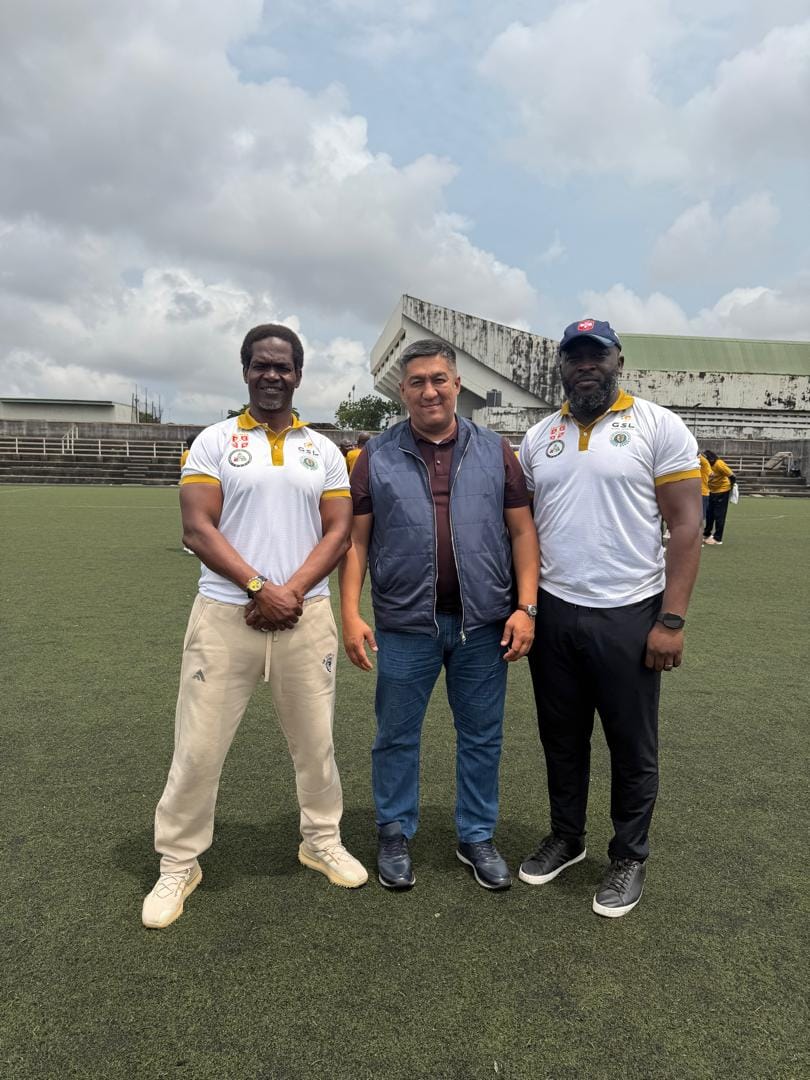
Today marks the beginning of a new era in international football collaboration as the Aktobe Regional Football Association of Kazakhstan and the Lagos State Football Association (LSFA) engaged in strategic discussions to establish a long-term football development partnership.
This meeting, facilitated by GSL Global Network, reinforces its dedication to fostering significant global football relationships.
Askhat Sagitzhanuly Kalzhanov, the President of the Aktobe Regional Football Association, traveled to Lagos to meet with Hajji Gafar Liameed, the Chairman of the Lagos State Football Association.
Their discussions aimed to identify areas of mutual cooperation that would enhance football development in both regions.
Key topics included the establishment of sustainable opportunities through technical exchanges, youth development initiatives, coach education, talent identification, club partnerships, and providing international exposure for players and football administrators.
As Nigeria’s commercial capital and a prominent center for football, Lagos offers vast opportunities for collaboration. With more than 2,000 football academies, 10 professional clubs, a variety of grassroots competitions, and one of Africa’s richest reservoirs of football talent, Lagos stands out as a premier location for football development, player cultivation, and innovation.
The Lagos State Football Association has consistently positioned itself as a forward-thinking governing body by implementing strategic initiatives that support grassroots football, enhance capacity building, promote women’s football, organize youth competitions, foster international partnerships, and ensure sustainable football administration.
During his visit, President Kalzhanov participated in the ongoing Train The Trainers programme, where Serbian football instructors are conducting an intensive coaching development course for coaches in Lagos.
He conveyed his admiration for the programme’s quality and the FA’s dedication to ongoing coach education and technical excellence. This initiative strengthens the belief that investing in coaches is one of the most effective strategies to enhance the overall standard of football development.
President Kalzhanov is set to stay in Lagos for an additional week to observe further football activities, visit selected football academies and professional clubs, and continue discussions with the Lagos State Football Association regarding practical collaboration areas.
Both Associations are hopeful that this partnership will facilitate exchange programmes for coaches, players, and technical experts, while also paving the way for new avenues of international cooperation and football investment.
The Lagos State Football Association is dedicated to forging global partnerships that generate opportunities for its football ecosystem and further position Lagos as Africa’s leading centre for football excellence.









A Fulani advocacy group, "The Fulani Defenders", has vehemently kicked against the newly inaugurated Forest Guards by the Plateau State government, arguing that the initiative is aimed at targeting herdsmen and Fulani pastoralist communities.
The government had on Saturday, November 28, unveiled the first batch of 1,000 Forest Guards who were deployed across the state in its bid to combat the lingering insecurity.
During the graduation ceremony held in Jos, Gov. Caleb Mutfwang said the newly trained personnel are expected to boost security operations through intelligence gathering, surveillance and monitoring of forests and vulnerable communities, particularly areas affected by recurring attacks.
Mutfwang stated that the Forest Guards will also support existing security agencies in tackling security threats, protecting lives and property, and restoring confidence among residents of troubled communities.
But in a swift reaction to the security set-up, the Fulani Defenders said the composition of the guards was such that Fulani people were denied the opportunity of being part of the outfit which to them makes it clear that they are the target.
In a statement issued on Sunday by its coordinator, Ahmad Abba, the group said it rejects the security outfit and called on the government to immediately disband them and set up a broad outfit that would accommodate every tribe and ethnic group in the state.

"The inauguration of the Forest Guards by the Plateau State Government on Saturday, November 28, 2026, should have been a laudable project following years of insecurity and violence in the state," the statement began.
"But as a Fulani advocacy group, we are really worried about the composition of the Forest Guards because there are fears that they have been set up to target innocent Fulani herders and communities.
"And the observed anomalies have further raised questions on the non-inclusion of Fulani people in the security outfit.
"Our questions are: Is the Forest Guard security system an ethnic or religious body? Was there transparency and openness during the recruitment process? Why were Fulani people denied the opportunity of being recruited into the outfit?
"If their mandate includes forest surveillance, intelligence gathering and supporting conventional security agencies against terrorists, bandits, kidnappers and other criminal elements, wouldn't it have been beneficial to include Fulani people who know the forests better?
"From our observations, the Forest Guards were set up to target Fulani pastoralists and communities. We therefore demand the immediate disbandment of the security outfit while a fresh, transparent and all-inclusive recruitment process be conducted to accommodate every tribe, ethnic group and religion."
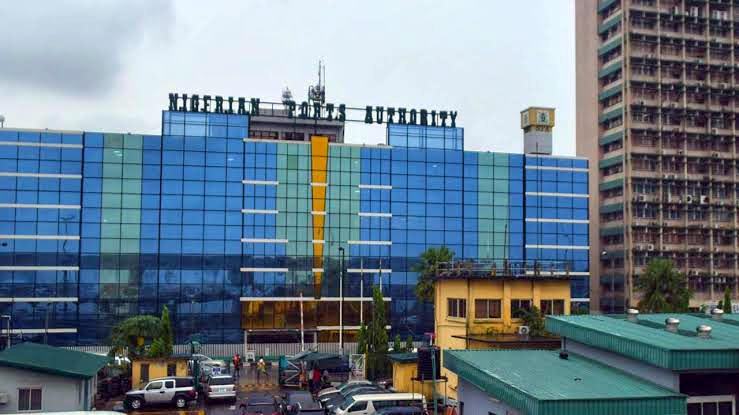
The Nigerian Ports Authority (NPA) has urged journalists to rely on accurate data and evidence in reporting on the maritime sector, saying credible journalism is essential to improving Nigeria’s trade competitiveness and investor confidence.
The General Manager of the Authority’s Corporate Affairs Division, Ikechukwu Onyemekara, said this on Wednesday at the opening of a two-day Data-Driven Business and Maritime Reporting Training organised in partnership with the Premium Times Training Academy in Ikeja GRA, Lagos.
Mr Onyemekara said accurate reporting helps businesses, investors and policymakers make informed decisions, while careless reporting could create uncertainty and undermine confidence in the country’s ports.
“Good journalism is part of the environment in which trade happens. It does not dredge a channel or berth a ship, but it shapes the confidence that brings ships and cargo in the first place,” he said.
The training was designed to strengthen journalists’ understanding of the maritime economy and improve their ability to interpret data and explain its implications to the public.
Ports’ operations
Mr Onyemekara, who spoke on behalf of the Authority’s Managing Director and Chief Executive Officer, Abubakar Dantsoho, said Nigeria’s total merchandise trade reached about N41.4 trillion in the second quarter of 2026, representing a 5.6 per cent increase compared with the corresponding period of 2025.


According to him, a significant share of the country’s trade, including crude oil, refined products, machinery, food and industrial inputs, passes through its seaports and terminals.
“When our ports work well, that trade costs less and moves faster. When they do not, households and businesses pay for it, often without knowing why,” he said.
Citing the NPA’s 2025 Operational Performance Report, the official said cargo throughput across Nigerian ports increased by 24.8 per cent, from about 103.6 million metric tonnes in 2024 to 129.3 million metric tonnes in 2025.
He added that cargo throughput reached 68.2 million metric tonnes in the first half of 2026, up 12.2 per cent from 60.8 million tonnes recorded in the corresponding period of 2025.
The ports also received 2,300 ships during the period, up from 2,152 a year earlier.
The official said outward cargo accounted for 41.9 per cent of total throughput in the second quarter of 2026, which the Authority described as evidence of improved export performance.
He said the figures reflected the activities of port workers, marine crews, haulage operators, clearing agents, warehouse staff and traders whose livelihoods depend on port operations.
The NPA official also highlighted the growing contribution of Lekki Deep Sea Port, which handled nearly 40 per cent of cargo through Nigerian ports in the first half of 2026.
He said more than three-quarters of Lekki’s cargo traffic was linked to refinery operations, illustrating how industrial investments were reshaping Nigeria’s trade flows.
“The headline figure tells you how big Lekki has become. The breakdown tells you why, and what to watch as other cargo grows. That is the difference between reporting a number and explaining it,” Mr Onyemekara said.
Landlord port model
Explaining the Authority’s role in port operations, he said Nigeria had operated a landlord port model since the concession of port terminals in 2006.
Under the model, the NPA owns and administers port land and waters, while private terminal operators manage cargo-handling operations within their terminals.
He said the Authority provides marine services, including pilotage, towage, dredging and navigational aids; maintains common-user facilities; monitors terminal operators’ concession obligations; and plans long-term port development.
Reporting maritime
Mr Onyemekara, however, urged journalists to distinguish the responsibilities of the various agencies operating within the port system when reporting delays or operational challenges.
According to him, cargo delays could result from terminal operations, documentation, customs examinations, truck movements or road conditions, making it necessary for journalists to establish where a failure occurred before assigning responsibility.
The official said the NPA was pursuing port modernisation, digitalisation, export facilitation and sustainability as part of efforts to improve efficiency.
He disclosed that the Federal Government had secured £746 million in UK-backed financing to modernise the Lagos Port Complex, Apapa, and Tin Can Island Port.
READ ALSO: PREMIUM TIMES Editor-in-Chief, 23 others earn PhDs as Baze University graduates 1,079 students
He also said the Authority was rehabilitating ports in the eastern region, including Onne, Warri and Calabar, while supporting promoters of new deep seaports.
On digitalisation, he said the Federal Government’s National Single Window became operational in March 2026, providing a common platform for trade documentation and payments across government agencies.
He said the NPA was also deploying a Port Community System, with support from the International Maritime Organisation, to link terminal operators, shipping lines, government agencies and freight forwarders.
The official added that the Authority’s electronic truck call-up system, Eto, was intended to improve truck movement and reduce congestion around the ports.
He urged journalists to consult primary sources, compare data across equivalent periods, provide the baseline behind percentages and give all parties a fair opportunity to respond.
“My charge to you is simple. Let evidence lead your stories. Let context shape them. Let fairness guide them. When rumour and data disagree, follow the data. When the data is incomplete, say so and ask for more.
“We do not ask you for praise; we ask for accuracy. Where we fall short, report it. Where we make progress, report that too, with the same discipline,” Mr Onyemekara said.
The two-day training brought together journalists and resource persons to strengthen reporting on business and maritime issues using data and open-source information.
At the training, media experts, including Musikilu Mojeed, Editor-in-Chief at PREMIUM TIMES; Idris Akinbajo, Managing Editor at PREMIUM TIMES; and Ray Echebiri, Editor-in-Chief at NextMoney, exposed participants to open-source data and resources for Nigerian maritime industry reporting, as well as techniques for analysing data and reports to produce enterprising journalism.
Discover more from Premium Times Nigeria
Subscribe to get the latest posts sent to your email.
-

 Events4 days ago
Plateau Govt Backs AGNN’s PENIEL 2026, Says Unity Among Christians Critical to Peace
-
Events4 days ago
PENIEL 2026: AGNN Calls for Deeper Encounter with God, Unity and National Transformation
-
News3 days ago
‘The Righteous Are Not on the Throne, That Is Why Nigerians Are Suffering’ — SDP’s Adewole Adebayo Fires the APC While Speaking to Press at Jos Conference
-
Business2 days ago
Plateau Government, BOI, PLASMIDA Back Young Innovators at YAI Bootcamp in Jos