Health
Half of approved diagnostics for Africa’s priority epidemic diseases unavailable at primary healthcare level – Report

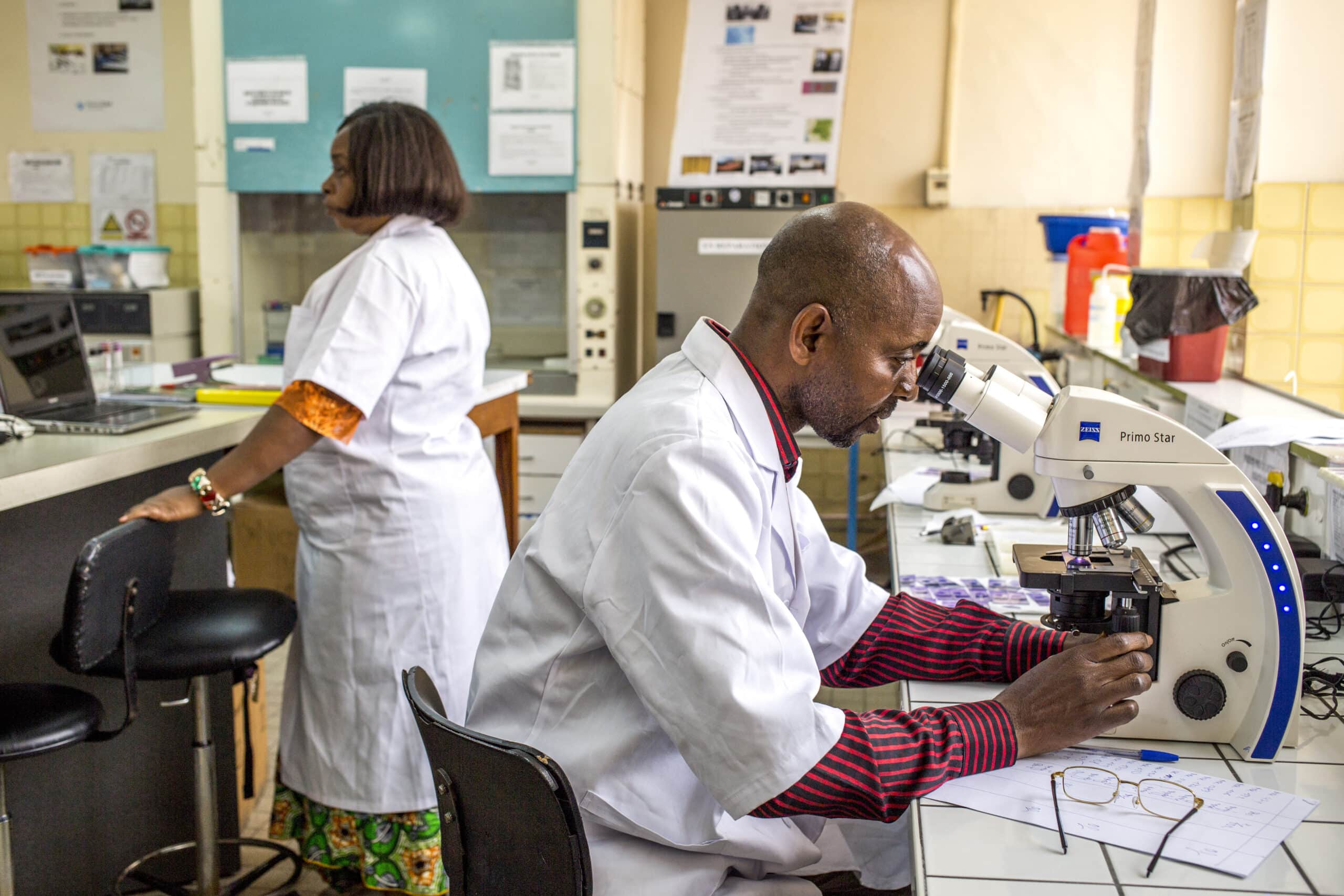

A new report has revealed that about half of the approved diagnostic tests for six epidemic-prone diseases prioritised by the Africa Centres for Disease Control and Prevention (Africa CDC) cannot be used in most primary healthcare facilities across Africa because they require laboratory infrastructure that is often unavailable.
The report found that 50 per cent of approved diagnostics for Mpox, dengue, cholera, bacterial meningitis, malaria and Ebola depend on laboratory facilities beyond the reach of many frontline health centres.
For Ebola alone, 88 per cent of approved diagnostic tests require laboratory infrastructure.
It also found that funding for diagnostic research and development has steadily declined since 2015, despite Africa’s continued vulnerability to infectious disease outbreaks.

Findings come months after the 2026 Bundibugyo ebolavirus outbreak, during which health authorities initially failed to detect the virus because available diagnostic tests were designed to identify the Zaire strain of Ebola.

The mismatch delayed confirmation of the outbreak by 10 days, highlighting the consequences of gaps in Africa’s diagnostic preparedness.
The report, titled Diagnostics Deficit: Funding, Access, and Preparedness Gaps in African Health Systems, was launched by global health organisations PATH and Impact Global Health ahead of the African Union Extraordinary Health Summit in Accra, Ghana.
Rapid diagnostic tests play a critical role in identifying outbreaks early, guiding treatment and helping health authorities contain the spread of infectious diseases. However, limited access to these tools, particularly in primary healthcare centres where many patients first seek treatment, continues to weaken disease surveillance and emergency response across the continent.
Uneven progress
The report examined six diseases selected from Africa CDC’s priority list for their epidemic and outbreak potential: mpox, dengue, cholera, bacterial meningitis, malaria, and Ebola. Measles, although also on the priority list, was excluded because comparable G-FINDER funding data were unavailable.
Researchers identified 577 approved diagnostic products across six diseases, with another 59 still under development.
However, innovation remains heavily concentrated in just two diseases. Dengue and mpox account for 84 per cent of all approved and pipeline diagnostic products, while cholera and bacterial meningitis, both identified by Africa CDC as major outbreak and antimicrobial resistance threats, have only seven approved or pipeline products each.
Despite a growing number of diagnostic products, access remains a major challenge. Of the 577 approved diagnostics, 288 require clinical laboratory infrastructure, limiting their use in PHC facilities.
While 83 per cent of malaria diagnostics can be deployed at the PHC level, most approved diagnostics for Ebola and mpox remain laboratory dependent, restricting their use in frontline health facilities.
Further review showed that investment in diagnostic research and development has continued to decline. Using G-FINDER data, the analysis found that annual funding for six diseases has fallen by nearly $4 million (approx. ₦6 billion depending on exchange rates) since 2015, dropping from almost $55 million to less than $26 million in 2024.
It warned that funding typically rises during major outbreaks before falling sharply once emergencies subside, a cycle that leaves African countries inadequately prepared for future epidemics.

Experts’ concerns
Commenting on the findings, Sabastine Wakdok, Director of Research at Impact Global Health, said a steady decline in funding reflects a diagnostic research system struggling to keep pace with Africa’s growing outbreak risks.
Mr Wakdok said investment in research and development for diagnostics targeting six priority diseases has continued to fall despite rising disease incidence across the continent.
He noted that funding often increases during outbreaks but drops sharply once the immediate crisis passes, leaving African countries inadequately prepared for future epidemics.
“Diagnostic R&D investment for six Africa CDC priority diseases has fallen nearly $4 million annually since 2015. More troubling, this decline persists despite rising disease incidence and outbreak risk,” he said.
He added that the continent was not receiving the sustained investment needed for epidemic-prone diseases, warning that outbreak-driven funding cycles leave Africa “perpetually underprepared.”
Also commenting, PATH’s Senior Director for the Centre for Advocacy and Policy, Bernard Aryeetey, said the challenge goes beyond developing new diagnostic technologies to ensuring they reach the people and health facilities that need them most.
Mr Aryeetey stressed that the availability of diagnostic tools alone is not enough if they cannot be accessed during outbreaks or integrated into frontline health systems.
“It is not solely whether diagnostics exist, but also whether they can reach clinics and surveillance systems when they are most needed, especially during outbreaks,” he said.
He warned that unless barriers relating to access, affordability, deployment and manufacturing readiness are addressed, people will continue to die needlessly even when effective diagnostic tools are available.
READ ALSO: PT Health Watch: Why high cholesterol is easy to miss but dangerous to ignore
Recommendations
To address identified gaps, the report called for sustained domestic and international investment in diagnostic research, arguing that emergency-driven funding alone cannot build resilient health systems.
It urged African governments to increase national financing for diagnostics while encouraging global health donors to provide predictable, long-term support.
Authors also recommended that Africa CDC make diagnostics a central pillar of the continent’s health security strategy and called on researchers and manufacturers to prioritise developing diagnostic tools for use in PHC facilities, rather than relying mainly on technologies that require sophisticated laboratory infrastructure.
To improve access across the continent, the report urged the African Medicines Agency to harmonise regulatory approval processes so that diagnostic tests approved in one African country can be recognised more easily in others.
It also highlighted Africa’s growing manufacturing capacity, noting that facilities across the continent can collectively produce more than 500 million diagnostic units annually.
However, weak demand, fragmented regulation, financing constraints and limited ecosystem support continue to prevent manufacturers from operating at scale.
The report concluded that although Africa has expanded its diagnostic pipeline in recent years, improving access, affordability, manufacturing capacity, and deployment will be critical to strengthening the continent’s preparedness for future disease outbreaks.








The World Health Organisation (WHO) has warned that gaps in routine immunisation are leaving Nigerian children vulnerable to preventable diseases, urging the government to increase domestic health financing and strengthen disease surveillance and outbreak preparedness.
Pavel Ursu, the WHO representative in Nigeria, raised the concern on Tuesday during the organisation’s Health Diplomacy Dialogue in Abuja, which brought together diplomats and health officials to discuss health security, disease outbreaks, global health financing and antimicrobial resistance.
Mr Ursu said Nigeria continued to face challenges in containing vaccine-preventable diseases, including measles and circulating vaccine-derived poliovirus, despite support from international partners.
He said the country’s immunisation programme must reach approximately eight million additional children annually, placing increasing pressure on the health system.
“If we want to maintain the same level of performance, we have to invest more,” he said.
Mr Ursu acknowledged support from Gavi, the Vaccine Alliance, and other partners in providing vaccines and related commodities but stressed the need for Nigeria to progressively increase domestic financing and assume greater responsibility for protecting its population.

He also highlighted changes in global health cooperation, including declining development assistance for health and ongoing discussions about reforming the global health architecture.
He said African countries needed to strengthen domestic financing, improve health system resilience, expand digital health services and promote local manufacturing of health commodities.
Mr Ursu said the dialogue was established to provide a platform for the WHO and diplomatic missions to exchange strategic information on public health developments, emerging threats and international health policy, including for embassies without dedicated development cooperation programmes.
He called for stronger international cooperation, including timely information-sharing and coordinated responses to outbreaks that could cross national borders.
Outbreaks expose gaps in health security
Speaking on health security, Alex Chimbaru, the WHO emergencies adviser, said Nigeria’s disease outbreaks reflected persistent weaknesses in immunisation coverage, disease surveillance and access to safe water and sanitation.
He said more than 700 children had been disabled by circulating vaccine-derived poliovirus in previous years, warning that the actual number could be higher.
Mr Chimbaru also highlighted cholera as a major public health concern, citing inadequate water, sanitation and hygiene infrastructure, insecurity and population displacement as factors complicating prevention and response efforts.
He said Borno State accounted for 96 per cent of cases in the affected area discussed during his presentation, highlighting the need to prioritise interventions in vulnerable communities.
According to him, the WHO, other United Nations agencies, Médecins Sans Frontières (MSF) and other partners supported the response through surveillance, logistics, case management, vaccination, risk communication and infection prevention and control.
Mr Chimbaru called for sustained investment in water and sanitation, functional public health emergency operations centres, rapid response teams and stronger cross-border coordination to prevent and contain outbreaks.
He also urged development partners to reinforce government-led health systems rather than establish parallel structures, stressing that sustainable financing and stronger primary healthcare services were essential to health security.
Abuja to host global conference on antimicrobial resistance
The dialogue also featured discussions on Nigeria’s preparations to host a global conference on antimicrobial resistance (AMR) in Abuja from 6 to 8 December.
Mary Bartuo, the WHO team lead for universal health coverage and life course, said the conference would seek to translate international commitments into measurable action, stronger accountability and sustainable financing.
READ ALSO: Non-communicable diseases caused 74% of global deaths in 2023 – WHO
She said AMR was associated with about one million deaths annually in the African Region and posed growing threats to food security, livestock production and economic development.
Ms Bartuo said priorities under the proposed Abuja Compact included responsible AMR use, infection prevention and control, vaccination, water and sanitation, equitable access to medicines and diagnostics, research, local manufacturing and sustainable financing.
She urged diplomatic missions to participate in the conference and support efforts to strengthen national and international responses to AMR.
The WHO officials called for sustained investment and stronger collaboration among governments, diplomatic missions and development partners to improve health security and strengthen countries’ capacity to prevent, detect and respond to public health threats.
Discover more from Premium Times Nigeria
Subscribe to get the latest posts sent to your email.

The Coordinating Minister of Health and Social Welfare, Muhammad Pate, has said the livestock sector uses more antibiotics than the human health sector.
Mr Pate noted that the responsible use of the drugs in livestock could help reduce the pressure driving antimicrobial resistance (AMR) that can affect humans.
He made the statement on Monday in Abuja at a joint One Health ministerial briefing ahead of the fifth Global High-Level Ministerial Conference on AMR.
Explaining the need for a multi-sectoral approach to AMR, the minister said antimicrobial use in livestock is an important part of the resistance problem.
“The livestock sector uses more antibiotics than the human health sector. So if they are used better, then there’s less pressure for antimicrobial resistance to develop that can affect people,” he said.
Mr Pate said antimicrobial resistance could move between humans, animals and the environment, emphasising the need for collaboration across sectors.
“Much of the zoonotic disease and AMR can come from animal health to humans,” he said, adding that the use of antimicrobials in animal health and human health could have consequences for the wider population.
Prevention before treatment
The minister said efforts to control AMR should not focus only on the treatment of infections but also on preventing diseases that require antimicrobial medicines.
He identified vaccination, hygiene, biosecurity, infection prevention and control, and improved diagnostics as important measures.
“If you can prevent the disease, then you don’t need to use the antimicrobial,” Mr Pate said.
He also urged Nigerians to avoid using antibiotics unnecessarily, noting that not every cough or catarrh requires antibiotic treatment.
“It’s not every cough that needs to use antibiotics. It’s not every catarrh that needs to use antibiotics, please consult a doctor,” he said.
Livestock practices
The Minister of State for Agriculture and Food Security, Aliyu Abdullahi, said AMR also poses a threat to agriculture and food security.
Mr Abdullahi said inappropriate or excessive use of antimicrobials and agrochemicals could undermine disease control, food safety, trade and livelihoods.
According to him, the agriculture sector is prioritising responsible use of antimicrobials, farmer education, extension services, good agricultural practices and biosecurity.
One Health approach
The Minister of Environment, Balarabe Lawal, said AMR cuts across human, animal and environmental health.
READ ALSO: CSOs demand disclosure of JBS $2.5bn Nigeria deal, warn of livestock expansion risks
“Resistance does not respect boundaries. It cuts across sectors. It moves from people to animals, from farms to food, and through water, soil, and waste systems,” Mr Lawal said.
The ministers’ meeting is part of preparations for the fifth Global High-Level Ministerial Conference on AMR, which will be held in Abuja from 6 to 8 December.
The conference is the first global high-level ministerial conference on AMR to be held in Africa, with the theme, “One Healthcare: Advancing global AMR commitments to local action.”
Discover more from Premium Times Nigeria
Subscribe to get the latest posts sent to your email.
-
News4 days ago
Inside INEC’s AI and cybersecurity plans to secure Nigeria’s 2027 Elections – Technology Times
-

 News3 days ago
EuroMatch NPFL: Ikorodu City Return to Winning Ways as Salami, Ikechukwu Sink Kwara United in Lagos
-
News3 days ago
Petra Power looks to modernize energy for data centers and defense vehicles
-
News3 days ago
Microsoft’s Satya Nadella says AI models need an ‘emergency brake’