Connect with us

Business

Journalists Urge to Adopt AI Strategies for Boosted Productivity

info

Published

on

Images 2.jpeg

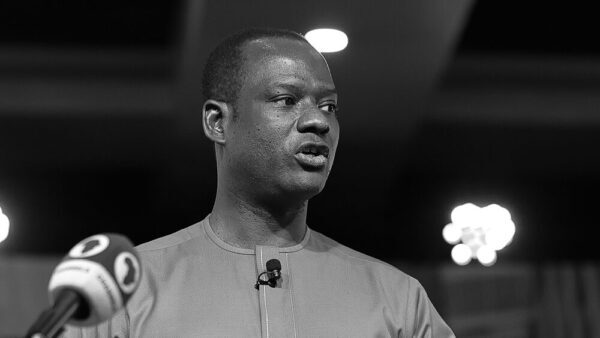
BY NKECHI NAECHE-ESEZOBOR—The Group Chief Executive Officer, Billsbox Services Limited, Dr. Monday Ashibogwu has said AI is not a destroyer, but anyone can be destroyed using AI carelessly.

Speaking on the topic, Publishing in an Era of Artificial Intelligence, Ashibogwu charged journalists to protect their credibility in the age of synthetic media, and strive to identify opportunities and threats Al presents and explore all with wisdom.

He spoke at a media training put together by Leadway Assurance in Lagos for Members of Nigerian Association of Insurance & Pension Editors (NAIPE).

“While integrating Al into newsroom operations, we must use Al responsibly in content creation and develop an Al strategy for sustainable publishing”

He noted that, Artificial Intelligence will not replace journalists, but Journalists who use Artificial Intelligence will replace those who don’t. “AI can aid in investigations and boost productivity however journalists must be circumspect”

He urged journalists to watch against hallucinations, fabricated quotations, deep fakes, plagiarism, copyright violations, privacy breaches, manipulation, misinformation, and the worst of it, loss of public trust.

The expert outlined action plan for publishers and content creators viz: “Develop an Al policy, train newsroom staff on Al use, adopt Al responsibly across teams, create verification procedures, review copyright compliance, and experiment with Al tools. Because the future belongs neither to traditional journalism nor to artificial intelligence alone. It belongs to journalists who combine human wisdom with machine intelligence” he added.

The post Journalists Urge to Adopt AI Strategies for Boosted Productivity appeared first on Business Today NG.

Continue Reading
Click to comment

Leave a Reply

Your email address will not be published. Required fields are marked *

Business

Naira depreciation, not fresh borrowing, drove debt surge — Oyedele

info

Published

on

By

Admin ajax 3 2.jpg

MTN ADVERT

The Minister of Finance and Coordinating Minister of the Economy, Taiwo Oyedele, has said much of the increase in Nigeria’s public debt since the current administration assumed office resulted from exchange-rate depreciation and accounting adjustments rather than extensive new borrowing.

Mr Oyedele spoke on Monday while briefing the Senate Committee on Finance on the state of the economy, in response to concerns by lawmakers over the country’s rising debt profile.

His remarks followed questions from Senator Adamu Aliero (Kebbi Central), who referred to claims that the President Bola Tinubu administration had borrowed about ₦80 trillion in addition to the approximately ₦75 trillion public debt it inherited.

Responding, the minister cautioned against comparing the country’s debt stock at the beginning of the administration to the current figure without accounting for the impact of naira depreciation.

“When this administration came into office, public debt was around ₦75 trillion. Many people simply compare that figure with today’s debt stock and conclude that this government has borrowed massively,” Mr Oyedele said.

PT WHATSAPP CHANNEL

He explained that because Nigeria reports its public debt in naira, the depreciation of the local currency significantly increased the naira value of the country’s external debt.

According to him, the exchange-rate revaluation alone added more than ₦40 trillion to the public debt stock.

Mr Oyedele also said another major factor was the securitisation of the Ways and Means advances inherited from the previous administration, which the National Assembly approved.

He noted that the exercise brought about ₦33 trillion in previously existing obligations onto the government’s official debt records.

“It was not new borrowing; it was simply bringing previously existing obligations onto the official debt books. These factors have not always been properly explained, which is why the reported public debt appears much larger,” he said.

The minister added that a significant portion of the government’s domestic borrowing has been used to refinance maturing debt rather than to accumulate new obligations.

According to him, refinancing involves replacing existing debt with new debt to meet repayment obligations and should not be interpreted as additional borrowing.

He maintained that the Tinubu administration has adopted a cautious borrowing strategy focused on financing infrastructure and supporting long-term economic growth while keeping debt levels sustainable.

“We see debt as leverage. Every naira and every dollar borrowed should generate more value than the amount borrowed,” Mr Oyedele noted.

Budget Implementation

Beyond the debt discussion, senators expressed concern over the slow implementation of the capital component of the 2026 Appropriation Act.

Senate Chief Whip Tahir Monguno (Borno North) and Mr Aliero criticised the pace of capital project execution, stressing the need to accelerate implementation.

Responding after a closed-door meeting with the minister and members of the economic management team, Chairman of the Senate Committee on Finance, Sani Musa, assured lawmakers that implementation would improve.

Mr Musa said both the executive and the National Assembly were working to strengthen budget performance, including reviewing the current envelope budgeting approach.

According to him, the government is considering a transition to a performance- and priority-based budgeting system, alongside reforms to the contractor payment process to improve project delivery.

Nigeria’s public debt has risen sharply in recent years, reflecting a combination of fiscal deficits, exchange-rate movements and the formal recognition of previously outstanding government liabilities.

READ ALSO: Senate confirms Taiwo Oyedele as minister

Following the liberalisation of the foreign exchange market in 2023, the naira depreciated significantly against major international currencies, increasing the naira value of Nigeria’s external debt even without equivalent new foreign borrowing.

The Federal Government has consistently maintained that its borrowing strategy is aimed at financing critical infrastructure, supporting economic reforms, improving revenue generation, and maintaining debt sustainability. The issue has remained a subject of scrutiny as lawmakers and economic analysts continue to monitor the country’s fiscal position, debt-servicing costs, and budget implementation.


Continue Reading

Business

FG to digitise mining sector, track operators

info

Published

on

By

WhatsApp Image 2026 05 22 at 07.41.44.jpeg

MTN ADVERT

The Federal Government seeks to deploy Nigeria’s digital identity infrastructure to track mining operators, strengthen regulation, and curb illegal mining nationwide.

The Minister of Solid Minerals Development, Dele Alake, disclosed that when he received the Director-General of the National Identity Management Commission (NIMC), Abisoye Coker-Odusote, and her management team during a courtesy visit to the ministry in Abuja.

The meeting explored areas for collaboration between the ministry and NIMC to integrate digital identity into the solid minerals sector, improving governance, regulatory compliance, and monitoring of mining operations.

A statement issued on Sunday by the minister’s Special Assistant on Media, Lara Owoeye-Wise, said that both institutions are working to leverage technology and credible identity systems to support ongoing reforms in the sector.

Mr Alake described NIMC as a critical institution in Nigeria’s governance architecture, noting that effective regulation and national planning increasingly depend on reliable identity management and accurate data.

PT WHATSAPP CHANNEL

“NIMC occupies a critical position in translating policy into reality. It is pivotal to the development of any nation because governance today is driven by data, technology, and credible identity systems,” the minister said.

Tracking mining operators

Mr Alake said integrating digital identity into the mining sector would enable government agencies to properly identify operators, monitor mining activities, and distinguish legitimate licence holders from illegal miners.

According to him, effective identity management is essential to strengthening enforcement and tackling insecurity associated with illegal mining.

“Without identification, we cannot trace; we cannot track, and insecurity will flourish. In the solid minerals sector, we need effective tracking of both legal and illegal operations,” he said.

He added, “A credible identity ecosystem will strengthen regulation, improve enforcement, and support our efforts to sanitise the sector.”

He said technology, digital identity, data gathering, and statistics have become indispensable tools for evidence-based policymaking, efficient licensing, investment promotion, and improved oversight of mining operations.

The minister also noted that access to credible and verifiable data would enable government institutions to understand activities across the mining value chain better and formulate policies that support the sector’s sustainable development.

NIMC proposes deeper collaboration

Speaking during the meeting, Ms Coker-Odusote said the recently enacted NIMC Act 2026 has strengthened the legal framework for Nigeria’s digital identity ecosystem and created new opportunities for collaboration with government institutions.

She said integrating NIMC’s digital identity infrastructure into the mining sector would improve interagency data integration, strengthen regulatory compliance, and enhance security.

According to her, the collaboration would also improve monitoring of mining operators, support law enforcement, and facilitate the implementation of Community Development Agreements between mining companies and host communities.

She added that a robust digital identity system would improve transparency, strengthen service delivery, and enable more efficient data sharing across government agencies.

“The commission’s infrastructure can support the creation of a more reliable identity ecosystem for the mining sector, helping regulators verify operators and improve monitoring across the country,” she said.

Reforms target illegal mining

The initiative forms part of the Federal Government’s broader reforms aimed at sanitising Nigeria’s solid minerals sector, which continues to face challenges, including illegal mining, insecurity, environmental degradation, and weak regulatory oversight.

READ ALSO: Nigeria will be big player in global supply of critical minerals – Dele Alake

Authorities have repeatedly identified illegal mining as one of the biggest obstacles to unlocking the sector’s economic potential, with criminal networks and unlicensed operators exploiting mineral resources while depriving the government of revenue.

PREMIUM TIMES recently reported that the Federal Government arrested two suspected illegal miners and shut down an illegal site in Osun State as part of an intensified nationwide enforcement campaign. During the operation, Mining Marshals confiscated equipment and sealed the site, while the suspects assisted investigators in identifying financiers of the illegal activities.

The minister had said that the Mining Marshals arrested more than 300 suspected illegal miners nationwide, with over 150 suspects, including foreign nationals, currently facing prosecution. Several illegal mining sites have also been closed as part of efforts to restore order to the sector.

The Tinubu administration has also introduced reforms to attract responsible investment into mining, improve transparency, strengthen licensing procedures, and ensure Nigeria derives greater economic benefits from its vast mineral resources.


Continue Reading

Trending