Business
Oyedele: Africa’s economies must reform financial systems

Nigeria’s Minister of Finance and Coordinating Minister of the Economy, Taiwo Oyedele, has called for urgent reforms to the global financial architecture, saying Africa continues to face structural barriers that limit access to affordable capital and long-term industrial growth.
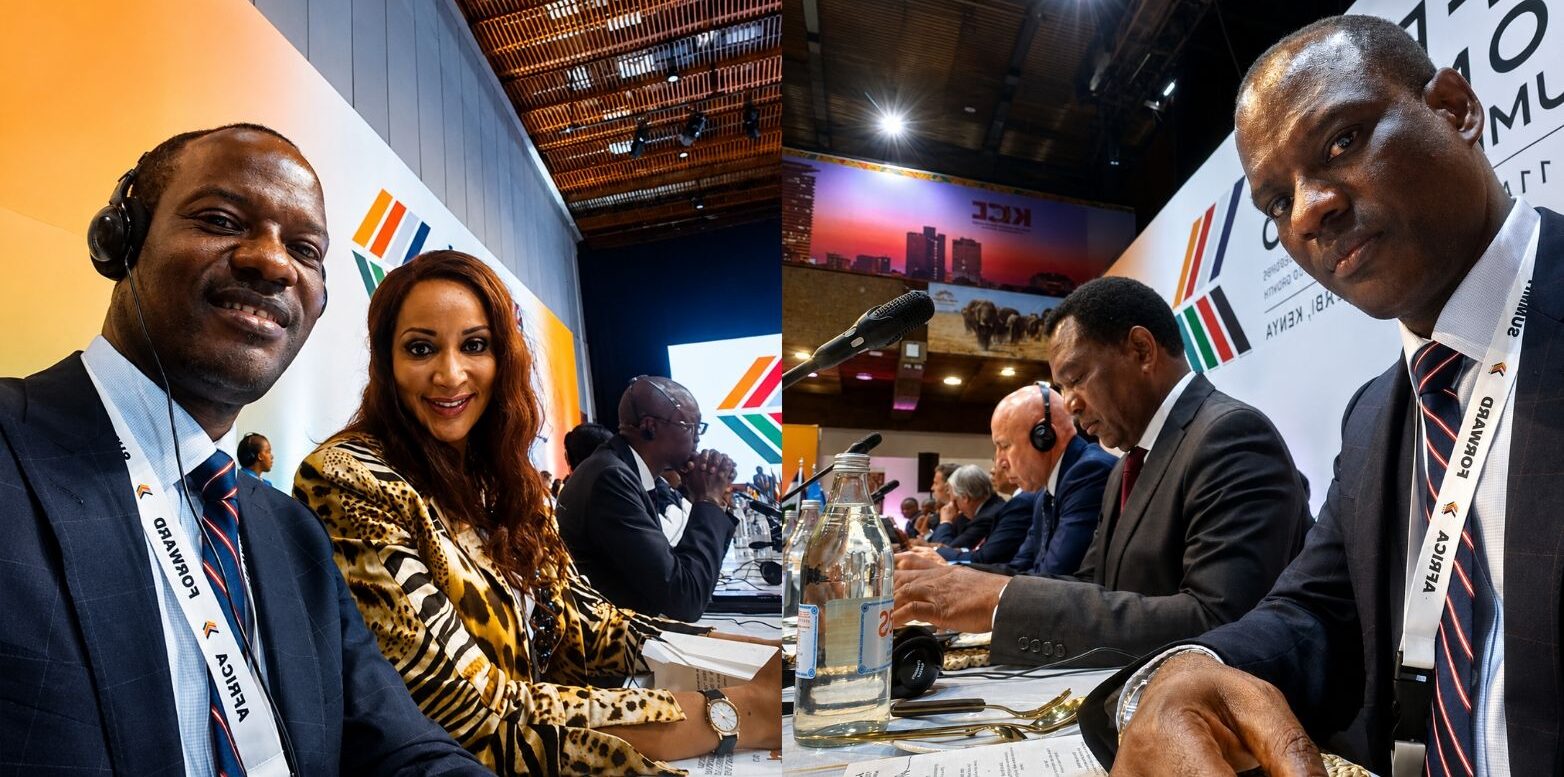
Speaking on the sidelines of the Africa Forward Summit in Nairobi, Mr Oyedele said African economies are still burdened by what he described as a “prejudice premium” that inflates borrowing costs and discourages long-term investment into the continent.
In a post shared on his official X handle on Wednesday, he said the current international financial system constrains Africa’s industrialisation ambitions through high borrowing costs, restrictive financing terms, limited access to long-term capital, and inadequate funding for productivity and value addition.
Beyond global reforms, the minister stressed the need for African countries to strengthen domestic systems by improving governance, ensuring policy stability, enforcing contracts, and deepening regional integration.
He warned that fragmented markets across the continent weaken competitiveness in a global economy that increasingly rewards scale and integration.

Mr Oyedele also urged African governments to mobilise domestic savings, including pension funds, while creating stronger pathways for private capital to flow into productive sectors.
ALSO READ: At Africa Forward Summit, Tinubu calls for reform of global financial architecture
He noted that with more than $120 trillion in global private capital seeking investment opportunities, Africa must position itself as a competitive investment destination rather than remain primarily a recipient of development assistance.
According to him, financing priorities must shift from raw material extraction and crisis response toward value addition, infrastructure development, skills, technology, innovation and regional value chains.
He added that Africa’s long-term growth will depend on productivity, integration and value creation rather than dependency.
PREMIUM TIMES earlier reported that President Bola Tinubu, at the Africa Forward Summit in Nairobi, said the growing economic relationship between Nigeria and France must translate into tangible development outcomes, as trade between both countries reached $4.7 billion in 2025.




Business
Sierra Leonean President Bio, Elumelu rally West African private sector to turn regional potential into investment, jobs

The President of Sierra Leone and immediate past Chair of the ECOWAS Authority of Heads of State and Government, Julius Maada Bio, and leading African investor and Chairman of Heirs Holdings, Tony Elumelu, have called on West Africa’s private sector to move decisively from the promise of regional integration to its delivery.
They both called for support to mobilise capital, build competitive industries, create jobs, and transform the region’s vast economic potential into shared prosperity.
Hosting President Bio in Lagos ahead of the inaugural West Africa Integration and Investment Summit (WAIIS), Mr Elumelu brought together leading private sector and financial institution leaders for the inaugural physical meeting of the WAIIS Private Sector Advisory Board.
The meeting focused on four strategic areas with the potential to reshape West Africa’s economic future: energy trade and industrialisation, strategic minerals, agribusiness, and digital transformation.
President Bio set out an ambitious vision for WAIIS to consolidate a regional market of more than 400 million people and mobilise businesses from within West Africa and across the world to deepen trade, investment and economic cooperation.
“We are partners in execution — let us transform ideas into partnerships, partnerships into investments, and investments into lasting prosperity for our continent,” Mr Bio told members of the Advisory Board.

He added: “But potential is not prosperity. Our task is to convert these advantages into productive enterprises, competitive industries, regional value chains, jobs and wealth.”
Mr Elumelu welcomed President Bio’s initiative to place private capital and enterprise at the heart of the regional agenda, reaffirming his commitment to mobilising African and international investment alongside leading African financial institutions, including the Africa Finance Corporation, Afreximbank, United Bank for Africa (UBA), Ecobank, etc., to support the execution of priority projects.
The approach reflects Mr Elumelu’s philosophy of Africapitalism—the belief that the African private sector has a defining role to play in catalysing the continent’s economic transformation through long-term investment in critical sectors.
Mr Elumelu stressed that Africa’s businesses must increasingly look beyond national borders and combine capital, expertise and capabilities to build enterprises and industries capable of competing at scale, while creating jobs and expanding opportunity across the sub-region.
“This is consistent with our aspirations to create jobs for our young people,” Mr Elumelu said. “We have all it takes to be prosperous.”
But private sector ambition, he noted, must be matched by decisive government action.
“Governments must provide the policy certainty, regulatory efficiency and security required to give investors the confidence to commit capital for the long term.”
Lagos State Governor, Babajide Sanwo-Olu, underscored the importance of industrialisation and the free movement of goods and services in building a truly integrated West African market. He stressed that political leaders must provide the enabling environment, certainty and assurances required for businesses to invest, produce and trade across borders.
At the centre of the discussion was a shared conviction that West Africa has the scale, resources, talent and entrepreneurial capacity to become one of the world’s most dynamic economic regions.
With the Summit now less than two months away, Mr Bio called on members of the Advisory Board to move from advocacy to active mobilisation: engaging prospective investors directly, matching them with viable projects, and identifying the financing gaps, policy decisions and other interventions required to move transactions forward.
WAIIS will take place on 17–18 November 2026 at the Julius Maada Bio International Conference Centre in Lungi, Sierra Leone, bringing heads of state, investors and business leaders together to advance investment across energy, strategic minerals, agribusiness and digital transformation.
READ ALSO: How Nigeria’s Population Commission mismanaged N245 billion on undelivered products, other controversial contracts – Auditor-General
Notable names on the WAIIS Private Sector Advisory Board are Tony Elumelu — Chairman, Heirs Holdings; Aliko Dangote— Group President/Chief Executive, Dangote Group; Folorunso Alakija — Executive Vice Chairman, FA Limited; Samuel Dossou-Aworet — Founding Chairman, Petrolin Group; George Elombi — President & Chairman of the Board of Directors, Afreximbank; and Abdul Samad Rabiu, Chairman/CEO, BUA Group.
Others are Wale Tinubu — Group Chief Executive, Oando PLC; Samaila Zubairu — President & Chief Executive Officer, Africa Finance Corporation; Alain Ebobissé — Chief Executive Officer, Africa50; Jean-Claude Kassi Brou — Governor, Central Bank of West African States; Paulo Gomes — Founder and Chairman, Orango Investment Corporation; Benedict Okey Oramah — Chairman, Africa Trading Minerals (ATMIN); and Habib Yérim Sow — Group Chairman & CEO, Teyliom Group.
Discover more from Premium Times Nigeria
Subscribe to get the latest posts sent to your email.
-

 News3 days ago
2027: El-Rufai’s detention could hurt APC, generate sympathy – SEDSAC director, other analysts express views
-
News2 days ago
Lucid Motors’ EV output falls to lowest level in almost 2 years
-
News4 days ago
Nigerians warned as AI creates new sextortion threat – Technology Times
-
Business3 days ago
NAIPE 11th Annual Conference Moves to 12 Noon as 28 Stakeholders Back Event