News
Notion just turned its workspace into a hub for AI agents

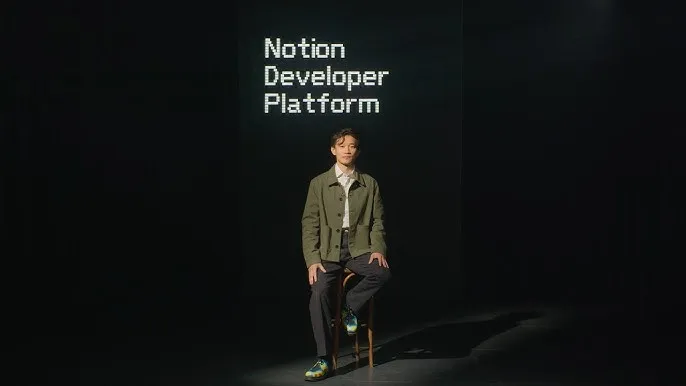
Productivity software maker Notion is stepping into the agentic era.
In a live-streamed product announcement on Wednesday, the company, known best for its collaborative note-taking app, introduced a new developer platform that extends the capabilities of its custom AI agents, connects with external agents, and allows teams to build automated multi-step workflows that can pull in data from any database.
By building an orchestration layer — a system that coordinates AI work across multiple tools and data sources — Notion is positioning itself as more than a note-taker with AI features and instead as a hub where people and agents can collaborate across tools and databases.
In February, Notion first launched its Custom Agents — AI teammates that handle repetitive tasks, like answering frequently asked questions, compiling status updates, and automating workflows. Since then, Notion customers have built over one million agents, the company says.
However, these agents had limitations. They couldn’t connect with external data or use custom logic. External agents that companies used also didn’t have a way to connect with the Notion workspace. Teams had to work around these problems by using third-party automation platforms or writing their own scripts that run on their own infrastructure.
“It’s true that, historically, Notion hasn’t been the most developer-focused platform,” said Ivan Zhao, Notion co-founder and CEO, during the livestream. “But things are changing.”

Now, Notion will allow teams to deploy their own custom code. With its new Workers, Notion’s cloud-based environment for running custom code, customers can write their logic and deploy it to a secure sandbox (an isolated environment that keeps the code from interfering with other systems). This allows teams to do things like sync their data into Notion, build custom tools, and trigger work with webhooks — which are automated signals that kick off actions when something happens in another app — without needing to rely on external infrastructure.
You don’t even have to write the code. The company points out that your preferred AI coding agent can do it for you.
The Workers will use the same credit system as Custom Agents, but Notion is making this free through August, so developers can experiment.
Syncing external data sources is also a part of the Notion Developer Platform. Powered by Workers, the database sync feature can pull in data from any database with an API. That means you could access data from places like Salesforce, Zendesk, Postgres, and others within your own Notion databases — and keep the data current.
Zhao noted that this means that Notion’s users can now “use your Notion database as a sheer canvas to power both your workflows and your agents.”

Workers can also build agent tools with custom logic, for those times when connecting with a third-party via MCP — short for Model Context Protocol, an emerging standard that lets AI tools connect to external data and services — isn’t enough.
Another addition allows Notion’s users to chat directly with external AI agents they use, assign them work, and track their progress, as if they were one of Notion’s own custom agents. At launch, Notion says that Claude Code, Cursor, Codex, and Decagon are supported partner agents, but it plans to add more.
There’s an External Agent API, too, if teams want to connect their own internal agents with Notion, like those they’ve built specifically for their company’s needs.

Developers and agents interact with Notion’s new Developer Platform via the Notion CLI, a command-line tool for developers, available on the company’s Business and Enterprise Plans.
The Developer Platform represents a shift in strategy for Notion as it becomes more of a programmable platform than just an application, setting it up to compete with other workflow automation platforms. As businesses increasingly look to automate knowledge work and build internal AI systems, a platform that ties together agents, custom code, and live data in one place starts to look less like a productivity app and more like core infrastructure.
It also follows the broader trend among AI companies, which have been moving beyond the AI chatbot to offer agentic tools that can take actions across different software platforms.
“Any data, any tool, any agent — that’s the big picture for the Notion Developer Platform,” Zhao said.
When you purchase through links in our articles, we may earn a small commission. This doesn’t affect our editorial independence.




Moove, a global mobility company, on Thursday announced that it will conclude its operations in Nigeria, six years after the company was founded in Lagos.
“The company does so with deep gratitude to the customers, team members, partners and communities who gave Moove its start,” a statement said Thursday.
Moove was founded in 2020 by Ladi Delano and Jide Odunsi after they saw that many gig workers in Nigeria wanted to earn through mobility but could not access the vehicle financing they needed.
The company began with 76 vehicles in Lagos and developed its Rental & Drive-to-Own model to give mobility entrepreneurs access to new vehicles and a pathway to ownership.
What Moove built in Lagos became the foundation for a business that today operates 42,000 vehicles across 29 cities globally.
Since its inception, Moove has served more than 9,000 customers across both its Drive-to-Own and rental products, helping customers generate approximately ₦57 billion in revenue, supporting livelihoods, families and businesses across Nigeria.


As Moove concludes its Nigerian operations, the company said eligible vehicles with an estimated total value of approximately ₦35 billion will pass into full ownership of the customers who currently operate them, with no payment to Moove required for the vehicles themselves from 1 October 2026.
Moove will also reward all staff members with a free car as a sign of appreciation, the statement said.
The ‘Thank You Nigeria’ initiative is Moove’s way of recognising the customers, employees and wider community whose trust, skill and support shaped the company from its earliest days, it added.
Ladi Delano, Co-Founder, Co-CEO and Advisory Board Chairman of Moove, said:
“Nigeria is where Moove began, and everything we have built since carries something of Lagos with it. Jide and I started the company because talented, hardworking mobility entrepreneurs wanted the opportunity to earn, but could not get access to the vehicles and finance they needed. Our first customers trusted us when Moove was still an idea, and that trust made everything that followed possible and for that we “thank you”.
“More than 9,000 customers have used our Drive-to-Own and rental products in Nigeria.
Their work generated approximately ₦57 billion in revenue through Moove-financed
vehicles. Those numbers matter because they represent people earning, supporting their families and building their own futures.
“This is an emotional moment for us. Nigeria gave Moove its beginning, its first customers and many of the people who built the foundations of our company.”
READ ALSO: Moove secures $100 million in series B funding
The cofounder explained that eligible vehicles worth approximately N35 billion will pass into full ownership of the customers who operate them, with no further payment to Moove required for the vehicles themselves.
“To our Nigerian team, thank you. Your commitment, resourcefulness and belief in the mission carried Moove through its earliest and most important years. You turned an idea that began in Lagos into a company that now operates across 29 cities globally. Jide and I will always be grateful for what you have built and for the way you have represented Moove,”he said.
“To our customers, thank you for partnering with us and realising our collective ambitions. To our partners, regulators and the wider community, thank you for supporting a young Nigerian company and helping it grow into a global business.
“Nigeria will always be where Moove started. As we continue to grow internationally, we will do everything we can to make Nigeria proud and to build a lasting global success story that never forgets where it began. Wherever Moove goes next, our story will always start in Lagos.”
Moove will work directly with affected customers and employees as it concludes its Nigerian operations and completes the transfer of eligible vehicles.
Discover more from Premium Times Nigeria
Subscribe to get the latest posts sent to your email.

-

 News3 days ago
2027: El-Rufai’s detention could hurt APC, generate sympathy – SEDSAC director, other analysts express views
-
News3 days ago
Lucid Motors’ EV output falls to lowest level in almost 2 years
-
Business3 days ago
NAIPE 11th Annual Conference Moves to 12 Noon as 28 Stakeholders Back Event
-
News2 days ago
Mirror Particle is building a ‘world model’ of human behavior