Health
Over One Million Children Reached as Plateau’s Malaria Chemoprevention Records Major Gains


The Plateau State Malaria Elimination Programme (SMEP) says its ongoing Seasonal Malaria Chemoprevention (SMC) project has led to a remarkable drop in malaria cases across all 17 local government areas of the state.
Speaking during an interactive session with journalists in Jos on Wednesday, SMEP Programme Manager, Ndas Kizito, revealed that more than 1,012,160 children under the age of five have received Sulfadoxine-Pyrimethamine with Amodiaquine (SPAQ) medication in the last three implementation cycles, achieving 106 percent coverage.
“The SMC intervention is significantly reducing malaria cases in Plateau,” Kizito said, noting that malaria prevalence had fallen to 18.8 percent, with an unpublished Malaria Indicator Survey (MIS) suggesting a further decline to 15 percent. He expressed confidence that with the fourth and fifth cycles of SPAQ administration, Plateau could be on course to becoming malaria-free.

Commissioner for Health, Dr. Nicholas Baamlong, hailed the achievements as a milestone in the state’s fight against malaria.
“Some years back, malaria prevalence in Plateau was around 21 percent. That figure has now dropped to about 18 percent, and with the most recent review, though yet to be made public, indications show a reduction to around 15 percent,” Baamlong said.
“If we sustain this progress, we should soon be recording less than 10 percent malaria cases per year. This is significant progress for the state, especially among children aged three months to 59 months, who are the most vulnerable,” he added.

Also speaking, Dr. Mbwas Mashor, Plateau State Project Manager of the Malaria Consortium, representing the organisation’s West and Central African Programme Director, Dr. Maxwell Kolawole, explained that the session was aimed at sensitising journalists and stakeholders while briefing them on preparations for the fourth SMC cycle, scheduled to commence across the state on September 4.
Director of Public Health, Dr. Mafwalal Bunah Masok, applauded the Malaria Consortium’s consistent support.
“Their backing has been critical in reducing malaria burden among under-five children, who are most vulnerable to severe malaria that often leads to death. The intervention has drastically cut down the burden in this high-risk age group,” he said.

Other stakeholders at the meeting—including Pharm. Lohdip Dojul, Chairman of the Pharmaceutical Society of Nigeria (Plateau State Chapter); Agwo Martin Dagen, Chairman of the Association of Medical Laboratory Scientists of Nigeria (Plateau State); and Dr. Nakah Joseph Nababa, representing the Nigerian Medical Association (Plateau State Chapter)—commended SMEP and the Malaria Consortium for their efforts. They also stressed the importance of the media in raising awareness and sustaining public participation in the fight against malaria.



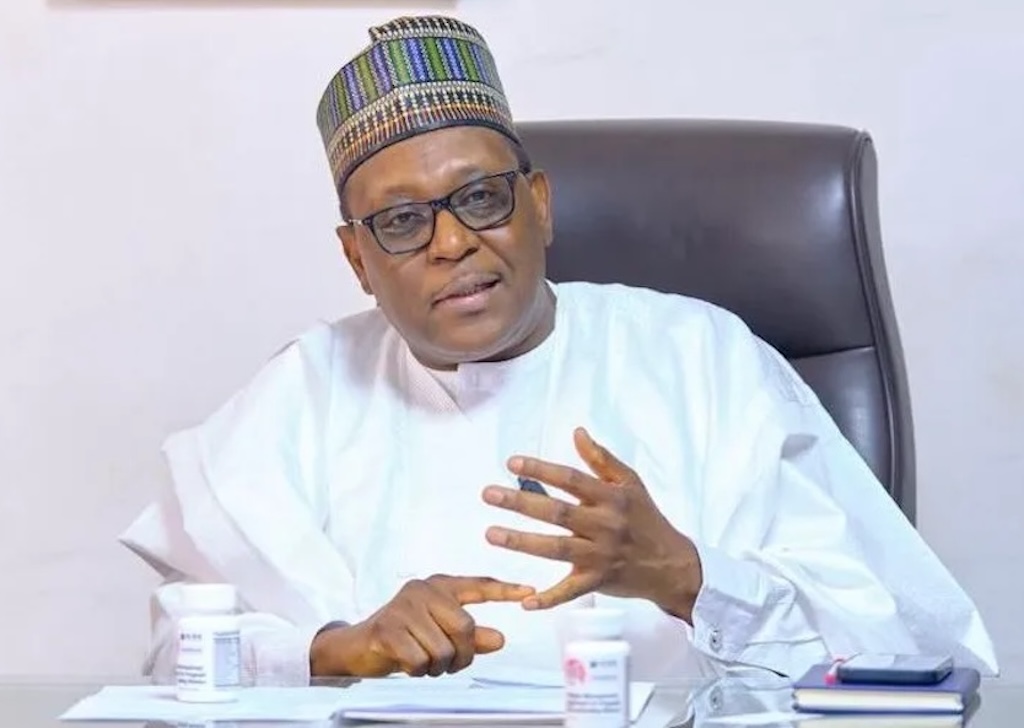
The Coordinating Minister of Health and Social Welfare, Muhammad Pate, has confirmed that the Ebola virus detected in Nigeria is highly similar to the virus identified in Kenya’s first imported case.
Mr Pate disclosed this on Friday during a briefing at the Federal Ministry of Health in Abuja, saying genomic sequencing showed that the viruses differed by only one mutation.
He said the analysis was conducted by sequencing teams at the Nigeria Centre for Disease Control and Prevention (NCDC) and the Institute of Genomics and Global Health at Redeemer’s University, Ede, Osun State, with the team led by virologist Christian Happi.
However, he cautioned that the finding does not establish how the Nigerian first case acquired the infection.
“Based on the genomic analysis, there is no evidence of travel of that index case in Kenya that links it to Nigeria, but the viruses are appearing to be related,” he said.
He added that the finding could change the understanding of the route of transmission as further investigations and testing continue.


Kenya has so far recorded nine confirmed Ebola cases caused by Bundibugyo virus, including one death, according to the European Centre for Disease Prevention and Control (ECDC). Eight of the cases were linked to the country’s first imported case from the Democratic Republic of the Congo (DRC), including four healthcare workers.
Africa CDC probes link
The genomic finding came on the same day the Africa Centres for Disease Control and Prevention (Africa CDC) said it is investigating a possible connection between Nigeria’s case and Kenya’s first imported case.
The agency said both patients had travelled through Entebbe International Airport in Uganda on 3 October, prompting investigations into whether they had shared equipment or had other contact. Africa CDC, however, stressed that no connection had been established between the infections.
The Kenyan patient travelled from the DRC through Uganda before arriving in Nairobi. He later died, becoming the first recorded Ebola death in Kenya’s current outbreak.
The Nigerian patient also passed through Uganda, but Ugandan authorities had earlier rejected suggestions that this established the country as the source of her infection.
Uganda denies active case
On 21 October, Uganda’s Ministry of Health said it had no confirmed active Ebola case and that the Nigerian patient’s transit through the country did not establish that she contracted the virus there.
The ministry said preliminary information indicated that the Nigerian woman had travelled to eastern DRC for business and passed through Uganda in early October without showing symptoms. It said the location of her exposure remained under investigation.
The new genomic finding now provides evidence of similarity between the Nigerian and Kenyan infections, although Nigerian authorities have not established that the patient was infected in Kenya.
One confirmed case
Mr Pate said Nigeria still has only one confirmed Ebola case and that authorities were continuing contact tracing, quarantine and additional testing of contacts.
Some tests have returned negative results, while others are pending, he said.
He urged Nigerians to remain vigilant but calm, saying there is no need for panic.
“We will continue to work diligently to ensure that we contain this virus as much as possible, and that we avoid a situation that spills over to the communities,” he said.
READ ALSO: Ebola: Atiku demands details of FG’s N10bn emergency fund
The minister said the government is also strengthening infection prevention and control measures in health facilities and would train health workers on how to identify and manage suspected cases.
He urged hospitals to notify public health authorities of suspected cases and encouraged Nigerians to observe basic preventive measures, including regular handwashing and hygiene.
Mr Pate also said Ebola is not currently known to be transmitted through the air but through close contact with infected body fluids.
He urged Nigerians to rely on information from public health authorities, including the NCDC, Federal Ministry of Health, World Health Organisation and Africa CDC, rather than unverified information on social media.
Discover more from Premium Times Nigeria
Subscribe to get the latest posts sent to your email.
The Africa Centres for Disease Control and Prevention (Africa CDC) has assured the public that patients’ personal information will remain confidential during ongoing Ebola containment operations, as authorities work to trace people who may have been exposed to the disease.
Wessam Mankoula, an epidemiologist and the agency’s Director of Emergency Preparedness and Response, gave the assurance during a virtual press briefing on Thursday. He explained that patients’ information was shared only with authorised investigators conducting contact tracing.
He said the information would not be disclosed publicly, emphasising the importance of protecting patients’ privacy during outbreak investigations.
The assurance follows the Nigerian government’s confirmation on Tuesday of an Ebola case in the Federal Capital Territory (FCT).
The patient, a woman who recently arrived in Nigeria on an international flight from Uganda, is receiving medical care in isolation at a private hospital in the FCT.
Contact tracing
Mr Mankoula said Nigeria’s National Reference Laboratory confirmed that the imported case involved the Bundibugyo strain of the Ebola virus.
He said 44 high-risk contacts had been identified, and the government was working to identify others who might have been exposed.
Contact tracing involves identifying and monitoring people who may have been in contact with an infected person, so possible infections can be detected early and further transmission limited.
Mr Mankoula also said investigators were examining a possible link between the Nigerian case and a case in Kenya. Both individuals had travelled through Entebbe International Airport in Uganda on 3 October.
He stressed that a connection remained under investigation and had not been established.
READ ALSO: Ebola: FG orders strict screening at Nigeria’s entry points
Regional response
Mr Mankoula said Africa CDC was working with partners, including the WHO, to strengthen disease surveillance and support preparedness measures. These included providing testing supplies at border areas near the Democratic Republic of the Congo (DRC).
Nigeria’s case comes amid an Ebola outbreak in the DRC involving the Bundibugyo virus.
According to figures attributed to the European Centre for Disease Prevention and Control (ECDC), the DRC had recorded 9,552 confirmed cases and 4,602 related deaths as of 19 October, based on data up to 18 October.
The outbreak has affected 66 of the country’s 178 health zones across eight provinces, with Ituri the most affected province.
These developments have heightened concerns about Ebola’s cross-border spread and the need for countries to strengthen surveillance, laboratory testing and coordination to identify suspected cases promptly.
Africa CDC continues to work with national health authorities and international partners to support outbreak response efforts and limit further transmission.
Discover more from Premium Times Nigeria
Subscribe to get the latest posts sent to your email.
-

 News1 day ago
Obi, Kwankwaso to hold Middle Belt Youth, Village Hall Meeting in Jos
-
News4 days ago
Meta’s Muse hits 10M U.S. downloads in 40 days, a milestone reached by only 11 other apps
-
Business3 days ago
How Your Side Hustle Income Ends Up in Your RSA
-
News3 days ago
Blacksmith hits unicorn valuation after Sequoia leads Series C