News
OPINION: Reflecting on the March 18 polls in Plateau
Published
3 years agoon
By
vicky
March 18 Polls
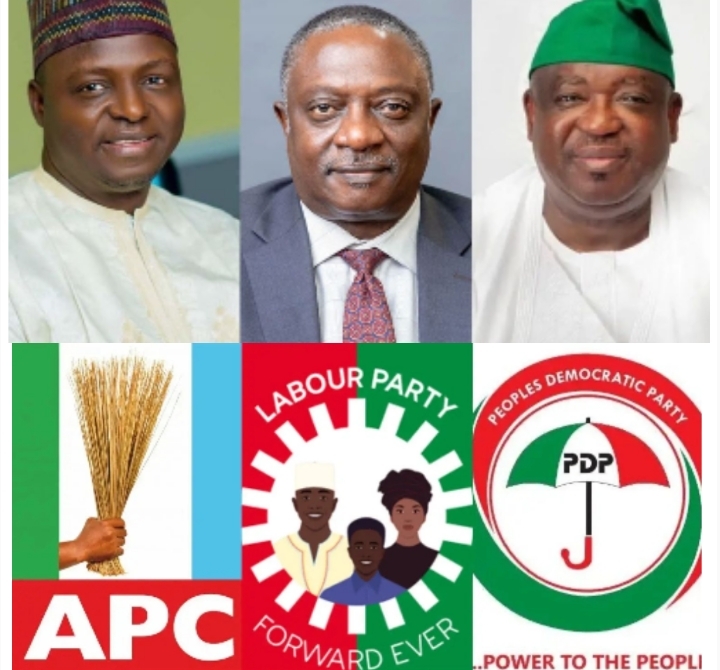
SOMETIMES, even the elements foretell the fortunes of men. At exactly 2.10 pm on Sunday, March 19, 2023, it started to rain. Not in showers or drizzles. It was a downpour, also witnessed in other parts of Plateau State. Who says God has abandoned this land? That sudden rainfall brought with it wonderful tidings. At the very moment it touched this parched earth, the opposition Peoples Democratic Party (PDP), was already leading in the gubernatorial and house of assembly elections held the day before. The ruling All Progressives Congress (APC) was trailing. As the rains fell, it appeared to put paid to the most incredible upsets in the House of Assembly polls. The Speaker, Yakubu Sanda, and the Majority Leader, Naanlong Gagyil, had lost to the PDP. Those resounding victories were more remarkable because these lawmakers played key roles in the removal of the immediate past Speaker, allegedly masterminded by Governor Lalong. And they continued to be unrepentant allies of Lalong.
Worthy of note is that it was Mrs. Happiness Mathew Akawu that walloped the Speaker in their Pengana State Constituency. Thus, bringing a gender boost and fresh dimension to the equation. As at the last count, the PDP had swept 16 more seats, bringing the tally for now to 18 in the 24-member legislature. Obviously, the PDP already held a comfortable majority. The rains also re-enforced the fact that God has also sent another Caleb, just as He did to the Israelites in the wilderness, to free Plateau State from the grip of the APC and restore it to its pre-destined glory. A glory that was mercilessly sacrificed for the political gains of a few. Apparently, God has not abandoned this grieving land. No, He has not. For Caleb is a Hebrew name that means ‘faithful’, ‘whole-hearted’, ‘bold’ or ‘brave’. Have no doubts. This Barrister Caleb Mutfwang, the gubernatorial candidate of the PDP, is set to be faithfully and whole-heartedly devoted to pursuing the cause of the long-suffering masses.
He will be brave and determined in confronting the state’s detractors who thrived on the people’s frustrations and had a field day. Boldness and courage shall be his catchphrase while meeting his own part of the social contract which he solemnly sealed with the people last Saturday. In the results just announced by the Independent National Electoral Commission (INEC) on Monday, March 20, Barrister Mutfwang defeated his closest rival of the APC, Dr. Nentawe Yilwatda, by 525, 299 votes. Yilwatda polled 481, 370. He was humbled with a difference of 43, 929 ballots. As the final results were being announced at around 3.18 PM, the heavens were once more pregnant with clouds, just as the day before. Again, the omens are magnificent. Surely, God is still watching over Plateau State. Finally, these noble and proud citizens have snatched their state from the precipice. Not without the necessary sacrifice and pain, though. Moving forward, restoring sustainable and lasting peace in this land that has been plagued by all sorts of crises should be of paramount importance to the new administration. Today, there are thousands of traumatised and disillusioned citizens whose lives have been totally shattered by the myriads of horrific mayhem visited on them and their communities.
Under his guidance, the peoples of the Middle Belt will reclaim their place as a distinct and unique socio-political expression and entity in the larger geographical north who fiercely cherish and protect their independence. The troubling matter of the state’s unwieldy debt stock should give any leader nightmares. With a debt of over N250 billion, one of the highest in the country, it is a huge irony that Plateau is among the four poorest states in Nigeria. But Mr. Mutfwang has, in course of his campaign tour of the state, outlined very practical and robust means of cracking this naughty nut. He has already drawn up a strategic plan on how to take the state from complete reliance on the monthly Federation Account allocations by tapping into other revenue sources in which the state has comparative advantage. Tourism and mechanised agricultural cultivation of rare and exotic crops such as Irish potatoes, strawberries, cabbage, carrots, etc, would be given a pride of place. He has also maintained that the state must cut its coat according to the size of its cloth. This means that all manner of extravagant, wasteful and unnecessary expenditure would stop.
Although this will inflict some pains on citizens, it is a necessary distress that must be endured if the state must survive economically, socially and politically. The long-term gains would certainly outweigh the short-term discomforts. An uncomfortably large number of uncompleted so-called Legacy Projects litter the state’s landscape. The costs remain an issue of litigation while the level of work done is mired in controversy. The necessity and usefulness of most of the projects to the host communities are questionable. This is a stark testament to the lack of transparency and accountability in administration. It says a lot about and the total lack of strategic planning and discipline in the use of scarce resources. A review of the projects should be carried and those deemed to be very essential to communities completed. Healing the land should is uppermost on the Mutfwang agenda. Too much blood has been shed in this land. Too many people are wounded and deeply scarred physically, emotionally and psychologically. But at the bottom of this healing should be justice. For there cannot be real peace, forgiveness and reconciliation without justice.
Peace is not the mere the absence of war and conflict. Peace goes much deeper, is more profound and fundamental. Fortunately, Barrister Mutfwang has exhibited a great capacity for boldly initiating this healing process and ensuring that justice is given to the oppressed and victims of violence and land-grabbing. Many citizens who have encountered him both in-person and in the media say that he does not come across as a lawyer-governor that will subvert the cause of justice. Rather, he will protect the poor and uphold the rule of law and the democratic process. As Barrister Caleb Mutfwang gets ready to take over the reins of power, citizens are sure that a new dawn is on the horizon. They see in the governor-elect another Caleb that has come to wipe their tears and restore hope, good governance, peace and development to this ravished state.
You may like
News
Accord Members Stage Protest, Demand Recognition Of Imumolen As National Chairman
Published
59 minutes agoon
April 22, 2026By
Preport
By Emmanuel Oloniruha
Some members of Accord party on Tuesday staged a protest at the Independent National Electoral Commission (INEC) headquarters, Abuja, demanding immediate recognition of Prof. Christopher Imumolen as the party’s National Chairman.
The protesters, who thronged the commission’s office with placards and a formal petition, called on INEC to comply with subsisting court orders affirming Imumolen’s leadership and to update its records accordingly
Speaking during the protest, Imumolen, a former presidential candidate of the party, expressed frustration over what he called INEC’s reluctance to enforce judicial decisions.
He said that the commission, as a regulatory body, must remain neutral and uphold the rule of law.
“We have not come here to cause any problem, but to speak because it seems INEC has not been listening.
“INEC should not be found supporting one faction over another, especially when there is a court order giving direction on what to do. A court order is not advisory; it is meant to be obeyed,” Imumolen said.
He queried INEC for complying with similar court orders regarding other parties, such as African Democratic Congress (ADC), while failing to do so for Accord.
He said that in spite of several court orders and petitions submitted to INEC, it had continued to recognise the Maxwell Mgbudem-led faction.
“We have submitted numerous letters and court proceedings to INEC, yet their website still reflects another person as chairman. Justice delayed is justice denied,” he stated.
Imumolen alleged that the Mgbudem-led faction had been illegally removing state chairmen supporting the court-mandated leadership.
“INEC is under a constitutional obligation to obey valid court orders. If there is any claim that the order has expired, the critical question remains: why was it not obeyed while it was subsisting?
“Had INEC complied accordingly, Prof. Chris Imumolen would have been duly reflected on the INEC website as national chairman, pending any application by Mr Maxwell Mdubem to vacate the order which, till date, has not been vacated,’’ he said.
He said that the demands of the protesters, as stated in the petition, included calls for the immediate recognition and formal listing of Imumolen as the national chairman on the INEC website.
“We hereby demand that INEC immediately recognise Chris Imumolen as national chairman in full compliance with subsisting court orders; and cease recognition of Mdubem, as no court order authorises such recognition.
“All duly elected state chairmen, who emerged through valid congresses and whose tenures remain subsisting, must also be recognised by INEC without prejudice,’’ he said.
The affected states, according to him, include: Zamfara, Borno, Ogun, Katsina, Yobe, Bauchi, Ondo, Ekiti, Lagos, Osun, Nasarawa, FCT, Edo, Delta, Benue, Oyo, Plateau and Kwara.
Imumolen called on INEC to immediately comply with all subsisting court orders, as issued by competent courts of jurisdiction.
“Court orders are meant to be obeyed—not ignored, not delayed and certainly not selectively applied.
“We trust that INEC will act swiftly to correct these anomalies and uphold the sanctity of the law,’’ he said.
He warned that failure to act accordingly risks placing INEC in direct conflict with judicial authorities and constitutional order.
“If laws are not obeyed, then should we take humanity into our hands? No, we will not. But if the court has decided, you follow it,” Imumolen said.
He also alleged that Mdubem had continued to deploy institutional mechanisms to intimidate and victimise duly-elected state chairmen who did not align with his claim to leadership.
INEC National Commissioner, Prof. Abdullahi Zuru, while addressing the protesters, said that the commission would consider the petition they submitted.
“I have listened to what you have said. I have received some communication by you. I will forward this to the commission and it will look into whatever it is there and act appropriately,’’ Zuru said.(NAN)(www.nannews.ng)
OBE/WAS
Edited by ‘Wale Sadeeq
News
Globacom pushes back on subscriber-led narrative, reframes telecoms competition around ‘depth, not speed’ – Technology Times
Published
2 hours agoon
April 22, 2026By
Preport
Nigeria’s telecoms market narrative is facing a fresh counterpoint after Globacom issued a strongly worded response to a recent industry analysis by Technology Times, arguing that prevailing interpretations of subscriber growth figures risk obscuring the deeper structural shifts shaping the nation’s digital future.
In a statement titled “Reframing Momentum: Globacom and the Expanding Horizon of Nigeria’s Digital Future,” the Second National Operator (SNO) challenges what it suggests is an overly narrow fixation on headline metrics such as net additions and market share movements, urging a broader reassessment of how leadership is defined in Nigeria’s evolving telecoms ecosystem.
“At first glance, the latest industry analysis reads like a ledger of familiar figures—subscriber gains, market shares, incremental rises and falls,” the telecoms group founded by Dr Mike Adenuga, Jr, the Nigerian business maganate with stakes in telecoms, oil and gas, banking, among others, says, setting the tone for its critique. “Yet, beneath this arithmetic lies something far more evocative: a nation stirring into a fuller digital consciousness.”


“At first glance, the latest industry analysis reads like a ledger of familiar figures—subscriber gains, market shares, incremental rises and falls,” the telecoms group founded by Dr Mike Adenuga, Jr, the Nigerian business maganate with stakes in telecoms, oil and gas, banking, among others, says, setting the tone for its critique. “Yet, beneath this arithmetic lies something far more evocative: a nation stirring into a fuller digital consciousness.”
Globacom: Nigeria telecoms evolving from pursuit of volume to refinement of value
The statement is a direct reaction to Technology Times’ analysis of recent subscriber data trends, where industry growth, marked by the addition of over 2.39 million new subscribers in the month of February 2026, was framed within the context of competitive positioning among operators. While not disputing the figures themselves, Globacom shares a different view of their significance, describing the surge not as “merely numerical progress” but as “the pulsebeat of a country leaning decisively into connectivity, commerce, and digital expression.”
However, the SNO, whose fully-owned mobile unit, Glo mobile, ranks as number three by subscriber base in the Nigerian telecoms market, draws a clear distinction between growth and leadership, arguing that “true leadership is not defined by the haste of footsteps, but by the clarity of foresight and the strength of foundations laid beneath the surface.”
This distinction forms the core of Globacom’s rebuttal. While industry commentary often spotlights operators leading in subscriber acquisition, the telecoms company suggests that such narratives “perhaps unwittingly” overlook what it calls “a subtler transition: a market evolving from the pursuit of volume to the refinement of value.”
The Nigerian SNO, which launched its Glo mobile service in August 2003, two years after its mobile competitors, MTN Nigeria and Airtel Nigeria, with the disruptive per second billing which made mobile services more affordable for subscribers, has recorded a number of telecoms industry’s feat including the launch of the Glo 1 undersea cable.
In positioning itself within this transition, Globacom states that it has deliberately chosen a different competitive arena. “This is the quiet theatre in which Globacom has elected to perform,” the company says, “not chasing the flicker of transient gains, but tending the enduring flame of data excellence, network resilience, and inclusive access.”
The language signals a strategic repositioning, from volume-driven competition to what the operator frames as infrastructure-led, value-centric growth. In doing so, Globacom implicitly challenges the industry’s traditional scorecard, which has long prioritised subscriber numbers as the primary indicator of market leadership.

This distinction forms the core of Globacom’s rebuttal. While industry commentary often spotlights operators leading in subscriber acquisition, the telecoms company suggests that such narratives “perhaps unwittingly” overlook what it calls “a subtler transition: a market evolving from the pursuit of volume to the refinement of value.”
Instead, SNO points to its long-term capital investments as the true measure of competitive strength. “Globacom’s strategy resembles less a hurried harvest and more a patient cultivation,” the statement notes, invoking a recurring metaphor that contrasts short-term gains with long-term infrastructure development.
Its investments, Globacom says, span “undersea cable infrastructure, expansive fibre networks, and democratised data pricing,” which it describes not as isolated initiatives but as “the subterranean roots feeding a vast digital canopy.”
From these “roots,” Globacom argues, emerge broader economic and technological outcomes, including “enterprise innovation, rural connectivity, and the widening of Nigeria’s technological commons.”
Globacom’s repositioning of its place in annals of Nigeria’s telecoms, aligns with a growing shift in global telecoms discourse, where infrastructure ownership, data capacity, and service quality are increasingly seen as strategic differentiators, particularly in emerging markets undergoing rapid digital transformation.
Globacom’s underscores this shift, asserting that “in an era increasingly defined by high-value data ecosystems and experiential quality, the true currency of competition is no longer subscriber count alone, but depth of service, affordability of access, and sovereignty of infrastructure.”
These three pillars, service depth, affordability, and infrastructure sovereignty, are presented as the new axes of competition, implicitly repositioning the operator’s role within the market. Rather than contesting leadership on subscriber metrics, Globacom seeks to anchor its relevance in foundational capabilities that enable long-term digital growth.
The emphasis on “sovereignty of infrastructure” is particularly notable, reflecting broader national and continental conversations around digital independence, local data hosting, and control over critical connectivity assets.
In this context, Globacom’s investments in subsea cables and fibre backbone infrastructure are positioned not just as corporate strategy, but as contributions to national capacity-building. The telecoms group suggests that such investments are “neither incidental nor invisible, but quietly consequential.”
Yet, the statement stops short of directly critiquing specific competitors, instead underscoring the telecoms industry’s evolution as a divergence in strategic tempo. “What emerges, therefore, is not a story of disparity, but of divergent tempos,” Globacom says.
“While some advance with visible velocity,” the SNO adds, “Globacom advances with depth—sinking its pillars into the bedrock of national connectivity, affordability, and long-term digital empowerment.”
This notion of “divergent tempos” offers a diplomatic but pointed response to analyses that foreground rapid subscriber acquisition as the dominant narrative. It suggests that while some operators may prioritise short-term growth indicators, others, like Globacom, are pursuing longer investment cycles that may not immediately reflect in headline figures.
The company further situates its approach within the broader maturation of Nigeria’s telecoms market. “As the industry sheds the simplicity of duopoly and matures into a more textured, capability-driven landscape, the advantage will favour those who balance scale with strategic patience,” it says.
This observation reflects an industry in transition, from early-stage expansion characterised by aggressive subscriber acquisition, to a more complex phase defined by service differentiation, data monetisation, and infrastructure optimisation.
Globacom’s also sends signals about the recalibration of its own priorities. The SNO highlights a “recalibrated focus, towards data-led growth, enriched customer experience, and innovative broadband solutions,” describing this shift as “not hesitation, but intention; not delay, but design.”
The phrasing suggests an awareness of how its performance may be perceived in comparative analyses, and an effort to proactively shape that narrative by repositioning the strategic intent.
The company positions this recalibration not as a defensive move, but as a forward-looking strategy aligned with the demands of a digital economy. By emphasising broadband, data quality, and customer experience, Globacom aligns itself with key growth drivers in Nigeria’s telecoms sector, where data consumption continues to outpace traditional voice services.
At a broader level, the company’s response highlights a tension at the heart of telecoms reporting and analysis: the balance between quantitative metrics and qualitative impact.
While subscriber numbers provide a clear and comparable benchmark, they may not fully capture dimensions such as network reliability, data speeds, pricing innovation, or infrastructure reach, factors that increasingly shape user experience and economic outcomes.
Globacom’s insistence on these dimensions suggests a push for a more nuanced analytical framework, one that goes beyond “the simplicity of duopoly” and recognises the multi-layered nature of competition in a maturing market.
The company reinforce this perspective with a philosophical note on the future of the industry. “For in the final reckoning, the future of telecommunications will not be won by those who merely move fastest, but by those who build most wisely,” it says.
“And in that unfolding narrative, Globacom stands not at the margins, but at the very blueprint of a digitally awakened nation—steady, deliberate, and profoundly enduring.”
This encapsulates Globacom’s core argument: that its competitive position should be assessed not through the immediacy of subscriber gains, but through the durability and strategic relevance of its infrastructure and service ecosystem.
For Technology Times and its audience across Nigeria, Africa and beyond, the response provides a valuable counterbalance to data-driven analysis, introducing a qualitative lens through which to interpret industry trends.
It also raises important editorial questions about how telecoms performance is measured and communicated, particularly in a market like Nigeria, where digital transformation is accelerating and the stakes extend beyond commercial competition to national development outcomes.
As Nigeria continues to expand its digital infrastructure and deepen internet penetration, the interplay between speed and depth, volume and value, will likely become more pronounced. Globacom’s intervention suggests that operators are increasingly aware of this shift, and are seeking to shape not just market outcomes, but the narrative frameworks through which those outcomes are understood.
Stay ahead with real-time reports, breaking news, and exclusive insights delivered directly to your phone. Don’t settle for outdated information. Join TECHNOLOGYTIMES NEWS on WhatsApp for 24/7 updates.
Join Our Whatsapp Channel
Trending
-
News20 hours ago
Labour Party fixes national convention for April 28
-
News22 hours ago
Nigeria’s Minister Matawalle Attempted to Bribe US Official — US Lawmaker Reveals
-
News3 days ago
The 12-month window | TechCrunch
-
News2 days ago
Plateau 2027: Jude Dakur Defects from APC to ADC, Reaffirms Governorship Ambition