Health
Plateau: Tuberculosis, TB cases on the rise — over 10,000 recorded in 2022

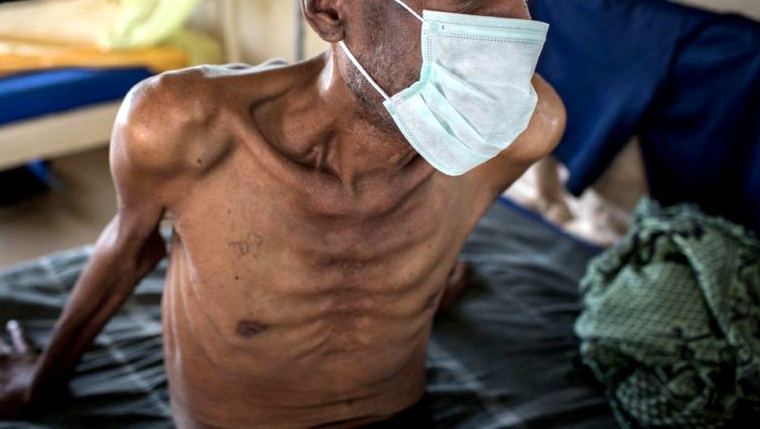


Kenya has confirmed a third case of Ebola after a 65-year-old woman tested positive while in quarantine.
The woman is a close relative of Kenya’s first confirmed patient, a 40-year-old who died from Ebola on 5 October, two days after arriving in Kenya from the Democratic Republic of the Congo (DRC).
The Associated Press (AP) reported that the woman had been in quarantine since 6 October and developed symptoms before testing positive. She has since been transferred to an infectious disease unit for treatment.
The second patient, a 39-year-old man from the same family, remains stable, according to Kenya’s Ministry of Health.
The ministry said there was no evidence of community transmission, as all three cases were linked to the first patient and the individuals had been in quarantine.
Nigeria’s preparedness
The development comes as Nigeria continues to monitor the regional outbreak and strengthen preparedness against possible importation of the virus.


PREMIUM TIMES reported on 7 October that the Nigeria Centre for Disease Control and Prevention (NCDC) was reviewing the country’s preparedness after Kenya confirmed its first imported case of the Bundibugyo strain of Ebola.
In a statement issued on 6 October, the NCDC said the case highlighted the risk of international importation through travel and population movement, including the possibility of the virus entering Nigeria.
The agency said it was working with the Federal Ministry of Health and Social Welfare, Port Health Services, state governments and other partners to strengthen surveillance, early detection, laboratory diagnosis, isolation, contact tracing and infection prevention.
It also said Nigeria conducted a national Ebola preparedness simulation exercise to assess its readiness to respond to a possible case.
As of 6 October, the NCDC said Nigeria had no confirmed Ebola case.
Contact tracing continues
Kenya’s first case involved a 40-year-old man who had been living in the DRC and travelled through Uganda before arriving in Nairobi. He tested positive for Ebola and died on 5 October.
The confirmation of a second case on 14 October raised concerns about further infections among people exposed to the initial patient.
PREMIUM TIMES reported on 14 October that the second patient, a 39-year-old close relative of the first case, developed symptoms while in quarantine.
At the time, Kenyan authorities had identified 128 contacts linked to the first patient, with 113 located and efforts ongoing to trace the remaining 15.
In its report on Friday, AP said three contacts of the initial patient remained unaccounted for, while authorities continued efforts to trace people who might have been exposed.
The latest case brings the number of confirmed Ebola infections in Kenya to three.
Regional outbreak
The cases in Kenya are linked to the ongoing Ebola outbreak in the DRC, where the Bundibugyo virus has caused thousands of infections and deaths.
The World Health Organisation (WHO) said the DRC had recorded 7,890 confirmed cases and 3,799 deaths as of 23 September.
The outbreak has raised concerns about cross-border transmission, particularly as people travel between affected areas and neighbouring countries.
The Bundibugyo virus is a distinct species of Ebola virus. No vaccine or treatment has been specifically approved for this strain.
Discover more from Premium Times Nigeria
Subscribe to get the latest posts sent to your email.

The National Primary Health Care Development Agency (NPHCDA) says about 93 per cent of children affected by recent diphtheria outbreaks in Nigeria had not received the full recommended vaccine doses.
The agency’s Executive Director, Muyi Aina, disclosed this on Thursday during its quarterly media briefing in Abuja.
Mr Aina said an analysis of cases recorded during the outbreaks showed that most affected children were either unvaccinated or had received fewer than the three recommended doses.
“We looked at data from all the cases that we have had, and in the different outbreaks that are happening, over 90 per cent, I think 93 per cent of the children had not received the full complement of vaccines that they should receive,” he said.
He said some affected children had either received no vaccine or only one of the three recommended doses.
Mr Aina attributed the situation partly to misinformation and false rumours affecting vaccine uptake in some communities.
“The vaccines are available. We have advocated, and we have interventions to get communities to access these vaccines,” he said.
“But when people allow misinformation and false rumours to influence their behaviour, they don’t access the vaccines.”
Mr Aina said reducing vaccine-preventable diseases remained a critical priority of the agency’s immunisation programme.
Other vaccination programmes
Mr Aina said more than 18.3 million girls had received the human papillomavirus (HPV) vaccine, and efforts are ongoing to expand coverage among eligible girls.
“For the human papillomavirus vaccine, over 18.3 million of our girls have now been vaccinated,” he said.
He added that the measles-rubella vaccine had reached more than 102 million children aged nine months to 14 years.
According to him, 882,000 children in Kebbi, Bayelsa, Ondo and Bauchi states had received at least the first dose of the malaria vaccine.
Mr Aina said the agency was also recording gradual improvement in routine immunisation coverage and reducing the number of zero-dose children through targeted interventions.
READ ALSO: NPHCDA records 45 million quarterly PHC visits, links 773,000 pregnant women to care
“We are reducing our number of zero-dose children through several interventions, including the identification, enumeration and vaccination of children, and through targeted interventions to reach underserved communities,” he said.
He urged caregivers, community leaders and teachers to support vaccination efforts to protect children against preventable diseases.
“I think this should be a wake-up call for all of us who are caregivers, for those of us that are community leaders and teachers, that we need to again focus on making sure that we get all of the vaccines that we need,” Mr Aina said.
He added that efforts are underway to expand the Basic Health Care Provision Fund to more facilities, increasing coverage from 8,300 to 15,000.
(NAN)
Discover more from Premium Times Nigeria
Subscribe to get the latest posts sent to your email.
-

 Health4 days ago
AMR: Livestock uses more antibiotics than human health sector
-
News3 days ago
MTN, Airtel take 90% of Nigeria’s 15m new subscribers as Glo shifts ground – Technology Times
-
News4 days ago
The Stage Is Set, Nairobi Is Ready! Africa’s Business and Sports Power Players Converge for YORA Summit 2026
-
News4 days ago
Nigeria must stop ‘renting’ AI, APC chairman says – Technology Times