Connect with us

News

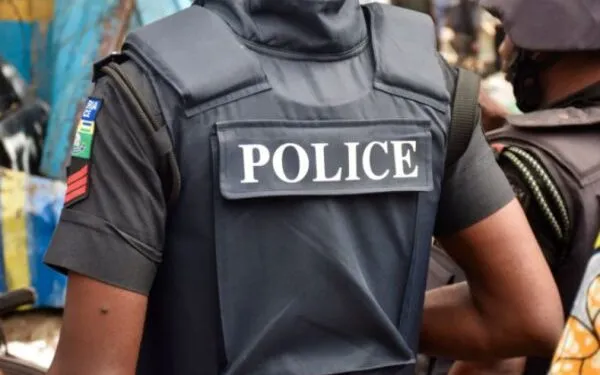
March 18 Polls: Plateau Police deploys over 10,000 personnel for election

editor

Published

on

POLICE

Plateau State Commissioner of Police, Manman Daura, has declared that over 10,500 security personnel, drawn from the Nigeria Police, the Military, NSCDC, NIS, NCS, NDLEA, and Federal Fire Service, will be deployed to the 4,989 polling units on Saturday.

Even as he warned political actors and their followers to desist from any act capable of inciting the general public to cause violence in any part of the state, he threatened that the Command would do anything within the ambit of the law to stop their activities from coming to fruition.

Addressing reporters on Friday, the State Commissioner of Police pointed out that

The military will cordon off the entire state in compliance with the restriction of movement on Election Day, adding that they will be in every strategic part of the state to enhance the security of lives and properties.

He added that the Inspector General of Police, IGP Usman Alkali Baba, has equally approved and allocated personnel protective gadgets and anti-riot equipment to the Command to enhance the operational capacity of the Command to provide adequate security throughout the governorship election and beyond.

The Commissioner of Police mentioned that inciting disturbance and breach of the public peace through unguided utterances and inciting hate speeches are criminal offenses that will not be accepted.

His words: “Because of that, any person who instigates a person or group of persons to do a thing to commit a criminal offense, engages with one or more other persons in a conspiracy for the doing of that thing, or If someone intentionally aids or facilitates any act or illegal omission, the doing of that thing makes that person liable for the offence of abetment. “And so whoever abets an offense shall, if the act abetted is committed in consequence to the abetment, be punished with the punishment provided for the offense.

“He equally warned religious leaders, most especially pastors, and imams, to desist from making inciting statements to their congregants that are capable of disrupting the peace currently enjoyed by the good people of Plateau State.

The Commissioner of Police added that the command put measures in place to ensure that their activities will be curtailed before, during, and after the electioneering period.

Daura urged traditional rulers, parents, and guardians to advise their children to avoid any form of utterance or behavior that has a tendency to disrupt the peace.

“I warn you to ensure that your followers and wards are well-behaved throughout the electioneering period and stay away from any form of thuggery as the Plateau State Police Command under my watch will not condone any form of misconduct.”

He further charged police personnel and other security agencies in the state against being partisan in the election process and urged them to be strictly neutral and apolitical in discharging their duty.

“Any officer found wanting will be dealt with severely according to the Police Act and Regulations,” I warn you to carry out your duties diligently in accordance with the set guidelines. You must be at your duty post during the election and accompany all materials to the racks and collation centers. You must not leave your duty posts until you have received a “stand-down order.”

Continue Reading
Click to comment

Leave a Reply

Your email address will not be published. Required fields are marked *

Business

S&P upgrades Nigeria’s credit rating, FG reacts

info

Published

on

By

Admin ajax 2.jpg

S&P Global Ratings has upgraded Nigeria’s credit rating from B- to B with a Stable Outlook, an indication that the US-based agency believes Nigeria’s economy is getting better.

The improved rating was disclosed by finance minister Taiwo Oyedele in an X post early on Saturday.

“This latest upgrade by S&P follows similar positive rating actions in 2025 by Fitch Ratings and Moody’s Ratings,” Mr Oyedele wrote.

PREMIUM TIMES reports that Fitch and Moody’s had upgraded Nigeria’s sovereign rating, with Fitch also raising the rating from B-to B with a stable outlook.

Mr Oyedele said the improved ratings by the three global ratings firms indicate their belief in President Bola Tinubu’s economic policies.

PT WHATSAPP CHANNEL

“It further reinforces growing international confidence in Nigeria’s economic reform trajectory, policy consistency, and medium-term growth prospects,” he wrote.

Read Mr Oyedele’s full statement below.

T ’ &

The Federal Government welcomes the decision by S&P Global Ratings to upgrade Nigeria’s sovereign credit rating from ‘B-’ to ‘B’ with a Stable Outlook.

This latest upgrade by S&P follows similar positive rating actions in 2025 by Fitch Ratings and Moody’s Ratings. It further reinforces growing international confidence in Nigeria’s economic reform trajectory, policy consistency, and medium-term growth prospects.

These independent assessments collectively affirm that the difficult but necessary reforms undertaken under the leadership of President Bola Ahmed Tinubu, GCFR, are yielding measurable results and laying the foundation for a more stable, transparent, and resilient economy.

In particular, S&P highlighted improvements in Nigeria’s external position, stronger balance of payments dynamics, increased oil production, expanding domestic refining and export capacity, and the sustained implementation of key macroeconomic reforms including foreign exchange market liberalisation.

The agency also recognised ongoing fiscal reforms aimed at broadening the tax base, improving public revenue mobilisation, enhancing fiscal transparency, and strengthening debt sustainability. Notably, Nigeria’s debt-to-revenue ratio has improved significantly since 2023 and is projected to decline further as reforms continue to mature.

The upgrades by Fitch, Moody’s, and now S&P send a strong signal to global investors, development partners, financial markets, and the international business community that Nigeria is regaining macroeconomic credibility and restoring confidence in the management of its economy.

The government remains firmly committed to prudent fiscal management, macroeconomic stability, and structural reforms that promote inclusive and sustainable growth. We have maintained our position against the reintroduction of inefficient fuel subsidies which historically created significant fiscal distortions, incentivised smuggling, weakened foreign exchange liquidity, and diverted scarce public resources away from critical national priorities.

We remain committed to a market-driven economy anchored on transparency, competition, and effective regulatory oversight. Accordingly, the Federal Government will continue to uphold policies that support free enterprise, respect private investment, and provide a stable and predictable environment for businesses and investors to thrive.

While these positive ratings developments are encouraging, we recognise that the work ahead remains substantial. We are focused on addressing inflationary pressures, improving food security, expanding decent job opportunities, and ensuring that economic growth translates into meaningful and inclusive prosperity for all Nigerians.

The Federal, States and Local Governments will continue to implement reforms with discipline, pragmatism, and compassion while maintaining close engagement with citizens and all stakeholders.

The Federal Government appreciates the resilience, patience, and support of Nigerians in this reform journey. The improving outlook from leading global rating agencies will further position our country to attract investments and and enhance the country’s ability to secure financing on more favourable terms. We are strengthened in our resolve to build a stronger economy that is globally competitive, fiscally sustainable, and works for all Nigerians.


Continue Reading

News

Peter Obi’s acceptance in North still in doubt despite Kwankwaso’s support base – Muhammad, Ibrahim 

info

Published

on

By

Peter Obi 5.jpg

A political alliance between former Labour Party presidential candidate, Peter Obi, and the leader of the Kwankwasiyya movement, Rabiu Musa Kwankwaso, is already generating fresh conversations ahead of the 2027 presidential election.

Although neither politician has officially emerged as the presidential candidate of the Nigeria Democratic Congress (NDC) yet, both men are seen as preferred candidates to contest against the ruling party and other strong opposition parties in the next election cycle.

Political observers believe the talks are largely driven by the electoral realities of the 2023 presidential election, where both candidates recorded impressive but regionally limited performances.

Obi secured more than six million votes nationwide under the Labour Party and won 11 states alongside the Federal Capital Territory (FCT). However, in the northern region, his victories were limited to Plateau and Nasarawa states, as well as the FCT, where he enjoyed considerable support.

Kwankwaso, who contested on the platform of the New Nigeria Peoples Party (NNPP), won Kano State and secured nearly one million votes, reinforcing his influence in the North-West.

The proposed alliance is now raising questions about whether Kwankwaso’s northern political structure could help Obi improve his acceptance across the region in 2027.

Speaking with DAILY POST in an exclusive interview, political analyst and lecturer at the Aliko Dangote University of Science and Technology, Professor Murtala Muhammad, said Obi’s appeal in the North during the 2023 election was mostly concentrated among urban youths and citizens seeking alternatives to mainstream political parties.

“Peter Obi demonstrated some electoral strength in parts of Northern Nigeria during the 2023 presidential election, particularly in Abuja and among urban youths, middle-class voters, and citizens dissatisfied with the traditional political establishment,” he said.

According to him, electoral trends showed that Obi’s strongest support base remained outside the North.

“Electoral analyses estimated his northern vote share at roughly 14 per cent, compared to over 40 per cent in Southern Nigeria,” Muhammad stated.

He explained that while an alliance with Kwankwaso could strengthen Obi’s chances in Kano and parts of the North-West, it may not significantly alter the broader regional voting pattern.

“Although a potential alliance with Rabiu Musa Kwankwaso could improve Obi’s competitiveness, particularly in Kano through the Kwankwasiyya movement, it does not automatically guarantee widespread northern support,” he added.

Muhammad argued that voting behaviour across most parts of the North-West is still heavily influenced by religion, regional identity, longstanding party loyalty, and local political interests.

“Consequently, many northern voters may still be reluctant to support Obi despite Kwankwaso’s endorsement, making it analytically inaccurate to assume that Kwankwaso’s northern identity alone can deliver the wider North-West voting bloc to Obi,” he said.

Also speaking on the development, Kano-based politician and State House of Assembly aspirant, Aminu Abdullahi Ibrahim, acknowledged that Obi has gained more visibility among northern youths since the last election.

“I believe Peter Obi has gained a level of popularity in parts of northern Nigeria, especially among young people, urban voters, Christians in the North-Central region, and Nigerians who are frustrated,” Ibrahim said.

He maintained, however, that Obi still faces stiff political limitations in the core North-West states, where established political structures remain dominant.

“His popularity in the core North-West, particularly in states like Kano, Katsina, Jigawa, Kebbi, Sokoto, and Zamfara, still remains limited when compared to established northern political figures such as Atiku Abubakar,” he added.

Despite those limitations, Ibrahim said a merger between both politicians could still create a stronger opposition platform than what existed during the 2023 election.

“That said, if Peter Obi and Kwankwaso eventually form a political alliance ahead of future elections, it could make a significant difference compared to 2023,” he stated.

According to him, any serious challenge in 2027 would depend on more than just popularity or online support.

“They require strong grassroots mobilization, party unity, trusted local structures, religious and ethnic balancing, and the ability to protect votes across polling units. Even if Obi and Kwankwaso work together, translating public excitement into nationwide electoral victory will still be a major challenge,” Ibrahim said.

As coalition discussions continue, analysts say the success of any Obi-Kwankwaso partnership may ultimately depend on whether both politicians can transform their individual regional strengths into a truly national political movement capable of competing across Nigeria’s diverse electoral landscape.

Continue Reading

Trending