Connect with us

Politics

Nimchak Nansak, a part-time teacher vying for a seat in Plateau assembly

editor

Published

on

Nimchak Nansak

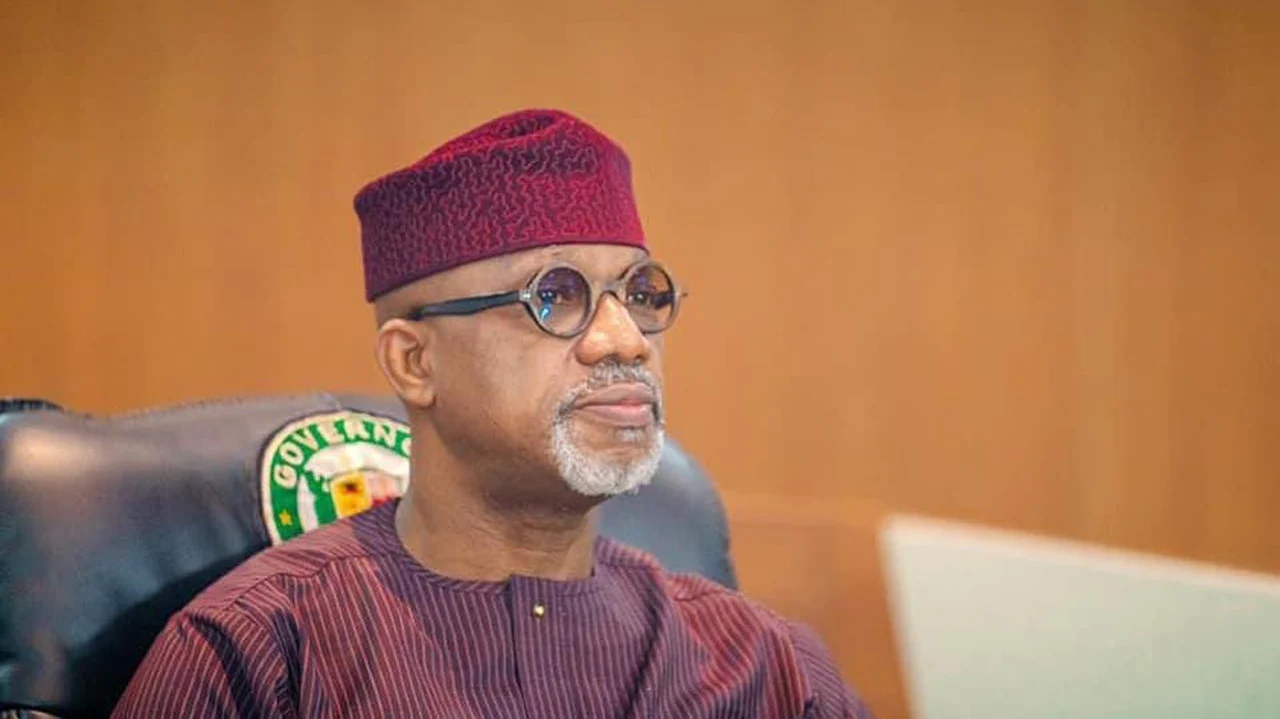
Nimchak Nansak, a part-time teacher in Langtang North Local Government Area of Plateau State is vying for a seat in the state assembly.

Rust-covered beds, shortage of personnel, and mediocre attention being given to patients all rape constituents of Langtang north in Plateau of adequate healthcare.

To salvage the situation, Nimchak Nansak fastened his girdle, swore a communal oath, and carried the heavy cross of contesting for a seat in the Plateau state assembly, where he believes he can contribute to the rehabilitation of his constituency.

For Nansak, it’s not a sudden dive.

As a 33-year-old who has lived in Langtang North all his life, the pain, agony, and needs of his people motivated him to join the All Progressives Congress (APC) in 2014 with the aim of causing radical economic change.

Not given to idleness and engrossed with a sense of purpose, he started by participating in ward politics, rose to the position of youth leader, and was further elevated as the party secretary in his local government. Nansak has also helped to coordinate campaigns since 2014, until this present moment when he decided to take the bull by the horns and contest for a seat in the state assembly.

Running a poultry farm in pari passu with part-time teaching at Federal Government Girls College, Langtang, Nansak said he saved his salaries with the aim of investing it all in the contest he now finds himself today.

After his stint at the government college, he moved to St. Peter’s Academy as a part-time teacher, while also taking students in the community on extra-curricular classes.

Nansak told TheCable that he is passionate about giving back to society and has been able to minimally achieve that by transferring knowledge to students.

Using his experience as a graduate of mathematics and computer science education from the University of Agriculture, Makurdi, he has been able to train hundreds of community youths in areas pertaining to science and agriculture.

“I moved into agriculture, and I also engaged in poultry farming, from there I was able to raise money for forms for the office and also do other things for the campaign,” he told TheCable.

An unsoiled politician and progressive at heart” is the description that best fits Nimchak Abel Nansak, who revealed that his strongest support and “godfathers” are the youths in the community who have voluntarily taken his ambition as their personal project because they believe in his competence, compassion and vision for the community.

He said: “I’m running the election with my personal funds. The youths in my society are my godfathers. They are the best asset I have. They see it as their own dream and project.”

Nansak said his goals for the youths are already “encapsulated into bills” that will “cushion the effect of challenges from the youth perspective”.

He intends to create “an industrial hub for the youth that will provide non-interest loans and an industrial trust fund. Any youth that is accessing this fund will not be paying any interest on such loans”.

He said the loans will be designed in a way that will give priority to those interested in agriculture, while also catering to others with different strokes of dreams in mind.

“Youths can access this loan and go into agriculture or do so many other things that will help them to do great things economically and also have enough money to contest for elective positions because it is not easy for youths to contest for these positions without the needed finance,” he said.

The ability to streamline goals is a superpower, and this is one strength that Nimsak appears to have leveraged. The politician said he intends to transform the healthcare sector and provide valuable farm seeds to make the agricultural endeavors of his constituents lucrative.

“In the healthcare system, I intend to widen the scope of basic healthcare in the constituency in terms of health insurance and secure more payments for our people. I will make healthcare provisions for people that are less privileged, and people that are not economically stable,” he told TheCable.

“People are not farming crops that are economically viable, so if given the opportunity I want to change the perspective of farming on this side of the world by ensuring that I provide crops that have a value chain and are economically viable like soya beans. I intend to provide these seeds.

“I will also ensure that I purchase fertilizer for them as part of my constituency development and provide agro-allied chemicals to be able to cultivate large portions of land. This can be done when we have clusters of women groups, youth groups, and community groups.”

Nimsak, though a member of the ruling party, considers himself one with the impoverished, and a member of the masses who shares the hurting pinch of fuel scarcity, abysmal power supply, and insecurity.

He would rather go fist-to-fist with the status quo than throw in the towel and leave his community in the same state.

Continue Reading
Click to comment

Leave a Reply

Your email address will not be published. Required fields are marked *

News

US Missionary Alex Barbir Expelled from Nigeria Over Speech Fueling Insecurity

info

Published

on

By

Images 2026 04 07T100856.114.jpeg

The Federal Government has expelled American missionary Alex Barbir, following allegations that his public statements were capable of worsening insecurity in parts of the country.

Authorities said his remarks were divisive and could trigger violence, especially in Plateau State.

The decision comes amid rising concerns over tensions in the North-central region. Government officials believe his activities and comments were beginning to affect national unity.

Abiodun Essiet, Senior Special Assistant to President Bola Tinubu on Community Engagement (North Central), confirmed the development during an interview on Monday. She said the government acted after reviewing the impact of his engagements.

“Yeah, so we’ve realised what Alex Barber has done, so I must inform you that Alex Barber is no longer in Nigeria,” she said.

She added that the missionary was removed because his actions were seen as harmful. “He has been, we can say, removed and sent out of the country because of the work he’s doing, which is creating division.”

According to her, some of his statements had immediate consequences. She linked a speech he delivered in Jos to an incident that followed shortly after.

“Immediately after he made his speech in Jos, a lot of people didn’t know that two people, two Muslims, were killed immediately after his speech,” she said.

“Because of the impact of this provocative speech, which he has been making, he was sent out of the country and is no longer in Nigeria.”

Before his exit, Barbir had built a strong presence in parts of Benue and Plateau states. He was known for humanitarian efforts in communities affected by violence. Through his initiative, he supported rebuilding projects, provided basic infrastructure, and participated in relief activities.

In Yelwata, a community hit by attacks in 2025, his team reportedly rebuilt several homes and assisted displaced residents. Some community leaders praised his intervention, saying it brought relief where government response was slow.

Despite this, his growing influence also attracted criticism. Observers accused him of presenting Nigeria’s security challenges in a way that could deepen religious and ethnic divisions. His repeated description of the crisis as a “war” raised concern among officials and analysts.

In several interviews, Barbir questioned official narratives and openly criticised the handling of insecurity. He also expressed distrust in government institutions, particularly in managing humanitarian support.

These comments drew reactions from public figures and religious leaders. Some called for investigations into his activities, warning that his words could threaten public peace. Others argued that foreign actors should not interfere in sensitive national issues.

There were also claims circulating online about his presence in areas shortly after the attacks. However, no evidence has linked him to any criminal activity.

Supporters of the missionary defended his work. They insisted he was only drawing global attention to the suffering in affected communities. Some religious leaders backed him, describing his actions as humanitarian and faith-driven.

Barbir himself responded to critics in a video, saying his work speaks for him. “They haven’t talked about me rebuilding villages… but when I speak out… then all of a sudden [they react],” he said.

He also rejected claims that his statements caused violence. In a post on his social media page, he said: “Let it be known that if Abiodun Essiet… made this statement, they are directly lying to the Nigerian and international community. I’ve never heard of this person, nor had a conversation with them.”

Legal experts say Nigeria has the authority to deport foreign nationals whose actions are considered a threat to public order. While freedom of speech exists, it does not extend to incitement or statements capable of triggering unrest.

Mrs Essiet said the government’s action was taken to prevent further tension. She warned against narratives that could divide communities, drawing parallels with past global tragedies.

“That’s what the government has done, because we don’t want individuals to come and create division,” she said.

She added that Nigeria must avoid any situation that could escalate into a wider conflict.

Continue Reading

Featured

Tinubu’s insecurity scorecard in Q1 2026 violent killings by bandits, terrorists

info

Published

on

By

Bh 1.png

As Christians commemorated Palm Sunday on March 29, bandits on motorcycles attacked the Anguwan Rukuba community in the Jos North council area of Plateau, killing at least 28 residents and injuring many others. The attack was one of the latest in a series of attacks on Nigerian communities in the first quarter of 2026.

Over the years, many parts of Nigeria have faced security challenges ranging from banditry to Boko Haram insurgency, mass kidnappings for ransom, and farmer-herder violence, many of which are often underreported, particularly in remote communities.

The North-West, Nigeria’s most populous zone, and the North-East have faced Boko Haram and banditry for over a decade. Meanwhile, the North-Central region also suffers from terrorist attacks. These attacks have displaced thousands in the worst-hit states in the northern region.

Nigeria ranked fourth in the global terrorism index released on March 19, 2026, by the Institute for Economics & Peace, recording a 46 per cent increase in deaths from terrorism in 2025.

The report said, “Islamic State West Africa Province and Boko Haram were responsible for 80 per cent of all terrorism deaths in the country.”

According to rights organisation Amnesty International, at least 323 people were killed in rural communities in Benue, Kwara, Kebbi, Katsina, Niger, and Zamfara within 21 days in February 2026.

On October 31, 2025, U.S. President Donald Trump declared Nigeria a Country of Particular Concernfollowing campaigns against “Christian genocide” in Africa’s most populous nation.

Less than two months later, the U.S. military carried out a series of air strikes against terrorist targets in the northern part of Nigeria, marking America’s first kinetic action in the West African country.

Despite this and persistent promises by President Bola Tinubu’s government to rid Nigeria of terrorists through the deployment of advanced technology and security personnel, many communities and military bases still bear the brunt of acts of terrorism.

From Chigwi village and the Anguwan Rukuba community in Plateau, to Sabon Gari in Borno, Woro and Nuku in Kwara, and Doma village in Katsina, several communities were attacked by bandits, Boko Haram, and ISWAP terrorists in the first three months of 2026.

Sunset on Easter in Benue, Kaduna

Suspected herdsmen attacked the Mbalom community in Gwer-East council area in Benue on April 4. About 17 people were killed, and several houses were razed in the attack, according to locals.

The following day, April 5, at least five worshippers were killed, and 32 others were abducted after bandits attacked the Evangelical Church Winning All in Ariko village, Kachia LGA in Kaduna during an Easter service.

Hours after the attack, the Nigerian Army confirmed in a statement that the abducted worshippers had been rescued.

Plateau communities in the firing line

Checks by Peoples Gazette showed that at least 119 people were killed in Plateau between January and March 2026.

At about 7:50 p.m. on March 29, gunmen attacked Anguwan Rukuba in the North-Central state. This region is known as the ‘Home of Peace and Tourism’. At least 28 residents were killed, and several others were injured.

In Chigwi village, no fewer than nine people were killed on January 5; seven in Bong village on January 2 in a house-to-house raid; and six farmers in communities of Jos South and Barkin Ladi council areas on January 6.

Seven people were murdered in the Kuru community of Jos South LGA on January 22. Four were killed in the Zurak and Sabon Gari communities in early February. Two residents died in the Garga community on February 17.

At least three herders in Jol village were killed on February 20. Four traders were murdered while en route to Pankshin, and 10 others in the Barkin Ladi and Riyom LGAs between February 22 and 23.

In Miango, bandits killed six residents. Another attack in the Nche Shwye Rishi community left seven people dead on February 28.

On March 14, about 20 soldiers were killed by bandits in the Wanka community. At the same time, three people died in an overnight attack on Rim village on March 25.

Death’s whisper in Kasuwan Daji, Niger

On January 3, bandits raided the Kasuwan-Daji market in Demo village, Niger State, at about 4:30 p.m. The terrorists killed over 30 and kidnapped several others.

According to the police, the bandits, from the National Park Forest along Kabe District, also looted shops, burnt the market, and carted away food items.

Boko Haram/ISWAP’s swoop on Sabon Gari, Borno

Suspected Boko Haram terrorists on January 29 killed dozens, including Nigerian Army officers and construction workers, in Sabon Gari in Borno, the epicentre of the Boko Haram and ISWAP insurgency since 2009.

War in Woro, Nuku, Kwara

About 170 people were massacred after armed bandits attacked Woro and Nuku in the Kaiama LGA on February 3. Dozens of villagers were also abducted, and buildings were burnt during the attack, adjudged the deadliest in the state.

Reports said the suspected bandits stormed the communities at about 6:00 p.m. on the date. The state governor, Abdulrahman Abdulrazaq, confirmed that 75 Muslims in Nuku were killed over their refusal to surrender to extremists who preached a strange doctrine.

Kaura village, Kaduna

At about 3:20 a.m. on February 7, terrorists attacked Kaura, a Christian community in Kaduna, killing three persons and abducting a Catholic priest and 10 others. According to the police, the deceased were two soldiers and a police officer, who died during the attack.

Suicide bombers sweep Maiduguri, Borno

At least 23 people were killed, and 108 others were injured in Maiduguri. Multiple explosions were carried out by suicide bombers using improvised explosive devices at about 7:24 p.m. on March 16. The police said the bombings were carried out at the Maiduguri Central Market, popularly known as Monday Market, the University of Maiduguri Teaching Hospital’s gate, and the Post Office Flyover area of the town.

Borno’s military bases as Boko Haram playground

The police command in Borno said on March 5, 2026, that Boko Haram raided the military base in Gwoza around 1:00 a.m. on March 4 before attacking the community. Similarly, in March, the Nigerian Army said troops of the Joint Task Force (North-East), Operation Hadin Kai, repelled attacks by terrorists on military positions at Azir Bridge and Banki in Borno.

Over 300 residents were kidnapped by suspected terrorists who invaded Ngoshe town between March 4 and 6, according to a report by Sky News.

Military spokesperson Uba Sani confirmed that the attacks occurred in Konduga, Marte, Jakana, and Mainok communities, disclosing that “a number” of soldiers died in the attack.

Mararaba reprisal in Nasarawa

Suspected herdsmen raided communities in Mararaba, Karu council area of Nasarawa, on March 26, as a reprisal. Six locals were killed, and seven houses, two cars, and a motorcycle were razed.

Deaths dot Doma village in Katsina

On the evening of February 3, at least 13 people were murdered when bandits attacked the Doma community in Tafoki Ward, Faskari LGA of Katsina. Several houses and vehicles were burnt during the incident.

The local government chair, Surajo Aliyu, said that prior to the attack, deemed a reprisal, the community informed the security agencies, and “unfortunately, they could not arrive before the bandits carried out their heinous act”.

Lakurawa terrorists lynch Kebbi

At least 33 residents of the Bui district in the Arewa council in Kebbi were killed by the Lakurawa terror group on February 19.

The police spokesperson in the state, Bashir Usman, had said in a statement that the bandits invaded the district at about 1:15 p.m. to rustle cattle.

Lakurawa is a new insurgent group operating mainly in Kebbi and Sokoto states.

Zamfara: Bike-riding bandits burn down Bukkuyum

Bike-riding bandits attacked the Tungan Dutse village in Bukkuyum, Zamfara, on the night of February 19. No fewer than 50 residents died, and an unspecified number of locals were wounded.

Also, many women and children were abducted, and houses were burnt in the attack.

Terror unleashed on Adamawa villages

Villages in the Madagali and Hong council areas of Adamawa came under Boko Haram/ISWAP terrorist attacks on February 23. The village head of Kirchinga in Madagali, Abubakar Lawan Kanuri, told Reuters that the armed bandits stormed the community in military uniforms and shot dead 18 residents.

In Garaha, Hong LGA, bandits, who also stormed the village on over 50 motorcycles, killed seven people before attacking a nearby military base.

Borgu buries scores of locals
Armed bandits killed over 40 people in the Tugan-Makeri, Konsoko, and Pissa communities in the Borgu local council of Niger on February 15.

While at least 38 were killed in Konkoso, six were shot dead, and many others were abducted in Tunga-Makeri. Several houses were also razed in the attacks.

Tinubu tickles ears with hope

On Friday, in his Easter message, President Bola Tinubu offered some words of hope, noting that “despite the good efforts of the administration and the gallant efforts of our men and women of the armed forces who leave behind their families to confront the evil actors in our land, challenges to our security have remained”.

On Thursday, Mr Tinubu was in Jos to commiserate with Plateau locals, a visit that left a sour taste in many mouths. However, the Nigerian president smelt a peace offering.

“The leaders of the nation’s security institutions have given strong assurances of progress. We have also sought and are receiving assistance from outside our shores.

“I am reassured that the citizens appreciate our efforts. I will continue to remind us of the imperative of unity and oneness. No nation can thrive where fear prevails, and no progress can be sustained without peace.

“To other parts of the country also enduring one form of insecurity or the other, rest assured that concerted efforts are already yielding breakthroughs. I therefore call upon all citizens to support lawful efforts, be our brothers’ keeper, and reject all forces that threaten our collective well-being,” said Mr Tinubu.

Continue Reading

Trending