Business
EFCC recovers $60 million for Nestoil lenders in ongoing debt investigation

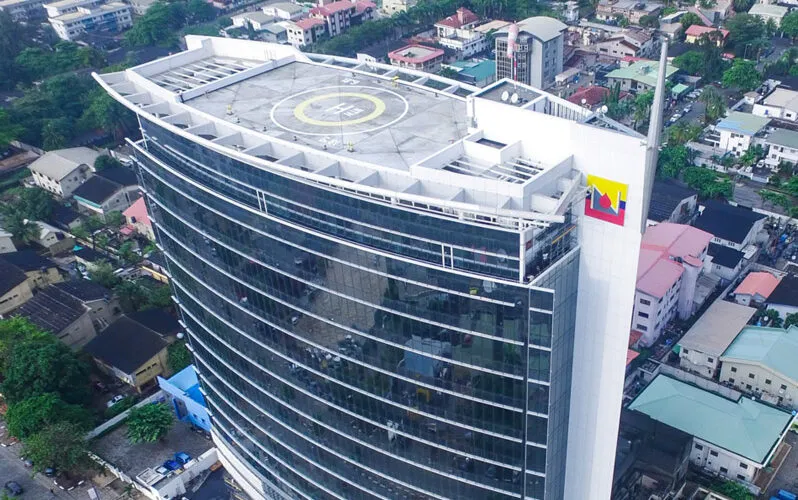

Nigeria’s top anti-corruption agency, the Economic and Financial Crimes Commission (EFCC), has recovered $60 million from indigenous oil and gas firm Nestoil Limited.
This breakthrough could advance efforts to resolve the protracted debt crisis between the energy company and a consortium of lenders.
Those familiar with the matter told PREMIUM TIMES that at a meeting facilitated by Olanipekun Olukoyode, the agency’s chief, Nestoil and a group of banks agreed to a structured repayment plan as part of an effort to recover the debt owed by the company to the lenders.
Our findings show that the engagement between the two parties has begun to bear fruit, with $60 million recovered so far from Nestoil and paid to the lenders in the course of the EFCC investigation and follow-up meetings with parties to the matter.
Oguzi Moses, head of investigation at EFCC’S Lagos Zonal Directorate 2, facilitated the payment made so far.

The consortium of lenders, PREMIUM TIMES found, welcomed the payment as a positive step and noted that it marks only the first stage in the repayment process, given that a substantial portion of Nestoil’s debt remains outstanding.
EFCC spokesperson, Dele Oyewale, did not answer or return calls seeking his comment on this development. But a top official of the agency, who asked not to be named because he did not have permission to discuss the case, confirmed the development, saying the anti-graft agency had to wade into the matter because of its economic implications for Nigeria.
Nnenna Azudialu-Obiejesi, executive director at Nestoil, also did not answer or return our reporter’s calls.
Background: Nestoil vs Lenders
The partial debt recovery is a major step forward in resolving a knotty legal battle between Nestoil and the banks over an alleged debt default.
The disagreement has strained relations between the parties and has far-reaching implications for the non-performing loan portfolios of some of Nigeria’s big banks.
The rift between the two parties is the subject of a complicated legal dispute that came to a head at the Supreme Court of Nigeria in June, leading the court to annul an order by the Court of Appeal freezing the assets of Nestoil and its affiliate, Neconde Energy.
The lawsuit is an attempt by FBN Quest Merchant Bank and First Trustees Limited to recover debts totalling more than $1 billion and N430 billion allegedly owed by Neconde and Nestoil, as well as Azudialu Obiejesi and Nnenna Azudialu-Obiejesi, their top promoters.
Last October, police officers acting on an order issued by Dehinde Dipeolu, a judge of the Federal High Court, Lagos Division, sealed Nestoil’s headquarters in Lagos. The order gave FBN Quest Merchant Bank and First Trustees leave to take over Nestoil’s assets.
Justice Dipeolu granted multiple orders freezing the defendants’ bank accounts and shares held with more than 20 financial and other institutions in Nigeria.
The court also authorised Abubakar Sulu-Gambari (SAN), the receiver/manager appointed by the plaintiffs, to take over Nestoil’s headquarters and other identified assets.
Justice Dipeolu also directed multiple security agencies to help enforce the receivership.
Following Nestoil’s complaints about the proceedings, John Tsoho, the chief judge of the Federal High Court, reassigned the case to another judge.
On 20 November 2025, J. Osiagor, the new Judge, revoked the earlier receivership-enforcement order.
FBN Quest Merchant Bank and First Trustees appealed against the decision on 22 November 2025.
In November 2025, the Court of Appeal issued a restorative injunction in an ex parte application filed by the financial institutions.
The order reversed Justice Osiagor’s decision, and also prohibited Nestoil, Neconde and their agents from obstructing the receiver/manager pending the hearing of the appeal.
In January, the Supreme Court directed all the parties in the suit to return to the Court of Appeal to resolve a major procedural issue.
It held that the appeal court had to resolve the issue around legal representation in the case.
On that score, the Court of Appeal, in January, disqualified Wole Olanipekun, Muiz Banire, and other lawyers appearing with them from representing Neconde and Nestoil.
It ruled that the receivership of Mr Sulu-Gambari had suspended Mr Azudialu-Obiejesi’s powers.
But the Supreme Court ruled in June that the appellate court exceeded its authority by issuing an ex parte application against the oil firms.
It ruled that the Court of Appeal assumed jurisdiction and granted an injunction against Neconde and Nestoil when the dispute was not properly before the court.
It also rebuked the lower court for misusing the judicial process in granting a stay of proceedings at the Federal High Court, Lagos.
The court consequently annulled the freezing order on Nestoil’s and Neconde’s assets.
Effect of Nestoil debt on banks
“Prior to the Court Action, Nestoil obtained several bilateral loan facilities from eight (8) lenders dating back to 2010 and serially defaulted on all the various repayment obligations,” the consortium of lenders said in a statement following the Supreme Court’s ruling.
READ ALSO: EFCC arraigns man for N56.5 million Hajj fraud
“Nestoil subsequently proposed restructuring the bilateral loan facilities to bring the Lenders into a Global Club to ease the administration of the indebtedness. Lenders, in good faith, agreed to this restructuring, but Nestoil has again serially defaulted on its repayment obligations since the restructuring became effective in 2023,” the lenders added.
According to a May press release by the lenders, Nestoil’s alleged $2 billion distressed loan has triggered “a historic balance sheet reset” and “a lack of dividend payments” at some major Nigerian banks.
The statement listed First Bank, United Bank for Africa and Access Bank among financial institutions severely impacted by Nestoil’s bad loans.
Discover more from Premium Times Nigeria
Subscribe to get the latest posts sent to your email.


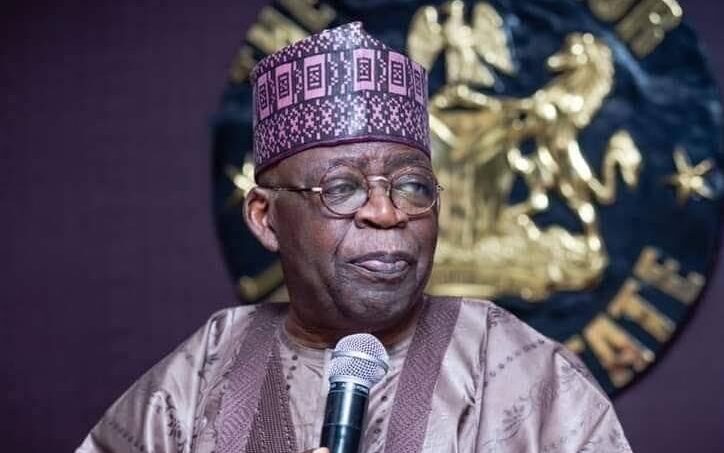
President Bola Tinubu has said 21 shared facilities established across 19 states and the Federal Capital Territory are supporting businesses and an estimated 650,000 jobs.
The facilities, established under the Federal Government’s National MSME Clinics initiative, provide entrepreneurs with access to equipment, electricity and production infrastructure without requiring them to bear the full cost of setting up such facilities themselves.
President Tinubu disclosed this in a statement on Monday while highlighting the government’s efforts to address infrastructure and equipment challenges facing micro, small and medium enterprises (MSMEs).
According to the President, many small businesses have the skills and ideas to expand but struggle to access the equipment and infrastructure needed to increase production.
He said the shared MSME hubs were designed to reduce some of those barriers by allowing entrepreneurs to use modern production facilities without making large upfront investments.
He cited tailors and food processors as examples of businesses that could benefit from the model.

“A tailor should not need millions of naira to buy industrial machinery before she can grow her business. A food processor should not have to build a factory before producing at scale,” he said.
The President said access to shared facilities could allow businesses to increase production while reducing their operating costs.
“When small businesses can produce more, at lower cost, they become more competitive. They grow. They employ more people. They create income and opportunity for Nigerian families.”
MSME support
The initiative comes as the Federal Government expands programmes aimed at improving access to finance, equipment, skills and markets for small businesses.
READ ALSO: Sowore’s AAC sues Tinubu, others over failure to transfer power to Shettima
The Small and Medium Enterprises Development Agency of Nigeria (SMEDAN), which implements several government MSME support programmes, has previously identified access to finance, infrastructure and markets among the challenges confronting small businesses.
The government has also introduced other interventions aimed at improving access to credit. These include the National Credit Guarantee Company (NCGC), which provides guarantees to encourage financial institutions to lend to businesses and other eligible borrowers.
President Tinubu noted that the government’s approach was focused on removing barriers that prevent entrepreneurs from turning their skills and ideas into sustainable businesses.
“Our job is to remove those barriers,” he said.
He added that strengthening small businesses would help create employment, increase household incomes and expand economic activity.
“Giving Nigerian enterprise the tools to succeed is how we build prosperity from the ground up,” President Tinubu said.
Discover more from Premium Times Nigeria
Subscribe to get the latest posts sent to your email.
-

 News4 days ago
Crusoe abandons $1.25B plan to use Boom turbines at AI data centers
-
News4 days ago
Alex Otti should be campaigning for Peter Obi not backing Tinubu – NDC
-
News3 days ago
I created an interactive digital avatar of myself — and you can talk to it
-
News4 days ago
At Meta Connect, the company’s smart glasses were everywhere