Connect with us

News

NGO trains 256 Plateau herders, farmers in peace building

editor

Published

on

A NGO Pastoral Resolve has trained 256 herders and farmers in sustainable peacebuilding in Plateau State.

For the past 10 years, the state had experienced violent clashes in different communities, especially among herders and farmers, which had led to the loss of lives and the destruction of properties.

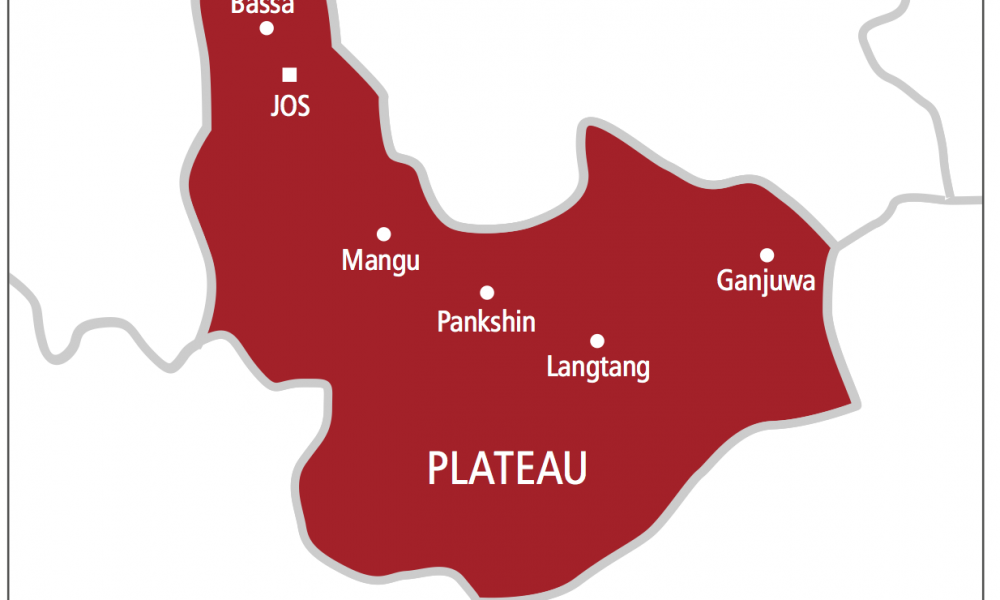
The PUNCH reports that the organisation carried out the training in four Local Government Areas of the state including Bassa, Riyom, Bokkos, and Barkin Ladi in collaboration with the USAID and Mercy Corps.

Over forty communities participated in the training which lasted for four days.

A Senior Project Officer (Field Operations) of Pastoral Resolve, Jemila Abdul, told journalists in Barkin Ladi on Sunday that the program was aimed at deepening the peace process in the state.

According to her, the training also aimed to stem the tide of communal clashes and other forms of violence which had claimed many lives and destruction of properties in the affected communities.

Abdul said, “If you look at the participating communities, they are from areas that have had one issue of herder/farmer conflict or another other. And Plateau cannot afford to continue on the path of endless violence which has caused so much pain, destruction, suffering, and untold hardship to the people, and we have been trying to work out modalities for them to live in peace in the affected communities.

“And because of the ongoing electioneering process leading to the coming elections, if they allow forces to come in between them, it could destroy the peacebuilding progress already made. That is why we have organized this training activity for communities in Barkin Ladi, Bokkos, Riyom, and Bassa LGAs to ensure that there is sustainable peace before, during, and after the elections.”

Abdul further noted that the organization will continue to give priority to issues fuelling herders/farmers’ conflict and work with stakeholders to achieve lasting peace in Plateau State and other parts of the country.

She charged the participants to make judicious use of the knowledge and step down the training to their communities and villages for enhanced cordial relationships in their dealings with one another.

A participant and former chairman of the Miyetti Allah Kautal Hore in Barkin Ladi, Alhaji Shua’ibu Bayanna, commended the organisation for the training intervention among the communities in the state, describing it as timely.

He called on the politicians to keep to the rules of the game throughout the electioneering period in the interest of peace and development of Plateau State.

Continue Reading
Click to comment

Leave a Reply

Your email address will not be published. Required fields are marked *

News

SpaceX is working with Cursor and has an option to buy the startup for $60 billion

info

Published

on

By

GettyImages 2256968212.jpg

SpaceX said it has struck a deal with Cursor to develop a next generation “coding and knowledge work AI,” which includes a surprising provision—an option to buy the popular software development platform for $60 billion later this year.

Partnering with and potentially purchasing a leader in the hottest AI product category can only be seen in the context of SpaceX’s much-anticipated public offering. Investors seeking more value in the IPO might see its engagement with Cursor as another way to extract value from Elon Musk’s increasingly sprawling tech conglomerate.

The deal won’t shock those who follow the industry closely. Last week, it was reported that xAI would begin renting computing power from its data centers to Cursor, with the coding startup using tens of thousands of xAI chips to train its latest AI model. And last month, two of Cursor’s most senior engineering leaders, Andrew Milich and Jason Ginsberg, left the company to join xAI, where both report directly to Musk.

SpaceX described the partnership as a project combining Cursor’s “product and distribution to expert software engineers” with SpaceX’s Colossus supercomputer, which the company claims has the equivalent compute power of a million Nvidia H100 chips.

SpaceX also said that at some undisclosed point later this year, it will either pay Cursor $10 billion for its work or acquire the company for $60 billion. Last week, TechCrunch reported that Cursor was eying a $50 billion valuation in an upcoming private fundraising round. That figure itself reflects an astonishing series of leaps. Cursor was valued at just $2.5 billion in January of last year, climbed to $9 billion by last May May, and was assigned a $29.3 billion post-money valuation when it closed on $2.3 billion in Series D funding in November.

Either figure would represent a significant expense for SpaceX, which is widely seen to be losing money following the acquisition of xAI and the social media network X and is planning extensive capital investment. The brief statement did not say if either deal could be paid in SpaceX stock.

In the meantime, the move could shore up weaknesses at each company, but it also reveals them. Neither Cursor nor xAI has proprietary models that can match the leading offerings from Anthropic and OpenAI — the same companies now competing directly with Cursor for the developer market.

Techcrunch event

San Francisco, CA
|
October 13-15, 2026

Cursor still uses and sells access to Claude and GPT models even as both firms roll out their own coding tools, an awkward arrangement that this new SpaceX partnership may be designed to eventually escape.

When you purchase through links in our articles, we may earn a small commission. This doesn’t affect our editorial independence.

Continue Reading

News

Nigeria ranks 72nd in global AI readiness as CITAD urges greater Investment

info

Published

on

By

Nigeria ranks 36th most corrupt country in the world.jpg

The Centre for Information Technology and Development (CITAD) has called for increased investment in artificial intelligence (AI) research and innovation, following Nigeria’s ranking of 72nd out of 195 countries in global AI readiness.

The call was made on Monday during a Research Methodology Workshop on AI readiness at subnational levels, held in Kano.

Speaking at the event, Salihu Abdulkarim of the National Information Technology Development Agency (NITDA) said Nigeria’s current ranking reflects both opportunities and gaps in the country’s digital development.

According to him, “Nigeria, with 179.6 million mobile subscribers and over 90,000 kilometres of optic fibre network, is projected to generate 18.3 million dollars in 2026, with Information and Communication Technology expected to contribute 21 per cent to the Gross Domestic Product by 2027.”

He compared Nigeria’s position with other African countries, noting that Egypt ranks 5th globally, while Kenya and South Africa are ranked 65th and 67th respectively, with Tunisia at 99th.

Abdulkarim said Nigeria’s National AI Strategy, launched in August 2024, is built on five key pillars aimed at driving transformation, including talent development through AI centres of excellence and research fellowships.

He added that the Federal Government plans to produce three million tech graduates with skills in artificial intelligence, machine learning, and data science to strengthen the country’s workforce.

However, he identified key challenges slowing progress, including poor infrastructure, fibre optic vandalism, right-of-way issues, unmet targets, and limited digital access in rural areas.

He also raised concern over the migration of skilled technology professionals to countries such as the United Kingdom and Canada in search of better opportunities.

“Upscaling is key, but AI will not take over human jobs,” he said.

In his remarks, the Executive Director of CITAD, Y.Z. Yau, said the organisation is working to assess how ready states are to adopt AI.

“We want to know if state governments are ready, what infrastructure they have, and how many data centres are available,” he said.

He explained that Kano, Plateau, and Bauchi states were selected for a pilot assessment representing northern Nigeria.

Also speaking, a lecturer at Bayero University Kano, Hafsat Ahmed Kabir, stressed the importance of infrastructure for successful AI deployment.

“AI deployment requires computing power, reliable electricity, high-speed internet, data centres, and cloud services because the system depends on processing large amounts of data,” she said.

Kabir added that one of the biggest challenges is implementing AI strategies at the state level.

Continue Reading

Trending