Business
Mutual Benefits Settles Over ₦5.5bn Claims, Reinforces Customer Trust



NKECHI NAECHE-ESEZOBOR—Mutual Benefits Assurance Plc has paid over ₦5.5 billion in claims to policyholders as at April 2026, reaffirming its long-standing reputation as one of Nigeria’s most dependable and customer-focused insurance brands.
The claims payout, according to the company cuts across both General and Life businesses, underscores the company’s unwavering commitment to fulfilling its promises to customers promptly and consistently, even as Nigeria’s insurance industry continues to evolve amid recapitalisation and increased market scrutiny.
A breakdown of the claims settlement shows that the sum of ₦3,668,742,117.69 was paid under the General Business portfolio, while ₦1,914,029,614.93 was disbursed under the Life Business portfolio, covering Group Life and Retail Life policies.
The payouts covered a broad spectrum of claims including motor, engineering, marine, life protection, death benefits and other insured risks.
Equally important, Mutual Benefits has consistently earned commendation from policyholders for its responsiveness during difficult moments.
A retail customer whose motor insurance claim was recently settled by the company described the experience as reassuring:“You never truly know the value of insurance until something goes wrong. What stood out for me was how quickly Mutual Benefits responded and resolved my claim without unnecessary stress.”
Another Group Life beneficiary noted: “At a very difficult time for our family, Mutual Benefits came through professionally and compassionately. The support made a real difference.”
Speaking on the development, Managing Director, Mutual Benefits Assurance Plc., Olufemi Asenuga described the payout as more than a financial transaction.
“Insurance is ultimately about trust. At Mutual Benefits, we understand that our relevance is not measured merely by policies sold, but by our ability to stand by customers when they need us most.”
He noted further that the consistent settlement of genuine claims reflects the company’s strong operational structure, disciplined underwriting approach and enduring commitment to policyholders across Nigeria.
Industry analysts have continued to emphasise the importance of prompt claims settlement in deepening insurance penetration and restoring public confidence in the sector.
A Lagos-based insurance and financial services analyst, Chinedu Okafor, stated that: “In a market where customers are increasingly demanding accountability and proof of value, insurers that consistently pay claims promptly will continue to earn long-term trust and market relevance.
Claims payment is the strongest form of marketing any insurance company can undertake.”
The latest payout comes at a critical period for Nigeria’s insurance industry, as operators continue to position for stronger financial capacity, operational efficiency and increased consumer confidence in line with ongoing recapitalisation conversations across the sector.
Mutual Benefits noted that while financial strength remains important, long-term sustainability in insurance is ultimately built on trust, service delivery and the ability to honour obligations consistently.
The company reaffirmed its commitment to improving customer experience, accelerating digital transformation, deepening insurance awareness and delivering innovative products tailored to the realities of individuals and businesses.
With over three decades of operations and a growing footprint across Nigeria, Mutual Benefits continues to position itself as a reliable partner for protection, wealth creation and peace of mind.
The post Mutual Benefits Settles Over ₦5.5bn Claims, Reinforces Customer Trust appeared first on Business Today NG.






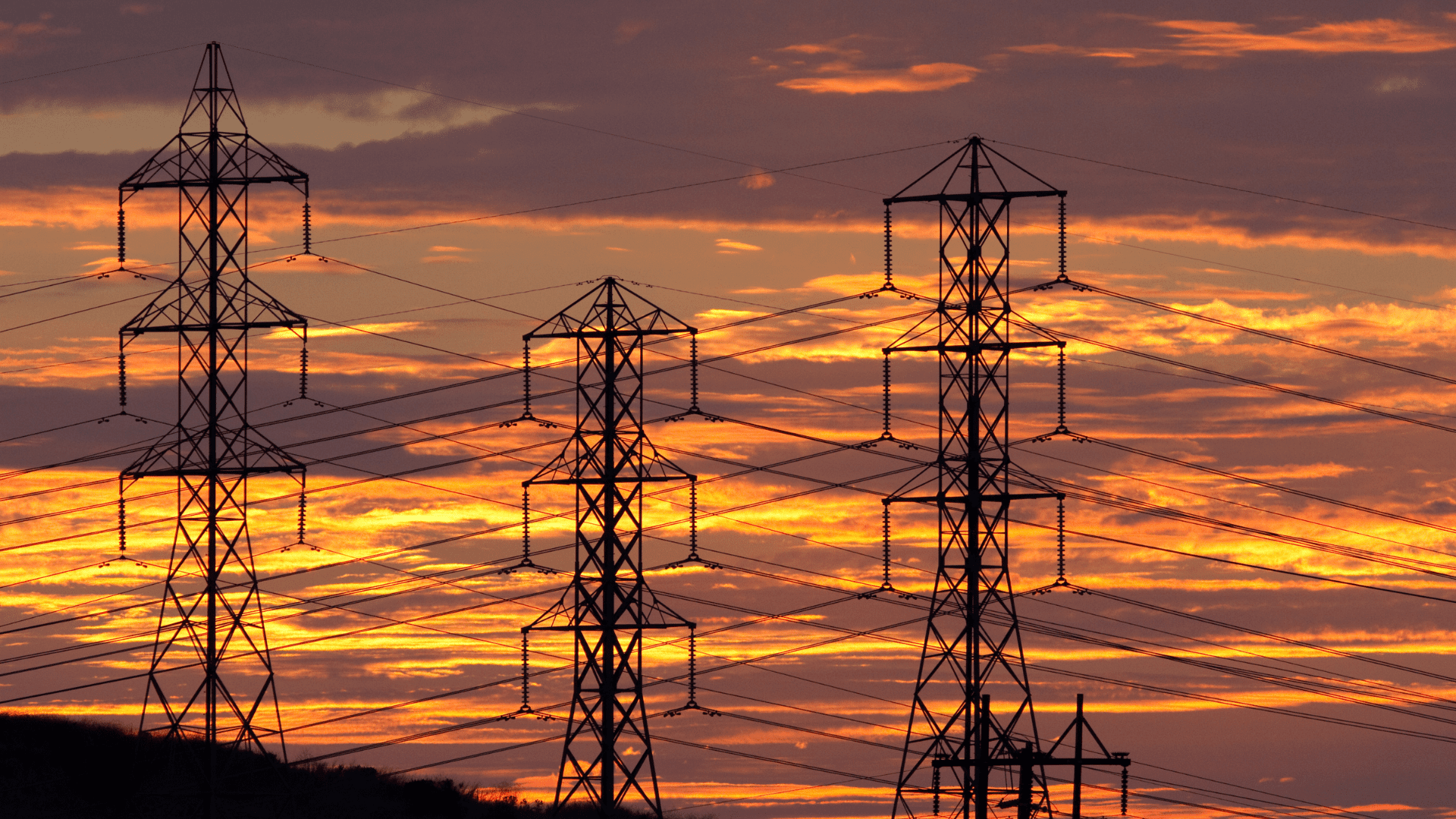

Africa added more than 4,200 megawatts (MW) of new hydropower capacity in 2025, making it a fast growing region for hydropower development globally, according to a new report released by the International Hydropower Association (IHA).
The report, 2026 World Hydropower Outlook, said the continent commissioned 4,297 MW of new hydropower capacity during the year, the second consecutive year that additions exceeded 4,000 MW.
The growth was driven largely by the completion of mega projects in Ethiopia and Tanzania, even as more than 90 per cent of Africa’s hydropower potential remains untapped.
The findings come as Nigeria continues to grapple with chronic power shortages, frequent grid collapses and one of the world’s largest electricity access deficits despite possessing significant hydropower resources.
Malcolm Turnbull, president of the International Hydropower Association, said countries are increasingly turning to hydropower and energy storage solutions as they seek reliable electricity supplies amid growing dependence on renewable energy and rising geopolitical uncertainties.

“As electricity systems become more dependent on variable renewables, and geopolitical tensions make reliance on imports more challenging, countries are increasingly recognising the importance of flexibility, long-duration storage and resilient domestic generation. Hydropower and pumped storage are uniquely positioned to provide these services at scale,” he said.
Ethiopia, Tanzania lead Africa’s growth
According to the report, Ethiopia fully inaugurated the 5,000 MW Grand Ethiopian Renaissance Dam (GERD) in 2025, making it the largest power station in Africa.
Tanzania also completed the Julius Nyerere Hydropower Project, a development the report said has substantially reduced the country’s dependence on diesel-powered electricity generation.
The report noted that Africa’s hydropower expansion places the continent at the forefront of global growth in conventional hydropower development.
However, it warned that progress remains far below potential.
“Despite progress, only around 10% of Africa’s hydropower potential has been realised, representing one of the most significant development opportunities in the world, with direct implications for electrification, industrial growth and energy security across a continent growing at twice the global average,” the report stated.
Most projects, it said, remain stalled by financing difficulties, regulatory bottlenecks and delays in securing approvals.
The report also identified weak transmission infrastructure and fragmented electricity networks as major barriers preventing power generated from reaching consumers efficiently.
Nigeria’s modest progress
Nigeria received only a brief mention in the report, which highlighted the rehabilitation of the Kainji Hydroelectric Power Station.
According to the report, the upgrade added 80 MW to the facility, increasing its installed capacity to 600 MW.
The modest increase contrasts sharply with the scale of new investments seen elsewhere on the continent.
Hydropower remains a critical component of Nigeria’s electricity supply. The Kainji, Jebba and Shiroro hydroelectric plants together account for a significant share of power delivered to the national grid.
Yet electricity supply remains inadequate for Africa’s most populous nation.
Data from the Nigerian Electricity Regulatory Commission (NERC) show that while Nigeria’s installed generation capacity exceeds 14,000 MW, actual available generation is significantly lower because of gas constraints, transmission limitations, ageing infrastructure and operational challenges.
The country has also experienced multiple national grid collapses in recent years, highlighting long-standing weaknesses in the electricity value chain.
Energy access challenge
The report arrives at a time when Nigeria is seeking to expand electricity access and reduce dependence on self-generated power.
According to the World Bank, about 86 million Nigerians lack access to electricity, giving the country the largest electricity access deficit in the world.
Businesses and households spend billions of naira annually on diesel and petrol generators to compensate for unreliable grid supply, a situation that raises production costs and constrains economic growth.
Although the 700 MW Zungeru Hydropower Plant has begun contributing electricity to the grid, several proposed hydropower projects across the country have faced delays linked to funding, environmental concerns and implementation challenges.
The IHA report suggests that while Africa is witnessing a resurgence in hydropower development, countries such as Nigeria will require significant investments in generation, transmission and energy storage infrastructure to fully benefit from the continent’s vast renewable energy potential.

BY NKECHI NAECHE-ESEZOBOR—The Securities and Exchange Commission (SEC) has directed an immediate halt to all marketing and promotional activities relating to a purported Initial Public Offering (IPO) by Dangote Petroleum Refinery & Petrochemicals FZE, warning investors that the offer has neither been filed with nor approved by the regulator.
In a public notice issued on Tuesday, the Commission said it had become aware of advertisements, digital campaigns, flyers, and targeted emails circulating across social media and investment platforms promoting an alleged public share offering by the refinery.
According to the SEC, no application for the registration of an IPO or any public offer of shares by Dangote Refinery has been submitted to or cleared by the Commission.
The regulator expressed concern over reports that some Registered Capital Market Operators (CMOs) were actively soliciting subscriptions and collecting investor commitments for the purported offer.
It described the activities as misleading and capable of creating false market expectations, information asymmetry, and risks to the integrity of Nigeria’s capital market.
The Commission noted that invitations encouraging investors to create accounts, pre-fund subscriptions, or secure guaranteed share allocations amounted to market manipulation and constituted serious violations of the Investments and Securities Act.
Consequently, the SEC directed all registered market operators, including stockbrokers and digital investment platforms, to immediately cease the publication, distribution, or promotion of any materials related to the alleged offering.
The regulator also ordered operators to remove all unauthorized promotional content from websites, social media platforms, and messaging channels within 24 hours of the notice.
In addition, the Commission instructed operators to stop accepting deposits, account openings, expressions of interest, or any form of commitment linked to the purported IPO. Any funds already collected from investors in connection with the offering must be refunded within 24 hours.
The SEC warned that failure to comply with the directive would attract sanctions under the Investments and Securities Act, 2025, and the Commission’s Rules and Regulations.
The regulator advised investors to exercise caution and rely solely on official communications issued through SEC-approved channels when considering investment opportunities.
It further urged members of the public to disregard high-pressure marketing tactics and requests for fund transfers tied to any “pre-IPO” placement, stressing that such activities have not received regulatory approval.
The Commission assured investors that should Dangote Refinery eventually submit and obtain approval for a public offering, an official prospectus would be released in accordance with the provisions of the Investments and Securities Act, 2025.
The post SEC Halts Promotion of Unapproved Dangote Refinery IPO, Warns Investors appeared first on Business Today NG.
-

 News4 days ago
BREAKING: Ekiti 2026: ADC wins first polling unit
-
Health3 days ago
FG releases outbreak response funds to states to boost Ebola preparedness
-
News4 days ago
Coach Lucky Jolly Iduseri Hails Discipline and Preparation After Team Nigeria’s Strong Showing at Central African Powerlifting Championship
-
Health4 days ago
Nigeria inaugurates presidential task force on Ebola preparedness