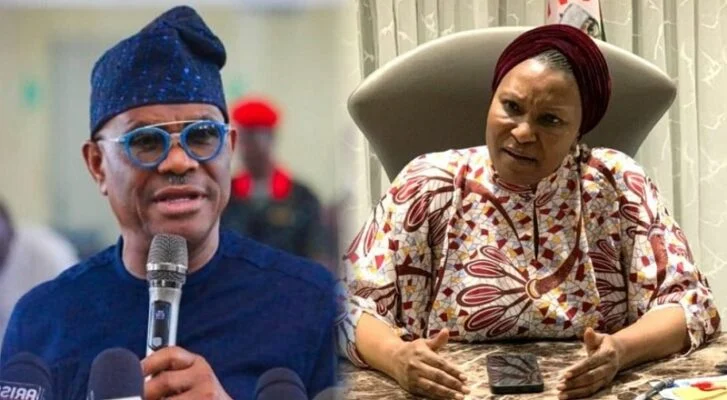
The death of a 14-year-old boy in Ilobu, Osun State, has sparked a fresh war of words between the All Progressives Congress, APC, and the Imole Campaign Council, with both sides accusing each other of politicising the tragedy ahead of the forthcoming governorship election.
A teenager, identified as Ezekiel Olapade, was reportedly killed during a shooting incident on Sunday near the Irepodun Local Government Secretariat, Ilobu, with another person also injured during the attack.
The incident has generated widespread concern in the state and intensified political tensions, as rival political parties continue to trade accusations over the circumstances surrounding the killing and the reactions that followed.
The APC, in a statement issued on Tuesday by its Director of Media and Information, Kola Olabisi, criticised Governor Ademola Adeleke’s visit to the bereaved family, alleging that the occasion was transformed into a political event.
According to Olabisi, “the governor should have focused solely on mourning with the family rather than making remarks that the party interpreted as political in nature.
“Such an occasion for strictly mourning the young lad was inappropriate for Governor Adeleke to have turned it to a campaign ground, as it could be likened to the state chief executive doing the wrong thing at the wrong time and wrong place,” he said.
The opposition party also questioned the governor’s comments regarding the incident, arguing that it was improper to attribute responsibility for the killing before the conclusion of police investigations.
Olabisi stated, “It didn’t add up and unexpected of a worthy chief executive to have bypassed the police in their investigation when he named the opposition party as being responsible for the killing.”
The APC alleged that there were contradictions in the governor’s position after he reportedly called for a police investigation while simultaneously expressing views on those responsible for the attack.
Meanwhile, the Imole Campaign Council dismissed the APC’s allegations and accused the opposition party of attempting to exploit the teenager’s death for political advantage.
In a statement signed by its spokesperson, Pelumi Olajengbesi, the council expressed concern over what it described as an increase in political violence in Osun State and called on all political actors to exercise restraint.
Olajengbesi said the loss of innocent lives should unite stakeholders in the pursuit of peace rather than deepen political divisions.
“The recent escalation of political violence in Osun is a threat to us all. The loss of innocent lives has no place in a civil society. Democracy cannot thrive where citizens live in fear,” he said.
The council also urged security agencies, including the Inspector-General of Police, to ensure that all residents receive equal protection regardless of political affiliation and warned against selective enforcement of the law.
Olajengbesi maintained that electoral contests should be determined through public support and democratic participation, adding, “Democracy demands persuasion, not coercion.
Political parties should compete with ideas, policies, and performance, not with conduct that threatens public peace and safety.”
The controversy followed allegations by the deceased’s father, Gbenga Olapade, who claimed that his son was struck by a bullet while trying to assist his mother during the chaos.
He also alleged that armed men opened fire near a palm wine bar owned by his wife and the deceased teenager’s mother and that security personnel at the scene failed to intervene as the attackers arrived.
Nigeria international goalkeeper Stanley Nwabali has finally opened up on his return to Chippa United, five months after walking away from the South African club, while his agent has revealed the deeply personal reasons behind the surprising decision.
The Super Eagles first-choice goalkeeper rejoined the Chilli Boys after mutually terminating his contract in February, bringing an end to months of speculation over why he stepped away despite recently signing a long-term extension.
Speaking after his return, Nwabali admitted leaving Chippa United was one of the toughest decisions of his career but insisted it was necessary for his personal well-being.
“It was a difficult decision, but football is about happiness. Your happiness comes first. The club understood my situation, and we both agreed it was the best step for me,” the 29-year-old said in an earlier interview.
While the goalkeeper chose not to disclose the real reason behind his departure at the time, his representative, Mohammed Lawal, has now revealed that Nwabali was battling immense emotional trauma following the loss of three close family members within a short period.
According to Lawal, the deaths of Nwabali’s grandmother, father and mother left the goalkeeper mentally exhausted and forced him to take a break from football before the situation affected both his career and personal life.
“We told him to step away before making a permanent decision that could damage his career. He wasn’t in the right frame of mind and needed time to grieve,” Lawal told ESPN.
The agent stressed that Nwabali’s exit had nothing to do with disagreements at Chippa United or interest from other clubs.
“There were offers from Saudi Arabia, England and elsewhere in Africa, but Stanley simply wasn’t ready to return to football. He needed time to heal emotionally,” he explained.
Lawal added that the goalkeeper deliberately kept his struggles private, insisting that he was under no obligation to publicly discuss his mental health while dealing with personal tragedy.
He also disclosed that Super Eagles coach Eric Chelle maintained regular contact with Nwabali throughout his break, while the goalkeeper sought professional support before deciding he was ready to resume his career.
The strong relationship between Nwabali and Chippa United chairman Siviwe “Chippa”
Mpengesi ultimately paved the way for his return.
“Chippa United understood everything he was going through.
They know him not only as a goalkeeper but as a person. That’s why returning there was the best environment for him to rebuild his career,” Lawal said.
Nwabali shot to global prominence after helping Nigeria reach the final of the 2023 Africa Cup of Nations and will now be aiming to rediscover his best form as he begins a fresh chapter with Chippa United ahead of the new season.
BY NKECHI NAECHE-ESEZOBOR—Mrs. Yetunde Ilori, the outgoing President of the Chartered Insurance Institute of Nigeria (CIIN), has stated that her greatest fulfillment after two years in office is successfully elevating insurance literacy into a national conversation.
This milestone was achieved through targeted initiatives that reached children, students, professionals, and various communities across Nigeria.
Speaking at her valedictory virtual press conference marking the end of her tenure as CIIN’s 52nd President, Ilori reflected on her administration’s key achievements.
She described her leadership journey as one driven by a steadfast commitment to expanding insurance education, strengthening professionalism, building capacity, and fostering deeper industry collaboration.
She expressed deep gratitude to the media for their unwavering support in publicizing the institute’s programs, noting that journalists played a vital role in boosting insurance awareness and enhancing public understanding of the sector’s economic importance.
“I came into office with a clear intention to make a difference,” Ilori said. “Leadership should always be measured by the impact it creates and the legacy it leaves behind.”
Ilori explained that her administration was guided by the EPIC agenda—focused on Education, Professionalism, Institutional and Individual Recognition, and Capacity Building. This strategic framework served as the foundation for the institute’s major initiatives over the past two years.
Key Milestones of the EPIC Administration
Nationwide Advocacy: A defining achievement of her tenure was expanding “Insurance Week” into a nationwide campaign. The initiative took advocacy beyond traditional industry circles and directly into local markets, schools, universities, and public spaces.
Early Childhood Education: To nurture financial literacy from an early age, the CIIN published two introductory books simplified for children aged 4–10 and 11–16, making insurance concepts accessible and relatable.
Youth & Tech Innovation: To foster innovation, the institute promoted youth participation through a specialized Hackathon, bringing together students, tech experts, and insurance practitioners to develop digital solutions for the sector.
The Million-Youth Project: Ilori highlighted a landmark partnership with the National Insurance Commission (NAICOM) and the Federal Ministry of Youth Development. This digital learning initiative aims to train one million Nigerian youths in insurance and financial literacy, equipping them with the skills to pursue careers in insurance, entrepreneurship, and sound financial planning.
She also praised the strengthened collaboration among insurers, regulators, and professional bodies, noting that these collective efforts contributed to major industry reforms, including supporting the progress of the new insurance bill.
Beyond domestic policy reforms, the CIIN under her leadership expanded its reach to Nigerian insurance professionals in the diaspora, upgraded facilities at the College of Insurance, and enhanced career development through directors’ conferences, specialized training, and student internship opportunities.
Ilori emphasized that the successes of her tenure were the result of industry-wide teamwork rather than individual effort.
“As I leave office, my desire is for this stakeholder collaboration to continue,” she concluded. “It is not about any single individual; it is about the institution and the sustainable growth of the Nigerian insurance industry.”