Connect with us

News

Plateau Govt Declares War on Terrorists, Tightens Security Measures

info

Published

on

Caleb Mutfwang 1.jpg

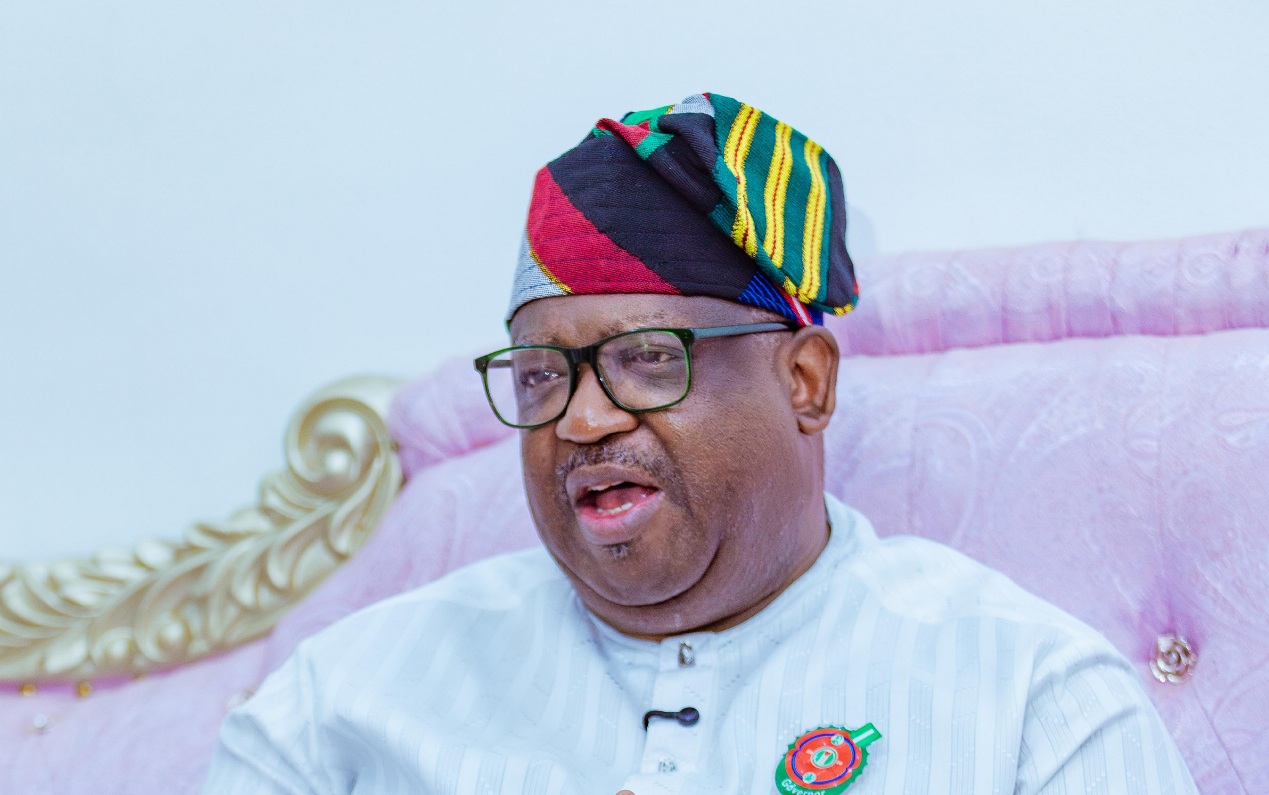
The Plateau State Government has declared that the state is “at war with terrorists and enemies of the state” as it vowed to intensify efforts to tackle the wave of coordinated attacks recorded across the state over the past four months.

The declaration was made after an emergency meeting of the State Security Council convened by Governor Caleb Mutfwang on Tuesday at the Rayfield Government House in Jos.

Addressing journalists after the meeting, the Secretary to the State Government, Samuel Jatau, said the council reviewed the worsening security situation and adopted fresh measures aimed at protecting lives and property.

Jatau said the emergency session brought together members of the State Security Council, chairmen of the 17 local government areas and the Chairman of the Plateau State Joint Traditional Council, the Gbong Gwom Jos, Da Jacob Gyang Buba.

According to him, the council concluded that Plateau had come under sustained attacks in recent months, with clear signs of coordinated assaults across communities.

“The council identified and unanimously agreed that the state has been under siege in the last four months with evidence of coordinated attacks unleashed on the state,” he said.

To curb the insecurity, the council resolved to intensify enforcement of the ban on motorcycles, night grazing and illegal mining activities, which it described as factors fuelling insecurity.

The government also directed security agencies to reclaim all ungoverned areas and public spaces across the state.

Jatau disclosed that the government would immediately boost logistics support for security agencies through the provision of additional motorcycles and operational vehicles to strengthen security operations.

The council further stressed the need for stronger collaboration between local government security structures and host communities, noting that intelligence sharing and synergy must be improved.

On public order, the government warned that any group found blocking highways would henceforth be treated as engaging in criminal activity and would face the full weight of the law.

The council also pledged to ensure the protection of farmlands ahead of the farming season to guarantee the safety of farmers and agricultural activities.

Traditional institutions were equally urged to tighten control over cultural groups and associations operating under their supervision.

Highlighting the seriousness of the situation, Jatau declared, “Plateau State is in a state of war with terrorists and enemies of the state.”

He added that the government remained fully committed to protecting lives, property and communities across the state.

As part of broader security measures, the council also resolved to launch a crackdown on drug dealers, traffickers and substance abusers operating within Plateau State.

Continue Reading
Click to comment

Leave a Reply

Your email address will not be published. Required fields are marked *

News

Nigeria telecoms market in 2026: MTN leads as Airtel surges, 5G rises and broadband expands – Technology Times

info

Published

on

By

1785763561 admin ajax.png

Nigeria’s mobile market is entering a new competitive phase in 2026, with market data showing MTN Nigeria strengthening its leadership, Airtel Nigeria recording the fastest subscriber growth, Globacom gradually recovering from last year’s subscriber verification shock, and T2 stabilising after years of decline.

Technology Times analysis of subscriber statistics from January to May 2026 shows the country’s four largest mobile network operators collectively added more than 7.5 million new subscriptions within five months, signalling renewed momentum in the telecoms market despite economic headwinds.

The figures by the Nigerian Communications Commission (NCC), the telecoms regulator, also reveal changing competitive dynamics, with growth increasingly driven by customer acquisition, network investments and data demand rather than regulatory adjustments that reshaped the market in 2024.

nigeria-telecoms-market-in-2026-mtn-leadsnigeria-telecoms-market-in-2026-mtn-leads

Technology Times analysis of subscriber statistics from January to May 2026 shows the country’s four largest mobile network operators collectively added more than 7.5 million new subscriptions within five months, signalling renewed momentum in the telecoms market despite economic headwinds.

Five key trends shaping Nigeria telecoms market in 2026

1. MTN Nigeria closes in on the 100 million subscriber milestone

MTN Nigeria, the nation’s largest mobile operator, continues to widen its lead over competitors. Its subscriber base grew from 94.25 million in January 2026 to 96.98 million in May 2026, representing a net gain of approximately 2.73 million customers in five months.

The steady expansion reinforces MTN’s dominance in both the voice and data markets as the operator inches closer to becoming Nigeria’s first mobile network with 100 million active subscriptions.

By May, MTN Nigeria accounted for about 51% of the combined subscribers of the four largest operators in the country.

2. Airtel Nigeria emerges as 2026’s fastest-growing operator

Airtel Nigeria recorded the strongest subscriber growth among Nigeria’s major telecoms operators during the review period. The mobile operator expanded from 62.04 million subscribers in January to 65.45 million in May, adding more than 3.4 million new customers.

The performance suggests Airtel continues to gain market momentum through aggressive network expansion, competitive pricing and increasing demand for mobile broadband services. Its sustained monthly growth also narrows the gap with MTN, strengthening Airtel’s position as Nigeria’s second-largest telecoms provider.

3. Globacom stages gradual recovery

Globacom continued rebuilding its subscriber base following the industry’s major subscriber clean-up exercise that affected the Second National Operator’s mobile unit, Glo mobile.

The operator increased its subscriptions from 22.46 million in January to 23.47 million in May, representing growth of just over one million customers.

Although the gains remain modest compared with MTN and Airtel, they indicate improving customer acquisition after the sharp market correction experienced in 2024 when regulatory audits significantly reduced reported subscriber numbers.

The figures suggest Globacom is gradually rebuilding its market position while focusing on retaining existing customers.

4. T2 shows signs of stabilisation

T2, formerly operating as 9mobile, continued to show gradual stabilisation after years of subscriber losses.

Its customer base rose from 3.26 million subscribers in January to 3.54 million by May, adding nearly 282,000 subscribers.

While its market share may appear relatively small, the positive trajectory suggests the operator has slowed its long-term decline and is beginning to rebuild its subscriber base.

The improvement follows years of restructuring aimed at restoring competitiveness in Nigeria’s mobile market.

5. Competition increasingly centres on data services

Beyond subscriber growth, the latest market trends point to an increasingly data-driven competitive landscape.

With voice revenues maturing, operators are investing heavily in:

  • 4G and 5G expansion
  • fibre transmission infrastructure
  • digital financial services
  • enterprise connectivity
  • artificial intelligence-enabled customer experience
  • cloud and digital platforms

Subscriber gains increasingly reflect network quality and broadband performance rather than traditional voice services, reinforcing Nigeria’s transition towards a digital economy.

nigeria-telecoms-market-in-2026-mtn-leadsnigeria-telecoms-market-in-2026-mtn-leads
Nigeria telecoms market in the first five months sees MTN strengthen its lead, Airtel post the fastest growth, broadband expand rapidly and 5G emerge as the next growth engine. Image credit: Image FX.

Airtel Nigeria recorded the strongest subscriber growth among Nigeria’s major telecoms operators during the review period. The mobile operator expanded from 62.04 million subscribers in January to 65.45 million in May, adding more than 3.4 million new customers.

Market leaders strengthen their positions

By May 2026, the combined subscriber base of the four operators reached approximately 189.98 million.

The market distribution shows:

Operator Subscribers (May 2026) Share*
MTN 96.98 million ~51.0%
Airtel 65.45 million ~34.5%
Globacom 23.47 million ~12.4%
T2 3.54 million ~1.9%

*Based on combined subscriptions of the four operators.

The figures illustrate a market increasingly dominated by two national players, MTN Nigeria and Airtel Nigeria, which together account for more than 85% of subscribers among the four largest operators.

What the numbers mean

Several broader trends emerge from the 2026 data:

  • Market growth has resumed, with all four major operators recording subscriber gains between January and May.
  • MTN remains firmly ahead, edging closer towards the symbolic 100 million subscriber mark.
  • Airtel is the market’s biggest growth story, adding more subscribers than any rival during the period.
  • Globacom is rebuilding steadily after the subscriber verification exercise that reshaped the market.
  • T2 has halted its prolonged decline, although it remains a distant fourth player in a positive outcome of rebranding and overall transformation embarked upon by its new management.

The data also suggests Nigeria’s telecoms market is entering a more mature phase where competitive advantage will increasingly depend on network quality, broadband coverage, 5G deployment, customer experience and digital service innovation rather than subscriber acquisition alone.

As demand for mobile broadband, digital payments, streaming, cloud services and AI-powered applications accelerates, operators are expected to intensify investment in infrastructure while competing more aggressively for high-value data customers.

For Nigeria’s telecoms industry, 2026 is shaping up not simply as a year of subscriber growth, but as the beginning of a new phase in which data leadership, not just subscriber numbers, will determine long-term market success.

Nigeria’s internet market: MTN and Airtel fuel broadband boom 

Nigeria’s internet market gathered fresh momentum in 2026, with the country’s four largest mobile operators adding more than six million internet subscriptions within the first five months of the year as demand for mobile broadband, video streaming, digital payments and AI-powered services continued to rise.

Technology Times analysis of Nigerian internet subscription data from January to May 2026 shows MTN Nigeria consolidating its leadership in broadband, Airtel Nigeria emerging as the fastest-growing internet provider, Globacom returning to growth after the 2024 subscriber audit, and T2 showing signs of stabilisation despite remaining a distant fourth player.

The figures also indicate that internet adoption is growing faster than traditional mobile voice subscriptions as operators intensify investments in 4G, 5G, fibre infrastructure and digital services.

By May 2026, Nigeria’s four major mobile operators served 157.02 million internet subscriptions, up from 150.91 million in January, representing a net increase of approximately 6.1 million internet connections in just five months.

Five key trends shaping Nigeria’s internet market in 2026

1. MTN remains Nigeria’s broadband powerhouse

MTN maintained its commanding lead in Nigeria’s internet market. Its internet subscriber base increased from 81.10 million in January to 83.53 million in May, adding about 2.43 million new internet users within five months.

The growth reinforces MTN’s position as Nigeria’s largest internet service provider by subscriber base, driven by continued investment in 4G expansion, 5G rollout and fibre transmission infrastructure.

With more than half of all internet subscriptions among the four major operators, MTN Nigeria remains the benchmark for broadband competition.

TT Hero ImageTT Hero Image

By May 2026, Nigeria’s four major mobile operators served 157.02 million internet subscriptions, up from 150.91 million in January, representing a net increase of approximately 6.1 million internet connections in just five months.

2. Airtel records the fastest internet subscriber growth

Airtel Nigeria emerged as the strongest growth story in Nigeria’s broadband market during the period under review. Its internet subscriber base rose from 53.57 million in January to 55.87 million in May, representing an increase of about 2.31 million users.

The operator’s sustained monthly gains suggest growing customer preference for its mobile broadband services as demand for video streaming, fintech applications, cloud services and social media continues to accelerate.

Airtel Nigeria also maintained the narrowest gap with MTN among all competitors.

3. Globacom returns to broadband growth

Globacom posted a steady recovery in internet subscriptions after experiencing sharp declines following the 2024 industry-wide subscriber verification exercise. Its internet subscriber base climbed from 15.40 million in January to 16.82 million in May, representing growth of approximately 1.41 million subscribers.

The rebound suggests Globacom is gradually regaining momentum in Nigeria’s broadband market through improved customer acquisition and retention.

Although still significantly behind MTN and Airtel, the operator appears to have restored positive growth.

4. T2 stabilises after years of decline

T2, Nigeria’s fourth-largest mobile operator, continued its gradual recovery. Internet subscriptions at the number four operator increased modestly from 843,811 in January to 802,534 in May, though the monthly figures indicate fluctuations around the 800,000 mark following years of subscriber losses.

While T2 remains a niche broadband player with less than one million internet users, the data suggests the operator has largely stabilised after an extended period of market contraction.

5. Nigeria’s broadband economy continues expanding

Perhaps the most significant trend is the continued expansion of Nigeria’s internet economy.

Total internet subscriptions increased from 150.91 million in January to 157.02 million by May 2026, reflecting growing reliance on mobile broadband for everyday digital activities.

The growth reflects rising demand for:

  • AI-powered digital services
  • Video streaming platforms
  • Mobile banking and fintech
  • E-commerce
  • Remote work
  • Online education
  • Digital entertainment
  • Cloud computing

As smartphone adoption continues to increase, internet connectivity has become the primary battleground for Nigeria’s telecoms operators.

nigeria-telecoms-market-in-2026-mtn-leadsnigeria-telecoms-market-in-2026-mtn-leads
Nigeria telecoms market in the first five months sees MTN strengthen its lead, Airtel post the fastest growth, broadband expand rapidly and 5G emerge as the next growth engine. Image credit: Image FX.

T2, Nigeria’s fourth-largest mobile operator, continued its gradual recovery. Internet subscriptions at the number four operator increased modestly from 843,811 in January to 802,534 in May, though the monthly figures indicate fluctuations around the 800,000 mark following years of subscriber losses.

Internet market share remains concentrated

Based on May 2026 internet subscriptions, the competitive landscape remains heavily concentrated among two operators.

Operator Internet subscribers (May 2026) Estimated share*
MTN 83.53 million ~53.2%
Airtel 55.87 million ~35.6%
Globacom 16.82 million ~10.7%
T2 0.80 million ~0.5%

*Based on the combined internet subscriptions of the four largest mobile operators.

Together, MTN and Airtel account for nearly 89% of Nigeria’s internet subscriptions, underscoring their dominance of the country’s broadband market.

What the internet numbers reveal

The 2026 internet data for Nigeria highlights several structural changes in the nation’s digital communications market:

  • Internet usage is expanding steadily, with more than six million additional subscriptions recorded in the first five months of 2026.
  • MTN remains the clear broadband leader, leveraging its nationwide network and continued investments in 4G and 5G infrastructure.
  • Airtel is the fastest-growing broadband operator, adding more than two million internet users and strengthening its competitive position.
  • Globacom is recovering, rebuilding internet subscriptions after the industry’s subscriber verification exercise.
  • T2 has largely stabilised, although its market presence remains comparatively small.

Beyond internet subscriber numbers

The data also illustrates how competition is shifting from traditional voice services to digital connectivity.

As artificial intelligence, cloud computing, streaming services and digital financial platforms drive data consumption, operators are increasingly competing on network quality, broadband speeds, spectrum efficiency, fibre capacity and customer experience rather than simply adding new SIM cards.

With Nigeria pursuing ambitious digital economy and broadband penetration targets, 2026 is emerging as a defining year in which internet connectivity, not voice telephony, is becoming the industry’s primary growth engine.

Nigeria’s mobile network enters the 5G era as sun sets on 2G, 3G

Nigeria’s mobile industry is undergoing its biggest technology transition in two decades, with 5G adoption accelerating, 4G becoming the country’s dominant mobile technology, and legacy 2G and 3G networks steadily losing ground as operators modernise their infrastructure.

Technology Times analysis of technology generation data for January-May 2026 reveals a market firmly in transition. While 4G continues to carry the bulk of Nigeria’s mobile traffic, 5G is recording the fastest growth, signalling the beginning of a new era in mobile connectivity. At the same time, 2G and 3G, the technologies that introduced millions of Nigerians to mobile telephony and mobile internet, are steadily approaching the twilight of their commercial life.

The figures also underscore how operators including MTN Nigeria, Airtel Nigeria, Globacom and T2 are shifting investment towards high-capacity broadband networks to support rising demand for video streaming, AI applications, fintech, cloud computing and enterprise digital services.

Five technology trends defining Nigeria’s telecoms market in 2026

1. 4G remains Nigeria’s digital workhorse

Although industry attention has shifted to 5G, 4G remains the dominant mobile technology across Nigeria.

Its share of mobile connections increased slightly from 53.41% in January 2026 to 54.30% in May, accounting for more than one in every two mobile connections.

The figures suggest that 4G has reached maturity and continues to underpin Nigeria’s digital economy by supporting:

  • Mobile broadband
  • Video streaming
  • Fintech services
  • e-commerce
  • Remote work
  • Online education
  • Social media

For MTN and Airtel in particular, 4G remains the principal revenue-generating network as nationwide 5G coverage continues to expand.

2026 verdict: Rising, but approaching maturity.

2. 5G is Nigeria’s fastest-growing mobile technology

The biggest technology story of 2026 is the rapid expansion of 5G. Its share of total mobile connections increased from 3.94% in January to 4.49% in May, continuing a remarkable upward trajectory from just 0.13% in mid-2023.

Although still representing less than 5% of total mobile subscriptions, 5G has become the fastest-growing access technology in Nigeria.

The growth reflects:

  • Expansion of MTN’s 5G footprint
  • Airtel’s continuing 5G rollout
  • Increasing availability of affordable 5G smartphones
  • Growing enterprise demand
  • Rising data consumption

For operators, 5G is less about replacing 4G immediately and more about enabling high-capacity applications including AI, cloud computing, smart manufacturing, IoT and immersive digital services.

2026 verdict: The technology whose sun is rising fastest.

nigeria-telecoms-market-in-2026-mtn-leadsnigeria-telecoms-market-in-2026-mtn-leads

Perhaps the clearest evidence of technological change is the continuing decline of 3G. Its market share fell from 5.67% in January 2026 to 5.10% by May, continuing a downward trend that has persisted for several years.

3. The sun is setting on 3G

Perhaps the clearest evidence of technological change is the continuing decline of 3G. Its market share fell from 5.67% in January 2026 to 5.10% by May, continuing a downward trend that has persisted for several years.

Once the technology that introduced Nigerians to mobile internet, 3G is steadily becoming obsolete as subscribers migrate to faster LTE and 5G networks.

Globally, many operators have already begun shutting down 3G networks to reuse spectrum for newer technologies, and Nigeria appears to be following the same trajectory.

2026 verdict: The sunset has clearly begun.

4. 2G refuses to disappear, but its decline is unmistakable

Despite being nearly three decades old globally, 2G still accounts for more than one-third of Nigeria’s mobile connections. Its share declined modestly from 36.97% in January to 36.12% in May 2026.

The figures highlight one of Nigeria’s unique telecoms realities: millions of subscribers, particularly in rural communities, still rely on basic feature phones for voice calls, SMS and mobile money services.

For operators, maintaining 2G remains important because it supports:

  • Rural connectivity
  • Low-cost handsets
  • Machine-to-machine communications
  • Legacy enterprise applications

However, the long-term trend is unmistakable.

The technology’s share has fallen dramatically from nearly 60% in 2023 to just over 36% today, indicating that Nigerians are steadily migrating to smartphones and broadband-enabled devices.

2026 verdict: The sunset is gradual but irreversible.

5. Nigeria is becoming a broadband-first telecoms market

Taken together, 4G and 5G now account for nearly 59% of all mobile connections, compared with roughly 43% two years ago.

This represents one of the fastest technology migrations in Nigeria’s telecoms history. The implications extend far beyond faster internet.

Broadband networks increasingly underpin:

  • Artificial intelligence services
  • Digital banking
  • E-government
  • Telemedicine
  • Online education
  • Video conferencing
  • Cloud computing
  • Smart city applications

For telecoms operators, future competition will increasingly revolve around broadband quality rather than voice coverage.

nigeria-telecoms-market-in-2026-mtn-leadsnigeria-telecoms-market-in-2026-mtn-leads
Nigeria telecoms market in the first five months sees MTN strengthen its lead, Airtel post the fastest growth, broadband expand rapidly and 5G emerge as the next growth engine. Image credit: Image FX.

The 2026 technology mix signals a structural transformation in Nigeria’s telecoms market. The era when operators competed primarily on voice coverage is ending. Instead, the competitive battleground is shifting towards high-speed broadband, low-latency connectivity and digital platform services.

How the four major operators are positioned

Although the technology-generation data is aggregated across the industry rather than broken down by operator, subscriber and internet market figures suggest distinct competitive positions.

MTN Nigeria

  • Maintains the largest 4G and 5G customer opportunity.
  • Leading nationwide 5G deployment.
  • Well positioned to monetise enterprise digital services and AI-driven applications.

Airtel Nigeria

  • Recording the strongest subscriber growth.
  • Expanding 5G while strengthening its 4G footprint.
  • Likely to remain MTN’s closest challenger in broadband.

Globacom

  • Focused on rebuilding its subscriber base.
  • Opportunity lies in accelerating migration of legacy users to 4G services.
  • Needs stronger participation in the emerging 5G market.

T2

  • Continues stabilisation after years of decline.
  • Faces the biggest challenge in funding next-generation network expansion.
  • Could target niche enterprise and digital service segments as the market evolves.

The technologies rising and those fading

Technology 2026 Trend Market Outlook
5G ▲ Fastest growth Sun rising rapidly
4G ▲ Continues expanding Dominant technology for the next several years
3G ▼ Steady decline Sun setting quickly
2G ▼ Gradual decline Sun setting slowly but remains relevant in rural Nigeria

What the numbers mean

The 2026 technology mix signals a structural transformation in Nigeria’s telecoms market.

The era when operators competed primarily on voice coverage is ending. Instead, the competitive battleground is shifting towards high-speed broadband, low-latency connectivity and digital platform services.

The data points to three defining realities:

  • 4G remains the backbone of Nigeria’s mobile broadband economy.
  • 5G is emerging as the industry’s next growth engine, attracting the bulk of new network investment.
  • 2G and 3G are entering their sunset years, with operators expected to gradually repurpose spectrum from legacy networks to support expanding 4G and 5G services.

For MTN, Airtel, Globacom and T2, the race in 2026 is no longer simply about acquiring more subscribers. It is increasingly about migrating customers to faster networks capable of supporting Nigeria’s rapidly expanding digital economy, where broadband connectivity has become the foundation for AI, fintech, cloud computing and next-generation digital services.


Editor’s note: The internet subscriptions graphic has been updated to correct the figures. 

Stay ahead with real-time reports, breaking news, and exclusive insights delivered directly to your phone. Don’t settle for outdated information. Join TECHNOLOGYTIMES NEWS on WhatsApp for 24/7 updates.

Join Our Whatsapp Channel

Continue Reading

News

2027: PDP will win if Jonathan appears on ballot — Reps Minority Leader, Agbedi

info

Published

on

By

House of Representatives Minority LeaderFred Agbedi, has expressed optimism that if former president Goodluck Jonathan is on the ballot, the Peoples Democratic Party, PDP, will win the 2027 general elections.

Agbedi made this this assertion on Monday when he appeared as a guest in an interview on Arise Television’s ‘Morning Show’.

He was speaking on the level of preparation for next year’s general elections, noting that the PDP is still strong regardless of the crisis confronting it.

“With former President Jonathan on the ballot, PDP will win in 2027. While we can agree that he has not mentioned running in 2027, he has also not ruled out the possibility.

“The question of whether it will be the Wike faction or the Turaki faction of the PDP that fields the party’s presidential candidate is yet to be decided. We are confident that the judgement will go our way,” he said

Recall that the Independent National Electoral Commission, INEC, had rejected Jonathan’s nomination for the 2027 polls submitted by the Taminu Turaki faction of the PDP.

The electoral body stated that nominations can only be processed through its designated online portal in line with electoral regulations.

Continue Reading

Trending