News
NFF Crisis: ‘The Struggle Is Not Over’ — Jalla Demands Credible Normalisation Committee After Gusau Exit

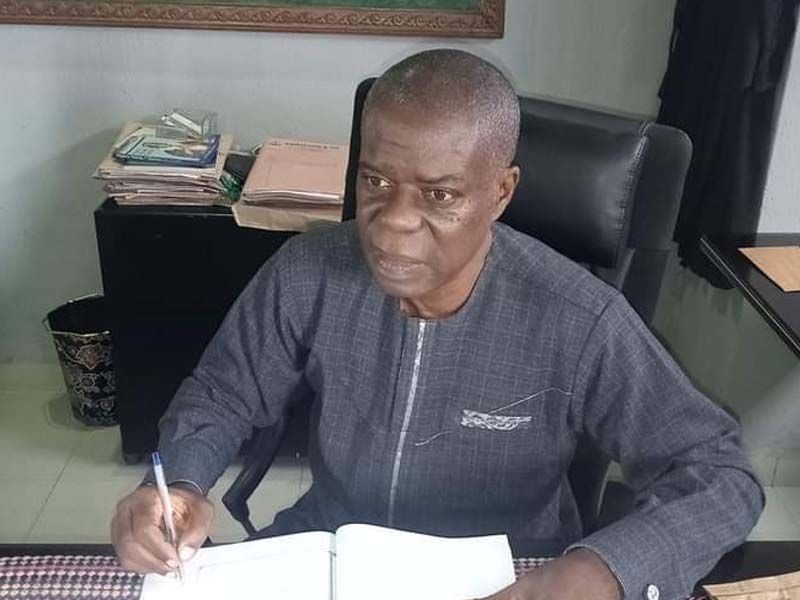
Prince Harrison Jalla, Chairman of the Advocacy for Nigeria Football Reform Initiative and head of the PFAN Task Force, has called for the immediate constitution of a credible Normalisation Committee following the resignation of Nigeria Football Federation president Ibrahim Musa Gusau and the entire NFF leadership, insisting that the latest development must become the beginning of genuine reform rather than another change of personalities.
Jalla described the resignation of Gusau and the NFF Executive Committee as a victory for Nigerian football but warned that the battle to rebuild the country’s football administration is far from over.
“It is a new dawn for Nigeria football,” Jalla said.
“We have all fought a good fight and kept the faith, but we have not finished the course. The struggle continues until the right thing is done from the word go.”
Gusau announced his resignation on Thursday at a World Press Conference in Abuja, saying he was stepping aside to create room for a “comprehensive and orderly reform process” capable of addressing the longstanding institutional, governance and developmental problems confronting Nigerian football.
The NFF subsequently confirmed the resignation of General Secretary Mohammed Sanusi and members of the Executive Committee, triggering a major leadership vacuum within the federation.
For Jalla, however, the departure of the leadership is only the first step.
He wants the government and football stakeholders to move quickly to establish a Normalisation Committee made up of Nigerians with the competence, credibility and independence required to rebuild the system.
“The NFF Board is gone, Nigeria Football wins,” Jalla said, while calling for a Normalisation Committee comprising credible individuals.
Jalla insists that the composition of the committee will be critical because the reform process cannot simply replace one group with another without addressing the structural weaknesses that have affected Nigerian football.
“With the composition of the Normalisation Committee, all federating units of the NFF, the private sector and other relevant groups must be represented fairly and equally,” he said.
“Nobody can hide under the directive of President Bola Ahmed Tinubu to skew things in their own favour or play God in this new dispensation. That era is gone forever.”
The reform advocate also called for the NFF Congress and Executive Committee to be democratically elected under a system that provides equal representation to the recognised federating units.
He wants the private sector to play a greater role in the administration and development of Nigerian football, arguing that a broader stakeholder structure would produce a more balanced and accountable federation.
Jalla’s demands come as the Federal Government moves to implement a wider reform of Nigerian football following the resignation of the NFF leadership.
President Bola Ahmed Tinubu has directed the National Sports Commission to work with the NFF Secretariat and relevant football stakeholders on a comprehensive reform process covering governance, administration, stakeholder representation, development pathways, domestic competitions and accountability.
The NFF’s planned September 27 elective congress has also been suspended as the authorities prepare for the next phase of the transition.
The federation has meanwhile appointed former Deputy General Secretary Dr Emmanuel Ikpeme to oversee the NFF Secretariat on an interim basis, ensuring continuity while consultations with FIFA, CAF, government and other stakeholders continue.
Jalla believes that the next few weeks could determine whether Nigeria genuinely breaks away from the old system or simply repeats the same cycle.
He has therefore urged the National Sports Commission, led by Chairman Shehu Dikko and Director-General Bukola Olopade, to ensure that the reform process remains neutral and does not favour any individual or group.
“The National Sports Commission, under Shehu Dikko and Bukola Olopade, must not falter or be seen to favour any individual or group over another,” Jalla said.
“This reform must be total, competence-driven, and nothing more.”
The latest developments have also raised questions over the ongoing investigation into the use of Federal Government intervention funds released to Nigerian football.
The Economic and Financial Crimes Commission has confirmed that its investigation will continue despite the mass resignations at the NFF.
For Jalla, therefore, the resignation of Gusau should not be treated as the conclusion of the crisis.
It is the opportunity to finally address the deeper problems.
After years of campaigning for structural changes to the way Nigerian football is governed, Jalla now wants the authorities to ensure that the opportunity created by the mass resignation is not wasted.
The message from the reform advocate is unmistakable: Gusau and his board may be gone, but the real fight, rebuilding Nigerian football from the foundation, has only just begun.






News
Pan-African Scrabble Association’s New President Haruna Adamu Receives Expert Tips On How To Succeed

The new president of Pan-African Scrabble Association (PANASA), Haruna Adamu, has received a useful reel of expert tips from experts of the game on how to succeed in the post he recently attained.
Sports247 reports that the line-up of wise counsel coming Adamu’s way is being led by PANASA’s immediate past president, Engineer Toke Aka, who is also a leading administrator of the sport in Nigeria.
While affirming total support for the new president, who hails from Ghana, Aka urged Adamu to prioritise engagement with national federations, while strengthening PANASA’s secretariat and expanding the impact of Scrabble across Africa.
Aka, who is also a founding member and executive official of World English Scrabble Players Association (WESPA), added that Adamu must identify various challenges that are facing national bodies and help them develop strategies to increase participation in competitions.
The immediate past president of Nigeria Scrabble Federation (NSF) declared: “I wish him well, and I must tell him that it is what he dreams and that will work. He is leading, and he must be the one to say or ask around to be able to say that this should be.
“If he does not take a step, nothing is going to happen. Nobody is going to push him. So all I say to him is that, as much as I have, I got in the position, he should also strive to take us beyond where we are.”
Aka further stressed what he described as a culture of timidity and limited engagement among some Scrabble administrators across Africa as an obstacle to the sport’s growth, then urged Adamu to note that challenges facing each country can be addressed through better planning, early preparation and support from PANASA, rather than be treated as huge obstacles.
“I don’t see them as problems. I just see them as bad planning. One man can’t do it alone. You need a team. So once your secretariat is up and doing, then what do you do for development? You engage, you ask, you talk.
“Even in countries where they don’t have, talk with the leadership in sports in such countries,” Aka asserted, while advocating persuasion, engagement and proper development efforts as strategies that will help PANASA face challenges facing different countries and provide solutions.
Aka posited that Adamu will succeed through effective leadership, a proactive secretariat and helping national associations overcome their challenges, while building on progress already made and extending Scrabble’s reach to more African countries.
-

 News4 days ago
Granola crunches up a dictation feature to compete with Wispr
-
News2 days ago
Nvidia weighs playing the cosigner for Nscale’s AI data center in West Virginia
-
News3 days ago
Satlyt takes another step toward turning satellites into space data centers
-
News3 days ago
'Sowore, you can’t fight alone’ – Isaac Fayose reacts to attack on AAC candidate