Business
ANALYSIS: COP17: Top issues dividing, shaping ongoing negotiations in Mongolia


It is the 10th day of the ongoing two-week negotiations at the 17th session of the United Nations Convention to Combat Desertification (UNCCD COP17), with the conference entering its final and most critical phase.
Wednesday has been designated Land and Indigenous Peoples Day at the conference venue in Ulaanbaatar, placing renewed attention on land restoration, Indigenous Peoples, pastoralists and local communities.
With less than 72 hours to the scheduled conclusion of negotiations on Friday, tensions and disagreements have emerged across the plenary and negotiation rooms as parties struggle to reach consensus on some of the key issues on the COP17 agenda.
The disagreements began early in the conference, with procedural and substantive differences among parties over several agenda items. Indigenous peoples, civil society organisations and young people have also raised concerns about their participation in the formal process, insisting that their voices must be heard in decisions that directly affect their communities and livelihoods.
COP17 in Mongolia
COP17 kicked off in Mongolia’s capital, Ulaanbaatar, on 17 August under the theme “Restoring Land. Restoring Hope” and is scheduled to conclude on 28 August.


According to the United Nations, the conference brings together delegates from UNCCD’s 197 Parties, alongside government, business and civil society leaders, scientists, young people, Indigenous Peoples, pastoralists and smallholder farmers.
They are deliberating on solutions to the interconnected challenges of desertification, land degradation and drought, with a focus on how land restoration can reduce instability, prevent displacement and strengthen human and national security in vulnerable regions.
PREMIUM TIMES gathered that at least 60 delegates from Nigeria are expected to participate in the conference.
“Land is our most vital infrastructure — underpinning food security, water, livelihoods and stability. When land fails, insecurity rises — through lost livelihoods, forced displacement and increased competition over scarce resources,” UNCCD Executive Secretary Yasmine Fouad said.

“With UNCCD COP17, Mongolia is offering the world a powerful message: Restoring Land, Restoring Hope is not only an environmental agenda, but a development and resilience priority.”
She said that as drought intensifies and land degradation accelerates, the conference must promote practical, investable solutions, including restoring degraded land and soils and strengthening the land-water nexus, to enable communities to thrive.
According to the UNCCD Data Dashboard, approximately 11.96 per cent of Africa’s total land area was recorded as degraded in baseline reporting. In comparison, Nigeria reports roughly 23.41 per cent, or 21.07 million hectares, of its total land area as degraded.
In Nigeria, authorities have said more than 50 per cent of the country’s rangelands and grazing routes have been degraded, a development that has contributed to farmer-herder conflicts affecting communities across the country for decades.
Nigeria, alongside other African countries, is seeking progress towards a legally binding international instrument on drought management. The proposed instrument would establish a stronger framework for countries to anticipate, prepare for and manage drought.
Finance is another major issue. Nigeria’s focal point to the UNCCD has said increased financing is crucial to securing support for national needs, including implementation of the country’s climate and adaptation plans.
However, developments in the negotiating rooms indicate that parties remain divided over the scope and nature of the proposed drought framework, raising concerns that unresolved issues could be pushed to a future COP.
The major issues emerging from the negotiations so far include drought management and land degradation, finance, rangelands and pastoralists, Indigenous Peoples and local community participation, and procedural and geopolitical tensions.
Drought framework: Binding or voluntary?
Perhaps the most contentious issue is the push for a global framework or instrument on drought management.
African countries, small island developing states and other vulnerable countries have been advocating stronger international action, including a legally binding instrument.
However, some developed countries and other parties have expressed reservations about a binding agreement, citing concerns around its financial implications, implementation and the duplication of existing international frameworks.
The disagreement has raised the possibility that negotiations could extend beyond COP17 if parties fail to find common ground.
The UNCCD Deputy Executive Secretary, Andrea Meza, acknowledged the divergent positions during a press conference on drought.

“We’re in the middle of the negotiation and what we’re seeing is different positions,” she said.
“We’re hearing some positions that are saying this should be addressed as a local event and we’re just here to share certain experience, but this is more an issue that needs to be addressed at the national level.”
However, she said this was not the position of most parties.
“Most of the parties are recognizing that this is a global challenge, and it should require and bring global solutions.”
Ms Meza said she remained hopeful that countries would reach an agreement.
“Maybe we will not agree, but I’m hopeful that in this we will get an agreement because I feel, and I think that most of the countries, this year with Super El Nino, they’re facing a lot of challenges right now, and they cannot go back to their cities, to their constituencies, and say, uh, nothing is coming out as a negotiated outcome from this.”
She added that the negotiations were only one part of the solution.
“But as I was saying, more than just what happened in the negotiation is just one of the pieces. We also need the action.”
Finance and investment
The financing gap for land restoration and drought resilience is another major fault line.
Negotiators are grappling with how to translate years of commitments into finance and action on the ground, including operationalising funding pledged through initiatives such as the Riyadh Global Drought Resilience Partnership.
The UN estimates that trillions of dollars will be required by 2030 to restore degraded land and strengthen drought resilience.
Developing countries are demanding easier access to finance, simplified procedures and lower transaction costs, while there is also growing interest in blended finance and greater private-sector participation.
Ms Meza said financing must be mobilised at the scale required to respond to the growing drought threat.
“We also need to be mobilizing financial resources at the scale that is needed,” she said.
She pointed to initiatives including the International Drought Resilience Alliance and the Drought Investment Facility as mechanisms that could help mobilise resources and private capital.
The issue is particularly important for Africa, where governments face significant resource constraints despite the scale of land degradation, drought and desertification challenges.
Rangelands and pastoralists
Rangelands and pastoralist livelihoods have emerged as another central issue at COP17, particularly as 2026 has been designated the International Year of Rangelands and Pastoralists.
Negotiators and stakeholders are discussing sustainable management of grazing lands, customary and communal land tenure, sustainable livestock value chains and payment for ecosystem services.
For Mongolia, where pastoralism remains central to rural livelihoods, the issue is particularly significant.
The country’s experience also demonstrates how drought can trigger a chain of risks, from pasture shortages and livestock losses to food insecurity and inflation.
The Mongolian Parliament representative at the conference said the country must move away from a reactive approach to one that is preventative and resilient.
“Resilience is not a slogan, it has to build into a policy,” she said.
Indigenous Peoples and local communities
The participation of Indigenous Peoples and local communities has also become an important issue as negotiations enter their final stage.
Indigenous groups have expressed concerns about being excluded from formal decision-making processes despite their extensive traditional knowledge and their direct exposure to land degradation, drought and other environmental pressures. Some members of the group had a peaceful demonstration on Tuesday, expressing their grievances around the process so far.


Responding to a question from PREMIUM TIMES on how the concerns of Indigenous Peoples and local communities were being addressed, Meza said greater efforts were needed to ensure their voices were represented.

“Clearly, now more than ever, we really need to make sure that the different platforms to guarantee the voices, that we have, the voices of local communities and of the indigenous people. We need to have them and to be put in place.”
She described the creation of the Indigenous Peoples and Local Communities Caucus in Riyadh as a landmark development.
“This is why what happened in Ria, with the creation of the 2 indigenous peoples and the local community, Caucasus, was a landmark decision because it was to that, to guarantee that we can have the voices of these stakeholders and where they can bring their knowledge, their traditional knowledge, their solutions, but also their needs.”
But she stressed that representation must go beyond participation.
“What we need is also understanding very clearly that their needs, this needs to happen and to be operationalised.”
The UNCCD official explained that the uncertainties surrounding one blocked agenda item could affect progress on the caucuses, although negotiations were continuing.
“What we are seeing is that for many, many countries, it’s still very important to guarantee these spaces.”
She said the formal negotiating process was only part of the picture, arguing that partnerships outside the formal process were becoming increasingly important.
“Now more than ever, coalitions of the will, alliances, of different stakeholders that want to work together towards the same aim, and in this case, to build residents become more important.”
She pointed to the International Drought Resilience Alliance as an example of a platform where Indigenous Peoples and local communities could participate more meaningfully.
“Inside the International Drug Recedience Alliance, this issue of having countries and DOs, you know, a more diverse composition for that, to guarantee that the indigenous peoples and the local communities can really be there in the table, discuss possible solutions, and try to be part of the different technologies and solutions that are developed are so important.”
Her message, she said, was that resources and knowledge must continue reaching affected communities regardless of the outcome of the negotiations.
“And I think that this is the message. No matter what happened in the negotiation, we need to continue mobilizing resources to those communities, facilitating access to knowledge, to information.”
She also highlighted the International Drought Resilience Observatory as a potential tool for widening access to information and knowledge.
“The intention of having the international drug receiving observatory, for example, to have a friendly instrument that any person in whatever part of the world can have access to and can be learning and also sharing their knowledge, their information, there.”
“This is why we think it’s it becomes a more important and critical tool.”
Procedural and geopolitical tensions
Procedural disagreements have added another layer of complexity to the negotiations.
The conference opened with tensions surrounding a core agenda item concerning the post-2030 Future Strategic Framework, while disagreements have also emerged over agenda items relating to gender, civil society participation and synergies with other UN environmental conventions.
Some of these matters were provisionally deferred, drawing criticism from Indigenous Peoples and civil society groups that have called for stronger representation in the negotiating process.
The disputes highlight the wider geopolitical tensions affecting multilateral environmental negotiations and raise questions about how far parties are prepared to compromise to deliver a consensus outcome.
The road to Friday
With less than three days remaining before the scheduled conclusion of COP17, the pressure is now on negotiators to bridge their differences.
The outcome will have implications beyond the conference venue in Ulaanbaatar.
For Africa, where drought, land degradation, desertification and food insecurity are already threatening livelihoods, the stakes are particularly high.
READ ALSO: INTERVIEW: How UNCCD, FAO, World Bank back Nigeria’s fight against drought, land degradation — Official
For pastoralists and Indigenous Peoples, the negotiations could determine whether their traditional knowledge and land-use systems receive greater recognition in global policy.
For governments and development partners, the talks will test whether existing financial pledges can be translated into accessible resources for communities facing land degradation and drought.
And for the UNCCD, COP17 represents a critical test of whether the global community can move from declarations and commitments towards practical, adequately financed action.
As the UNCCD official put it, the challenge is no longer simply understanding the threat.
“More than just what happened in the negotiation is just one of the pieces. We also need action.”
With the conference scheduled to end on 28 August, the outcome of the negotiations could determine whether countries move towards stronger international commitments on drought or defer key decisions to a future COP.
Discover more from Premium Times Nigeria
Subscribe to get the latest posts sent to your email.





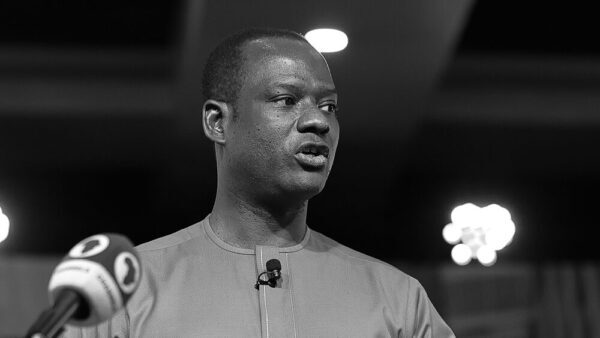
The Federal Government says Fitch Ratings’ decision to revise Nigeria’s credit rating outlook from Stable to Positive reflects progress in economic reforms, foreign exchange market adjustments and efforts to strengthen the country’s external position.
Fitch announced the revision on 9 October, retaining Nigeria’s long-term foreign-currency issuer default rating at ‘B’.
In a statement issued on Saturday, the Minister of Finance and Coordinating Minister of the Economy, Taiwo Oyedele, said Fitch cited increased foreign exchange reserves, easing inflation and improved economic prospects among the factors supporting the outlook revision.
According to the minister, Nigeria’s gross foreign exchange reserves rose to $54.9 billion as of 25 September 2026, from $32 billion in mid-April 2024.
He attributed the increase to more formalised foreign exchange transactions, portfolio inflows, higher exports and remittances.
Fitch also projected that Nigeria would record a current account surplus equivalent to 6.4 per cent of gross domestic product in 2026.

Economic growth and inflation
The ratings agency projected that Nigeria’s real gross domestic product would grow by 4.3 per cent in 2026, compared with 4 per cent in 2025, with growth remaining above 4 per cent in 2027 and 2028.
Fitch expects non-oil activities to remain the main driver of economic expansion.
The projection comes as Nigeria’s economy recorded growth of 4.43 per cent year-on-year in the second quarter of 2026, according to the National Bureau of Statistics (NBS).
The figure was higher than the 3.89 per cent recorded in the first quarter of 2026 and the 4.23 per cent recorded in the corresponding quarter of 2025.
The World Bank’s October 2026 Nigeria Development Update projected average annual economic growth of 4.4 per cent between 2026 and 2028, identifying services and agriculture among the contributors to economic activity.
On inflation, Fitch projected an average rate of 15.4 per cent in 2026, less than half the level recorded in 2024.
The NBS reported that Nigeria’s headline inflation rate eased marginally to 15.39 per cent in August 2026, from 15.43 per cent in July.
The figures provide recent context for Fitch’s assessment of inflation, although the agency’s annual average forecast is different from the monthly inflation rate reported by the NBS.
Reserves, oil production and public debt
Fitch also noted developments in Nigeria’s oil sector, including crude oil production meeting the country’s OPEC target of 1.5 million barrels per day from May 2026.
Mr Oyedele said increased domestic refining was helping to reduce fuel imports and foreign exchange demand.
On public finances, Fitch expects Nigeria’s tax reforms to increase non-oil revenue relative to the size of the economy.
The agency projected that general government debt would average 32 per cent of GDP between 2026 and 2028, below the median of 56 per cent for countries with a ‘B’ rating.
Fitch also highlighted Nigeria’s domestic debt market and the banking sector recapitalisation exercise, noting that many banks had capital adequacy ratios above 20 per cent.
However, the agency identified persistent challenges, including inflation remaining above levels in peer countries, government revenue being low relative to the size of the economy, and interest payments accounting for a high proportion of government revenue.
The minister said the federal government would continue implementing reforms aimed at increasing revenue, improving spending efficiency, strengthening debt management and supporting non-oil economic growth.
Other rating developments
The Fitch decision follows other developments in Nigeria’s international credit assessments.
READ ALSO: FG to negotiate ₦1,350 petrol price ceiling as global oil shock drives pump prices
In May 2026, S&P Global Ratings upgraded Nigeria’s credit rating from ‘B-’ to ‘B’. In August, Moody’s revised its outlook on Nigeria to Positive while retaining its ‘B3’ rating.
Mr Oyedele noted that the government’s medium-term objective remained to improve Nigeria’s credit standing and work towards investment-grade status.
He said the administration would continue to focus on foreign exchange market reforms, tax revenue mobilisation, fiscal governance, more efficient public spending and growth in non-oil sectors.
The minister said its broader objective was to “translate economic reforms into jobs, food security, support for small businesses and improved living standards”.
Discover more from Premium Times Nigeria
Subscribe to get the latest posts sent to your email.
-

 News4 days ago
Robot data startup Mecka AI nabs $60M from Sequoia
-
Business2 days ago
Communications Ministry made ₦345.5 million duplicate payment for Abuja ICT Park project
-
Business3 days ago
Fuel subsidy would cost Nigeria over N20trn yearly — Minister
-
News2 days ago
LumenUs helps automate tedious paperwork in times of grief