News
Enugu 2026 Mascot Unveiled as Olopade Promises Biggest-Ever National Sports Festival

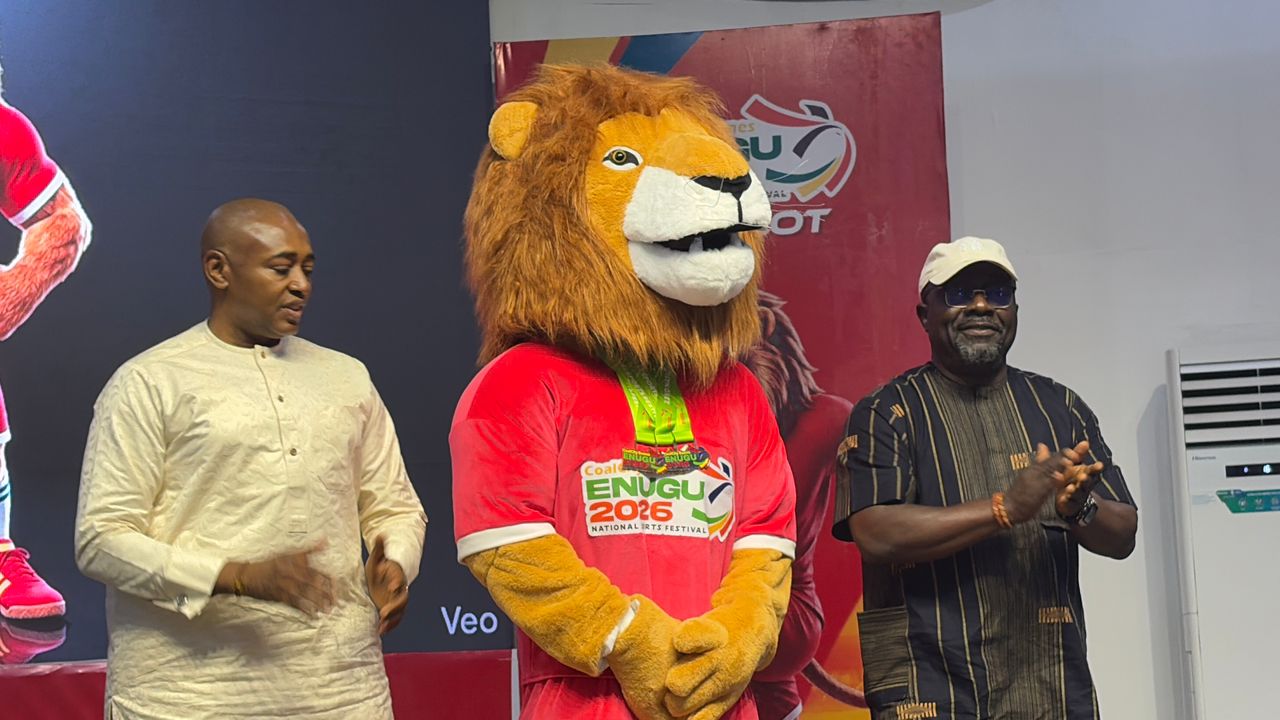
The official mascot and logo of the 23rd National Sports Festival, tagged “Coal City Games, Enugu 2026,” have been unveiled in Enugu, with the Director-General of the National Sports Commission (NSC), Hon. Bukola Olopade, promising that the Games will be the biggest and highest-sponsored edition in the history of the Festival.
The mascot was unveiled on Friday by the Deputy Governor of Enugu State, Barr. Ifeanyi Ossai, who represented Governor Peter Ndubuisi Mbah at the ceremony.
Read Also: Enugu Marathon: Nilayo Targets Jos, Kaduna As National Road Race Expansion Takes Shape
The event marked a major milestone in preparations for the National Sports Festival, scheduled to hold in Enugu from November 27 to December 11, 2026.
Olopade, who is also Chairman of the Main Organising Committee of the Games, said the unveiling of the mascot and logo was an important stage in the build-up to the Festival because it would help generate nationwide awareness, excitement and anticipation.
He said the mascot would become a symbol through which the message and spirit of the Coal City Games would be taken from Enugu to every part of Nigeria.
According to him, the National Sports Festival should belong to all Nigerians and should not be permanently associated with any particular region of the country.
Olopade said after 28 years, it was time to demonstrate that the Festival could move around the country and give different states the opportunity to showcase their sporting facilities, talents and cultural heritage.
He said Enugu 2026 was therefore designed to demonstrate that the National Sports Festival was a truly national event capable of uniting Nigerians through sports.
The NSC Director-General said the hosting of the Games in Enugu was particularly significant to him because the state is his home state.
“For me personally as the DG now, this means the world to me that we have brought back the National Sports Festival to my home state, Enugu State,” he said.
Olopade recalled that before becoming Director-General of the NSC, he was involved in sports management and had participated in efforts to encourage states to bid for the hosting rights of the National Sports Festival.
He said Enugu’s successful bid therefore represented a significant personal and professional milestone for him.
The NSC boss said the Commission was not only focused on delivering a successful Festival but was also determined to ensure that the Games left behind a lasting legacy in sports infrastructure and development.
He disclosed that work was ongoing on several facilities, including the swimming pool and sports halls, as part of preparations for the Games.
Olopade said the Commission was working closely with the Enugu State Government and other stakeholders to ensure that the necessary facilities were completed ahead of the Festival.
“Our ambition is clear: to deliver the most organised, most competitive and most memorable National Sports Festival ever held,” he said.
He expressed confidence in the continued support of the Federal Government, noting that the Festival provided an important platform for showcasing Nigeria’s sporting talents and facilities.
Olopade commended President Bola Ahmed Tinubu for his support for sports development and praised Governor Peter Mbah for his commitment to the successful hosting of the Games.
He also acknowledged the contributions of members of the Main Organising Committee, the Local Organising Committee, directors and staff of the National Sports Commission, as well as other stakeholders involved in the preparations.
The Director-General particularly expressed appreciation to Premium Trust Bank, the headline sponsor of the Festival, and other corporate partners for their support.
He described the 2026 edition as the biggest and highest-sponsored National Sports Festival ever, saying the growing involvement of the private sector was an indication of increasing confidence in sports as a vehicle for youth development and national transformation.
Olopade said the contribution of Premium Trust Bank and other sponsors would help strengthen the Games and create greater opportunities for Nigerian youths.
He stressed that the success of the Festival would depend on the collective efforts of the Federal Government, the host state, sponsors, organisers and other stakeholders.
The Deputy Governor, Ossai, who represented Governor Mbah, formally unveiled the mascot and logo, further signalling Enugu State’s readiness to host athletes and officials from across the country.
The 23rd National Sports Festival will be historic for Enugu State as it will be the first time the state is hosting the National Sports Festival.
With the unveiling of the mascot and logo, the Coal City Games have entered another critical phase, with organisers expected to intensify preparations around sporting facilities, accommodation, transportation, security and other logistics ahead of the opening.
The Festival is expected to bring together athletes from across Nigeria in a celebration of sports, youth, culture and national unity, while providing a major platform for discovering and nurturing the next generation of Nigerian sporting talents.






The Independent National Electoral Commission, INEC, has unveiled the final list of Lagos State governorship candidate.
The list is contained in a document released by INEC on Saturday in preparation for the 2027 general elections.
According to the document, the Lagos State deputy governor, Femi Hamzat is listed at the candidate of the All Progressives Congress, APC.
Also on the list is Gbadebo Rhodes-Vivour as the African Democratic Congress, ADC, candidate.
Find attach below document containing the full list.


-

 News3 days ago
Robot data startup Mecka AI nabs $60M from Sequoia
-
Business1 day ago
Communications Ministry made ₦345.5 million duplicate payment for Abuja ICT Park project
-
Business2 days ago
Fuel subsidy would cost Nigeria over N20trn yearly — Minister
-
News4 days ago
Spotify expands audiobooks to over 180 markets