Connect with us

Politics

Plateau, Lagos, Edo and other exciting election battles of today

editor

Published

on

Vote

Nigerians go to the polls today to elect governors in 28 states of the federation. The eight states not conducting governorship elections, however, will join the other states in electing brand new state legislative houses.

Given the constitutional powers of the state legislative houses in determining the fate of governors, it is as such not surprising that the battle for the legislative houses is also a keen battle. No where is that battle keener today than in Edo State where Governor Godwin Obaseki is fighting for his life having sowed discord in the two mainstream parties, PDP and APC.

Since the Presidential and National Assembly elections of February 25 when the Dan Orbih led mainstream of the PDP worked against the governor’s faction of the party and ensured that none of the candidates endorsed by Obaseki won a seat, reality has dawned on the governor that today’s House of Assembly elections could lead to his end.

Should Orbih and Comrade Adams Oshiomhole sustain their collaboration in Edo North and Central, and the Obidients repeat their February 25 feat in Edo South, Obaseki may not have a single PDP man in the House of Assembly and thus the fear of his political demise.

Outside Edo State, eyes will be focussed today on governorship battles in Plateau, Lagos, Delta, Oyo, Kaduna, Kano and Enugu among others.

Plateau State, a traditional PDP state was won by the APC in 2015 after the immediate past governor, Senator Jonah Jang pushed his near kinsman, Senator Gyang Pwajok as his successor.

Even though Pwajok was seen as a very brilliant and humble man with a passion for service, the majority of the electorate, however, revolted against the emergence of a near kinsman of the outgoing governor leading to the emergence of Mr Simon Lalong.

However, having tested Lalong and his creed of submissiveness to the Fulani, it is no brainer that the APC will have an uphill task in today’s poll. The PDP is also united around Barrister Caleb Mutfwang, a former award winning local government chairman who appears to have galvanised the plateau with a good spirit that has united most of the PDP tendencies in the state.

The prospects of the PDP candidate are being helped by the reality that the two main challengers, Goshwe Nentanwe of the APC and Patrick Dakum of Labour Party are seen as acolytes of Governor Lalong, a link that significantly reduces their credibility in the eyes of the voters.

After the unthinkable defeat of Asiwaju Bola Tinubu in Lagos on February 25, Governor Babajide Sanwo-Olu appears to have realised that the once unthinkable thought of the APC losing the state could begin under his watch. It is no surprise then that the governor has since that day been practically on the move begging for votes in a way that none of his predecessors ever did.

The main challenger had until the February 25 presidential election been seen as the former APC tough guy, Jide Adediran aka Jandor who is flying the ticket of the PDP.

His stock has considerably fallen with the exposure given the Labour Party candidate, Gbadebo Rhodes-Vivour who has now become the main threat to Tinubu’s fiefdom over Lagos.

GRV as he is popularly known, traces his paternal roots from the heart of Lagos Island but is married to an Igbo and is born of an Igbo mother. The marital and maternal links have inspired not a small dose of ethnic politics in the state from some alleging that he is not a full bloodied Lagosian.

Even worse, some allege that his aspiration on the platform of Labour Party as an affront.

The issue has brought out the worst in many otherwise once respected political gladiators including Chief Femi Fani-Kayode who has warned that Lagos should not be ceded to non-Lagosians.

That is Fani-Kayode whose only male children were begotten from an Igbo woman. Some are alleging that if Fani-Kayode knew where to go when matters of male lineage came how would he worsen the situation in Lagos with an ethnic slur.

Lagos indeed would be a tough one to call.

The Obi surge is also at play in Delta where Senator Ovie Omo-Agege’s bid on the APC’s platform to overthrow the PDP hegemony has now been overshadowed by the Labour Party candidate, Deacon Ken Pela.

Pela was not an issue until Obi swept the polls in Delta three Saturdays ago. Omo-Agege who popularised the castigation of the outgoing governor, Senator Ifeanyi Okowa as an ethnic bigot has now been snared by the same words.

Just a year ago, Omo-Agege and the APC rarely issued a statement without calling Okowa as an Owa-Alero governor. That was because of assertions of the governor’s alleged diversion of projects from neighbouring communities to his village.

Now, Omo-Agege is being seen as even worse given the way he is accused to have pulled projects to his Orogun community. For that very reason, the PDP candidate, Sheriff Oborevwori who was seen as sinking after Okowa’s disastrous performance in the presidential elections has resurrected.

Okowa it is now whispered is desperate to the extent of breaking the bank to stop Omo-Agege.

If the masses sustain the momentum for Obi and the Labour Party, then Okowa and Omo-Agege may well lick their wounds together.

Imo, Oyo, Kaduna, Kano, and Sokoto States are also states that will be of interest to many with incumbent and outgoing governors determined to sustain their political footholds in their states.

The permutations above, however, would depend on one fact, which is the extent to which the Independent National Electoral Commission, INEC exerts the integrity of the process. Should Prof Mahmood Yakubu not disappoint the nation again, we could well be in for a very exciting time this weekend.


Continue Reading
Click to comment

Leave a Reply

Your email address will not be published. Required fields are marked *

News

Makinde Visits COCIN Headquarters in Jos, Urges Christians to Shape Nigeria’s Political Future

info

Published

on

FB IMG
The Governor of Oyo State and presidential candidate of the African People’s Movement (APM), Engr. Seyi Makinde, has called on Christians across Nigeria to actively participate in politics and use their voices to influence the country’s future ahead of the 2027 general elections.

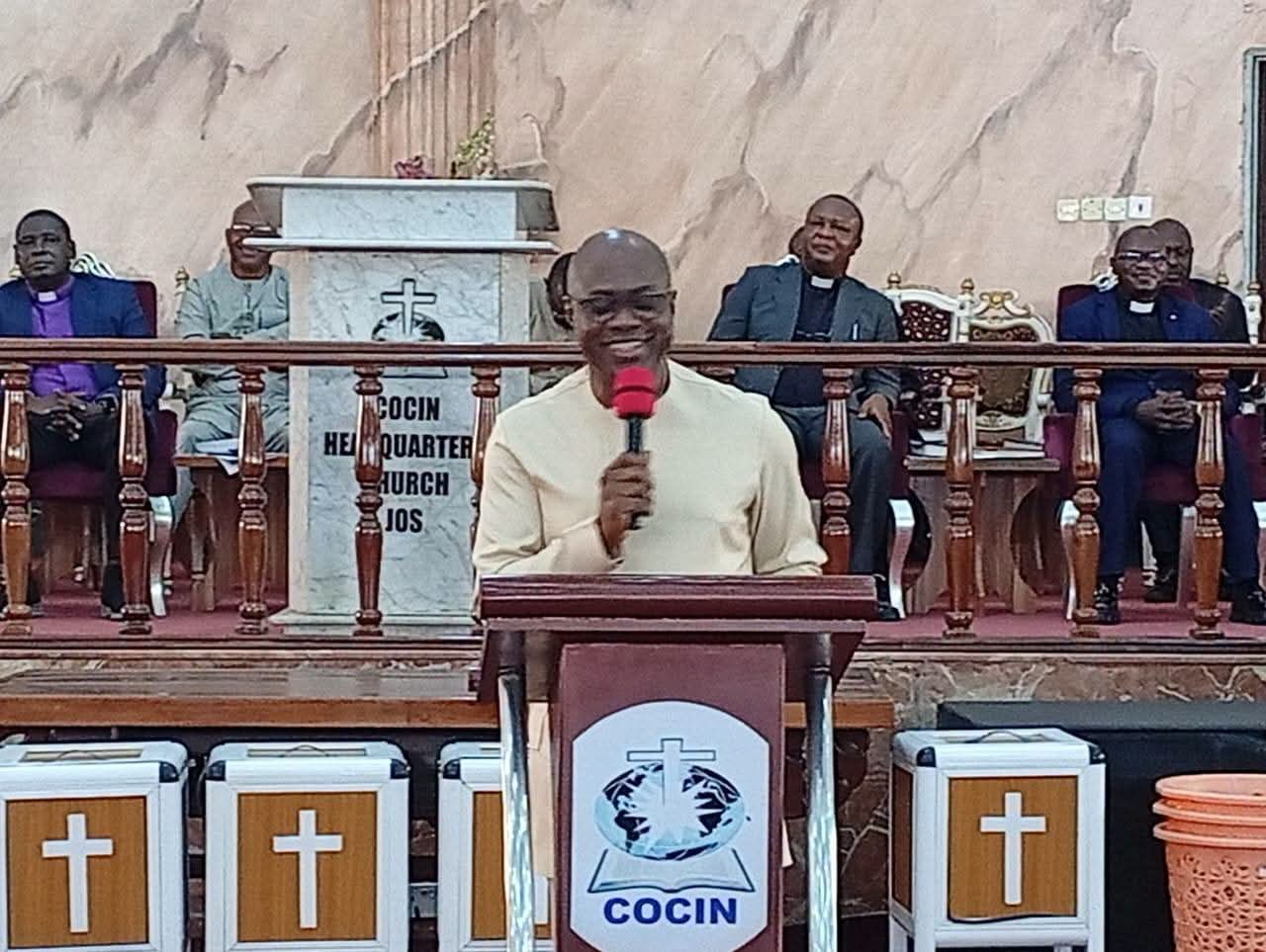
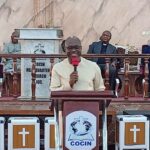
Makinde made the call on Sunday during a church service at the Headquarters of the Church of Christ in Nations (COCIN), Jos, where he was received by the church leadership and congregation.

The presidential candidate said his visit was not for an open campaign but to worship with the congregation, seek prayers and encourage Christians to take an active role in determining the nation’s political direction.

Describing Nigeria as being at a defining moment, Makinde said the country needed leadership capable of addressing insecurity, reducing economic hardship, strengthening the economy and implementing policies that improve the lives of ordinary Nigerians.

“Nigerians deserve better. We need a leader who has the fear of God, who sees the pains of Nigerians, who can change bad governance to good governance,” he said.

Makinde Challenges Christians to Embrace Politics

The Oyo State Governor challenged Christians who avoid politics because they consider it dirty or incompatible with their faith to reconsider their position.

He argued that Christians should not abandon the political space but should participate actively and contribute to decisions that shape the nation’s future.

“As Christians, we must participate. We must participate. Let our voices be heard in changing the course of history for Nigeria,” he urged.

He also encouraged the congregation to turn out on election day and make informed choices, stressing that decisions taken today would have lasting consequences for future generations.

Recounts Political Journey, Promises Return to Plateau

Reflecting on his political journey, Makinde recalled how many people doubted his ambition when he first expressed interest in becoming Governor of Oyo State.

He said his eventual emergence as governor demonstrated that political expectations could be challenged through determination and public support.

Makinde maintained that his message to Nigerians, particularly the Christian community, was to support leadership that understands their challenges and is committed to building a better country.

He disclosed that he would return to Plateau State in the coming days for an open campaign.

The service featured prayers for Nigeria, Plateau State and peaceful, credible elections in 2027.

Continue Reading

News

2027: Kefas, Bwacha, Tutare, 16 others battle for Taraba governorship

info

Published

on

Kefas, Bwacha, Tutare


As Nigeria gradually moves towards the 2027 general elections, political attention, as observed by DAILY POST, is increasingly shifting to Northern Nigeria, a region whose electoral influence could prove decisive in determining who occupies the presidency and controls the balance of power at the National Assembly and state levels.

With its vast voting population, complex political alliances, influential traditional institutions, extensive grassroots networks and diverse ethnic and religious constituencies, the North remains one of the most consequential battlegrounds in Nigerian electoral politics.

But beyond the broader Northern political calculations lies another intriguing contest: Who will command the votes of Taraba State in 2027?

Will the ruling All Progressives Congress, APC, consolidate its growing influence across the state, or will opposition parties successfully mobilise voters and turn dissatisfaction with governance into electoral gains?

Can the Peoples Democratic Party, PDP, rebuild its traditional support base following significant defections? Will the African Democratic Congress, ADC, Accord Party, AP, All Progressives Grand Alliance, APGA, Nigeria Democratic Congress, NDC, and other political platforms alter the established political equation?

These questions are increasingly defining conversations around the forthcoming general elections.

Beyond party manifestos, campaign promises and political declarations, the battle may ultimately revolve around economic hardship, insecurity, unemployment, public confidence in government, political defections and the strength of grassroots mobilisation.

While the Independent National Electoral Commission, INEC, has listed 19 governorship candidates, making the contest one of the most crowded political battles in the state’s recent history, DAILY POST observed that prominent contenders include incumbent Governor Agbu Kefas of the APC, former Senator Emmanuel Bwacha of the PDP and former Senator Abubakar Umar Tutare of the ADC.

The political drama is particularly interesting because of the reversal of political platforms between Kefas and Bwacha.

Kefas, who won the 2023 governorship election under the PDP, has since defected to the APC, while Bwacha, who contested the same election under the APC, is now the PDP governorship flag bearer.

This political development has not only altered traditional calculations but also introduced a new dimension to the contest.

The question confronting political observers is whether the movement of influential politicians between parties will automatically translate into a corresponding movement of voters.

“The governor’s political calculations will largely revolve around his administration’s performance, party structures, grassroots mobilisation and ability to sustain the political alliances that have emerged following his defection,” an APC chieftain, Ismaila Abba, said.

“His administration’s free education policy, particularly at the primary and secondary school levels, alongside other development initiatives, is expected to feature prominently in the campaign,” Abba stated.

Voters, according to political analysts, will have the opportunity to examine the administration’s performance in infrastructure, healthcare, education, employment, security, agriculture and economic development.

The governor will therefore face an important question: Can the political advantage of incumbency translate into broad-based electoral support across Taraba North, Taraba Central and Taraba South?

For the APC, the task goes beyond celebrating the governor’s defection. The party must demonstrate that its expanded political structure can command genuine grassroots support.

Governor Kefas and APC stakeholders in the state, however, remain optimistic that the party will not only emerge victorious in the governorship election but also secure victories for President Bola Ahmed Tinubu and its candidates contesting National Assembly and State House of Assembly seats in 2027.

“The people have no doubt, and they’ve given all the assurance that Mr President is reaching out to them through me, and for that reason, they are going to vote for Mr President. Taraba State is for APC 100 percent,” Kefas said.

“In Taraba State, we are not contesting elections with any party, anybody. We only have candidates from other parties participating in elections with us,” the governor added.

Bwacha’s governorship ambition

For former Senator Emmanuel Bwacha, the 2027 election represents another opportunity to pursue his governorship ambition.

His emergence as the PDP candidate places him at the centre of the opposition’s efforts to challenge the APC administration.

Bwacha brings legislative experience, political networks and previous electoral experience to the contest, having represented Taraba South in the National Assembly.

However, the PDP faces the challenge of rebuilding its structures following the departure of its former governor and other influential political figures.

The party must demonstrate that it can survive the political realignment and maintain a credible support base across the state.

“The PDP faces the challenge of rebuilding its structures following the departure of its former governor and other influential political figures. The party must demonstrate that it can survive the political realignment and maintain a credible support base across the state,” Ande Kelvin argued.

Bwacha’s challenge will be to convince voters that his candidacy represents a viable alternative and that the PDP can offer a different approach to governance.

The central question is whether the former senator can consolidate his established political networks and attract support beyond his immediate political constituency.

“The stage is now set for the 2027 political contest. The mistakes witnessed during the 2023 general election will not be repeated,” Bwacha said.

Citing alleged economic hardship and high levels of corruption under the incumbent administration, Bwacha expressed confidence that the PDP has the capacity to form the next government in the state in 2027.

“Today, governance has drifted away from the people. Public service has been replaced with self-serving interests. Our vision is simple: to restore Taraba to a place where every citizen feels a sense of belonging. A state where leadership serves the people, and the people trust their leaders,” he boasted.

Tutare and the ADC factor

Another political figure whose participation has added to the unfolding drama is former Senator Abubakar Umar Tutare, the ADC governorship candidate.

Tutare’s candidacy presents another platform for voters seeking alternatives to the APC and PDP.

His previous experience in the Senate and political connections could provide opportunities to engage different constituencies across the state.

However, the ADC’s major task will be translating political visibility into a sustainable grassroots structure across Taraba’s 16 local government areas.

The party must demonstrate that it has the organisational capacity to compete beyond the influence of prominent individuals.

“Let me tell you for free that the ADC is the party to beat come 2027. Tarabans are tired of this failed administration in the state and the country at large. They want a strong alternative, and that is what we offer,” Tutare said.

16 other candidates in the race

Although the APC, PDP and ADC have attracted considerable attention, the contest is not limited to these three parties.

Professor Jerome Nyameh of the Accord Party, Danjuma Usman Shiddi of APGA and Yahaya Mohammed Sani of the Nigeria Democratic Congress are among the other candidates seeking the governorship.

The participation of 19 candidates creates a wider political field and introduces the possibility of a fragmented electoral contest.

For smaller political parties, the election provides an opportunity to present alternative programmes, mobilise dissatisfied voters and challenge the dominance of established political structures.

However, their ability to translate political ambitions into significant electoral support will depend on organisation, resources, visibility and grassroots acceptance.

The 2027 election could therefore test whether Taraba voters remain largely aligned with established political parties or are increasingly willing to explore alternative platforms.

Ultimately, the contest will be a test of political loyalty, the strength of party structures, the appeal of individual candidates and, perhaps most importantly, the extent to which voters believe their lives have improved under successive administrations.

Continue Reading

Trending