News
MTN faces pressure as 95% network runs on diesel in Nigeria, CEO says – Technology Times

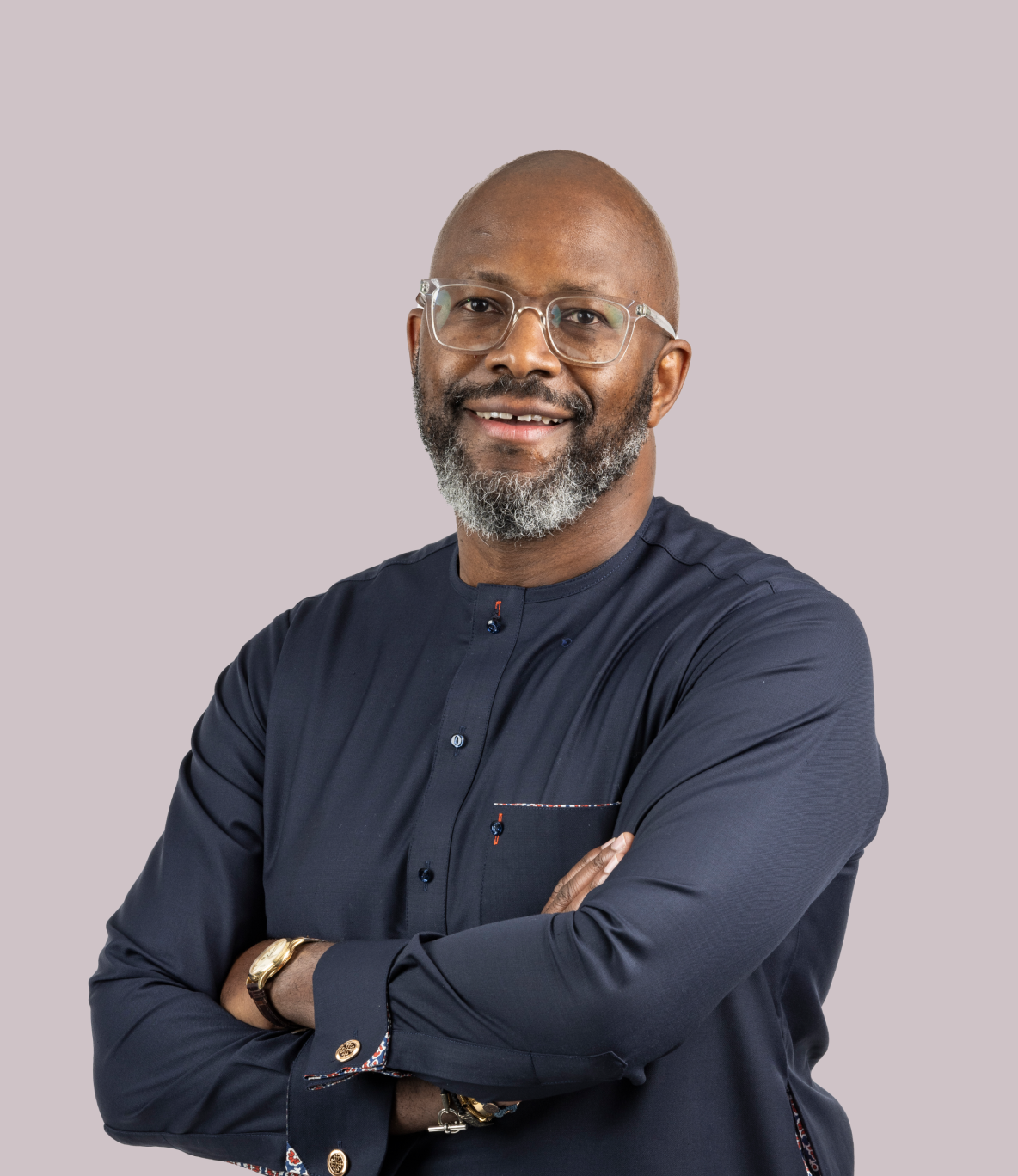
Rising diesel costs are putting pressure on MTN Nigeria’s profitability, with the telecommunications company revealing that about 95% of its network in the country is powered by diesel generators.


The disclosure was made by Ralph Mupita, MTN Group President and CEO on Monday during the presentation of the company’s interim results for the six months ended June 30, 2026.
Mupita says higher global oil prices during the period translated into increased diesel costs for the Nigerian operation, where dependence on generators remains extensive.
“Our network in Nigeria is like 95% on diesel generators, 5% on the grid,” Mupita says adding that energy costs, largely driven by diesel, now account for more than 30% of MTN Nigeria’s operating expenditure.
“Just over 30% of opex within Nigeria is energy prices, and that’s substantially diesel,” he says.
Diesel costs to hit coming quarters
The impact of higher diesel prices, according to Mupita, is not limited to the quarter in which the increase occurs because of the way MTN Nigeria’s energy contracts are structured. The cost recognised in a quarter is based on the average diesel price from the previous quarter. This means the effect of fuel-price movements can carry into subsequent reporting periods.
“And the way our contracts work, the cost in the quarter is the prior quarter’s average diesel price,” he explained. As a result, the higher diesel prices experienced during the second quarter are expected to affect MTN Nigeria’s third-quarter operating costs.
“What we experienced in Q2 of this year will come into Q3, and then Q3 will come into Q4,” Mupita says.
The cost pressure comes as MTN continues to invest heavily in its Nigerian network to meet growing demand for connectivity.
Data demand drives network investment
Mupita said demand for MTN’s services remains structurally strong in Nigeria, particularly as customers consume increasing amounts of mobile data.
He disclosed that the company recorded 2.7 million net customer additions in the first quarter, while average data consumption per customer reached 14.8GB.
The increase in data usage is pushing the company to continue investing in network capacity.
Mupita said MTN’s capital intensity in Nigeria exceeded 20% during the period as the company pursued growth in its mobile network and expanded its home connectivity strategy.
The operator is targeting the home broadband market through a combination of fixed wireless access and fibre, areas it believes offer significant growth opportunities in Nigeria.
The challenge for the company is that expanding network infrastructure also increases the amount of equipment that needs to be powered, making energy efficiency increasingly important to the economics of network expansion.
Nigeria remains a key growth market
Despite the pressure from energy costs, MTN maintained that Nigeria continues to offer strong growth opportunities.
Mupita described demand in the Nigerian market as robust, pointing to continued customer additions and rising data consumption.
He also noted that the naira remained relatively stable during the period, while liquidity at the prevailing exchange rate was not creating significant difficulties for the company. Inflation also moderated during the period.
However, higher diesel prices remain a major cost concern. Mupita says the impact of energy prices means MTN expects its Nigerian operation to remain within its medium-term guidance but towards the lower end of its EBITDA margin range.
“We are confident that the medium-term guidance framework we gave around Nigeria will maintain on service revenue, on the EBITDA margin will still be in range, but because of the high energy prices, we see ourselves at the lower end of the range,” he says.
The lower end of that range is around 53% EBITDA margin, according to the MTN CEO.


Airtime advance adds another pressure
Energy costs are not the only factor affecting MTN Nigeria’s financial performance.
The company also faced a significant revenue impact after Nigeria’s competition authorities directed it to suspend its airtime advance service in April.
Mupita said MTN responded by reducing its airtime advance base to about a quarter of its first-quarter run rate.
The suspension affected revenue generated during April, May and June, contributing to the weaker service revenue performance reported for the quarter.
However, MTN subsequently received communication from the competition authorities allowing the company to move towards restoring airtime advance through four vendors.
Mupita expects this to support the recovery of the business during the second half of the year, although he cautioned that the restoration would not immediately return the operation to its previous level because of the need for the new vendors to build experience and optimise their operations.
AI emerges as cost-cutting tool
Against the backdrop of rising energy expenses, MTN is also looking at technology, including artificial intelligence, to improve operational efficiency.
Ferdi Moolman, MTN CEO, South Africa says the group’s cost-efficiency programme is increasingly focused on structural changes to how the business operates rather than simply cutting expenses.
He cited the use of AI to improve power consumption at network sites in South Africa as an example.
“We did some proof of concept (POC) in the Western Cape, used AI to help us get more efficiency out of power consumption, which was very successful,” he says.
MTN plans to expand the initiative across the country. Moolman says the company still has significant room to extract efficiencies, with the broader cost initiative expected to take two to three years because of its structural nature.
For MTN in Nigeria, however, the scale of diesel dependence means energy costs will remain a major factor in determining how much of its strong data and subscriber growth translates into profitability.

Technology Times Reporter
oladapo.rilwan@technologytimes.ng


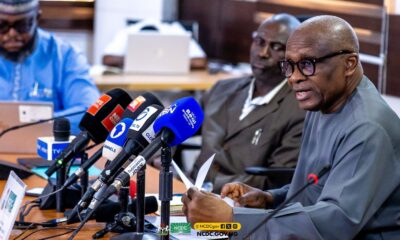


Governor Seyi Makinde of Oyo State has declared that the All Progressives Congress, APC, or any of the political parties willing to use any of the public facilities in the state is free to do so.
Makinde specifically explained that the APC is free to use the ancient Mapo Hall for its proposed campaign.
Makinde made these declarations in a statement signed by his Special Adviser on Media, Dr Sulaimon Olanrewaju.
The statement was made available to DAILY POST Tuesday night.
Makinde in the statement explained that no political party should be denied access to use the facilities as long as they fulfil the conditions.
Makinde made these declarations in response to concerns surrounding the proposed use of Mapo Hall by the APC presidential campaign.
He added that public facilities belong to the people of the state.
He said that its usage must be done in transparent and equitable way.
Makinde in the statement explained that, "Any political party or organisation that fulfils the stipulated conditions should not face discrimination or unjust restrictions in accessing such facilities".
2027: APC, other political parties free to use public facilities- Makinde

The Nigeria Police Force has confirmed the arrest of a 22-year-old man, Umar Ibrahim Gandi Maradun, over a viral video allegedly showing him calling for the use of AK-47 rifles to kill Christians in Enugu and Plateau states.
Politics Nigeria reports that the suspect, a native of Maradun Local Government Area of Zamfara State, was arrested for investigation after the video circulated on social media and sparked concerns over religiously motivated violence.
In a statement issued on Tuesday, October 27, 2026, the Force Public Relations Officer, Chief Superintendent of Police (CSP) Ani Iniedu, said the Zamfara State Police Command had activated its intelligence resources to identify those involved in the incident.
The police also confirmed that the command had engaged the leadership of Jama’atu Izalatil Bidi’a Wa’ikamatus Sunnah (JIBWIS) at the national and state levels following the emergence of the video.
According to the police, the organisation disassociated itself from the alleged conduct and handed the suspect over to the authorities for investigation.
The video reportedly showed the suspect wearing JIBWIS uniform and appearing alongside pupils from two Islamic schools in Maradun: Nurul Islam Islamiya and Akidatul Sahiha Islamiya.
Preliminary findings by the Zamfara State Police Command indicated that the video was recorded on Friday, October 23, 2026, while the suspect was reportedly on his way to Aliyu Ibn Abi Thalib Mosque, where he and others allegedly provided security during Friday prayers and preaching.
The suspect was born on September 15, 2004. He reportedly attended Mualledi Model Primary School and Government Day Secondary School, both in Maradun.
He also reportedly joined JIBWIS in 2025 and recently gained admission to study Mass Communication at Zamfara State University, Talata Mafara.
The police said a comprehensive investigation had commenced and that the suspect would be charged before a competent court if sufficient evidence established an offence under applicable law.
Earlier, the Zamfara State Commissioner of Police, Bello, said the investigation would consider allegations of incitement to violence, disturbance of public peace and criminal intimidation under Sections 77, 78 and 380(b) of the Penal Code Law applicable in the state, subject to the evidence gathered and applicable law.
The police also condemned statements capable of promoting religious hatred, threatening community safety or undermining peaceful coexistence.
“The Zamfara State Police Command remains resolute in its duty to uphold the law, protect lives and property, defend the rights of all citizens without discrimination, and work with relevant stakeholders to sustain peace and security throughout Zamfara State,” the commissioner said.
The development comes as JIBWIS has publicly distanced itself from the video and condemned calls for violence against non-Muslims.
The group’s National Publicity Secretary, Sheikh Ahmad Muhammad Ashiru, stated this in a statement issued at its headquarters in Jos on Tuesday.
Ashiru said the organisation had yet to establish the authenticity of the video but maintained that its position against violence was clear.
“We are yet to confirm whether the video is authentic, but our position against violence remains clear,” he said.
He added that JIBWIS, under the leadership of Ash-Sheikh Muhammad Sani Yahaya Jingir, would not support calls to attack or kill anyone because of their religious affiliation.
Ashiru said banditry, kidnapping, armed robbery and Boko Haram attacks were already affecting communities across the country, warning that statements promoting violence could heighten tensions and threaten peaceful coexistence.
“We would not support any call capable of disturbing the peace of Nigeria, as such comments are capable of inciting violence and creating unnecessary tension among Nigerians,” he said.
The JIBWIS spokesperson stressed that anyone making such statements in the organisation’s name did not represent its position.
He urged security agencies to investigate the video, establish its authenticity and identify those responsible, adding that anyone found culpable should face the law after a proper investigation.
Meanwhile, the Nigeria Police Force has urged members of the public to remain calm, avoid circulating unverified information and refrain from sharing the video in ways that could escalate religious tensions.
The Force reiterated its commitment to protecting Nigerians irrespective of religious affiliation and taking lawful action against conduct capable of inciting hatred or threatening public peace.
-

 News3 days ago
Troops rescued 70 abductees, recovered N10 million ransom: DHQ
-
Business3 days ago
CBN grants JP Morgan approval-in-principle to set up merchant bank
-
News3 days ago
Plateau Activates Ebola Preparedness Measures, Urges Residents to Observe Safety Guidelines
-
Business3 days ago
REA Ends 16 Years of Darkness in Two Kano Communities