Business
Logistics, energy costs threaten Nigerian non-export sector survival

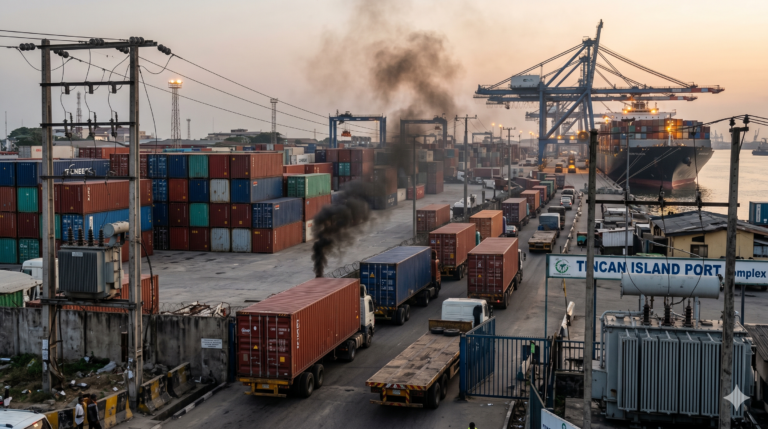
The Nigerian non-oil export sector is facing threats from logistics and energy costs despite the massive growth potential the sector signals, a new report revealed.
The report, titled ‘3T Impex Non-Oil Export Index Report 2026’, published on Wednesday, revealed the paradox of Nigeria’s international trade sector.
Published by 3T Impex Trade Consulting, the report synthesised data from 87,824 export transactions between 2021 and 2025, alongside a detailed sentiment survey of 94 active non-oil exporters across Nigeria’s six geopolitical zones.
The report stated that while exporter confidence and global demand have reached record highs, severe structural bottlenecks, specifically skyrocketing logistics and energy costs, are actively neutralizing these gains and pushing smaller exporters out of the market.
The findings present a 75-point chasm between market ambition and operational reality.

According to the report, the ‘Business Confidence Index’ stands at a strong 87.8 out of 100, with 75.5 per cent of exporters reporting actual sales growth and 91.5 per cent expecting global demand to improve.
This optimism is further reflected in the ‘Predictive Outlook Index’, which scored an exceptional 92.8, as 83.0 per cent of respondents plan to invest and expand their capacity.
Challenges
However, this optimism is heavily overshadowed by the ‘Logistics Benchmark Index’, which plummeted to a critical low of 12.8 out of 100, the weakest index in the entire study.
In the index, a staggering 77.7 per cent of exporters reported increased inland transport and port handling costs over the period.
“Nigeria’s non-oil exporters are confident, market-facing, and growing. But a Logistics Benchmark of 12.8 out of 100 is a structural emergency, not a policy inconvenience.
“When 77.7 per cent of exporters face rising logistics costs while simultaneously recording the strongest sentiment scores (87.8 confidence, 92.8 outlook), the system is trapping its own best performers,” the report stated.
The report further identified operational hurdles, rather than market demand, as the primary constraints to scaling.
It showed that 51.1 per cent of exporters cited the high cost of energy and processing as their absolute number one barrier, which forces many to avoid value-addition and revert to exporting raw commodities.
Also, 28.7 per cent identified quality and standardization rejections as their top constraint, highlighting the urgent need for better certification infrastructure to meet strict global requirements like the EU Deforestation Regulation (EUDR).
Additionally, the report warned of a worsening national risk, noting that 71.7 per cent of all exports now exit through just two Lagos ports (Tincan Island and Apapa), with Tincan’s share alone growing to 45.9 per cent in 2025.
Intervention
While the total export value grew by an impressive 93 per cent over five years to reach $6.17 billion in 2025, the actual transaction count dropped from 18,280 in 2021 to 16,683 in 2025.
This indicates that Micro, Small, and Medium Enterprises (MSMEs) are being systematically excluded from the formal export system due to prohibitive logistics overheads.
The report presented other key metrics that reveal a stagnant operating environment. The ‘Regulatory Efficiency Index’ scored 54.8, reflecting a system that acts as a passive constraint.
The ‘Financial Health Index’ stood at a fragile 52.7, indicating that current export growth is occurring despite a lack of robust financial system support.
The report further advocated immediate, deliberate action from policymakers and financial institutions to embark on urgent recommendations addressing the high export costs issues.
READ ALSO: How US, Chinese investment models are reshaping Nigeria’s trade, energy sector
The report advised policymakers to diversify export port infrastructure by activating Onne Port to relieve Lagos, resolving grid power reliability for export zones, expanding NEXIM export credit insurance, and creating logistics-linked pre-export financing to support struggling businesses.
It also advised exporters to consolidate shipments and prioritize quality compliance.
The report presented tools for tracking exporter sentiment and performance, and provided actionable insights to accelerate Nigeria’s export diversification agenda to unlock sustainable economic growth.








Business
PHOTO STORY: Keyamo inaugurates waste recycling programme, inspects upgraded pilgrims’ terminal at MMI, Lagos


The Minister of Aviation and Aerospace Development, Festus Keyamo, has inaugurated the first phase of the Federal Airports Authority of Nigeria’s (FAAN) Sustainable Waste Management Programme and inspected the upgraded Pilgrims’ Terminal at the Murtala Muhammed International Airport (MMIA), Lagos.
Mr Keyamo disclosed this on Thursday in a post on his official X page following the activities, which he conducted alongside the Chairman of the FAAN Board, Abdullahi Umar Ganduje, and the authority’s Managing Director and Chief Executive Officer, Olubunmi Kuku.
The minister stated that the waste management initiative introduces colour-coded recycling bins to encourage proper waste separation, describing it as the first phase of a nationwide programme to make Nigeria’s airports cleaner and more environmentally sustainable. According to him, the initiative reflects FAAN’s commitment to improving environmental practices across airports nationwide.

Following the inauguration, Mr Keyamo inspected the upgraded Pilgrims’ Terminal, which now features a 300-seat passenger waiting area, modern VIP and VVIP lounges, free high-speed Wi-Fi, a fully air-conditioned mosque, and enhanced screening and security systems.
He commended the management of FAAN for both projects and urged the authority to sustain the momentum.
“I commend the management of FAAN for these initiatives and encourage them to keep up the tempo in line with President Bola Ahmed Tinubu’s Renewed Hope Agenda,” the minister said.
In a separate statement, FAAN described the waste management programme as a significant step towards building cleaner, greener, and more sustainable airports across the country.
The authority urged passengers and other airport users to support the initiative by disposing of waste in the designated recycling bins.

“As you travel, your small actions can make a big difference. Dispose of your waste in the right bin, support recycling, and help us create an airport environment we’re all proud of,” FAAN stated.
These initiatives arrive as the federal government continues efforts to modernise airport infrastructure and improve service delivery across Nigeria’s aviation sector.
The Pilgrims’ Terminal at the Murtala Muhammed International Airport serves as one of the country’s major departure points for Muslim pilgrims travelling to Saudi Arabia for Hajj and Umrah. Upgrading the facility is expected to improve passenger comfort, ease the movement of travellers during peak pilgrimage periods, and enhance security screening and other airport services.
READ ALSO: Keyamo speaks on China-Enugu cargo flights
Similarly, the introduction of the Sustainable Waste Management Programme reflects a growing emphasis on environmental sustainability in airport operations. Globally, airports are increasingly adopting waste segregation and recycling systems as part of broader efforts to improve sanitation, reduce pollution, and align with international sustainability standards.
FAAN stated that the colour-coded recycling bins introduced at MMIA represent the first phase of a nationwide rollout, with the programme expected to encourage responsible waste disposal and foster cleaner airport environments across Nigeria.

-

 News2 days ago
Gagdi Hails Tinubu’s Infrastructure Drive as Babban Lamba–Sharam Road Project Begins in Plateau
-
News2 days ago
2027: Atiku, Obi, others should back Tinubu, opposition dead – Abubakar, Fasola
-
News1 day ago
EFCC Clears NIS Comptroller General Kemi Nandap in Visa Fraud Investigation
-
News2 days ago
Oluremi Tinubu Pledges to Wear Akwete Fabric if Tinubu Wins Second Term, Announces ₦2bn Grant for Weavers