News
Maka Kids is redefining kids’ screen time with a streaming app optimized for well-being, not engagement

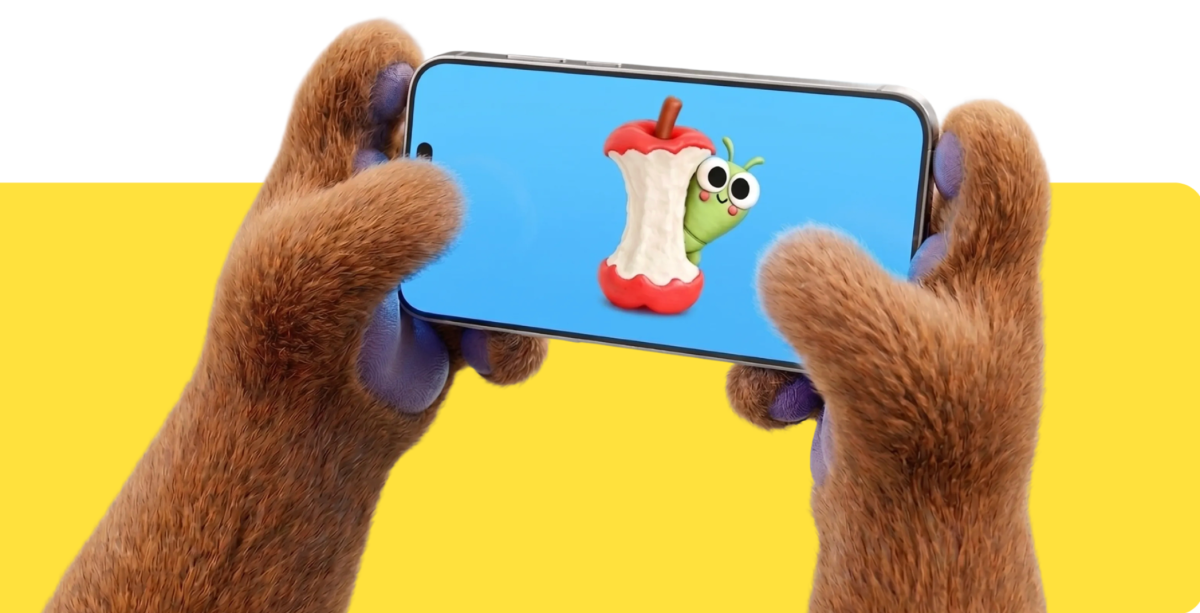
In a media landscape dominated by Baby Shark and Skibidi Toilet, one startup is reimagining children’s media by focusing on well-being, not watch time.
Maka Kids is building a streaming app for children ages zero to six featuring content designed for healthy development. The startup has now raised $3 million in seed funding to scale its platform, and is currently accepting waitlist sign-ups.
Unlike traditional streaming platforms, Maka Kids doesn’t have recommendation algorithms, ads, or auto-play. Instead, it is designed to offer a predictable experience that supports learning, creativity, and emotional growth.
Maka Kids was founded by Isabel Sheinman and Tanyella Leta, who previously founded Nabu, a non-profit venture that brought children’s books to more than 15 million children across 26 countries.
Sheinman and Leta were introduced at a dinner back in 2013 through a mutual friend and immediately hit it off, the pair told TechCrunch in an email. They said they initially over the fact that they both came from families of educators and entrepreneurs, an experience that first inspired Nabu and later fueled their passion for Maka Kids.
They began dreaming up the concept of Maka Kids after discussions with their friends, families, and customers at Nabu. They heard from parents who felt increasingly anxious about the effects of screen time on their children. Building on those concerns, the duo conducted hundreds of user interviews, which ultimately shaped their solution: a children’s streaming app designed with well-being at its core.

“We were seeing parents get completely overwhelmed trying to weigh decisions about what was unsafe, what was good, and understand why their kid was melting down every time screen time ended,” Sheinman said. “At the same time, we watched the children’s media ecosystem get louder, faster, more algorithmically driven. Looking at this problem, we felt uniquely positioned to deliver the relief that parents craved.”
All of the content on Maka Kids is evaluated using Maka Imprint, the startup’s patent-pending developmental framework created through two years of R&D in collaboration with researchers at the Yale Child Study Center. The framework maps seven core domains of early childhood development across more than 650 developmental indicators, including language, creativity, emotional skills, and growth mindset.
Maka Kids licenses content directly from IP holders and individual creators. The startup is also partnering directly with studios and animators to produce original content.
Every show on the platform goes through an analysis of pacing, stimulation levels, color contrast, and narrative structure. Its catalog features slower-paced, lower-stimulation content with genuine narrative arcs and stories from around the world.
The duo believes an important factor often missing from the screen time debate for kids is how much the right story, delivered at the right moment, can positively support a young child.
“Stories can support language development, emotional regulation, curiosity, and give kids a sense of how wide the world is,” Leta said. “Children’s media at its best is one of the most powerful developmental tools families have, when it’s designed with this intention. Most of the platforms children watch on today were designed for adult audiences, with a kids experience crudely bolted on as an afterthought. The incentive for the majority of kids’ streaming platforms is watch time, not well-being.”

When parents create a profile for their child, they can select channels focused on a variety of topics, such as kindness, STEM, emotional regulation, or movement, and then set preferred session lengths. From there, Maka Kids delivers curated, developmentally vetted content tailored to those selections.
The session then ends naturally, with wind-down cues from characters to help children calmly transition away from screen time without a meltdown.
Maka Kids is running a private beta on iOS this summer and plans to launch publicly this fall on iPhone and iPad, with casting support via AirPlay. Maka Kids says it already has thousands of families on its waitlist.
As for the startup’s business model, the app will operate on a subscription model, priced at $11.99 per month, with a discounted annual option.
In terms of the new funding, the startup plans to use it to grow its catalog of vetted shows. The round was led by Michigan Rise, with participation from Union Heritage Ventures, Flybridge, Also Capital, Detroit Venture Partners, Song United, Invest Detroit, Ann Arbor Spark Capital, and Segal Ventures, as well as angel investors.
“Longer term, our vision is to become the trust layer for every digital experience children have,” Sheinman said. “Embedded into games, edtech products, and shows, Maka Imprint can help developers align their products to what is actually good for kids and families. The kids category deserves a trusted industry standard, and that’s what we are building.”
When you purchase through links in our articles, we may earn a small commission. This doesn’t affect our editorial independence.







Nigeria is reviewing its Ebola preparedness after Kenya confirmed an imported case of the Bundibugyo virus, the Nigeria Centre for Disease Control and Prevention (NCDC) said.
The NCDC said the case highlights the risk of “international importation” of the virus through travel and population movement, “including the possibility of the virus being imported into Nigeria.”
The agency announced this Tuesday night in a statement signed by its Director-General, Jide Idris. It noted that “as of 6 October, there is no confirmed case of Ebola disease in Nigeria.”
The case makes Kenya the fourth country to report a case linked to the current Bundibugyo virus outbreak, following the Democratic Republic of the Congo (DRC), Uganda and France.
Kenya confirms first case
PREMIUM TIMES reported on Tuesday that Kenya confirmed its first imported case of Ebola caused by the Bundibugyo virus.
According to the World Health Organisation (WHO) Regional Office for Africa, the patient was a Kenyan citizen who had been living in the DRC, where the virus outbreak is ongoing.


The patient travelled by road from the DRC to Kampala, Uganda, before flying to Nairobi, where they were isolated after developing symptoms. Samples tested positive for Bundibugyo virus at Kenya’s National Virology Reference Laboratory and the Kenya Medical Research Institute.
Despite receiving supportive care, the patient died on the night of 5 October and was buried on Tuesday under Kenya’s safe and dignified burial protocol, according to WHO.
Nigeria reviews preparedness
The NCDC said the development in Kenya has added a new regional dimension to the outbreak and underscores the possibility of international importation through travel and population movement.
It noted that since the outbreak was first reported in the DRC, NCDC, working with the Federal Ministry of Health and Social Welfare, Port Health Services, State governments, and other stakeholders, including partners, has taken steps to strengthen Nigeria’s preparedness for Ebola.
“These efforts have focused on early detection, isolation and referral, laboratory diagnosis, infection prevention and control, contact tracing, risk communication and protection of healthcare workers,” it said.
The NCDC said Nigeria has conducted a national Ebola preparedness tabletop simulation exercise to assess the country’s readiness to respond to a possible case.
It added that it would continue to monitor developments in Kenya, the DRC and other affected countries and adjust preparedness measures as necessary.
DRC remains worst affected
The current outbreak was first reported in the DRC and has been linked to the Bundibugyo virus, a species of Ebola virus.
As of 23 September, WHO said the DRC had reported 7,890 confirmed cases, including 3,799 deaths, giving a crude case fatality ratio of 48.1 per cent.
The outbreak has affected 63 health zones across seven provinces, with WHO warning of increased cross-border risks.
Uganda’s latest Ebola outbreak ended in August, while France reported a travel-related case in June.
READ ALSO: Kenya confirms first imported Ebola case linked to DRC outbreak
NCDC advises travellers, health workers
The NCDC advised people travelling from affected areas to monitor their health for 21 days after leaving the affected area.
“If symptoms develop, avoid unnecessary contact with others and immediately contact the appropriate public health authorities or seek care at a recognised health facility, clearly disclosing travel and possible exposure history,” it noted.
The agency also advised Nigerians to practise hand hygiene and avoid contact with the body fluids of sick or deceased people.
It urged health workers to maintain a high index of suspicion when treating patients with compatible symptoms and a history of travel to or exposure in an affected area within the previous 21 days.
Discover more from Premium Times Nigeria
Subscribe to get the latest posts sent to your email.
-

 News4 days ago
Troops rescue 15 kidnap victims, nab two suspects in nationwide operations
-
 Business4 days ago
Nigeria’s business activity expands as household confidence weakens
-
News2 days ago
2027: El-Rufai’s detention could hurt APC, generate sympathy – SEDSAC director, other analysts express views
-
News3 days ago
Nigerians warned as AI creates new sextortion threat – Technology Times