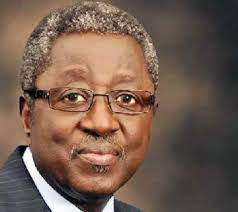
Former Plateau State Governor and Senator, Jonah Jang, has denied reports suggesting that he called for the resignation of Governor Caleb Mutfwang following the governor’s defection from the Peoples Democratic Party (PDP) to the All Progressives Congress (APC).
In a statement issued on Monday by his Media Consultant, Comrade Clinton Garuba, Jang said his comments at a recent PDP stakeholders’ meeting were taken out of context and misrepresented in some media reports.
“For clarity, Senator Jang’s remarks were quoted out of context. At no time during the PDP stakeholders’ meeting did he call for Governor Mutfwang’s resignation,” Garuba said.
He explained that Jang merely criticised the practice of politicians defecting from the parties on whose platforms they were elected, rather than targeting any individual.
“Rather, he criticised politicians for leaving their parties to join others,” the statement added.
Jang also urged the people of Plateau State to disregard the reports and continue to support Governor Mutfwang, whom he said remains in office on the strength of the people’s mandate.
The clarification followed comments made by Jang during the PDP stakeholders’ meeting last Friday, where he described the PDP as a strong and enduring political party, noting that other parties have come and gone while the PDP remains.
Without mentioning any individual, Jang had argued that it was unusual for elected officials to move their mandates to another party platform, suggesting that such actions raise ethical and democratic concerns.
BY NKECHI NAECHE-ESEZOBOR—The organized labor movement on Monday hailed a recent ruling by the International Court of Justice (ICJ) confirming that the right to strike is implicit in Convention 87 as a landmark victory for workers worldwide.
However, the ruling has sparked a fresh domestic debate, with labor representatives strongly criticizing the Nigeria Employers’ Consultative Association (NECA) for attempting to downplay the judgment’s impact.
The controversy escalated following a television appearance by the Director-General of NECA, Mr. Adewale Smatt-Oyerinde.
Speaking on TVC, Oyerinde argued that the right to strike is not automatic and asserted that workers must still adhere strictly to existing local labor laws, specifically citing Section 43 of the Trade Dispute Act (TDA).
He also suggested that a meeting of social partners to establish complimentary conditions remains a necessary precondition before any strike action can be declared.
Labor representatives quickly fired back, labeling Oyerinde’s remarks as an “unnecessary academic exercise in futility” and a selective interpretation of international law. Critics accused the NECA boss of being economical with the historical background of the dispute, pointing out that the issue had already undergone exhaustive debate across various levels of the International Labour Organization (ILO).
The legal battle began when the global Employers’ Group challenged whether the right to strike was protected under Convention 87.
After the ILO Governing Board affirmed the right through a majority decision, the Employers’ Group appealed the matter to the ICJ. As the highest judicial body in the world, the ICJ’s subsequent ruling in favor of workers is considered definitive and legally binding.
Labor advocates emphasize that Nigeria ratified Convention 87 in 1960, signaling a long-standing commitment to its principles. They argue that following the ICJ’s conclusive verdict, both the Nigerian government and employer bodies like NECA are obligated to obey the law unconditionally rather than selectively hiding behind local statutes to weaken workers’ rights.
Reassuring the public and the business community, labor stakeholders maintained that a strike has never been the first option for workers, but rather a last resort. They cautioned that an adversarial interpretation of the ICJ ruling by employers would only harm industrial harmony, urging instead for mutual respect and total adherence to international legal frameworks to guide future industrial relations in Nigeria.
The people deciding that AI can replace your job are also the ones least likely to understand what your job truly involves, according to Box founder Aaron Levie, who pointed to this as an example of “AI psychosis.” Indeed, ClickUp recently cut 22% of its workforce for AI agents, tech layoffs in 2026 are already nearly matching all of 2025, and DuckDuckGo installs are climbing from users who want Google to stop forcing AI into search and just give them links.
Watch as TechCrunch’s Equity podcast hosts Kirsten Korosec, Anthony Ha, and Sean O’Kane dig into what happens when the AI-pilled and the AI-skeptical are both right at the same time, plus three deals worth knowing about and Waymo’s new robotaxi hitting the road.