News
Faith, Integrity Best Legacy Parents Can Leave For Children — Kaigama


By Philomina Attah
The Catholic Archbishop of Abuja, Most Rev. Ignatius Kaigama, says the greatest legacy parents can bequeath to their children is not material property, but strong values of faith, integrity, and the fear of God.
This is contained in a statement signed by the Director of Media and Public Relations, Nigerian Christian Pilgrim Commission (NCPC), Celestine Toruka, and made available to newsmen on Friday in Abuja.
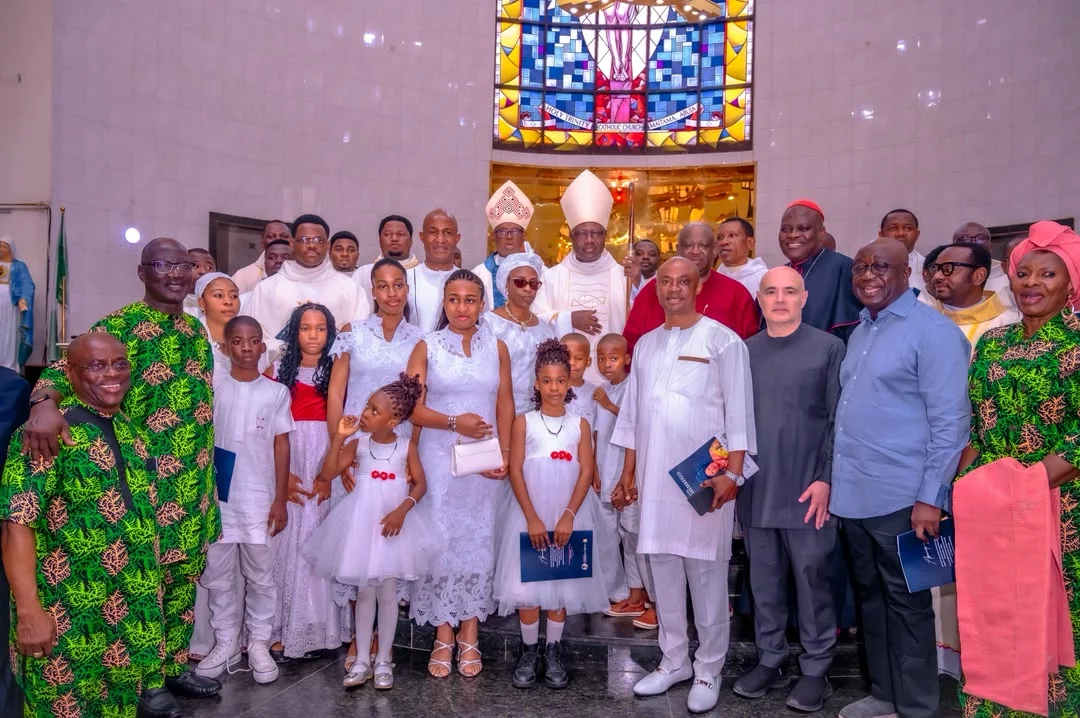
Archbishop Kaigama stated this during a Requiem Mass held in honour of Late Chief Ezinne Opara at the Holy Trinity Catholic Church, Maitama, Abuja.
Late Opara, who passed away on May 7, 2026, at the age of 83, was the mother of Prof. John Kennedy Opara, the pioneer Executive Secretary of NCPC and Chairman of CSS Group of Companies.
Kaigama urged leaders across all sectors to serve humanity with humility and remain mindful of the transient nature of human existence.
”Christiana Opara lived well and reached the age of 83.
“The lesson I learnt from Mama Opara was to do good to others and that, as people do good to others, the world will become a better place,” Kaigama said.

The Archbishop noted that Prof. Opara remained an integral part of the Archdiocese of Abuja, stressing that “whatever affects him also affects the Archdiocese.”
He further extolled the virtues of Prof. Opara, commending his meritorious service under four Nigerian presidents as the founding head of the NCPC, as well as his current contributions to agricultural development as Chairman and Chief Executive Officer of CSS Global Integrated Farms.
Paying tribute to his late mother, Prof. Opara described her as a loving, dependable, and deeply religious woman who served as a pillar of strength for her children.
”She taught me the fear of God, the importance of relationships, and was a source of remarkable strength to me and my siblings.
“My mother meant everything to me because she taught me all that I have learnt and am able to do today.
“She taught me how to cook, how to love, and how to pray,” Opara said.
Also speaking at the event, the incumbent Executive Secretary of the NCPC, Bishop Stephen Adegbite, highlighted his long-standing relationship with Prof. Opara.
Adegbite described Opara as a man committed to building upon the solid foundation and legacy established at the commission.
The Requiem Mass drew a prominent gathering of political leaders, diplomats, and senior clergy.
Among the dignitaries present were the Governor of Plateau State, Caleb Mutfwang; former Governor of Imo State, Emeka Ihedioha; former Deputy Governor of Imo State, Prof. Placid Njoku; Deputy Governor of Nasarawa State, Dr Emmanuel Akabe; and former Minister of Women Affairs, Dame Pauline Tallen.
Others in attendance included the Israeli Ambassador to Nigeria, Michael Freeman; the Senator representing Adamawa North, Rev. Amos Yohanna; the Archbishop Emeritus of the Catholic Archdiocese of Abuja, His Eminence, John Cardinal Onaiyekan; and the Auxiliary Bishop of Abuja, Most Rev. Anselm Umoren.
The remains of Late Chief Christiana Opara will be laid to rest on Aug. 7, 2026, at Umuopara Nguru Obetiti, Aboh Mbaise Local Government Area of Imo State.(NAN)(www.nannews.ng)
Edited by Funmilayo Adeyemi




News
‘The World Needs to See Nigeria’ — Floyd Mayweather Eyes Major Sporting Events, Promises Regular Visits to Boost African Tourism
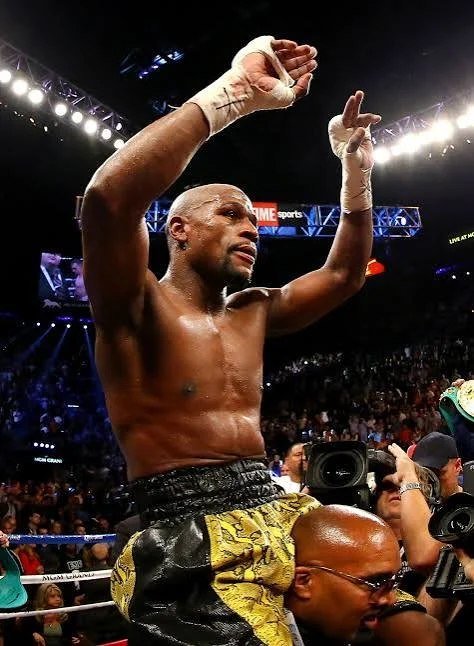
Undefeated boxing legend Floyd Mayweather Jr. has expressed his determination to help transform Nigeria into a destination for major international sporting and entertainment events, declaring that the country’s extraordinary talent, beautiful people and tourism potential deserve greater global recognition, Sports247.ng reports.
The former five-division world champion, who retired from professional boxing with an unbeaten record of 50 victories, believes Nigeria possesses enormous opportunities to attract international visitors through sports, entertainment and cultural tourism.
Speaking during his visit to Nigeria, Mayweather revealed that discussions with his Nigerian associates had strengthened his desire to contribute to the country’s international visibility.
“My Nigerian brother, on the regular, has constantly said we have to do something, and in the best way possible,” Mayweather explained.
The American boxing icon expressed admiration for Nigeria’s people and talent, insisting that the country’s positive attributes deserve greater exposure.
“There’s so much talent and so many beautiful people, and the world needs to see this,” he declared.
Mayweather believes international sporting events could become an important catalyst for attracting visitors, creating business opportunities and showcasing Nigeria to audiences around the world.
“We need more tourism in this country. So we want to bring tourism, but we also want to bring a lot of sporting events, as well as a lot of other different events here in Nigeria,” he stated.
The boxing superstar stressed that Africa’s tourism potential remains underappreciated internationally, arguing that greater investment in events and global promotion could help change perceptions of the continent.
“The world don’t get a chance to see how beautiful, you know, the continent of Africa is,” he observed.
“A beautiful place, so many beautiful people.”
Mayweather also spoke passionately about his admiration for African heritage, describing the continent as home to some of the world’s most remarkable people.
“Of course, the most beautiful people in the world come from Africa,” he added.
Beyond expressing admiration, Mayweather indicated that he wants discussions about bringing international events to Nigeria to translate into action.
“I’m ready to get going as soon as possible,” he declared.
He further revealed his intention to maintain a regular presence in Nigeria as he explores opportunities to contribute to the country’s sports and tourism sectors.
“I will be coming back here on the regular,” Mayweather promised.
For Nigerian sports and tourism stakeholders, Mayweather’s interest presents an opportunity to explore international partnerships capable of attracting major events, increasing global visibility and creating new economic opportunities.
Although no specific event or investment agreement has been announced, the boxing legend’s message is clear: Nigeria and Africa deserve a bigger place on the global sporting and tourism stage.
Business
COP31: Six billion tonnes of emissions from burning wood may be missing from climate reports – Report

At least six billion tonnes of carbon dioxide from burning wood and other biomass for heat and power have been recorded as zero in countries’ energy accounts since 1990, according to a report released by the Royal Society for the Protection of Birds (RSPB) at the UN climate summit in Antalya, Turkey.
RSPB, a British conservation charity, said on Monday that the amount is about equal to the annual emissions of the United States.
Bioenergy is energy made from organic material such as trees, crops and food waste, according to the RSPB.
Matt Williams, the independent energy analyst who carried out the analysis, told the audience at a press conference that he examined the greenhouse gas reports countries have submitted to the UN climate body since 1990. Some countries did not report every year while others left parts of their reports blank, he said.
“And because of missing data, this is probably an underestimate,” Mr Williams said.
The gap comes from guidance issued by the Intergovernmental Panel on Climate Change, which assigns the carbon from harvested wood to the forest sector of the country where the trees are cut, he said. The country that burns the wood records the emissions in its energy sector as zero and often has no information on whether the felled trees are replaced.


That guidance dates from the 1990s, when most biomass was burnt in the country that grew it, Mr Williams said. Wood pellets are now traded internationally, and five major economies spent nearly $250 billion subsidising bioenergy between 2002 and 2024, he said, citing research by the Environmental Paper Network.
Ruairi Brogan, a senior policy officer at the RSPB, said the charity wants the panel to change its guidelines so that emissions are counted where biomass is burnt.
“It’s not just fossil fuels that have to go at this COP,” Mr Brogan said.
Credits from Nigeria’s wood stoves
The same accounting treats wood burnt in poorer countries differently, said Janaina Uemura of the Global Forest Coalition, which organised the press conference with the RSPB. Ms Uemura said household fuelwood in those countries is counted as emissions that can be turned into carbon credits, while wood burnt in power stations in richer countries is counted as zero.
A carbon credit represents one tonne of emissions avoided, which a buyer can count against its own. Nigeria authorised the stove maker BURN to sell 5.2 million such credits internationally in March. A second approval, for close to four million credits, went to UpEnergy, a Uganda-based developer.
Sixty-two per cent of Nigerian households cook with wood, according to the National Clean Cooking Policy. Wood fuel is the leading cause of forest degradation in the country, which burns about 34.7 million tonnes more wood a year than its forests can sustainably supply, according to a World Bank study published last year.
Carbon capture push at the summit
The organisers also criticised technologies that capture or remove carbon dioxide. Kwami Kpondzo of the Global Forest Coalition and HOME Alliance, who is from Togo, said removal methods that depend on biomass would take land from communities in developing countries.
“The only way to cut the emissions is to do it at the source,” Mr Kpondzo said.
A record 700 carbon capture lobbyists registered for COP31, more than the 699 delegates in the 50 smallest national delegations combined, the Centre for International Environmental Law said on Monday.
READ ALSO: COP31: African activists fault just transition talks, demand inclusion, accountability
Nigeria’s long-term low-emission strategy emphasises gas power plants fitted with carbon capture and storage, according to Climate Action Tracker.
Both carbon removal and bioenergy are at issue in the first draft of the summit’s main decision, which was released on Monday. Two of its paragraphs make room for carbon removal technologies, the campaign group 350.org said, while a third promotes Turkey’s target of 35 per cent electrification by 2035 “regardless of the electricity mix”.
The RSPB wants bioenergy excluded from that target before ministers adopt the decision on Friday, 20 November.
“Big bioenergy is a dangerous distraction. Now leaders must listen,” Mr Brogan said.
Discover more from Premium Times Nigeria
Subscribe to get the latest posts sent to your email.
-

 News4 days ago
Tinubu (APC) in Jos: Promises to restore peace in the State and Nigeria
-
News4 days ago
Yari Defends Tinubu on Insecurity, Says Opposition Failed to Tackle Crisis for Over 20 Years
-
News3 days ago
Flaming Hydra’s new Kickstarter campaign rethinks e-book ownership and digital lending
-
News2 days ago
2027: Tinubu a failure, shouldn't seek second term – Atiku