
Health
Africa CDC reports progress, warns Ebola outbreak outpacing response in DR Congo

The Africa Centres for Disease Control and Prevention (Africa CDC) has reported progress in efforts to contain the Ebola outbreak in the Democratic Republic of the Congo (DRC), but warned that rising infections continue to outpace the response.
The Head of the Continental Incident Management Support Team for the Ebola response, Wessam Mankoula, disclosed this on Thursday during a webinar on the outbreak.
Mr. Mankoula stated that the continental Incident Management Support Team is now operational in Uganda, coordinating the Ebola response with support from partners across Africa.
He noted that the DRC and Uganda have also made progress in implementing a memorandum of understanding aimed at strengthening cross-border Ebola surveillance and response.
According to him, laboratory capacity has improved significantly, with health authorities now able to conduct more than 2,000 Ebola tests daily across affected areas.

He added that clinical trials evaluating Ebola therapeutics have commenced, marking another milestone in efforts to improve treatment outcomes.
Response under pressure
Despite these gains, Mr. Mankoula said confirmed Ebola cases increased by 25 percent over the past week, raising concerns about sustained transmission.
He said Ebola treatment centres remain under severe pressure, with bed occupancy reaching 95 percent across affected facilities.
Contact tracing also remains inadequate, with only seven contacts identified for every confirmed case—well below the recommended target—while infections among frontline health workers continue to pose a major challenge.
Uganda’s progress
Mr. Mankoula described Uganda’s response as encouraging, stating that the country had demonstrated that Ebola could be contained through strong surveillance and rapid action.
He said Uganda has recorded 20 Ebola cases, most linked to imported infections, but authorities quickly contained transmission.
According to him, the country currently has only one patient receiving treatment after recording two deaths and 17 recoveries.
He added that Uganda had achieved complete contact tracing for all identified contacts, helping to interrupt further transmission.
He stated that the country’s experience demonstrates that early detection, prompt isolation, and effective contact tracing remain critical to controlling Ebola outbreaks.
Situation in DR Congo
In contrast, Mr. Mankoula said the DRC had recorded 1,759 confirmed Ebola cases as of 7 July, including 353 new infections reported within one week.
He said the outbreak has claimed 600 lives, representing a case fatality rate of about 34 percent.
Among healthcare workers, 112 infections have been recorded, while 35 frontline workers have died during the response.
Mr. Mankoula described the current epidemic as the fastest-growing Ebola outbreak recorded during its first six weeks.
He said the virus continues to spread faster than response efforts, with the effective reproduction number estimated at 1.4.
“This means the outbreak is still progressing. Currently, the estimated reproduction number is 1.4, meaning every 10 infected individuals are expected to transmit the virus to approximately 14 others,” he said.
The outbreak has affected 37 health zones in the DRC, with 94 percent of confirmed cases reported in Ituri Province.
Mr. Mankoula noted that six affected health zones had not reported any confirmed cases in the past 21 days, suggesting progress in some locations.
He added that most infections have occurred among people aged between 15 and 44 years, with women accounting for 53 percent of confirmed cases.
However, he said insecurity in North Kivu continues to hamper response activities, contributing to high fatality rates and limiting access for emergency response teams.
Mr. Mankoula called for a 50 percent increase in treatment bed capacity, faster case detection, stronger community engagement, and sustained funding to strengthen the Ebola response.
He also announced the deployment of additional experts and 4,000 community health workers, while Uganda and the DRC continue implementing joint border surveillance under their bilateral agreement.
READ ALSO: DRC Ebola cases rise to 1,274, 96 health workers infected Africa CDC
Ebola virus
Ebola virus disease (EVD) is a severe and often fatal illness caused by infection with the Ebola virus. It spreads through direct contact with the bodily fluids of an infected person or contaminated materials and can cause symptoms including fever, vomiting, diarrhea, and, in severe cases, internal and external bleeding.
The current outbreak in the DRC and Uganda is caused by the Bundibugyo strain of the Ebola virus. Unlike the more common Zaire strain, which caused the 2014 West African epidemic, there is currently no approved vaccine or specific antiviral treatment for the Bundibugyo strain, making containment efforts more challenging.
PREMIUM TIMES reported that although Nigeria has not recorded any confirmed Ebola case, the Nigeria Centre for Disease Control and Prevention (NCDC) has classified the risk of importing the virus as high because of increased travel and trade with affected countries. The agency has also intensified surveillance at the country’s entry points, activated emergency preparedness measures, strengthened laboratory capacity, and directed states and healthcare facilities to heighten surveillance and rapidly report suspected cases.






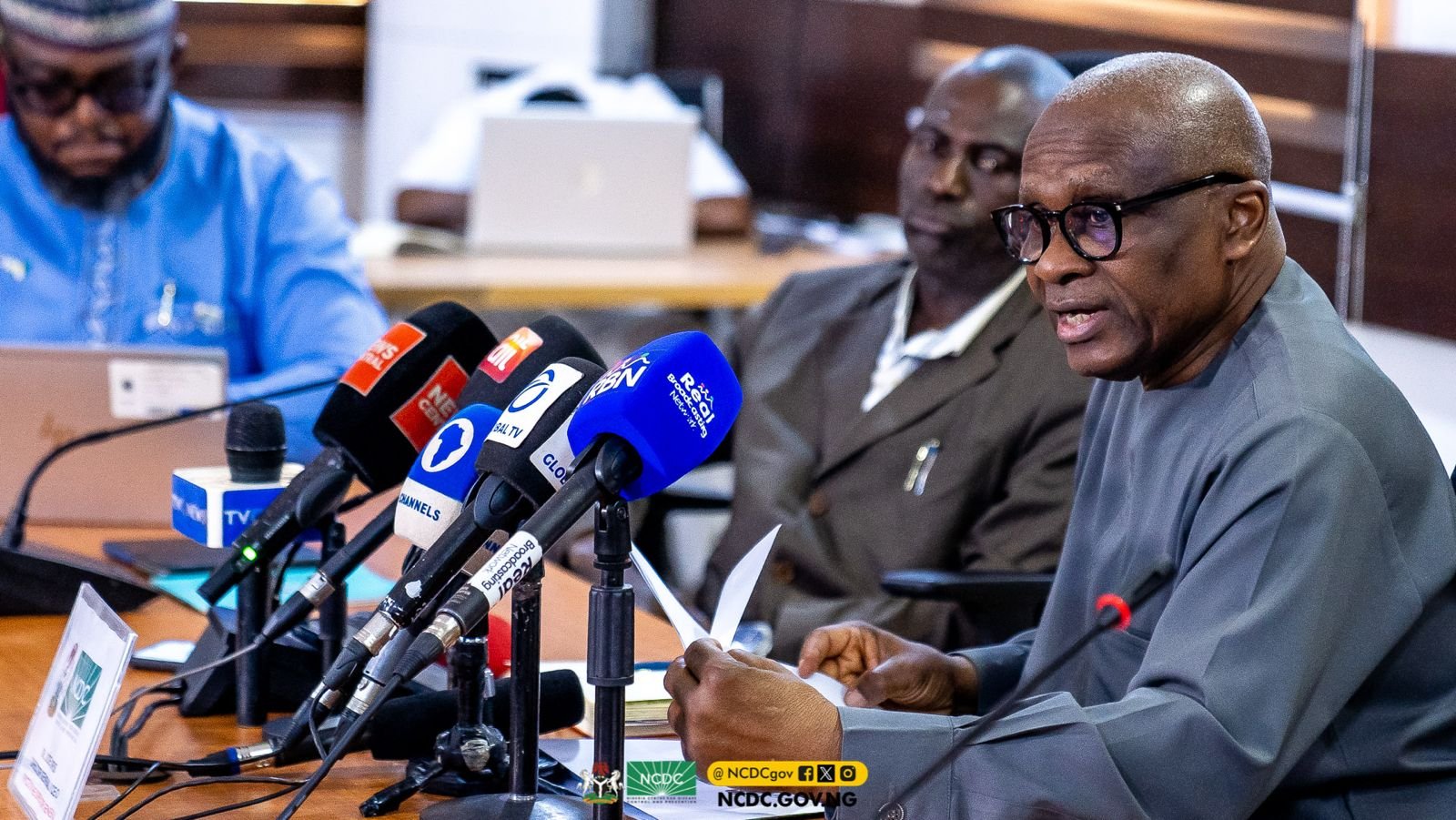
The Nigeria Centre for Disease Control and Prevention (NCDC) says it has identified 53 contacts linked to Nigeria’s confirmed case of Ebola disease in the Federal Capital Territory (FCT).
The Director-General of the NCDC, Jide Idris, disclosed this on Sunday during a media briefing in Abuja, where he provided an update on the country’s response to the outbreak.
Mr Idris said the contacts include healthcare workers, the confirmed patient’s domestic staff and spouse, as well as health personnel involved in collecting samples from the patient.
“As of now, we have 53 primary contacts. These comprise 44 people from the health facility where the patient was treated and nine additional contacts,” he said.
“Of the nine additional contacts, three are household members of the patient, her driver, chef and husband. Three others attended to her at Julius Berger Clinic before she got to the other facility, while the remaining three are members of the team who went to collect samples.”
He said the contacts had been listed and categorised according to their level of exposure, with public health teams continuing to monitor them.

According to him, none of the identified contacts had tested positive for Ebola or developed symptoms as of the time of the briefing.
Mr Idris also clarified that the agency had investigated two cases, including the confirmed case in the FCT and a suspected case in Rivers State, which tested negative for Ebola.
He disclosed that the confirmed patient had returned positive results from three samples collected for testing, while her husband tested negative for the disease.
Contact tracing continues
Mr Idris said contact tracing was ongoing, with public health teams working to identify people who may have been exposed to the confirmed patient and assess their level of risk.
He said identified contacts would be monitored for 21 days after their last possible exposure, in line with Ebola’s incubation period.
He explained that the number of contacts could change as investigations progressed and more information became available.
He said that being identified as a contact does not mean a person has Ebola, but allows health authorities to monitor their health and detect possible infections early.
Mr Idris urged Nigerians contacted by public health officials to cooperate with monitoring teams and provide accurate information about their movements, contacts and any symptoms they might experience.
Nigeria strengthens Ebola preparedness
The NCDC boss said the agency is strengthening laboratory capacity and infection prevention measures across the country as part of efforts to prevent further transmission of the disease.
Mr Idris said about 12 laboratories had been identified as having the capacity to test for Ebola, while efforts were ongoing to ensure the availability of reagents and other essential supplies.
He said testing for the confirmed case was being conducted at the National Reference Laboratory, with other facilities being supported to ensure suspected cases could be investigated promptly.
He added that the agency is also working with health authorities to train healthcare workers on infection prevention and control measures, including the proper use of personal protective equipment, hand hygiene and safe disposal of potentially infectious materials.
Mr Idris said preparedness and response activities were being strengthened in states considered at higher risk, while the NCDC was finalising an incident action plan with partners to coordinate the national response.
He commended healthcare workers for their vigilance in detecting the confirmed case. He also urged Nigerians to rely on information from public health authorities and avoid spreading rumours.
Nigeria’s Ebola case and possible link with Kenya
Nigeria confirmed an imported Ebola case in the FCT on Tuesday, 20 October, marking the country’s first confirmed case since the 2014 outbreak.
READ ALSO: Ebola: Lagos is prepared to respond — Commissioner
The patient is a 42-year-old Ugandan-born woman resident in Abuja who recently returned from a holiday in Kampala, Uganda.
According to the Africa Centres for Disease Control and Prevention (Africa CDC), the woman returned to Nigeria on 3 October and developed symptoms three days later.
On Friday, Nigerian authorities announced that genomic analysis showed a high degree of similarity between the virus detected in the Nigerian patient and that found in Kenya’s first imported case.
The Coordinating Minister of Health and Social Welfare, Muhammad Pate, said the finding did not establish that the Nigerian patient was infected in Kenya, as there was no evidence that she had travelled there.
The Africa CDC had earlier said it was investigating a possible link between the Nigerian and Kenyan cases because both patients travelled through Uganda’s Entebbe International Airport on 3 October.
Kenya’s first case was imported from the Democratic Republic of the Congo (DRC) through Uganda. The country has since recorded nine confirmed cases, including two deaths, with the eight additional infections linked to the first patient.
Discover more from Premium Times Nigeria
Subscribe to get the latest posts sent to your email.

As temperatures rise across parts of Nigeria, health authorities are warning residents to take precautions against the effects of extreme heat.
The warning comes as the country moves from the rainy season into the hotter, drier months, when prolonged exposure to high temperatures can increase the risk of dehydration, heat exhaustion and heatstroke.
A recent report by the Climate Impact Lab estimated that Nigeria could record 31,400 additional heat-related deaths between September 2026 and February 2027.
The report, titled “451,000 at Risk: Where Action Can Save Lives During the Super El Niño,” estimated 451,000 additional heat-related deaths globally during the period.
The Nigerian Meteorological Agency (NiMet), in a 23 October advisory, also warned of hotter days and increased heat discomfort as the country enters the dry season.
The agency said changing weather conditions, including reduced rainfall and cloud cover, could contribute to rising temperatures. It warned that excessive heat could cause dehydration, heat exhaustion and heatstroke.
People most at risk
Extreme heat can affect anyone, but some people are more vulnerable to its effects.
The World Health Organisation (WHO) identifies older people, young children, people with chronic illnesses and outdoor workers among those who face greater health risks during periods of extreme heat.
People living with heart, lung or kidney conditions, diabetes and other chronic illnesses may also experience worsening symptoms when temperatures become very high.
Outdoor workers, including farmers, construction workers, traders and others who spend long periods under the sun, can also be exposed to heat for several hours without adequate opportunities to cool down.
WHO said extreme heat places additional stress on the body as it tries to maintain a normal temperature. Prolonged exposure can increase the risk of heat exhaustion and heatstroke and may also worsen existing health conditions.
What should you do?
NiMet advised Nigerians to drink water regularly and wear lightweight, breathable clothing.
It said people should also limit prolonged exposure to direct sunlight, particularly during the hottest periods of the day, and strenuous physical activities should be moved to cooler hours.
NiMet further urged schools and workplaces to ensure adequate ventilation, provide drinking water and shaded rest areas, and allow regular breaks during hot weather.
WHO similarly advises people to avoid strenuous activity during the hottest part of the day, stay in shaded or cool places and keep their homes as cool as possible.
People should also check on relatives, neighbours and friends who may be more vulnerable, particularly older people and those living alone.
WHO urged parents to take extra care with young children. Children should not be left alone in parked vehicles, as temperatures inside vehicles can rise rapidly even when the weather outside does not appear extreme.
READ ALSO: WHO pledges support as Nigeria records first imported Ebola case
Warning signs
Symptoms of heat exhaustion may include heavy sweating, weakness, headache, dizziness and nausea. Moving the person to a cooler place, giving fluids where they are able to drink and helping them cool down can help prevent the condition from becoming more serious.
Heatstroke is different and requires urgent medical attention. According to WHO, heatstroke is a potentially fatal medical emergency. Someone with hot, dry skin, delirium, convulsions or loss of consciousness during extreme heat should receive immediate medical attention.
The Climate Impact Lab said the projections provide an opportunity for governments and humanitarian organisations to identify vulnerable populations and direct resources towards interventions that can save lives.
NiMet has also urged Nigerians to follow official weather forecasts and advisories as conditions change.
Discover more from Premium Times Nigeria
Subscribe to get the latest posts sent to your email.
-

 News3 days ago
Obi, Kwankwaso to hold Middle Belt Youth, Village Hall Meeting in Jos
-
News3 days ago
Handball President Jibril Saidu Ojih Explains Reasons Behind Introduction Of Transfer Fees For Nigerian Players
-
News3 days ago
Lotus Bank flags dta privacy risks from unapproved workplace AI tools – Technology Times
-
Entertainment3 days ago
FOGMMON PLATEAU CONGRATULATES EJIDIKE UGOCHUKWU (𝙈𝙞𝙣𝙨𝙩𝙧𝙚𝙡 𝙅𝙞𝙙) ON HIS APPOINTMENT AS NATIONAL PRESIDENT


