News
Commonwealth Games Boost! Team Nigeria Athletes Land Fresh Rewards As Nigerian Firm Unveils Medal Incentives



Team Nigeria athletes have received another major boost ahead of the 2026 Commonwealth Games after Caligeo Suites Ibadan unveiled a special incentive package to reward medal winners in Glasgow, Scotland.
The initiative, announced by the hotel’s Chief Executive Officer, Gbolahan Fatuga, is aimed at motivating Nigerian athletes to achieve podium finishes while encouraging greater private-sector participation in sports development.
The announcement comes as Team Nigeria concludes its final preparations in Scotland ahead of the Games, with several corporate bodies and sports stakeholders stepping forward to support the country’s athletes.
“To foster corporate sponsorship and support for our athletes within the Nigerian business community, I propose this initiative, with Caligeo Suites serving as a benchmark for other organisations and individuals,” Fatuga said.
Under the reward scheme, gold medallists will receive accommodation vouchers worth 30 nights, silver medallists will earn 20 nights, while bronze medallists will be rewarded with 15 nights at Caligeo Suites in Ibadan.
The accommodation vouchers, which are subject to room availability, will remain valid until December 31, 2027.
A former athlete himself, Fatuga explained that the vouchers were deliberately made transferable, recognising that many athletes are based overseas and may prefer to share the rewards with those who contributed to their success.
“Some of our athletes may not be able to use these vouchers themselves, so they can transfer them to their coaches, family members or friends who supported them throughout their journey,” he added.
Fatuga also called on more Nigerian businesses to invest in sports, stressing that sustainable athlete development requires stronger collaboration between the private sector, government and sports federations.
The incentive applies exclusively to Team Nigeria athletes who win medals at the 2026 Commonwealth Games and forms part of a growing wave of private-sector initiatives aimed at complementing government support for elite athletes as they prepare to compete in Glasgow.
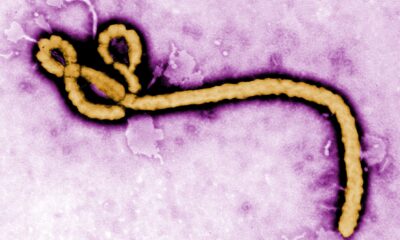






Nigeria’s first confirmed Ebola patient is the wife of a diplomat who travelled to Uganda’s capital, Kampala, for a holiday, the Director-General of the Africa Centres for Disease Control and Prevention (Africa CDC), Jean Kaseya, has said.
Mr Kaseya said the woman, originally from Uganda but resident in Abuja, developed symptoms three days after returning to Nigeria on 3 October.
Providing details of the patient’s medical history, Mr Kaseya said the woman first developed symptoms on 6 October and initially sought treatment at a private hospital, believing she had malaria.
She subsequently visited another private hospital, where she was admitted on 11 October after her condition failed to improve.
“She went to the first hospital, a private hospital, thinking that she had malaria, and then she went to the second private hospital. She was admitted on the 11th,” Mr Kaseya told the BBC’s Newshour programme.
Details of patient’s travel, condition
According to a report by the BBC, Nigeria’s Coordinating Minister of Health and Social Welfare, Muhammad Pate, confirmed that the 42-year-old woman spent two and a half weeks in Kampala before returning to Abuja through Ethiopia, where she had a two-hour stopover in Addis Ababa.


Mr Pate said the patient, who tested positive for Ebola on Tuesday, was stable and responding to treatment.
“She’s stable, she’s improving,” he said.
He said health authorities had identified 44 people who came into contact with the patient and were taking measures to prevent further transmission.
“Not all of them have been in close proximity. We cast the net wide so that we contain it as broadly as possible,” he told the BBC.
The minister explained that none of the identified contacts, including the person who travelled with the patient, had developed symptoms.
He added that the woman had remained in Abuja since returning to Nigeria.
Mr Pate said public health authorities were alerted on Monday, 19 October, after the patient’s condition failed to improve.
Her Ebola diagnosis was confirmed the following day after three laboratory tests.
Ebola has an incubation period of two to 21 days, meaning an infected person may not develop symptoms until several days or weeks after exposure.
Ebola spreads through direct contact with the blood or other bodily fluids of an infected person, or with contaminated materials. Symptoms can include fever, headache, severe weakness, vomiting and diarrhoea.
Conflicting accounts of patient’s travel history
The latest information from Nigerian authorities and the Africa CDC differs from an earlier account provided by Uganda’s Ministry of Health.
Ugandan authorities had described the patient as a Nigerian national who travelled to eastern Democratic Republic of the Congo (DRC) for business and only passed through Uganda while returning home.
The Ugandan government maintained that the country had no active confirmed Ebola cases and that the woman’s transit through Uganda did not establish that she contracted the virus there.
However, Mr Pate said Nigerian authorities were working with Uganda, Ethiopia and the Africa CDC to establish the patient’s complete travel history and determine where she might have contracted the infection.
“We respect our sister nation of Uganda,” he said. “We have very strong solidarity, we are all in it together.”
Mr Kaseya also called for greater information-sharing among African countries to support investigations into the patient’s movements and possible exposure.
He urged Western countries to avoid imposing travel restrictions, stressing that international collaboration and solidarity were essential to containing the outbreak.
Regional outbreak
Nigeria’s confirmed case comes amid an ongoing Ebola outbreak linked to the Bundibugyo virus in the DRC, with infections also reported in other countries.
The European Centre for Disease Prevention and Control reported more than 9,500 cases and 4,602 deaths in the DRC as of 19 October.
Kenya, which confirmed its first imported case in early October, reported a ninth case on Tuesday. Its health ministry said all nine cases belonged to one known cluster, with the eight surviving patients responding well to supportive care.
The first Kenyan patient had travelled from the DRC through Uganda before arriving in Nairobi. The development has heightened regional concerns about the movement of the virus across borders.
Uganda also recorded Ebola infections earlier in 2026 but subsequently declared its outbreak over after completing the required period without a new confirmed case.
Nigeria’s current case has renewed attention on the risks posed by international travel during an outbreak, as public health authorities work to establish the source of infection and prevent further transmission.
Health authorities have advised the public to maintain good hand hygiene, avoid contact with the bodily fluids of suspected cases and promptly report possible exposure to public health officials.
Nigeria draws on 2014 experience
Nigeria previously experienced an Ebola outbreak in 2014 after an infected traveller arrived in Lagos from Liberia.
The outbreak resulted in 20 cases, including 19 laboratory-confirmed cases and one probable case, with eight deaths.
The World Health Organisation (WHO) declared Nigeria free of Ebola transmission on 20 October 2014 after the country completed 42 days without a new case.
Meanwhile, Mr Pate expressed confidence in the country’s ability to contain the latest case, citing improvements in disease surveillance, laboratory capacity and the availability of trained epidemiologists.
He said Nigeria’s previous experience with Ebola was one reason for confidence in the current response.
“We have done it in 2014, and we have good public health institutions,” Mr Pate said.
Discover more from Premium Times Nigeria
Subscribe to get the latest posts sent to your email.
News
2027: Gov Adeleke, Akande, Oyetola unite for Tinubu at presidential campaign council inauguration Thursday

Osun State Governor Ademola Adeleke, former governor Bisi Akande and former governor Adegboyega Oyetola are among prominent political leaders expected to participate in the inauguration of the Osun State chapter of the Tinubu Presidential Campaign Council scheduled to hold in Osogbo on Thursday, October 22, 2026.
The information was contained in a statement issued on Tuesday by Olawale Rasheed, spokesperson for Governor Adeleke, the state coordinator of the council.
The statement said the campaign council would comprise political leaders, elected office holders, former lawmakers, party executives and other stakeholders drawn from the All Progressives Congress, APC, Accord and the Peoples Democratic Party, PDP.
Governor Adeleke, who is the state coordinator, is expected to oversee the inauguration of the council, which brings together political figures from different party backgrounds in support of President Bola Tinubu's presidential campaign.
Among the APC leaders listed for the council according to the statement are "former Osun governor Bisi Akande, former governor Adegboyega Oyetola, former senator Iyiola Omisore, Senator Ajibola Basiru, Senator Jide Omoworare, Senator Sola Adeyeye and Alhaji Bola Oyebamiji."
Other APC figures named include "Otunba Titilayo Ponnle, Engr Akintunde Adegboye, Engr Mumini Olabanji and former House of Representatives Speaker Foluke Etteh."
The list also includes members of the party's state executive committee and candidates for the National Assembly and Osun State House of Assembly.
The council's APC component features former federal and state lawmakers, including Senator Sunday Fajinmi, Senator Mudashir Hussain, Olubunmi Etteh, Adejare Bello, Wale Afolabi and Olatunbosun Oyintiloye, alongside other political stakeholders.
The Accord and PDP components include Professor Wale Oladipo, Prince Kola Adewusi, Erelu Olusola Obada, Dr Olu Alabi, Alhaji Kazeem Akinleye, Alhaja Atinuke Oyawoye, Barrister Kolapo Alimi and Reverend Bunmi Jenyo.
Also listed are Senator Lere Oyewumi, Bamidele Salam, Adewale Morufu Adewale, Clement Akanni, Soji Adetunji, Lukman Mudashiru and Lanre Ladebo.
The list includes Accord National Assembly candidates and serving and former members of the Osun State House of Assembly.
"Local government chairpersons and other grassroots political leaders from across Osun's local government areas are also included in the proposed council structure.
"Their participation is expected to provide representation for the different parts of the state during the campaign activities," the statement added.
The list also names party executive members and other political stakeholders, including Pastor Victor Akande, Prince Bola Ajao, Nathaniel Ojetola, Wunmi Otunla, Barrister Ebenezer Bolarinwa and Alhaji Adeyela Adeleke.
-

 News3 days ago
Euromatch NPFL: Matchday 9 results
-
News4 days ago
NUCAP: Nigeria targets 20 million people with 3,700 telecom towers – Technology Times
-
News3 days ago
No agenda, no rush, no leaving San Francisco: Benchmark’s partners on investing in a frenzied market
-
News4 days ago
Meta removes language that raised scraping and AI training concerns