News
ECOWAS Invites Job Applications, Sets April 30 Deadline

News
Warriors Send Early Warning! Abia Crush Rivers Alphas 41-0 As Bello Stars In SHOWTIME Season XV



Abia Warriors delivered the first major statement of SHOWTIME Flag Football League Season XV, producing a dominant 41-0 victory over Rivers Alphas at Showtime Arena to begin their new campaign emphatically.
Quarterback Bello Anuoluwapo led the individual ratings with an impressive 8.1, while receiver Success Patrick followed closely at 8.0. Joseph Williams, another key figure in the Warriors’ offence, earned a 7.3 rating as Abia controlled the contest on both sides of the ball and prevented Rivers from scoring.
The Warriors led 20-0 at halftime before continuing their dominance after the break. Williams connected with Success Patrick for a touchdown and later found Jumai A.O., while Bello also delivered touchdown passes to Jumai as Abia’s multiple attacking options proved difficult for Rivers to contain. The Warriors’ defence was equally influential, forcing turnovers and maintaining the shutout.
The performance immediately puts the spotlight on Abia’s determination to challenge again after their championship reign was ended by Lagos Knights in the Season XIV final. More importantly, it demonstrated the quality of individual talent that SHOWTIME is putting before fans and potential commercial partners every Game Week.
With the league’s digital platform now documenting player ratings, match statistics and play-by-play action, stars such as Bello, Success and Williams have measurable performances that can be followed throughout the season. That creates stronger personalities around the competition and gives brands new opportunities to associate with players, weekly awards, statistics, highlights and digital content.
For sponsors, a result like this is more than a scoreline. It produces athletes and stories capable of driving conversations throughout the week, while SHOWTIME’s growing digital ecosystem allows those performances to live beyond the stadium.
With ₦60 million in Season XV rewards and the journey towards SHOWTIME Bowl XV only beginning, the Warriors have wasted little time announcing themselves.
41 points scored. Zero conceded. A commanding opening victory.
Abia Warriors are back — and Season XV already has another major storyline.
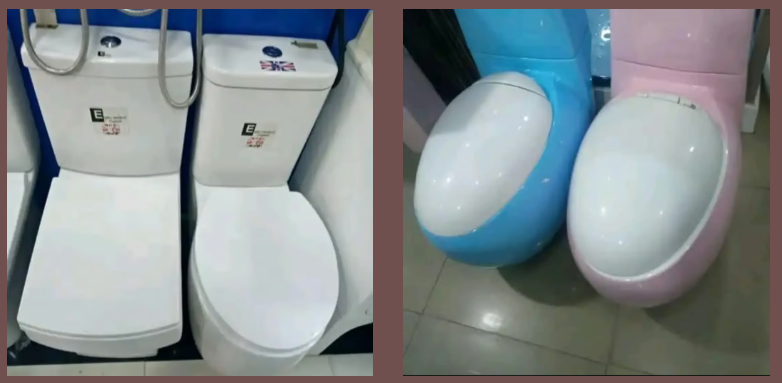
A bitter corporate battle between Chinese business partners over the control of Crown Ceramics Nigeria Limited has escalated into a maze of court cases, petitions and regulatory interventions, exposing one of the most contentious shareholder disputes involving a foreign-owned manufacturing company in Nigeria.
Court documents and petitions obtained by PREMIUM TIMES show that the dispute, which has dragged through courts in Abeokuta, Lagos and Abuja, has also reached the Nigeria Police Force, the Economic and Financial Crimes Commission (EFCC), the Corporate Affairs Commission (CAC) and the Office of the Vice President.
At the centre of the dispute are majority shareholders who collectively own 65 per cent of the company and a minority shareholder, Chen Dongfeng, who they say holds about eight per cent equity but has allegedly assumed effective control of the business.
The majority shareholders allege that since March 2025 they have been denied access to the company’s factory, financial records, bank accounts and corporate decision-making despite remaining the controlling shareholders.
They claim repeated requests to inspect company accounts, review operational reports, hold board meetings, conduct audits and receive profit distributions were ignored or obstructed.
According to the documents, the shareholders also allege they have been prevented from participating in the management of the company while Mr Dongfeng allegedly exercises exclusive control over the company’s finances, banking arrangements, factory operations and corporate records.


Mr Dongfeng is the Managing Director of Crown Ceramics.
Court battles across three cities
The dispute first reached the Federal High Court in Abeokuta in 2025 when the majority shareholders — Zhang Kefeng, Zhang Linshuang, Liu Zhengyu and Liao Yuzhen — filed Suit No. FHC/AB/CS/64/2025 after alleging that Mr Dongfeng had taken physical control of the company despite being a minority shareholder.
Among other reliefs, they sought orders preventing banks from honouring transactions initiated by him after the company’s board passed a resolution directing financial institutions to deny him access to company funds.
While that case was pending, Mr Dongfeng instituted another suit in Lagos involving substantially similar issues regarding the management and control of the company .
Aliyu & Musa (SAN), the law firm engaged by the majority shareholders to handle the matter, initially advised an internal resolution through a board meeting. The company then convened a board meeting aimed at resolving the dispute internally, including consideration of Mr Dongfeng’s removal as a director.
It is not immediately clear whether the meeting proceeded but a court action was filed in Abeokuta seeking to restrain the board from removing Mr Dongfeng.
Documents seen by PREMIUM TIMES show that Mr Dongfeng asked the court to invalidate a meeting purportedly held on 1 March 2025, arguing that he was not served the statutory notice required by law.
In the counterclaim filed before the Federal High Court in Abeokuta, Mr Dongfeng asked the court to declare that, as a recognised member and director of the Company, he was legally entitled to receive notice of all general and board meetings of the company.
He also asked the court to declare that the alleged failure or refusal to serve him notice of the 1 March 2025 meeting violated Sections 243 and 245 of the Companies and Allied Matters Act (CAMA) 2020, as amended.
According to him, the statutory notice should include the date, venue and agenda of the meeting, as well as all documents required to be circulated to persons entitled to attend.
Similarly, Mr Dongfeng is asking the court to set aside and declare invalid the meeting held on 1 March 2025 on the grounds that it was convened and conducted without proper statutory notice. He is also asking the court to nullify all resolutions purportedly reached at the meeting.
In addition, he is seeking a perpetual injunction restraining the majority shareholders, their agents, representatives or anyone acting on their behalf from implementing, relying on or taking any steps pursuant to the resolutions allegedly passed at the meeting.
Mr Dongfeng wants the court to further restrain the majority shareholders from issuing or relying on notices for future board or general meetings of the first plaintiff unless such notices are properly served on him in compliance with CAMA 2020.
Meanwhile, the majority shareholders maintain that despite the various court proceedings, no court has issued an order expressly preventing them from accessing the company or participating in its management.
In April 2026, the High Court of the Federal Capital Territory, Abuja, granted an interim order restraining anyone from preventing them from accessing the company’s premises and directed the Inspector-General of Police to provide adequate security to facilitate compliance with the order.
The Police Directorate of Legal Services subsequently recommended that the Ogun State Commissioner of Police provide officers to implement the court order.
Despite these developments, the majority shareholders insist they remain excluded from effective control of the company. Their lawyer, Sanusi Musa, told PREMIUM TIMES that some police officers are “conniving with the minority shareholder to prevent the majority shareholders from accessing the factory. The presence of police is stopping them from accessing the facility.”
Mr Musa added that the Vice President, Kashim Shettima, in his capacity as Chairman of the Presidential Enabling Business Environment Council (PEBEC), has directed the police to intervene in the matter and yet that directive has not been adhered to.
“The majority shareholders are helpless as of now,” Mr Musa said.
Meanwhile, Emeka Ekweozor, the lawyer to Mr Dongfeng, told PREMIUM TIMES that the matters in controversy are “sub judice, and it would be wholly inappropriate for parties to seek, through the media, to achieve what ought properly to be determined by the Court.”
Alleged N40 billion diversion
The dispute has since taken a criminal dimension.
In a petition submitted to the EFCC on 10 July, the majority shareholders accused Mr Dongfeng and several others of diversion and misappropriation of company funds, fraudulent transactions, concealment of corporate records and related economic crimes.
The petition alleges that approximately N40 billion may have been diverted, withdrawn, transferred or otherwise misappropriated since March 2025.
According to the petition, the alleged transactions include diversion of company sales revenue to personal accounts or related companies, payments under suspected fictitious procurement arrangements, inflated labour costs, unsupported invoices, questionable reimbursements, substantial cash withdrawals without documented corporate approval and undisclosed cross-border transfers.
The petition further alleges that company bank statements, financial reports, inventory records and sales records have been withheld from the majority shareholders despite repeated requests.
The shareholders also claim they have received no dividend or profit distribution even though the company has continued operations.
They urged the EFCC to investigate the allegations, obtain and analyse the company’s financial records, trace banking transactions and recover any funds found to have been unlawfully diverted.
PREMIUM TIMES could not independently verify the allegations against Mr Dongfeng and his lawyers have vehemently denied all the allegations.
Mr Ekweozor, said his “Client categorically denies all allegations of diversion, misappropriation, fraudulent transactions, concealment of corporate records, or any other economic offences alleged against him. The allegations are false, unsubstantiated and are expressly denied.”
Allegations involving company employees
The dispute also extends to several company employees.
In a separate petition to the Inspector-General of Police, the company alleged that five employees unlawfully interfered with the management of Crown Ceramics Nigeria Limited by obstructing directors from carrying out their responsibilities and encouraging other workers to frustrate the company’s leadership.
The petition further alleges that the employees prevented officials of the Corporate Affairs Commission from entering the company’s premises during an investigation initiated following directives from the Office of the Vice President.
The petition asked the police to investigate, apprehend and prosecute the employees for their alleged actions.
Appeal to the Vice President
The majority shareholders also sought intervention from Vice President Kashim Shettima in his capacity as Chairman of the Presidential Enabling Business Environment Council (PEBEC).
In their petition, they alleged that Mr Dongfeng illegally stripped company assets, committed fraud, forged corporate documents and unlawfully pledged the company’s assets as collateral for loans obtained for another company without the knowledge or consent of the majority shareholders.
They further alleged that company assets, including landed property, production lines and machinery, were used to secure loans running into tens of billions of naira and that corporate ownership records were altered without authorisation.
ALSO READ: Nigerian company says it’s unable to reach majority shareholder
The petition also claimed that the majority shareholders had effectively lost access to a company into which they had collectively invested more than $25 million.
According to the petition, some of the investors returned to China after allegedly being prevented from accessing the company and participating in board meetings.
The shareholders appealed for government intervention to guarantee their safety, restore access to the company, facilitate investigations by relevant authorities and enable them to resume management of the business.
In his reaction, Mr Ekweozor said all these allegations against his “Client are denied in their entirety, remain contested, and are connected with ongoing judicial proceedings which have not been finally determined.”
Multiple proceedings continue
The dispute remains unresolved.
Several cases are still pending before courts in Abeokuta and Lagos as both sides continue to await court ruling.
The majority shareholders insist they remain unlawfully excluded from a company in which they hold a controlling stake, while seeking full restoration of their management rights and access to company assets.
Mr Ekweozor told PREMIUM TIMES that it is “deeply concerning that allegations which are hotly disputed and substantially connected with matters pending before the Courts are now being presented to the media as though they have been established facts.”
“Our Client considers this a deliberate attempt to circumvent the judicial process and procure, through publicity, what ought properly to be determined through evidence and due process of law.”
Crown Ceramics Nigeria Limited was registered in 2014 to engage in importing, exporting, manufacturing and general contracting.
Discover more from Premium Times Nigeria
Subscribe to get the latest posts sent to your email.
-

 News4 days ago
Al Gore has a surprisingly calm take on the AI data center backlash
-
News3 days ago
Tinubu’ll win presidency with 65 percent votes – Jibrin
-
News3 days ago
Crusoe raises $3.9B to build massive data centers and small modular “AI factories”
-
Business3 days ago
FG moves to clear export grant backlog, reform EEG scheme