Connect with us

Business

Dangote refinery cuts aviation fuel price to N1,650

info

Published

on

Dangote Refinery 2 1024x831 1 e1778177983979.jpg

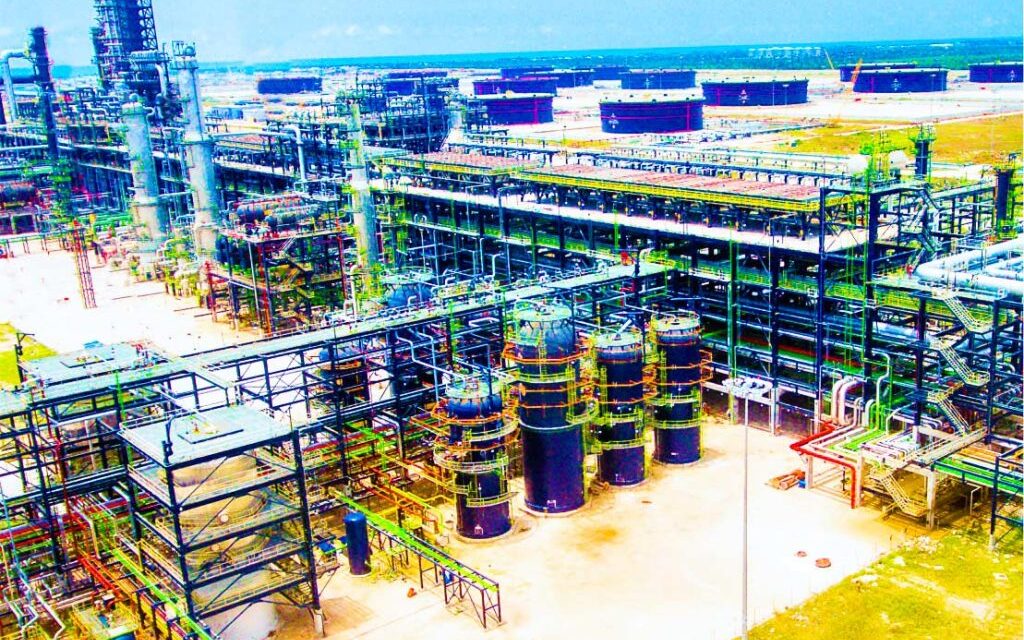
Dangote Petroleum Refinery and Petrochemicals has reduced the price of aviation fuel, also known as Jet A1, to N1,650 per litre from N1,750 per litre in a move expected to ease pressure on domestic airlines struggling with rising operating costs.

The refinery disclosed the reduction in a statement issued on Tuesday, saying the intervention was aimed at supporting airline operations and ensuring stable fuel supply across the country.

The company also announced a 30-day interest-free credit facility for marketers and airline operators backed by bank guarantees, alongside its transition from dollar-based pricing to a naira-denominated structure.

“These interventions come amid growing concerns over the rising operational costs faced by domestic carriers, with aviation fuel accounting for a significant portion of airline expenses,” the refinery said.

Airline operators have repeatedly warned that rising Jet A1 prices were pushing airlines deeper into financial strain and threatening the sustainability of flight operations.

We had extensively reported on the impact of soaring aviation fuel prices on Nigeria’s aviation sector, including increased flight delays, cancellations, operational disruptions, and growing passenger frustration across several domestic routes.

At the peak of the crisis from April and May, some airlines reduced flight frequencies while operators raised concerns after Jet A1 prices climbed above N2,500 per litre in parts of the country.

The situation also triggered warnings from the Airline Operators of Nigeria (AON) in April, which threatened to suspend operations over the escalating cost of aviation fuel and other operational challenges confronting carriers.

Passengers across the country were affected by the disruptions, with many travellers increasingly questioning recurring schedule changes, delays and sudden cancellations by airlines already struggling with high fuel and maintenance costs.

The refinery said the latest reduction is expected to lower fuel procurement costs for airlines, improve operational stability and support efforts to moderate airfares.

The intervention comes as the Federal Government continues efforts to stabilise the aviation fuel market through the naira-for-crude initiative and other policy measures aimed at reducing pressure on operators.

A government technical committee earlier recommended the inclusion of aviation fuel under the naira-for-crude arrangement as part of measures to address persistent supply and pricing challenges within the sector.

The committee also projected indicative Jet A1 prices ranging between N1,760 and N1,988 per litre in Lagos, and between N1,809 and N2,037 per litre in Abuja.

Aviation fuel remains one of the largest cost components for airlines in Nigeria, alongside aircraft maintenance, insurance, foreign exchange and leasing expenses.

Continue Reading
Click to comment

Leave a Reply

Your email address will not be published. Required fields are marked *

Business

Group calls for review of GMO approval in Nigeria

info

Published

on

By

Genetically modified foods.jpg

MTN ADVERT

A coalition of environmental, agricultural, and civil society organisations has urged the Nigerian government to put on hold new approvals of Genetically Modified Organisms (GMOs) in the country.

It is also asking the government to conduct an independent review of existing approvals, citing concerns over biosafety, public health, biodiversity, and farmers’ rights.

The group made the call in a communiqué issued at the end of the National Conference on Biosafety and Agroecology held on Monday in Abuja.

The conference, attended by the representatives of federal ministries, regulators, farmers, researchers, civil society organisations, and legal practitioners, among others, reviewed the increasing approval and commercialisation of genetically modified crops in Nigeria, including Bt Cowpea, TELA Maize and recently registered transgenic cotton varieties.

Participants raised concerns about the implications of GMOs for biosafety, environmental protection, food sovereignty, public health and farmers’ rights, the communiqué said.

PT WHATSAPP CHANNEL

They similarly urged the federal government to place a moratorium on new GMO approvals pending independent, long-term and peer-reviewed assessments, including feeding trials, environmental impact assessments and social impact studies.

An independent review of existing approvals to ensure compliance with the National Biosafety Management Act (NBMA) and the precautionary principle also featured in their demands.

Other recommendations included bolstering public agricultural research and extension services, protecting indigenous seed systems, supporting community seed banks, phasing out highly hazardous pesticides and increasing investment in agroecological research and training.

GM concerns in Nigeria

The adoption of GM crops has remained contentious among food system experts in Nigeria, creating two divides. GM proponents argue that the technology can help scale up food production and boost food security. Critics, however, fear the technology could trigger environmental and health risks, and have expressed worries about weak regulatory enforcement and inadequate labelling.

According to the International Service for the Acquisition of Agri-biotech Applications, more than 30 major food crops have been genetically modified globally.

Nigeria has approved four crops—maize, cowpea, cotton, and soybean—for commercialisation and is among the six African countries leading in biotech crop adoption.

In 2024, the government approved four varieties of Tela maize, further intensifying debates over GM crop safety and transparency.

Farmers’ limited knowledge of GM seed characteristics, potential dependence on seed companies, and the broader impact on traditional farming systems have been identified among the downsides.

An investigation by PREMIUM TIMES and international partners in 2024 laid bare how the U.S. government, through the now-defunct USAID, funded pesticide and GM-related advocacy campaigns in Nigeria, including efforts that profiled critics of GMOs.

In March, the National Biosafety Management Agency ordered the suspension of four new transgenic cotton hybrid varieties in Nigeria.

The varieties are MIC 561 BGII, MIC 563 BGII, BIOSEED-FIYAH CH1001, and BIOSEED-FIYAH CH1002. They were allegedly registered by the National Committee on Naming, Registration and Release of Crop Varieties, Livestock Breeds and Fisheries on 26 March 2026 without the requisite approval of NBMA.

The agency said its regulatory surveillance and compliance-monitoring mechanisms identified “serious compliance abnormalities” in the varieties.

The suspension of the new cotton varieties underscores ongoing challenges around biosafety compliance and regulatory oversight in Nigeria’s biotechnology sector.

READ ALSO: GMOs: Experts accuse Nigeria’s biosafety regulator of not being transparent

Concerns over food security approach

The conference noted that Nigeria’s food security challenges require “holistic, people-centred and sustainable solutions” rather than sole dependence on technological interventions.

Participants also raised concerns about biodiversity loss, genetic contamination of indigenous seed varieties, monoculture farming systems, dependence on pesticides and the absence of sufficient long-term ecological studies on GM crops.

The communiqué stated that proprietary seed systems could undermine farmers’ rights to save, exchange and improve seeds, with implications for rural livelihoods and local food systems.

It further observed that existing biosafety governance frameworks require greater transparency, accountability, scientific rigour and meaningful public participation.

The conference spotlighted the far-reaching consequences of continued use of hazardous pesticides, warning that they constitute risks to human health, biodiversity, soil fertility and water resources.

It endorsed agroecology as a viable pathway to sustainable agriculture, noting that it has demonstrated the potential to improve soil health, biodiversity, climate resilience and farmers’ livelihoods.

Participants said structural barriers, including limited access to land, finance, information and technology, continue to affect farmers, particularly women and young people.

In their conclusion, participants remarked that ecological sustainability, food sovereignty, public accountability, social justice and the well-being of present and future generations should guide Nigeria’s food and agricultural policies.


Continue Reading

Business

Cornerstone Insurance Plc Foundation Donates Solar-Powered Borehole to NDLEA

info

Published

on

By

IMG 7302.jpeg

Cornerstone Insurance Plc Foundation (CIPLCF), has donated a solar-powered borehole to the National Drug Law Enforcement Agency (NDLEA) in Abuja, reaffirming its commitment to providing access to clean sustainable water.

The project, commissioned recently, reflects Cornerstone’s vision of protecting lives and property by promoting health, and sustainability. It also aligns with the United Nations Sustainable Development Goals (SDGs), particularly SDG 6 Clean Water and Sanitation and SDG 13 Climate Action.

Speaking at the handover ceremony, the Head of Marketing and Corporate Communications Cornerstone Insurance Plc, Cordelia Ekeocha, who represented the MD/CEO Stephen Alangbo. said the initiative emphasises its commitment to supporting communities and promoting sustainability. We believe that all our initiatives should have a lasting impact in the lives of the recipients.

The CIPLCF is committed to promoting community support, education, and health & safety, hence this borehole project is significant.

Receiving the project on behalf of the NDLEA Chairman, Brigadier-General Mohammed Buba Marwa (Rtd), the Director of Technical Services, DCG Ambrose Umoru, commended the Foundation for the donation, noting that the borehole would provide reliable access to clean water for the agency.

The post Cornerstone Insurance Plc Foundation Donates Solar-Powered Borehole to NDLEA appeared first on Business Today NG.

Continue Reading

Trending