Connect with us

News

Dachung Musa Bagos Foundation Empowers Less Privileged with Food Distribution in Plateau Communities

editor

Published

on

Musa Bagos

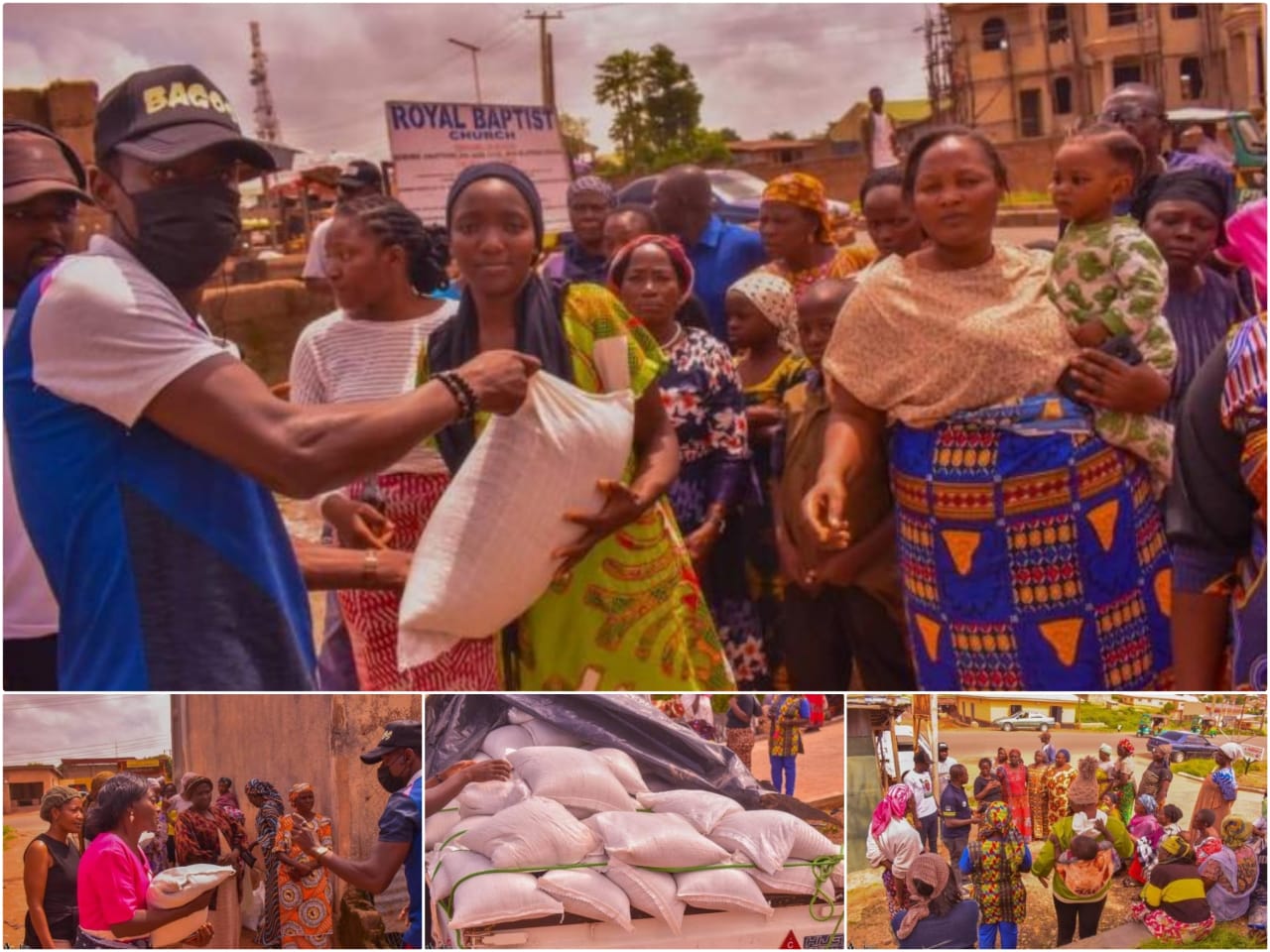
In response to the challenging economic conditions and hardships faced by Nigerians, the Dachung Musa Bagos Foundation took action today by distributing essential food items to the less privileged in several communities. This initiative is a part of the foundation’s core mission to provide much-needed support to those in need.

The distribution was carried out under the compassionate leadership of Mrs. Lydia Dachung Bagos, the Executive Director and CEO of the Dachung Musa Bagos Foundation. As she distributed the food items, Mrs. Bagos emphasized the importance of maintaining hope and placing trust in God during these difficult times. She urged the beneficiaries in various communities to view the intervention as a gift from the foundation, a symbol of solidarity, and a heartfelt effort to empathize with their struggles.

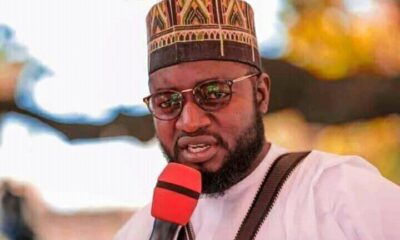
The Dachung Musa Bagos Foundation a nongovernmental organization set up by the member representing Jos North and Jos South Federal Constituency, Hon Dachung Musa Bagos, visited several communities, including Tudun Wada, Hwolshe, Abattoir, Dadin Kowa, and Zarmaganda, where the distribution took place. The joy and gratitude of the beneficiaries were palpable as they expressed their heartfelt appreciation to the President, Executive Director, and the entire team at the foundation for their thoughtful gesture during their times of need.

The foundation’s mission goes beyond just providing food items; it aims to shine a light on the lives of those in need and bring smiles to their faces. By addressing the pressing challenges faced by the less privileged, the Dachung Musa Bagos Foundation continues to make a positive impact on the community.

With this recent intervention, the foundation reaffirms its commitment to making a difference and uplifting the lives of the less privileged, even in the face of economic difficulties. The Directorate of Information and Communications at the Dachung Musa Bagos Foundation continues to work diligently to keep the public informed about the foundation’s activities and their mission to bring hope and relief to those in need.

As the foundation carries on with its noble cause, communities across the region are hopeful that more individuals and organizations will follow suit, uniting in their efforts to create a brighter and more compassionate society.

Continue Reading
Click to comment

Leave a Reply

Your email address will not be published. Required fields are marked *

News

What the jury will actually decide in the case of Elon Musk vs. Sam Altman

info

Published

on

By

IMG 4131 rotated.jpg

Nine California jurors are now deliberating over the future of OpenAI, the world-leading artificial intelligence lab.

While the trial exploring Elon Musk’s case against OpenAI’s other cofounders and Microsoft has covered territory ranging from the breakup of the founders in 2018 to Altman’s firing and rehiring in 2023, the jurors will be considering a set of fairly narrow questions.

  • Breach of charitable trust — essentially, did OpenAI and cofounders Sam Altman and Greg Brockman violate a specific agreement with Musk to use his donations to OpenAI for a specific, charitable purpose and not general use by the non-profit?
  • Unjust enrichment — did the defendants use Musk’s donations to enrich themselves through OpenAI’s for-profit arm, instead of for charitable purposes?
  • Aiding and abetting breach of charitable trust — Did Microsoft, through its interactions with OpenAI, know that Musk had specific conditions on its donations, and play a significant role in causing harm to Musk?

OpenAI has also made three arguments in its defense that the jury will weigh:

  • Statute of limitations — a legal deadline by which a lawsuit must be filed. Here, if OpenAI can prove that any harms to Musk happened before August 5, 2021 for the first count; August 5, 2022 for the second count; and November 14, 2021 for the first count, then his claims will be moot.
  • Unreasonable delay — Musk, by filing his lawsuit in 2024, delayed his claim in a way that made his request for damages unreasonable.
  • Unclean hands — a legal doctrine holding that Musk’s conduct related to his claims against OpenAI was unconscionable and renders them invalid.

If Musk wins out, it could mean the end of OpenAI as a for-profit company, but it’s not entirely clear what will result. Next week, the judge will begin a set of new hearings where lawyers from both sides will debate what the consequences of a verdict in favor of the plaintiffs might be. That process could be rendered moot by a negative verdict, however.

Breach of charitable trust

Musk’s attorneys say the defendants clearly understood that Musk wanted to support a non-profit that would ensure the benefits of AI to the world, and prevent it from being controlled by any one organization. In particular, they say a $10 billion investment from Microsoft in 2023 into OpenAI’s for-profit affiliate—the first to happen after the statute of limitations—was the event that turned Musk’s concern into conviction.

That deal, Musk’s lawyers say, was different from previous investments and led to OpenAI’s investors being enriched by the company’s commercial products, at the expense of the charitable mission of AI safety that Musk promoted.

OpenAI’s attorneys have asked every witness to describe specific restrictions put on Musk’s donations, and none have, including his financial adviser Jared Birchall, his chief of staff Sam Teller, or his special adviser Shivon Zilis. They say everyone involved agreed that private fundraising would be required to achieve its goals, and note that Musk himself attempted to launch an OpenAI-affiliated for-profit he would personally control, and later to merge OpenAI into his company Tesla. They also note the organization’s other donors haven’t said their charitable trust was violated.

Importantly, a forensic accountant hired by OpenAI testified that all of Musk’s donations had been used by OpenAI well before the key date of August 5, 2021. That is evidence that Musk’s donations were already used for their purpose well before he brought his lawsuit, invalidating any charitable trust that may have existed.

Mainly, they insist that the for-profit affiliate that conducts most of OpenAI’s actual activity continues to fulfill the organization’s mission, and has generated nearly $200 billion in equity value to support the non-profit foundation. Notably, Sam Altman argued that providing ChatGPT for free helps fulfill the mission of sharing the benefits of AI with the world.

Unjust enrichment

The plaintiffs point to the multibillion-dollar valuations of stakes held by OpenAI founders like Brockman and Ilya Sutskever, as well as Microsoft itself, as a sign that Musk’s donations were ultimately used for personal benefit, as opposed to supporting the mission of the charity. They argue that the work at OpenAI’s for-profit was commercially focused, while the foundation itself was left essentially dormant, without full-time employees, and, ultimately, not even in control of the for-profit.

OpenAI says all of Musk’s contributions were used by the foundation by 2020, and that equity distributions came well after he left the organization in 2018. Even beforehand, evidence shows the key players agreed that being able to compensate researchers with stock was key to developing AGI, the hypothetical form of AI capable of performing any intellectual task a human can. OpenAI executives maintain that the for-profit’s work meaningfully advanced the foundation’s mission, including safety activities. They say the non-profit board continues to control the for-profit, and instituted new governance controls following “the blip,” when Altman was fired by OpenAI’s non-profit board in 2023 for lack of candor and then rehired just days later.

Aiding and abetting

Musk’s case focused on the events of the blip, when Microsoft CEO Satya Nadella, whose company depended on OpenAI’s tech, was personally involved with helping to bring Altman back and creating a new board to govern OpenAI. They note that Microsoft executives wondered if their commercial agreement might conflict with the non-profit’s goals, and suggest that Microsoft’s commercial priorities led OpenAI away from its mission. They’ve focused attention on a clause in Microsoft’s agreement with OpenAI that gave Microsoft veto rights over major corporate decisions at OpenAI.

Microsoft’s witnesses have insisted that the company’s executives didn’t know of any specific conditions on Musk’s donations despite extensive due diligence, and never vetoed any decision by OpenAI. They note that the company’s investments and compute power allowed OpenAI to achieve its biggest triumphs.

Statute of Limitations

Musk has suggested that his skepticism of his cofounders grew over time, until in the fall of 2022 he finally decided they had betrayed him when he found out about Microsoft’s plans for a new $10 billion investment that took place in 2023. He wouldn’t file his lawsuit until mid-2024.

OpenAI’s attorneys argue that the terms of that deal were spelled out in a term sheet for a previous fundraising round in 2018, which Musk received and his advisers reviewed, but Musk said he didn’t read in detail. They also note numerous blog posts and other communications from over the years that show Musk could have known what OpenAI was doing well before he brought them to court, including tweets where Musk criticized the company years before the suit. Zilis, Musk’s adviser, even voted to approve these transactions as a member of the OpenAI board.

Ultimately, the OpenAI attorneys emphasize that Musk’s formal role in the organization ended in 2018 and his last donations took place in 2020.

Unreasonable delay

OpenAI’s attorneys say the real reason that Musk filed his suit was he realized that he was wrong about OpenAI, after its launch of ChatGPT revolutionized the business of artificial intelligence. They argue that OpenAI has operated under its current structure since its first Microsoft investment in 2018, and that forcing the organization to restructure eight years later is unreasonable.

Unclean hands

There is evidence that Musk was planning his own competing AI efforts while he was still the chair of OpenAI, and hired OpenAI employees to work on AI at Tesla. OpenAI’s attorneys argue that these efforts undermined OpenAI at a time when it was using Musk’s donations to pursue its mission. They noted that Zilis, the mother of three of Musk’s children, didn’t disclose her personal relationship to other OpenAI board members for years. And they argue that Musk withheld his donations in 2017 in an effort to win control of a planned for-profit affiliate of OpenAI. Finally, “Mr. Musk abandoned OpenAI for dead in 2018,” Bill Savitt, OpenAI’s lead attorney, told the jury.

When you purchase through links in our articles, we may earn a small commission. This doesn’t affect our editorial independence.

Continue Reading

Business

SEC positions AI, data-driven regulation to attract investments

info

Published

on

By

IMG 2380.jpeg

BY NECHI NAECHE-ESEZOBOR—The Securities and Exchange Commission has said it is placing artificial intelligence, data analytics and technology-driven regulation at the centre of Nigeria’s capital market reforms to attract both local and foreign investments.

Speaking at the FSDH Investor Conference 2026 in Lagos, the Director-General of the SEC, Emomotimi Agama, said the future of global investing would increasingly depend on the quality of intelligence, data and technology supporting investment decisions rather than the size of capital alone.

According to him, the era of “intelligent investing” has already arrived, driven by artificial intelligence, real-time analytics, distributed ledger technology and algorithmic systems that are reshaping how investments are priced, allocated and protected globally.

He said, “We are at the threshold of what scholars and practitioners are calling the era of intelligent investing — a paradigm in which data does not merely inform decisions, but actively participates in them.”

Agama noted that the SEC had embarked on what he described as the most comprehensive regulatory reform agenda in its history to ensure Nigeria remains competitive in the evolving global investment environment.

He explained that the Commission’s reforms were aimed at creating a forward-looking market structure capable of supporting intelligent investing through faster settlement systems, tokenised securities and deeper derivatives markets.

According to him, the Commission’s seven-pillar capital market infrastructure vision includes plans to achieve T+1 settlement cycles, expand digital assets regulation and build a comprehensive framework for tokenised securities.

The SEC boss said the Commission was also developing governance frameworks for artificial intelligence applications in the capital market to ensure transparency, accountability and investor confidence.

“We are developing AI governance frameworks for capital market participants — frameworks that demand explainability, accountability and algorithmic fairness. An investor in Nigeria deserves to know not only what decisions were made on their behalf, but how those decisions were reached,” he said.

Agama stated that intelligent investing must be inclusive and accessible to ordinary Nigerians, adding that the SEC’s fintech-bank integration strategy targets about 20 million retail investors across the country.

He said technology and data-driven investing tools could democratise access to wealth creation opportunities for small businesses, artisans and low-income earners who had previously been excluded from formal investment systems.

The SEC DG also stressed the importance of collaboration between regulators, financial institutions, fintech firms and investors in building a resilient and technology-driven market ecosystem.

According to him, Nigeria’s capital market reforms and adoption of intelligent investing frameworks would strengthen investor confidence, improve market transparency and position the country as a leading investment destination in Africa.

He added that the Commission was strengthening investor protection through enhanced enforcement mechanisms, financial literacy programmes and the establishment of a dedicated Investor Protection Department.

Agama said, “Confidence is the ultimate asset in a capital market. Every disclosure we enforce, every fraud we prosecute, every investor we educate adds to the stock of market confidence.”

He further noted that Nigeria’s growing role in African capital market integration and digital finance initiatives would help channel long-term investments into infrastructure, gender finance and other critical sectors of the economy.

The SEC DG commended FSDH Merchant Bank for creating a platform for stakeholders to discuss the future of intelligent investing, adding that collaboration and data-sharing among market participants would be critical to building globally competitive financial markets in Nigeria.

The post SEC positions AI, data-driven regulation to attract investments appeared first on Business Today NG.

Continue Reading

Trending